
Explore interior trends, AI design insights, styling guides and real transformations
Designing a Narrow Balcony: 7 Practical Ideas for European Homes
Introduction: making the most of a narrow balcony
Across Europe, many flats feature balconies that are less than a metre wide. In some buildings, the space feels almost impractical to use, while in others it’s simply a question of making every centimetre count. The challenge of a narrow balcony is not just about fitting furniture, it’s about creating a sequence of usable zones that can be rearranged as seasons change, and as needs evolve - from a quiet place to read, to a compact home office, to a miniature garden. The following guidance translates the ideas into practical strategies that work in diverse European contexts, from the core of city-centre blocks to compact suburban apartments.
In European design practice, the emphasis is on verticality, modularity and lightweight materials. When width is limited, depth and height become your allies. With careful planning, a balcony that is 0.8 to 0.95 metres wide can host a surprising variety of functions, provided furniture is slender, storage is optimised and surfaces are chosen with weather resistance in mind. Below are seven ideas that can be combined or adapted to suit your climate, building regulations and personal tastes.
Storage systems: making every inch count
The first discipline for a narrow balcony is storage. The goal is to hide clunky gear at the ends of the space while keeping the central area open for movement. Start by closing off the end walls with tall, slender storage units that reach close to the ceiling. On covered balconies, wood-toned open shelving can bring warmth and texture, reclaimed timber shelves or pallets repurposed into shelving units create character and texture. For open balconies, consider light-weight, airy metal shelving with decorative latticework that allows air to move through and visually lightens the space.
If you need to conceal items such as a compact gardening set, sports equipment, or seasonal belongings, install high cabinets with doors. A key advantage of tall units is that they free the floor for furniture and plants, while keeping sight lines clear along the balcony. When accessibility is limited, a mobile solution helps. A pouffe can double as a seat or a small stool to reach items on the top shelves, and it can move with you around the space as needed.
Strategic zoning is essential. Place storage at the ends and leave a clear central corridor to maintain a sense of openness. For those with evolving needs, consider modular storage modules that can be reconfigured as a small home workshop, a reading nook or a dining corner. The objective is to reduce visual clutter and ensure everything has a designated place.
Work zone: compact and efficient
A dedicated work area on a narrow balcony is a popular concept in Europe, especially for residents who work from home or need a quiet spot for drafting, crafts or study. The trick is to optimise width by choosing a deep, slender desk. A work surface that is deeper under the desk than above allows you to store essential items below while keeping the workspace tidy.
On a truly tight footprint, the chair should disappear under the desk when not in use, enabling you to pass by with minimal constraint. Overhead shelves or hanging storage above the desk extend your capacity without consuming floor space. Ensure lighting is robust enough for long sessions: a dedicated task light near the desk plus ambient balcony lighting will create a comfortable environment after dusk.
Remember to consider weather and power sources. If sockets are not readily available on the balcony, plan for a single extension lead with surge protection and ensure that any electrical installation complies with local regulations. Materials should be weather-resistant and surfaces easy to wipe down after use. A small, durable chair with clean lines can fold away or slide under the desk, preserving a compact footprint while maintaining ergonomic comfort.
Reading nook: a quiet corner among the rails
Another effective use of end spaces is a dedicated reading corner. By combining a slim bookcase or wall-mounted shelves with a comfortable, compact seating arrangement, you can create a tiny library that brings calm to a busy urban life. Choose one or two low, soft chairs or a pair of compact armchairs with a removable cushion cover for easy cleaning. A slender floor lamp or a wall-mounted reading light will illuminate the pages without dominating the space.
To prevent a cluttered feel, use vertical storage for books and keep decorative items to a minimum. A small throw or a couple of cushions in a colour that complements the palette of the balcony can add warmth and personality. If you lack a free wall for shelving, consider a slim unit that sits on a narrow side, designed to hold a small selection of books and a few cherished objects. The goal is to create a serene, human-scale zone where you can unwind with a favourite novel or a magazine.
Lounge zone: silver linings for relaxation
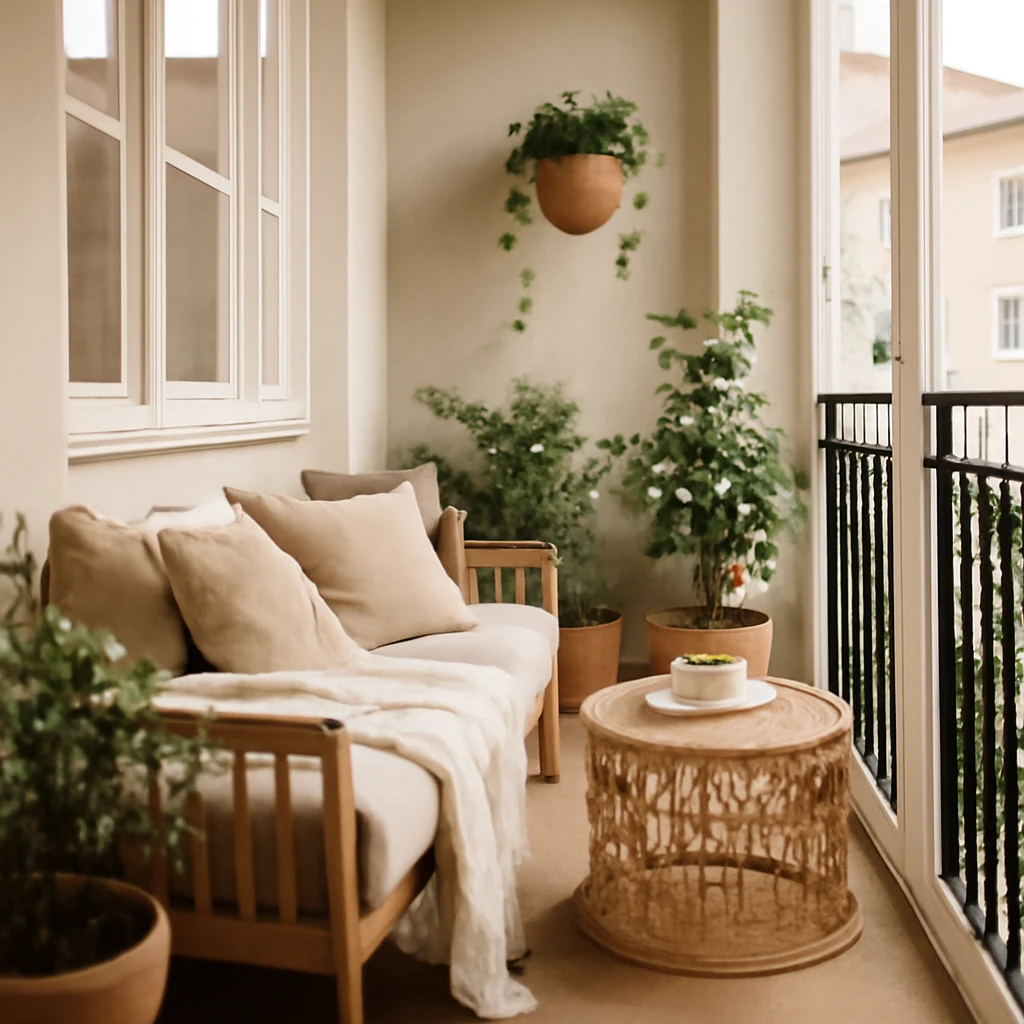
A soft, low-profile lounge area is one of the most desirable outcomes on a narrow balcony. The emphasis is on comfort without sacrificing space. Rather than a traditional sofa, look for compact, modular seating or a long, narrow bench with a backrest along one edge of the balcony. A customised cushion arrangement can turn the bench into a cosy lounge platform. If space allows, add a small coffee table or a stackable stool that can double as a side table or extra seat.
Be prepared for long hours of lounging by choosing seating that is weather-resistant and quick-drying. Materials such as high-performance outdoor fabrics or quick-drying foam are practical choices. When space is extremely tight, you can create a lounge impression by placing a series of floor cushions or pouffes along the edge, with a narrow adjacent surface for drinks and a book. A lightweight throw and a couple of cushions in a contrasting accent colour will elevate the mood without visually crowding the space.
Tea nook: intimate, sip-by-the-sea mood on a balcony
Even a narrow balcony can become a romantic tea corner if you select the right scale of furniture. A compact, slender table - think narrow countertops or wall-mounted shelves - paired with small folding chairs or light stools is ideal. Alternatively, consider a pair of foldable chairs that tuck neatly away when not in use. A narrow table can double as a planter shelf when idle, so you gain greenery while keeping the surface usable for mugs and pastries.
Bright textiles and greenery will inject life into the space. Think parasol-pattern cushions, weather-resilient fabrics in Mediterranean-inspired tones, and a curated selection of plants in small pots. The plants don’t just soften the space, they also help create a microclimate that makes the balcony feel more private and retreat-like, especially in dense urban settings.
Creative studio: a dedicated corner for hobbies and craft
For hobbyists and makers, even a narrow balcony can function as a creative studio. A durable workbench with storage for tools and materials is essential. In a constrained footprint, you can zone a narrow area with a long worktable along the end wall, plus overhead shelves for containers, jars and packets of craft supplies. A shallow drawer unit or a rail system can hold everything you need within arm’s reach.
If your passion is drawing or painting, a compact easel and a vertical storage rack can be used to hold paper, brushes and paints. A small studio chair with a low back keeps the line of sight clear and avoids protruding into the central walkway. Lighting is critical here: a bright, adjustable lamp or a daylight-balanced LED source helps to capture colour accurately and reduces eye strain during long sessions.
Even on the tiniest balcony, you can create a dedicated space for creative work by orienting the setup to face a view or a light source. A wall-mounted magnetic strip or pegboard can hold frequently used tools and keep the surface free for inspiration boards or finished pieces.
Garden at height: cultivating greenery in vertical spaces
For many European balconies, plants are the cue that transforms a narrow space into a tranquil outdoor retreat. Plants can thrive in lightweight containers, hanging pots, and rail planters that do not encroach on the central corridor. On high floors, wind becomes a major factor, so it is wise to choose robust, wind-tolerant species. Suitable options include hardy herbs, low-growing flowering plants, and compact perennials that can withstand gusts with simple staking.
In tall, narrow balconies, consider adding small, wall-mounted planters along the side walls to create a vertical garden. Self-watering planters and drip irrigation options reduce maintenance and keep plants healthy on days when you’re away. Use a mix of evergreen foliage and seasonal blooms to maintain colour throughout the year. For those with a balcony facing the sun, consider sun-loving plants such as geraniums, lobelia, and trailing thyme that can spill over the edge of planters in a graceful cascade.
On sheltered balconies, you can extend the growing season with frost-resistant containers and insulated pots. If space allows, a compact trellis or lattice can support climbers, creating a living screen that enhances privacy while softening the architectural lines of the balcony. The garden at height is not merely decorative, it contributes to air quality, mood, and microclimate, making the balcony a restorative space even in dense urban environments.
Practical considerations: materials, safety and maintenance
Material selection is central to the longevity of a balcony design. For flooring, consider composite decking or weather-resistant timber that handles moisture and temperature fluctuations. Non-slip finishes are essential in European climates when rain is common. If you prefer a more seamless look, outdoor tiles in a neutral palette can extend visually into the interior, creating a sense of continuity.
Frames and railings should be inspected regularly for corrosion and stability, especially on exposed balconies. Choose furniture with corrosion-resistant frames and UV-stable fabrics. If you use cushions, select fabrics designed for outdoor use that resist mould and fading from sun exposure. Stackable or collapsible pieces make seasonal transport and storage easier, especially in city apartments where space is a premium.
Lighting is a powerful instrument in small spaces. Integrate a combination of ambient lighting, task lighting and decorative accents. A weatherproof wall light with warm colour temperature enhances comfort during evenings, while a slender, energy-efficient LED strip along the underside of a shelf or railing can accentuate depth and create a welcoming ambience. Remember to respect regulations around electrical installations on balconies, particularly in high-rise buildings, and always consult a qualified professional when adding outlets or fixtures.
Layout principles: how to plan your narrow balcony
Start with a simple diagram of the balcony footprint. Mark the fixed elements such as doors, railings and drainage points. Then brainstorm the core functions you want to prioritise - storage, work, reading, lounging, dining or gardening. In a typical balcony, you can usually accommodate two or three of these functions if you choose slender furniture and clever storage. The aim is to maintain a clear central zone for circulation while anchoring each function at the ends or along the sides.
Choose modular pieces that can be reconfigured as your needs change. Lightweight, stackable chairs and fold-out tables provide flexibility without bulk. Consider depth-first planning: if you must keep the central aisle clear, place deeper furniture against the walls and use the edge space for seating and planters. Pay attention to scale: pieces should relate to the balcony width and never overpower the space. Neutral bases with a few bold accents can help balance a small balcony without making it feel cluttered.
Climate, maintenance and seasonal shifts
European balconies experience a range of climates, from humid maritime air to dry heat and cold winters. Maintenance routines should reflect this diversity. Clean surfaces regularly to remove salt, mould, and grime, and protect timber with appropriate finishes. If you use live plants, arrange a simple seasonal calendar for watering, pruning and feeding. In exposed locations, windbreaks such as a lightweight privacy screen can reduce gusts while preserving airflow and light.
The seasonal rhythm should be considered in your design. In winter, you might reduce seating to create a compact, protective zone, while in spring and summer you can expand the balcony momentarily by moving cushions to storage and letting planters take the lead. A balcony designed with flexible zones can adapt to changing daylight patterns, enabling longer hours of outdoor use during transitional seasons.
Conclusion: turning a narrow balcony into a holistic living space
A narrow balcony is not a limitation but an invitation to clever, vertical and modular design. The European approach to small-space living often emphasises light, air and order: a few well-chosen pieces, carefully planned storage, and the strategic use of vertical space. With the right palette, materials and layout, a balcony that barely accommodates a chair can become a sequence of intimate, functional zones - a place to work, read, lounge, tea, create and grow. By embracing multi-functionality and prioritising ease of access, you can transform even the narrowest balcony into a beloved extension of the home.
You may also like these articles
 Tips & How-To
Curtains for the Kitchen: European Styles, Fabrics and Functional Tips
A practical guide to European kitchen curtain styling.
Interior Design
Italian Style Interiors: Warm Mediterranean Elegance for European Homes
Italian-inspired interiors blend warmth with timeless elegance across Europe.
Kitchen Design
A European Guide to Country Kitchen Design: Warmth, Craft and Comfort
A comprehensive guide to European country kitchen design.