
Explore interior trends, AI design insights, styling guides and real transformations
Six elegant napkin folds to elevate European table settings
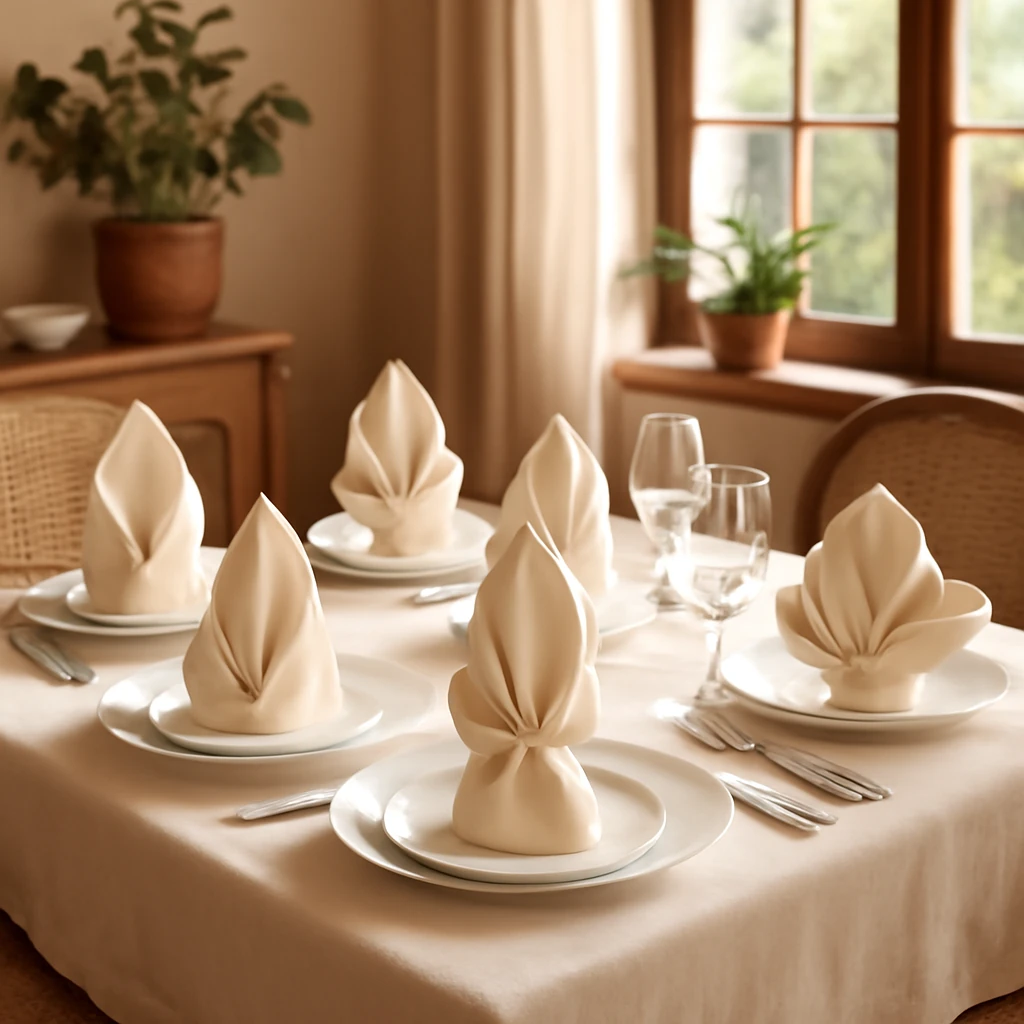
How to fold napkins beautifully for a napkin holder or glass: 6 ideas
Napkins are not merely practical, they are a design feature that can set the tone at the table from the moment guests are seated. In European homes, table styling blends traditional sensibilities with contemporary aesthetics. The following six napkin folding techniques suit linen or paper napkins of standard sizes such as 40x40 cm or 60x60 cm in larger formats. Each idea aims to be beautiful, functional and easy to reproduce, whether you are hosting a family supper, a dinner party or a celebratory banquet.
Six ideas and step-by-step instructions
1. The Rose
To craft a rose, you will need a glass and a square napkin of about 40x40 cm. This design works particularly well with linen napkins where the fabric holds a soft fall and natural sheen.
- Place the napkin on the rim of the glass, centring it to create a stable base.
- Fold the outer edges toward the centre to begin forming petals, layering additional sheets to add volume.
- Fold the innermost edges inward to shape the heart of the flower.
- Continue layering until the napkin resembles a rose, then lift the glass carefully to release the blossom.
- Gently fluff the petals with your fingertips for a natural finish.
2. Flower in a Glass
For a simpler arrangement, roll the napkin along its grain and place it diagonally in a glass to create a four-petal base. Alternate colours if using two shades.
- Take a square napkin and roll it into a looser cone shape.
- Position it in the glass with the point downward, the base should form a neat layer of four pieces.
- Raise the corners and press them along the inner walls to form the next layer.
- Form additional layers as desired, stopping before the corners bend too far.
3. A Bird
For a playful bird, combine three napkins in different tones to create a trapezoid form and add a separate head and neck piece.
- Fold three napkins into trapezoid shapes by folding opposite corners toward the centre and then folding in half.
- Take a separate strip or napkin to form the head. Roll it into a tube and bend the tip to shape the neck.
- Attach the head to the body and place the whole assembly into a holder with a small dab of double-sided tape if desired.
4. The Fan
This graceful option suits romantic dinners by candlelight or everyday lunches. Use square napkins in colours that complement your tableware.
- Fold the napkin’s corners toward the centre to form triangles that resemble fan blades.
- Repeat with a second napkin so you have two fans, place them facing each other in the holder to create volume.
- Alternatively, place a single fan to sit upright as a focal point.
5. The Crown
The crown formation is stylish and practical, creating a focal point that feels both formal and friendly.
- Fold a square napkin diagonally to form a triangle.
- Stack several triangles depending on the holder width, aligning them mirror‑image for symmetry.
- Finish with a central detail that sits in the widest part of the stack to anchor the display in the holder.
6. The Stack
For a pared‑back yet sophisticated look, a simple stack inside a holder works beautifully.
- Centre a neat stack of folded squares or a single rectangle to match the holder’s profile.
- Choose a holder that complements the table’s material - wood, metal or enamel - so the stack becomes a design element.
- Keep the stack tidy and readily accessible for guests.
Colour and materials guidance
Colour strategy is central to cohesive table styling. White linen napkins offer timeless elegance and form a blank canvas for more statement pieces, while colour can introduce mood, seasonality and personality.
- White or ivory napkins paired with traditional or modern tableware create a classic backdrop for celebrations.
- Green tones with touches of gold or brass echo natural, festive vibes, especially in winter and spring gatherings.
- Bold colours such as deep teal, charcoal or terracotta make a strong impression when balanced with simple dishware and understated glassware.
- Two‑tone or ombre napkins can echo the menu or florals, repeat colours in other textiles for harmony.
- Natural fibres such as linen or cotton carry texture that enhances light and shadow on the table, texture can outweigh colour alone.
In all cases, ensure napkins and accessories share a tactile language - similar weight, finish and sheen - to avoid visual conflict.
Preparing the dining space for a celebration
A well‑considered setting begins long before guests arrive. The table should feel cohesive, comfortable and convivial. Plan the layout with care so every guest has easy access to napkins, cutlery and drinkware without crossing arms or reaching across plates.
- Forecast the number of place settings and keep a couple of spare place settings nearby for unexpected guests or last‑minute additions.
- Ensure colour and texture continuity across tableware, textiles and centrepieces, a consistent palette helps the eye travel comfortably across the table.
- Glassware should harmonise in style and finish, all stems, rims and bases should feel cohesive rather than mixed to avoid visual noise.
- Decorative elements such as candles, small vessels and greenery can add warmth, rhythm and scale to the table, be mindful not to overwhelm the napkin presentation.
- Consider the needs of younger guests: provide unbreakable serveware where appropriate and select child‑friendly options for cutlery if needed.
Tips for napkin placement on the table
- Placement matters as much as the folding. Plan the seating and service flow so guests can easily reach napkin holders without crossing dishes.
- Use a combination of napkin holders and separate napkins for personal use and for the table’s broader presentation, this helps keep surfaces tidy and accessible.
- Regularly refresh and tidy the napkin displays, avoid clutter that can disrupt the table’s rhythm when guests are served.
Care, storage and longevity
- Choose napkins that suit the setting: linen for elegance and repeated use, or high‑quality paper for straightforward hospitality that still looks refined.
- Linen benefits from proper washing temperatures and ironing while still damp for crisp edges, store flat or rolled to avoid creases that can affect folds.
- For napkin holders, select materials that resist tarnish and moisture, wooden, metal and enamel finishes each require specific care to maintain appearance.
- Store folded napkins in a clean, dry environment, rotate designs to keep the table looking fresh through the season.
Seasonal and regional nuances
Table dressing in Europe varies with climate, tradition and regional preferences. In warmer months, consider lighter textures, cooler tones and outdoor‑friendly fabrics. For autumn and winter gatherings, richer colours, tactile weaves and softer lighting help create intimacy. Regional celebrations may call for specific motifs such as festive greenery, seasonal fruits or local florals. The folding methods described here are versatile enough to adapt to these variations, giving you a reliable toolkit for any occasion.
Seasonal ideas and styling notes
- Spring and early summer: delicate pastels, white linens, and light‑coloured napkins paired with glassware that catches the daylight.
- Autumn: deeper hues, woven textures, and centrepieces using seasonal foliage and muted metals.
- Winter holidays: evergreen sprigs, warm lighting, and layered textures such as velvet versus crisp linen.
- Summer: outdoor friendly napkins, quick‑dry fabrics, and simple but elegant holders that resist wind and movement.
Final thoughts
Folding napkins into elegant shapes is more than decoration, it is a reflection of hospitality, taste and attention to detail. By combining six distinct folds with mindful colour pairing, thoughtful tableware selection and a well‑considered space, you can elevate any meal. In the European context, where dining culture encompasses a spectrum of styles from intimate family suppers to formal celebrations, a well‑crafted napkin presentation anchors the room’s aesthetic and invites conversation. With practice, the folds become effortless and the style becomes your signature on the table.
You may also like these articles
 Kitchen Design
Open Kitchens: Designing without Upper Cabinets Across Europe
Bright, uncluttered European kitchens through upper-cabinet-free layouts.
Furniture
Designing and Filling the Hallway Wardrobe for European Homes
Smart, spacious hallway storage ideas for European homes.
Interior Design
A sunlit Provençal-inspired home: warmth, light and crafted charm
A sunlit, Provence-inspired family home blending light, colour and handmade details.