
Explore interior trends, AI design insights, styling guides and real transformations
Venetian plaster: marble-like finishes for European interiors
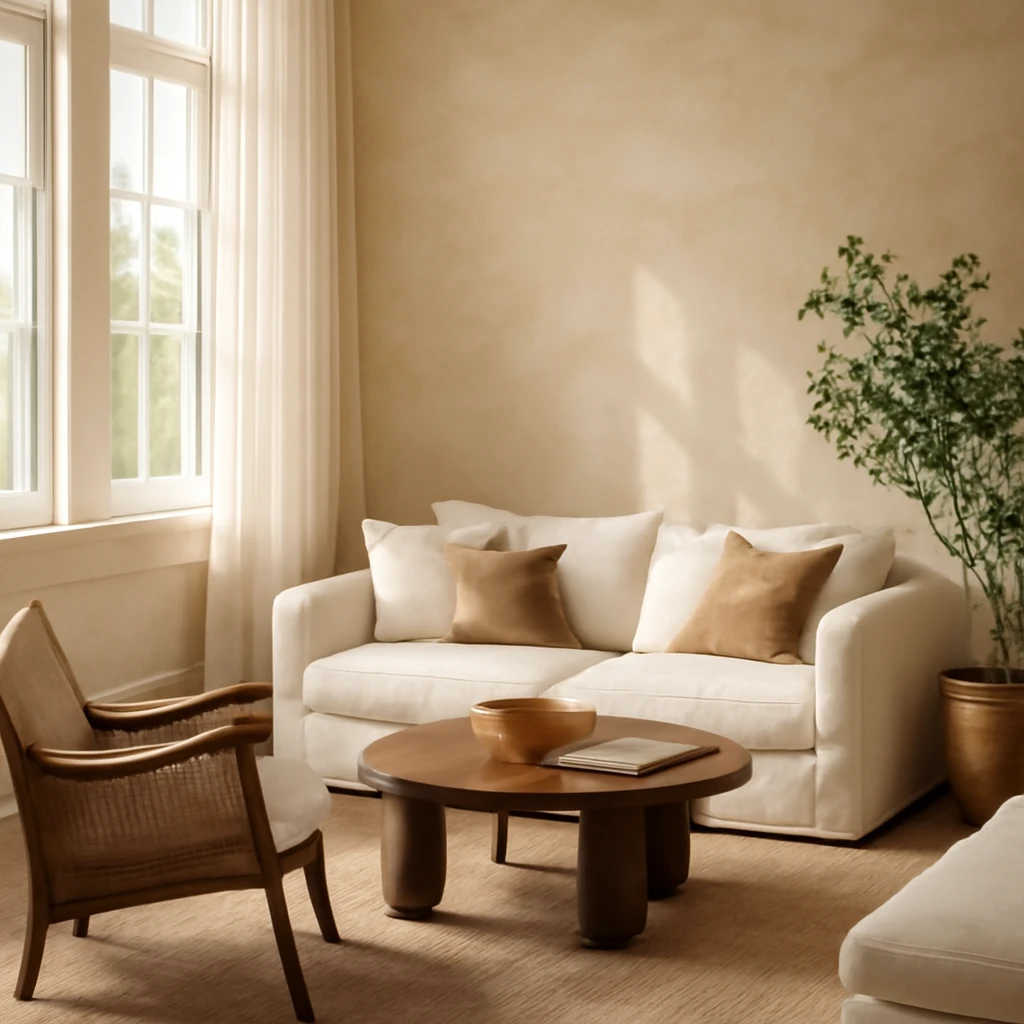
Introduction
Venetian plaster is a time honoured finishing technique that delivers seamless, sculpture-like walls with the refined look of marble. Suitable for contemporary European interiors, it combines natural materials with refined craft to create tactile surfaces that capture light, colour depth, and a sense of permanence. In modern homes across the continent, this traditional finish is used to elevate living spaces, from restrained Nordic apartments to classical city blends, offering a sophisticated alternative to paint or wallpaper.
Advantages
- Beautiful, seamless surfaces. When expertly applied, Venetian plaster yields a continuous, joint-free wall that reads as a single material.
- Extensive colour and texture options. Ranges from pale stone tones to rich earths and deep charcoals, with several tactile effects that suit different rooms and light conditions.
- Natural and safe composition. The base materials are typically mineral and lime-based, providing a low-odour, low-toxicity finish suitable for living environments and sensitive occupants.
- Breathability. The open-pore nature of the finish helps regulate humidity and reduces the risk of mould where properly applied and maintained.
- Durability. With correct preparation and curing, a Venetian plaster surface can last for two decades or more, and unlike wallpaper it resists mechanical wear when properly executed.
- Low maintenance. Surfaces can be wiped down with gentle cleaners, though care is needed to preserve the texture and sheen.
As with any high-performance decorative finish, the main drawback is price and the need for skilled application. Achieving the desired depth and uniformity requires a trained tradesperson who understands both materials and technique.
Composition and finish
Venetian plaster is a thick, translucent coating based on natural materials. Pigments are blended into the matrix to achieve a chosen hue and depth of colour. The essential component is a mineral powder, commonly marble, but occasionally quartz or other stones may be used. The powder is combined with a lime-based or lime-putty binder, plus a latex or acrylic modifier to adjust viscosity and adhesion.
Finish can be supplied ready-to-use or as a dry mix requiring mixing with water. In either case, pigment and optional additives such as pearlescent particles or glitter are usually added separately at the preparation stage.
Application requires a very thin first layer, followed by multiple subsequent layers to build depth and texture. Generally, around ten thin passes are employed to achieve a smooth, uniform surface. The technique is demanding and time-consuming, demanding patience and a controlled environment to avoid cracking or uneven absorption.
Types of Venetian plaster
Venetian plaster encompasses several approaches, each yielding a distinct look and feel. Below are common categories used by professional craftsmen across Europe:
- Classical Venetian plaster. A multi-layered, durable finish that forms a resilient, stone-like surface with subtle veining and depth.
- Pearlised or metallic finishes. Incorporates reflective particles to impart a gentle glow and luster, great for feature walls or dining spaces.
- Marble-look plaster. Achieved by layering plaster in varying directions to mimic natural veining and the sense of marble blocks within the wall.
- Textured finishes. Used to imitate natural textures such as wood grain, stone, or leather. Requires higher skill and a careful control of texture to ensure consistency across surfaces.
- Special effects. Techniques such as crackle patinas, veining patterns, or aged patinas can be incorporated to evoke antique or mineral reckonings. Finishes may employ wax or varnish to alter sheen and resilience.
Within these families, many sub-variants exist, including subtle veneti and more pronounced veining, each achieved through variations in layer order, direction, and pigment loading. The final appearance is heavily influenced by the craftsman’s technique, the preparation of the substrate, and the environment in which the plaster cures.
Areas of use
Venetian plaster is primarily an interior finish and is chosen for its refined aesthetics as a wall or ceiling treatment. It is not intended for exterior façades, where temperature fluctuations and moisture can compromise the surface. In interiors, it is well suited for living rooms, dining rooms, bedrooms, corridors, and hallways, as well as selective features such as columns, mantlepieces, and alcoves that can be highlighted with the finish.
Because it is a premium product, Venetian plaster is typically reserved for decorative purposes rather than broad-room coverage where a simpler, cost-effective finish would suffice. It can be used to enhance classic interiors, contemporary schemes, or a fusion of styles, making it a versatile tool in a European interior designer’s repertoire. For bathrooms and damp rooms, specialists often apply a protective wax or synthetic sealer to improve moisture resistance, and careful planning is required to ensure longevity in high-humidity environments.
Application technique
Preparation is critical: the surface must be flat, clean, and free of dust. Any cracks or imperfections should be repaired with a suitable filler and allowed to cure before priming. A deep-penetrating primer is then applied to optimise adhesion and reduce the risk of staining or efflorescence through the plaster.
The process for applying Venetian plaster may be described as follows, with the understanding that professional craftsmen adapt the method to the product and the room:
How to apply Venetian plaster
- Surface preparation. Remove old coatings, clean thoroughly, repair cracks, and fill any uneven areas. A well-prepared substrate is essential for a uniform result.
- Priming. Apply a deep-penetrating primer to stabilise the surface and improve adhesion. Allow to dry completely before proceeding.
- Colouring the base plaster. Mix a tint into the base plaster or apply a tinted base coat if using a premixed product. It is common to test a small area to preview the colour after finishing and drying, as colour can shift slightly during cure.
- Layering. Apply thin coats with a trowel or spatula, allowing each layer to dry before applying the next. The number of layers depends on the desired depth and technique, but ten or more is typical for a classic effect. Each layer should be controlled for uniform thickness and smoothness.
- Shaping and texture (optional). While still workable, masterful shaping or texturing can be introduced to create veining, patterns, or subtle reliefs.
- Finishing. The final stage may involve waxing or sealing to alter sheen and to enhance durability. Beeswax creates a warm, glossy finish, while synthetic wax yields a more matte, modern look along with improved moisture resistance.
- Protection and maintenance. Once cured, the surface may be cleaned with gentle cleaners. Abrasive or harsh cleaners should be avoided to preserve the texture.
It is important to maintain a suitable environment during curing - stable temperature and humidity help prevent cracks and defects. The craft requires patience and experience, particularly to achieve an even sheen and to avoid visible inconsistencies in colour or texture.
Colour palette
The colour range for Venetian plaster is expansive, with hues suited to almost any scheme. Material selection and lighting influence the perceived depth and warmth of the finish. Common approaches include:
- Natural stone tones. Warm beiges, greys, and taupes that echo marble and limestone, ideal for timeless interiors.
- Whites and blacks. White or near-white plaster creates a bright, expansive atmosphere, black or charcoal walls can act as dramatic backdrops when used selectively.
- Earthy shades. Ochres, terracottas, and mossy greens work well in traditional or rustic-inspired spaces, providing depth without overpowering light levels.
- Bold accents. Rich blues, greens, or metallic-pearl tones can be used sparingly to emphasise architectural features or focal walls.
Colour depth is influenced by pigment concentration and the number of layers. Lighter colours can require more coats to achieve uniform coverage, while darker tones may demand careful control to avoid streaks or patchiness. For small rooms, lighter palettes can help maintain a sense of openness, in larger rooms, deeper hues can create a luxurious, cocooning effect.
Room-by-room applications: examples for interiors
Venetian plaster is versatile for different spaces, although certain considerations apply. Below are typical strategies for European homes:
Kitchen
Venetian plaster can provide a durable, washable wall finish in kitchens, offering a premium alternative to tile or painted walls. Where hygiene and maintenance are priorities, planners may opt for plaster in areas away from the sink and hob, with a ceramic tile splash-back behind the cooking zone. In high-use areas, applying a hard-wearing wax or synthetic coating can enhance moisture resistance while preserving the surface’s tactile quality.
Bathroom
In bathrooms, moisture management is critical. A polished, smoother Venetian plaster with a sealing wax or polyurethane-based varnish can help resist humidity. Some practitioners prefer fully sealed, non-porous versions to simplify cleaning and improve longevity. It is wise to avoid high-heat, direct spray, or prolonged damp exposure on untreated surfaces.
Hallways and living spaces
Long, well-lit corridors and living areas benefit from the luminous depth of a plaster finish. A pale, reflective tone can enhance daylight and artificial light, contributing to a sense of airiness. In rooms with tall ceilings, a slightly glossy finish can elevate the sense of grandeur, while matte textures offer a more contemporary, understated character.
Bedroom
Bedrooms favour calming, muted tones with soft textures that promote relaxation. A warm white, soft taupe, or gentle grey can help create a tranquil backdrop for furniture and textiles. A single feature wall with a marble-look or subtle veining can provide visual interest without overwhelming the space.
Entrances and commercial spaces
In entryways or reception areas, a sophisticated Venetian plaster can set the tone for the rest of the interior. Durable finishes with glass or metal accents complement modern architecture and high-traffic zones when properly sealed and maintained.
Cost and installation
The cost of Venetian plaster varies with the product form, the amount of material required, and the level of methodology involved. Ready-made mixes may be priced differently from premixed liquids or dry powders, and labour charges reflect the complexity of achieving an even, flawless finish. In Europe, many studios offer full-service packages that include substrate preparation, tinting, layering, and final sealing. For clients seeking a high-end result, professional installation is essential to realise the full potential of the finish and to guarantee longevity. Always obtain a detailed written quotation that itemises materials, preparation, layers, and waxing or sealing.
Because it is a premium finish with technical requirements, many designers advise consulting a specialist early in the planning process. This helps ensure that the chosen technique aligns with the room’s proportions, climate, and use, and allows for accurate budgeting and scheduling within renovation timelines.
Frequently asked questions
What do you need for Venetian plaster?
To achieve a marble-like, stone-inspired finish, a professional typically uses:
- Specialist Venetian plaster mix suitable for the desired effect;
- A venetian trowel or a flexible blade for thin, even application;
- A standard putty knife for creating textures or patterns;
- A polishing machine or appropriate sanding tools to refine the surface,
- Brushes or applicators and protective sealants or waxes for the final finish.
Venetian plaster requires perfectly flat, smooth walls. Preparatory work is time-consuming and critical for a flawless result.
What is Venetian plaster?
Venetian plaster is a decorative finish originating in Italy, designed to imitate polished stone such as marble. It is laid in thin layers, with finishing techniques that produce a reflective or velvety surface depending on wax or sealer choices. It suits classic and contemporary interiors alike and is valued for its durability, moisture resistance (with proper sealing in damp environments), and ability to confer a sense of refinement and depth to any room.
In European projects, Venetian plaster is often selected for its tactile quality, its capacity to illuminate spaces through subtle light interaction, and its compatibility with other refined materials such as natural stone, timber, and metal. When planned as part of a cohesive material palette, it can underpin an elegant, cohesive design language across a home or small-scale commercial space.
Conclusion
Venetian plaster offers a timeless alternative to conventional paints and wallpapers, delivering a wall finish that is simultaneously architectural and artistic. With careful substrate preparation, skilled technique, and a thoughtful colour strategy, this finish can transform interiors across Europe - from light-filled apartments to sophisticated, classic profiles. Engage a reputable professional who understands the material and local climate, and you can enjoy a wall surface that ages gracefully, developing a subtle patina that enhances colour and texture over time.
You may also like these articles
 Tips & How-To
Ten bathroom plants for a lush tropical vibe across Europe
Revitalise small bathrooms with robust, low-light tropical plants.
Kitchen Design
A European Guide to Country Kitchen Design: Warmth, Craft and Comfort
A comprehensive guide to European country kitchen design.
Small Spaces
Designing the hallway: practical strategies for European apartments
Transform hallways into bright, organised, design-forward spaces.