
Explore interior trends, AI design insights, styling guides and real transformations
White Skirting Boards: A Timeless Detail for European Interiors
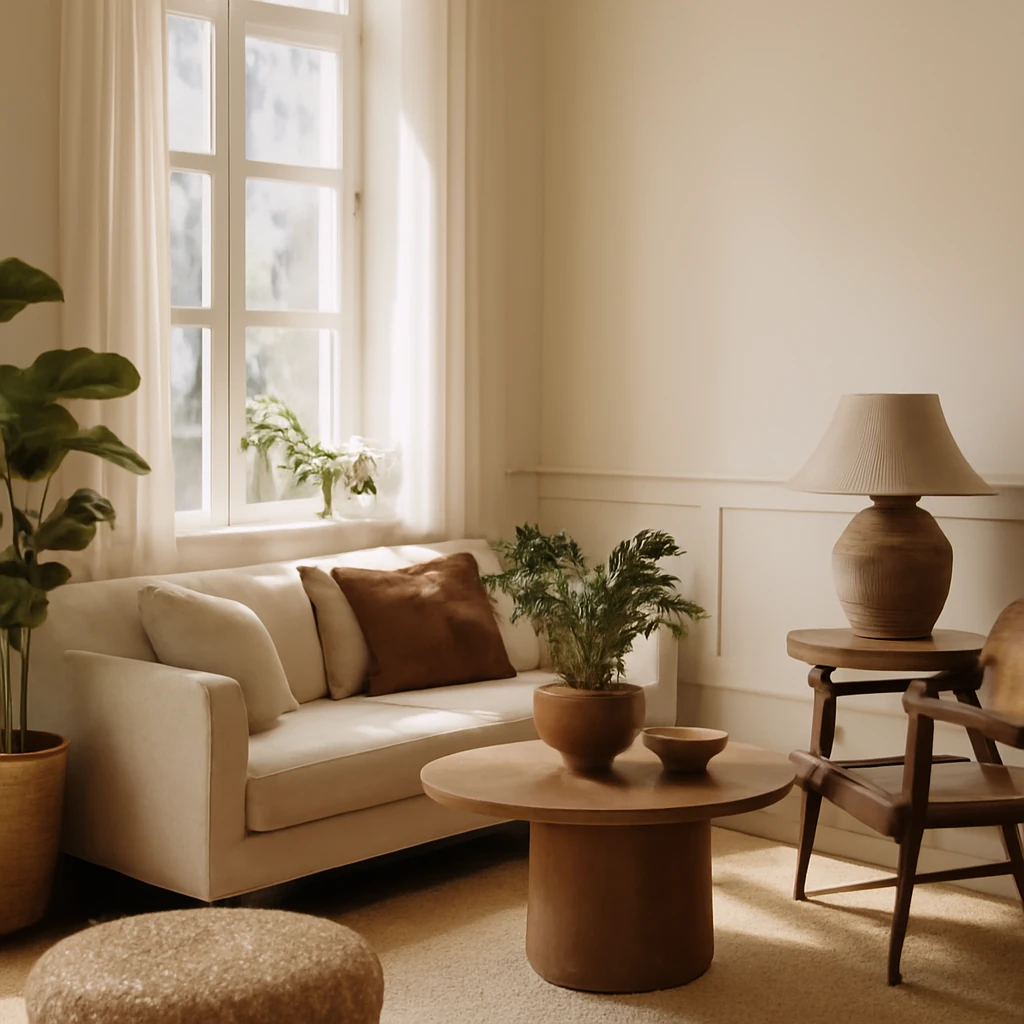
Why white skirting boards?
White skirting boards offer a simple, universal finish that can harmonise with almost any wall colour and floor material. They visually elevate the ceiling line, provide a clean, cohesive border between surfaces, and adapt to a wide range of styles - from minimalist to classic. The decision to use white is often about achieving a refined, timeless look that remains versatile as you update furniture or paint colours over time.
To make this element as discreet as possible, many designers choose to paint the skirting boards to match the wall colour. When this seamless approach isn’t feasible - such as when walls feature bold patterns or textured coverings - a lighter white provides the gentlest contrast and prevents a heavy, boxed-in feeling.
- Visual height: a white border against a lighter wall can make the room feel taller, especially when the skirting is proportionally tall.
- Stylistic versatility: white skirting works with both contemporary and traditional schemes and suits smooth or textured profiles alike.
In a typical European apartment or house, a white skirting board can act as a unifying frame that ties together wood floors, tiles, and other architectural details, helping the space feel finished and considered.
When and how to use white skirting boards
This finish has surged in popularity due to its universal appeal. It is employed in almost every room - from living areas to kitchens and bathrooms - where a clean junction between wall and floor is desired and where a specific lighting or architectural effect is sought.
- Space perception: light shades subtly reflect more light, contributing to an airy atmosphere and, in some cases, visually expanding a compact area.
- Framing and contrast: against dark floors or rich textures, a white border can function like a frame, emphasising the surrounding surfaces.
Pros and cons of white skirting boards
Pros:
- They pair easily with any colour and pattern, maintaining a neutral, cohesive backdrop.
- They visually enlarge spaces, particularly when used with light walls and ceilings.
- They suit a broad spectrum of styles, from classic to modern, and can be used to create architectural precision.
- They enable bold design plays elsewhere in the room through deliberate contrast or colour accents.
- They lend a refined, finished look that can be both understated and elegant.
Cons:
- On very light surfaces, dust and grime are more noticeable and require regular care.
- Maintenance may be necessary to preserve the pristine appearance, particularly in high-traffic zones.
- Some profiles or textures may demand careful installation to ensure seamless joins and alignment.
In a real-world European home, the decision often hinges on lifestyle and maintenance expectations. A durable finish with a do-able maintenance routine can make white skirting a long-lasting, practical choice.
What white skirting boards are made of
Manufacturers offer a variety of materials, each with distinct properties. Here is a clear guide to the most common options and how they perform in European interiors.
Polyurethane (PU) with ornate profiles
PU is a plastics-based material suitable for decorative plinths and mouldings. It enables high, elaborate profiles with intricate detailing. Joints are typically filled with a specialist adhesive and the surface becomes seamless under paint. PU boards are resistant to moisture and safe for both classic and contemporary interiors. They retain their shape well and can be produced in finely detailed designs that echo traditional cornices and trims without the bulk of real wood.
General considerations
PU is lightweight, easy to cut, and suitable for DIY installations when proper glue and fixing methods are used. It is important to prep the wall surface adequately to achieve a tight fit and a clean finish.
Polystyrene (PS) - durable and smooth
Polystyrene-based profiles - often branded as various D‑types - are robust, readily available, and can be produced in smooth or lightly textured finishes. They are typically moisture resistant and do not release harmful substances when painted. PS allows for clean, smooth lines and is a practical choice where sharp, modern profiles are desired. It is sometimes used for crown-like tops or linear, architectural detailing that reads as minimal and contemporary.
Both PS profiles and PU profiles are commonly supplied with an undercoat or primer and require painting after installation to achieve a flawless, continuous surface and to avoid visible joints.
- PS planks and fillets are commonly used not only for skirting but for decorative mouldings and small accents throughout the interior.
MDF - moisture-resistant with a smooth surface
Medium-density fibreboard (MDF) is dense and stable when properly sealed. MDF tends to yield very smooth finishes and can be milled to include shallow grooves or fine profiles. In damper or more variable climates, MDF boards require careful sealing and mounting to prevent gaps along the joints. When installed with vertical walls and flat surfaces, MDF can deliver a clean, elegant result, especially in light-colour schemes.
Note: MDF skirting boards generally feature screw or clip fixes. The joints between boards may be visible unless the wall is perfectly straight or the boards are precisely machined to butt together.
Wood - eco-friendly but sensitive
Solid wood skirtings offer natural warmth and a tactile, architectural presence. They can be finished in a variety of stains or painted white. However, natural timber is sensitive to humidity and climate changes, seasonal expansion or contraction can affect joints and alignment. In well-insulated European homes with stable humidity, high-quality wood can be a stunning, long-term choice, though it may be more costly and require ongoing maintenance to keep the finish uniform.
Plastic - budget options
Economical profiles are often installed in new-builds or refurbishment projects where speed and cost matter. Plastic skirting is quick to fit, generally resistant to moisture, and easy to paint. However, the visible joins and corners can be less forgiving, and the long-term durability may lag behind higher-end materials.
Choosing the height of the skirting board
The height you choose creates distinct room effects. Consider the look you want to achieve and how other architectural features will interact with the border.
High skirting boards - around 10 cm
High boards read as substantial, grounding the space and creating a sense of luxury. They can be paired with ceiling mouldings and wall panelling to emphasise classical or neoclassical design. Tall profiles are particularly effective in rooms with ornate doors or decorative joinery, where the border acts as a unifying frame and helps balance heavy detailing.
In a room with complex woodwork or ambitious door profiles, a 10 cm border can unify disparate elements into a cohesive whole.
Medium height - 7 to 10 cm
This is the most versatile option for contemporary interiors or spaces expressed in a restrained, neutral palette. A medium-height skirting board balances well with natural materials and minimalist furniture, allowing the floor to remain a visual anchor while the walls stay calm and cohesive.
Medium-height skirtings pair nicely with light floors and subtle wall textures, supporting an eco, Scandinavian or Japandi aesthetic.
Low skirting boards - up to 7 cm
Low profiles are ideal for minimalism or rooms with a strong architectural line. The border becomes almost a shadow line, keeping focus on textures, furniture, and lighting. When walls are bright or patterned, a restrained border helps maintain a serene, uncluttered feel.
Low profiles can be decorative in their own right when joined with angular door frames or projected wall panels.
Cable channels and tidy wiring
In modern, media-rich interiors, it is essential to conceal cables along the floor line. Some skirting profiles incorporate built-in cable channels or are designed to accommodate a discrete raceway. When selecting a product, check whether the model provides space for wires and how easy it is to route cables without compromising the finish.
White skirting boards: how they work with different floorings
The skirting border interacts with flooring to shape the room’s rhythm. Here are typical pairings and the visual outcomes you can expect.
With tiles
Tiled floors in moist or high-traffic zones often require a robust, moisture-resistant profile. A thicker, high-quality plastic or MDF-based border can provide a durable transition. For contrast, a tall profile offers a bold frame against light tiles, for a subtler effect, a mid-height border aligned close to tile colour creates a seamless transition.
A frame-like strip that mimics the door and architrave tones can beautifully complement ceramic or porcelain tiling, producing a cohesive, continental interior.
With laminate
Laminate floors are versatile and commonly paired with smooth, uniform skirting. The border can be high or mid-range, depending on the room’s ceiling height and wall colour. A flush, gap-free fit is crucial to a modern look, with neat joints that remain conspicuous only on close inspection.
Laminate with a white border creates a crisp edge that reads as precise and orderly in contemporary living spaces.
With engineered wood or parquet
When pairing with more premium timber floors, many designers prefer MDF or PS borders to avoid warping from moisture differences and to keep lines perfectly aligned. A moulded, slightly decorative profile can echo the wood’s grain, while a smooth border maintains a contemporary edge.
With natural wood floors
With wood, high-end boards paired with white frames can look particularly elegant, especially in traditional or transitional spaces. It is common to use mouldings that mirror the door profiles or window architraves to create a unified, crafted feel. The key is to ensure the grain direction and finish are coherent with the floor and walls.
With a dark floor and light doors
A white border acts as a unifying line between contrasting elements, creating clear, elegant definitions without overpowering either surface.
With light floors and dark doors
Similarly, a white edge serves as a bridging element, giving a smoother transition between the bold contrast of doors and the calm, pale floor.
With a white door
White doors pair naturally with white skirting for a seamless, legible boundary. When doors are a shade apart or feature distinctive architraves, a matching border around the base of the wall helps tie the room together rather than competing with the door design.
With coloured doors
If doors introduce a colour statement, a neutral white border can soften the transition and keep the room from feeling fragmented. The skirting can either contrast subtly with the door or echo a shared undertone for gentle cohesion.
With coloured architraves
Another approach is to repeat a colour motif in the architrave and skirting. This repetition creates a deliberate rhythm that guides the eye around the room while preserving a calm overall palette.
Bright, playful accents
For lively interiors, white border strips can provide restraint, letting feature walls, furniture, and textiles take the spotlight. In spaces configured for socialising or creative activity, a crisp white edge reduces visual noise and helps the room feel more energetic rather than chaotic.
Care and installation
To keep white skirting boards looking fresh, regular cleaning is advisable. Use a soft cloth or brush with a mild cleaning solution to remove dust and smudges. Avoid abrasive cleaners or scrubbing pads that could scratch the surface. If the finish dulls over time, repaint with a paint suitable for the chosen material (wood, MDF, or plastic) to restore a pristine edge.
Installation does not necessarily require specialist trade skills. The key steps are accurate measurement, clean mitred cuts at 45 degrees for interior corners, proper adhesion with a high-quality adhesive, and secure fixation with appropriate fasteners or clips. For walls that aren’t perfectly straight, plan for small gaps and use flexible sealants to maintain a neat, continuous line.
DIY installation: a practical guide
Before starting, gather the tools: a tape measure, mitre box or a miter saw, a carpenter’s square, a level, a quality adhesive, finishing nails or screws with wall plugs, a spirit level, and paint suited to the chosen material. Follow these simplified steps:
- Measure the perimeter of the room accurately to determine the total length of skirting needed. Add a small margin for waste and cuts.
- Mark the wall where corners will meet and cut the boards at 45-degree angles for clean mitred joints. Dry-fit to ensure tight corners before fixing.
- Apply adhesive to the back of the skirting and press it firmly against the wall, starting at a corner and working along the length. Use clamps or temporary supports if needed.
- Secure with finishing nails or screws through pre-drilled holes to avoid splitting. Countersink the fasteners and fill with colour-matched filler for a seamless finish.
- Seal any gaps with a flexible sealant to prevent dust ingress and ensure a tidy edge against the floor.
- Paint or finish the skirting after installation, following the manufacturer’s recommendations for the paint type and surface.
Careful preparation and precise cutting yield the best results, even for DIY projects in compact European homes.
In conclusion
- White skirting boards are a versatile, timeless detail that suits almost any interior style and wall or floor finish.
- They pair well with white doors, but can also harmonise with wooden or coloured architraves when the palette is carefully coordinated.
- The most practical balance of durability and finish is often found with polystyrene or polyurethane profiles, offering clean joints and easy painting, while MDF provides a durable, moisture-resistant option with a smooth surface.
For European spaces, a white skirting border offers a reliable backbone for design: it frames floors with elegance, softens transitions between materials, and supports a cohesive, balanced interior. When planned thoughtfully - considering height, material, flooring, and the surrounding architectural details - white skirting boards can elevate both the aesthetics and the practicality of a living space, making the room feel more open, orderly, and timeless.
You may also like these articles
 Bathroom Design
Tiles for the Bathroom in 2025: Trends Shaping European Interiors
Discover the 2025 bathroom tile trends that blend texture, tone and sustainability.
Small Spaces
Small spaces, big style: Essentials for European apartment design
Smart strategies to transform compact European homes into comfortable, stylish spaces.
Renovation
Turnkey Renovation for European Homes: A Complete Design & Build Guide
Everything you need to know about turnkey home renovations across Europe.