
Explore interior trends, AI design insights, styling guides and real transformations
Tiles for the Bathroom in 2025: Trends Shaping European Interiors
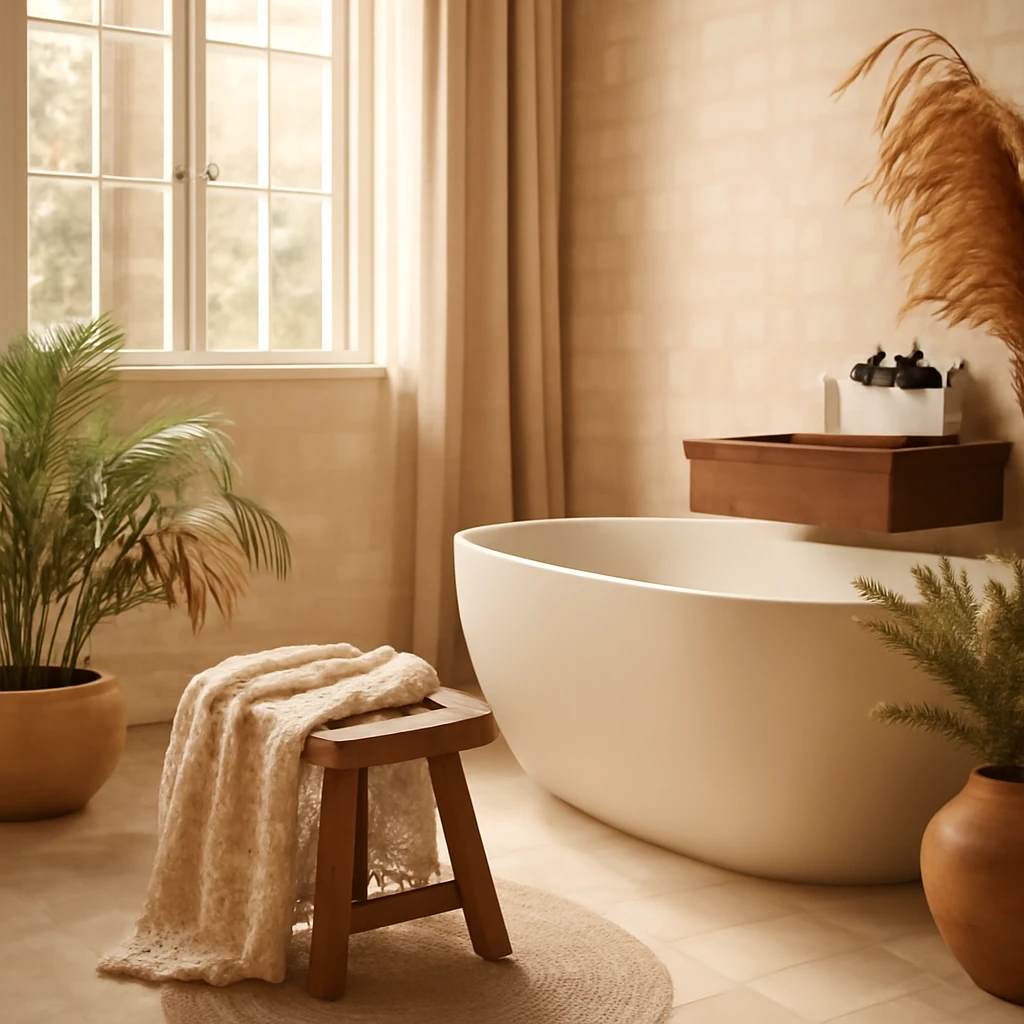
Rethinking bathroom tiling for 2025
Across Europe, ceramic and porcelain tiles remain the cornerstone of bathroom finishing thanks to their moisture resistance, durability and design versatility. In 2025, the tiling landscape embraces nature-inspired motifs, large-format slabs, terrazzo, soft-matte finishes and tactile 3D textures. This article unpacks the top trends and offers practical guidance for applying them in urban flats, historic townhouses and contemporary homes from the Atlantic coast to the Baltic states.
Choosing fashionable bathroom tiles for 2025
Advantages of tile
- Moisture resistance. Ceramic tiling does not absorb water, making it ideal for humid spaces. A dense structure helps prevent mould and offers hygienic surfaces for daily use.
- Longevity. With proper installation and care, tiles maintain their appearance for decades. They resist impact, scratching and aggressive cleaning products, which is essential in busy family bathrooms.
- Thermal compatibility. Tiles cope with temperature fluctuations and work well with underfloor heating. They can be applied on floors and walls, enabling integrated heating solutions that keep feet warm in winter.
- Design versatility. A vast range of colours, textures and formats allows tiling to suit every style - from classic to contemporary minimalism. Patterns, mosaics and faithful imitations of natural materials (stone, marble, wood, concrete) are widely available.
- Eco-credentials. Many tiling products are made from natural raw materials and produced with lower environmental impact, aligning with Europe’s demand for sustainable interiors.
In the bathroom, tiles can be the primary material or used in concert with other finishes. Typically, tiling covers wet zones - such as the shower, the wall behind the bath or washbasin - and serves as a durable backdrop for the rest of the space. This approach is especially practical in European homes where moisture exposure is persistent and maintenance matters.
Trends for 2025 in bathroom tiling
Let us examine the ceramic tiling designs that deserve attention in 2025 and how to adapt them to different European contexts.
Natural motifs
Natural influences remain dominant in contemporary design, and the bathroom is no exception. Porcelain or ceramic tiles replicate the textures of stone, marble, travertine, wood and concrete. The colour palettes span from soft sands and warm beiges to saturate greens, terracottas and stone greys. This approach creates a calm, restorative atmosphere and is versatile enough for classic, Nordic-minimalist, eclectic or contemporary bathrooms alike. Pair natural textures with warm lighting and timber vanities to amplify the sense of serenity.
Large formats
Large-format tiles continue to top trend lists, increasingly used even in compact spaces. Fewer joints mean easier maintenance and a more seamless surface. Visually, large slabs create an expansive feel, which is invaluable in small European bathrooms that must feel calm and uncluttered. Tiles imitating timber, marble or stone in formats such as 1200x600 mm or 1200x2400 mm provide a quiet, cohesive aesthetic that reads as contemporary and refined.
Terrazzo
Terrazzo has returned to the fore with a modern twist. Chaotic speckles made from coloured stone or glass chips offer vibrant, energetic accents without becoming overwhelming. Terrazzo works well in retro-inspired schemes or in contemporary looks that crave a playful focal point. Use it on a full wall, a striking shower niche, or as a floor feature to unify the space. The palette can be bold or restrained, depending on how the aggregates are balanced with other finishes.
Matte surfaces
Matte finishes have overtaken gloss for their understated elegance and tactile depth. They pair beautifully with natural materials - timber, stone, clay and textiles - adding warmth and sophistication. Matte tiles also coordinate well with glass, metal, or decorative plaster, enabling a cohesive palette without excessive sheen. In bathrooms, consider combining matte walls with gloss accents on fixtures for a refined contrast.
3D effect and dimensional patterns
Textured tiling adds depth and drama by altering light and shadow across the surface. The effect is particularly compelling for an accent wall or a feature strip, where a wave, geometric or abstract pattern can create focal interest without overpowering the room. In 2025, dimensional tiling works across styles - from sleek modern to restrained neoclassical - unifying spaces through tactile texture rather than colour alone.
Black and white
The black-and-white pairing remains a perennial favourite for its clarity and versatility. It reads as sophisticated and timeless in Nordic, eco, and contemporary classic interiors. Expect variations in proportion - checkerboard floors, black marble veining on walls, or high-contrast panels. To prevent the palette from feeling cold, temper it with warm timber, soft textiles or natural stone elements in adjacent surfaces.
Nostalgia and heritage revival
Vintage sensibilities continue to influence bathroom tiling. Mid-century cues, retro-inspired mosaics and aged textures respond to a growing appetite for history‑tinged spaces. Walls may feature pale retro squares or small monochrome mosaics, while tiles with aged glazes or moulded relief patterns introduce tactility. The aim is to evoke memory and character while maintaining contemporary practicality.
Ethnic motifs
Ethnic-inspired patterns - Moroccan, Turkish and other flourishes - remain strong in European bathrooms. Patterns add a sense of personality and can be integrated in a restrained way to avoid overpowering the space. Use modestly on a feature wall or within a shower niche, and pair with neutral, modern sanitaryware to let the pattern sing without competing with the rest of the room.
Eco-friendly materials
Sustainability continues to shape material choices. An increasing number of tiles are produced from recycled materials or with processes designed to reduce environmental impact. Eco-friendly tiling often mimics natural textures, supporting the wider trend toward biophilic design. Distinctive collections in this area can serve as a strong design statement in a bathroom.
Mixing textures
Combining multiple textures remains a reliable route to a lively, sophisticated space. Potential pairings include:
- Matte with gloss finishes on walls or floors
- Ceramic tiles with painted or wallpapered surfaces in moisture-resistant formats
- Tile with timber, stone or concrete elements
Textiles and soft furnishings can soften the cool geometry of ceramic surfaces, bringing warmth and comfort. A mixed-texture approach is versatile for bathrooms of any size and can be tailored to suit individual styles from minimal to maximalist.
Rich, complex shades
Bathrooms offer flexible space for exploring bold hues. Rich tones such as burgundy, emerald, indigo, terracotta and honeyed yellows can be used for an accent wall or integrated into wet zones. Choose classic tile shapes - square or rectangular - paired with dynamic textures or inventive layouts to maintain timeless appeal while delivering a modern punch.
Practical considerations for 2025
Tile selection is about more than aesthetics. It must also respond to performance, maintenance, installation and lifecycle considerations - particularly in European bathrooms that vary from compact urban flats to larger rural homes.
- Moisture management. Ensure tiles and grouts are appropriate for wet zones. In humid climates or high-usage bathrooms, select grouts with antimicrobial properties and consider sealing where needed.
- Slip resistance. For floor tiles, choose appropriate slip ratings (R11 or R12 in many European classifications) to enhance safety in wet areas.
- Underfloor heating compatibility. If using underfloor heating, verify tile suitability, thermal conductivity and expansion tolerances to prevent movement or cracking over time.
- Installation patterns. Grid layouts offer clean lines, while herringbone, diagonal or vertical stack patterns can add movement and dimension, particularly in narrow bathrooms.
- Size and proportion. In small bathrooms, large-format tiles can visually enlarge the space, in larger rooms, large slabs foster calm, cohesive aesthetics and reduce grout lines.
- Maintenance and cleaning. Matte finishes require careful cleaning to avoid micro-scratches, gloss finishes reveal smudges more readily. Establish a routine with pH-neutral cleaners suitable for the chosen finishes.
- Lifecycle and supply. Consider tile availability and colour consistency across regions. Work with reputable manufacturers who provide reliable stock and consistent sizing across orders.
Combining tiling with other finishes
Tiling need not cover every surface. In many European bathrooms, wet zones are tiled while walls beyond the shower or behind the vanity may feature paint, moisture-proof wallpaper, or natural stone for contrast. Integrating timber vanity units, stone basins or metal accents can elevate the palette without compromising practicality. Thoughtful lighting - integrated fixtures or concealed LEDs - enhances texture and highlights architectural lines, turning tile choices into a coherent interior language.
Practical steps for realising a 2025 tile scheme
To maximise the impact of these trends, adopt a methodical approach that respects both aesthetics and practicality:
- Define the space and budget. Decide where tiles will be used most - floor, walls, or wet zones - and determine the level of maintenance you are prepared to accept.
- Explore a palette. Start with neutral bases and test textures in sample boards to understand how finishes interact with lighting and room colour.
- Choose a format strategy. Large-format tiles can unify space, consider a mix of sizes to create interest where needed (for example, a floor-to-wall continuity or a feature panel in the shower).
- Plan joints and grouting. A dark grout emphasises lines and grid patterns, a lighter grout softens the divisions for a seamless look. Epoxy grouts can offer superior durability in wet zones.
- Consider installation time and access. Larger tiles may require careful substrate preparation but can yield fewer joints and faster cleaning in the long run.
- Consult a professional. A reputable tiler can advise on substrate suitability, waterproofing, and compatibility with underfloor heating, ensuring the finish lasts for years to come.
Conclusion
European bathrooms are evolving, and tiling remains a versatile, durable medium that can be expressive as well as functional. The 2025 palette leans toward tactile textures, oversized formats and natural, sustainable aesthetics that invite touch and lingering in a tranquil space. By balancing creative ambition with practical realities - humidity, heating, maintenance and supply - designers and homeowners can craft bathrooms that feel both contemporary and timeless, suitable for a wide range of European living contexts, from alpine retreats to coastal apartments and city-centre townhouses.
You may also like these articles
 Trends
Creating Calm in Contemporary European Bedrooms
A comprehensive guide to contemporary bedroom design across Europe.
 Colour & Materials
Grey Essentials for European Interiors: Colour, Texture and Light
Grey interiors in Europe: mood, balance and practical styling tips.
Kitchen Design
The Timeless Allure of Provencal Kitchens: A European Guide to Rustic Elegance
Sunlit Provencal kitchen design for European homes: rustic charm meets modern living.