
Explore interior trends, AI design insights, styling guides and real transformations
The Subtle Power of Wood Veneer: Craft, Care and Practical Applications for European Homes
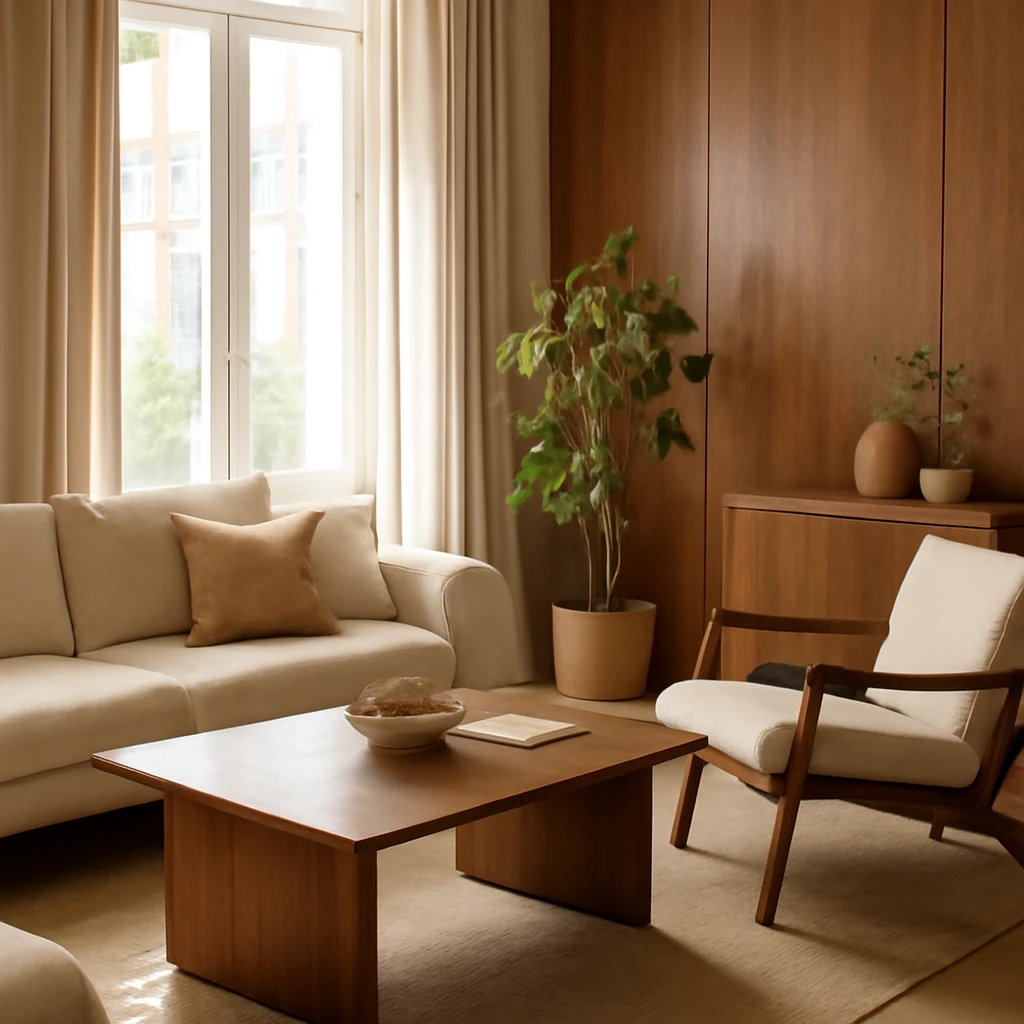
What is wood veneer for furniture?
Wood veneer refers to thin sheets of real timber, typically 0.2–12 mm thick, used to face or cover the surface of engineered boards such as MDF, plywood or particleboard. Veneer allows designers to achieve the warmth and beauty of solid timber without the higher cost or weight, while enabling more sustainable use of valuable wood resources. When applied with skill and a careful finishing process, veneer can look indistinguishable from solid wood to the unaided eye and touch, yet offer advantages in stability and environmental impact.
In contemporary European interiors, veneer is widely chosen for kitchen cabinet façades, living room storage, bedroom wardrobes, and feature walls. It can be finished with lacquer, oil, or wax to enhance depth of colour and grain while protecting the surface from daily wear.
How veneer is made
The production starts with selecting suitable logs from managed forests. The log is prepared by removing the bark and then processed on specialised equipment to produce thin sheets by peeling (rotary‑peel) or by slicing (planed or sawn). The method of cutting influences the grain pattern and the aesthetic of the finished surface. After production, sheets are dried, uniformly graded by colour and quality, and then prepared for bonding to a substrate such as MDF, particleboard, or plywood.
Types of veneer used in furniture
Note: veneer nomenclature varies by region, but the principles are universal. The following terms are commonly used across Europe.
Rotary-peeled veneer
Also known as rotary-cut veneer, this method peels a log on a lathe to form continuous sheets. The resulting veneer is relatively uniform in thickness, typically 1–5 mm, and is economical for large surfaces. It is ideal for cabinet doors, panelling, and wide run surfacing, where a consistent grain flow is desired. Finishes such as lacquer, oil, or heat pressing can bring out a natural depth and protect against wear.
Fine-line veneer
Fine-line or thin-line veneer is produced from rapidly growing species, used to create a sophisticated, cost-effective look that resembles high‑end timber. The surface is malleable for innovative finishings and design experimentation, offering a broad colour palette after staining or glazing. This category is popular for contemporary kitchens, living areas and feature walls where warmth without the price tag of premium timbers is preferred.
Sliced veneer (plain, quarter- and rift-sawn)
Veneer produced by slicing the log yields a different family of grain patterns. Plain-sliced (flat-sawn) veneer shows a broad, natural grain with cathedral patterns. Quarter-sawn veneer (and the more specialised rift-sawn) reveals a more linear grain with a restrained figure. These sliced veneers can be used for statement surfaces or more restrained cabinetry, depending on the desired look. Thicknesses vary, commonly from 0.6–2.5 mm for standard applications, and up to several millimetres for thicker, more tactile surfaces when needed for structural effects.
Thick sawn veneer
Thick veneer is less common but highly prized in luxury projects. Cut from solid wood into substantial sheets (often 2–12 mm thick), it is used for premium furniture pieces, curved surfaces or architectural detailing where the texture and depth of traditional timber are celebrated. The higher material cost is balanced by reduced waste and the opportunity to articulate dramatic grain across large surfaces.
Surface finishing and decorative colouring
Veneer can be finished in multiple ways to achieve the desired aesthetic and moisture resistance. Common options include:
- Lacquer or polyurethane for a durable, wipeable surface with a glassy or satin finish;
- Oil or wax to emphasise the natural grain and provide a warm, tactile feel;
- Stain or colour wash to alter the timber tone while preserving the grain, and
- Matte or high‑gloss coatings to suit minimal or dramatic design schemes.
Layering these finishes can enhance durability while preserving the wood’s character. In European interiors, practitioners often combine a veneer face with moisture-resistant edges and, where required, a topcoat that resists humidity in kitchens and bathrooms.
What can be veneered?
Veneer is used across furniture and interior elements to achieve a luxurious timber appearance without the volume of solid wood. Common applications include:
- Cabinets, doors and panelling for living spaces and bedrooms;
- Tabletops and work surfaces, including kitchen islands and dining tables;
- Desks and sideboards, with carved or marquetry details achieved through inlay work;
- Feature walls and decorative panels that add texture and warmth to a room.
It is also possible to veneer secondary surfaces such as wardrobe interiors, drawer sides, and back panels where a consistent timber look is desirable but weight and cost must be controlled.
How to distinguish natural veneer from other materials
The standout attribute of veneer is its irregular grain and occasional natural defects, which reflect the growth history of the tree. When you examine a veneered surface closely, you may notice subtle variations in colour, pores and healing marks that confirm its real-wood face. In contrast, laminates or film-faced surfaces tend to display a uniform pattern with little variation, even across large expanses. Edge details, glue lines and the way the grain wraps around drawer fronts or curved surfaces can also reveal the presence of veneer rather than solid wood or synthetic alternatives.
Why veneer can be preferable to solid timber
Veneer offers several practical advantages for European interiors:
- Resource efficiency - a small amount of real timber provides a large surface area, reducing demand on hardwoods while delivering the appearance of premium timber.
- Stability - veneers on engineered cores tend to resist warping, bowing and seasonal movement better than solid timber in variable climates.
- Consistency and colour control - engineered cores paired with veneer faces allow for uniform colour and grain across batches, a crucial factor for kitchens and joinery projects.
- Cost efficiency - veneer surfaces are typically more affordable than solid timber of equivalent visual impact, enabling higher-end aesthetics at a more accessible price point.
- Versatility - a wide range of timber species and grain patterns can be realised through veneer, including rare or protected timbers used in a controlled, responsible manner.
Advantages and drawbacks of veneered furniture
Advantages
- Eco‑friendly option - conservation of high‑quality timbers by using thin faces.
- Durability when protected with appropriate coatings, resistant to wear in everyday use.
- Design flexibility - a broad palette of colours and grains, with compatibility across styles from Scandinavian minimalism to classic European elegance.
- Weight management - lighter than solid timber pieces of the same scale, improving ease of handling and installation.
Drawbacks
Despite its advantages, veneer requires mindful care and certain limitations:
- Edge and surface vulnerabilities - unprotected veneers can be prone to impact damage, moisture absorption and delamination if seals fail.
- Colour and grain variance - colour shifts between production runs and within a single piece can occur, matching across large schemes may require deliberate planning.
- Repair considerations - repairing damaged veneer can be challenging and sometimes requires resurfacing or professional refurbishment.
Inside the construction: what lies beneath the veneer
Most veneered furniture rests on a core made from engineered wood or a combination of materials. The core commonly used in European joinery includes:
- MDF (medium-density fibreboard) for a smooth, uniform surface suitable for precise edging and painting;
- Particleboard or chipboard, which is cost-effective and widely used for flat-pack and budget-friendly items;
- Plywood for greater rigidity and moisture resistance in cabinetry and shelves;
- OSB (oriented strand board) in some structural or back panels, typically paired with more robust veneered fronts;
- Back panels and internal supports may incorporate lightweight boards such as HDF or plywood to reduce weight while maintaining stiffness.
Adhesives used to bond veneer to the core vary, many rely on formaldehyde‑free, high‑bonding glues designed for stability in European climate zones. Proper sealing along edges and joints is essential to prevent moisture ingress that could compromise the veneer or underlying core.
Design considerations: choosing veneer for different spaces
Veneer can be successfully deployed in kitchens, living areas, bedrooms, offices and bathrooms when paired with appropriate finishes and detailing. Here are practical considerations to guide selection:
in kitchens and bathrooms, select veneer with a durable topcoat (lacquer or epoxy) and ensure cabinet interiors are fully sealed. Consider moisture-resistant cores where exposure is higher. plan patterns across multiple doors and panels to achieve a cohesive flow. Bookmatching can create a striking, continuous timber narrative. align veneer tones with wall colour and other materials (stone, metal, fabric) to unify the space. Keep a palette that suits the room’s用途 and light levels.
Examples of veneered furniture and surfaces
Veneer can be applied to a wide range of furniture and interior elements. Typical examples include:
- Kitchen cabinet doors and tall frames with flush panels for a clean, contemporary look;
- Bedroom wardrobes featuring continuous veneer doors and integrated lighting for a seamless silhouette;
- Living room media consoles and dining tables where the veneer adds warmth without excessive weight;
- Feature walls and ceiling panels to introduce texture and tone beyond paint or wallpaper;
- Decorative inlays and marquetry within more traditional or luxury interiors.
Care and maintenance guidelines
To keep veneered surfaces looking their best, follow these practical recommendations. They apply whether the surface is finished with lacquer, oil or wax:
- Avoid placing hot or icy items directly on the surface, use coasters and trivets to prevent heat and moisture marks.
- Avoid direct, prolonged sunlight which can cause fading and changes in colour over time. Use window treatments or exterior shading to protect timber surfaces.
- Clean spills promptly to prevent moisture penetration and swelling of the veneer or edge banding.
- Use non-abrasive cleaners appropriate for timber finishes. If the surface is oiled or waxed, re‑apply as recommended by the finish manufacturer to maintain the protective layer.
Choosing veneer: practical tips for European projects
When selecting veneer for a project, consider the following guidelines to secure both performance and beauty:
choose timbers that suit the room’s use, climate and whether the finish requires oil, wax or lacquer. Premium timbers offer rich colour and depth, but fine-line veneers from fast-growing species can achieve a similar look with lower cost and excellent durability. plan the sequence of doors, panels and shelves so grain lines align, creating visual harmony across the joinery. ensure the topcoat chosen matches the environmental conditions (humidity, heat, cleaning regimes) of the space. pay attention to edge banding and mitred corners, correctly sealed edges prevent moisture ingress and ensure a pristine finish over time. request documentation about forestry practices and the veneer’s origin. Transparent supply chains contribute to responsible design choices across Europe.
A closer look at cost and performance factors
Several variables influence the final price and the long-term performance of veneered furniture:
- Plywood or MDF core quality: higher grade cores reduce warp risk and offer more stable surfaces for edge finishing.
- Veneer thickness and cutting method: thicker veneers and premium slicing techniques generally command higher prices but deliver greater durability and a richer grain.
- Species rarity and demand: certain timbers command premium due to availability, climate impact considerations, and regulatory constraints.
- Finish system: topcoat choice (lacquer, polyurethane, oil, or wax) affects resistance to moisture, abrasion and cleaning frequency, as well as the final appearance (matte, satin or gloss).
- Manufacturing accuracy and consistency: meticulous production controls and skilled finishing yield a more uniform product across batches, which is crucial for large schemes.
Frequently asked questions
Where is veneer used in modern interiors?
Veneer is widely used for cabinetry, doors, wall panels, furniture fronts, and decorative surfaces. In contemporary European design, its tactile warmth is valued in kitchens, living rooms, bedrooms and office spaces. It also offers a practical alternative in projects requiring a refined timber look with controlled cost and resource use.
How should I choose veneer for a moisture-prone space?
Look for veneers that are paired with moisture‑resistant cores (such as moisture‑resistant MDF or marine plywood) and finished with a robust topcoat suitable for kitchens or bathrooms. Ensure joints and edges are well sealed, and select a finish that resists humidity and cleaning agents used in these spaces.
What factors influence veneer cost?
Key determinants include:
- Timber species and availability;
- Quality of the core board and edge treatments;
- Veneer thickness and the complexity of the cutting method;
- Surface finish and any ornamental inlays or marquetry work.
The best approach is to balance the design ambition with practical budget considerations, selecting a veneer that delivers the desired aesthetic without compromising longevity or maintenance needs.
In defence of veneer: closing thoughts
Wood veneer offers a compelling combination of natural beauty, durability and sustainability that aligns well with European design values. It enables architects and interior designers to realise intricate grain patterns, rich colours and refined textures across diverse spaces - from a minimalist kitchen island to a warm, timber-clad living room wall. By understanding the production methods, selecting appropriate core materials and finishes, and applying thoughtful grain planning, veneer surfaces can be both aesthetically stunning and practically robust for modern homes.
Final notes
When embarking on a veneer project, engage with informed specialists who can guide you from material selection through to finishes and long‑term care. A well-chosen veneer can be the defining material of a space, delivering the tactile experience of timber while remaining economically and environmentally responsible for contemporary European living.
You may also like these articles
 Renovation
Gas pipes in European kitchens: 10 lawful design ideas for a seamless look
Balancing safety and style: compliant kitchen pipe décor across Europe.
Colour & Materials
Bleached Oak: A versatile light wood for European interiors
Bleached oak transforms European spaces with light, tactile warmth for floors, walls and furniture.
Tips & How-To
Preparing for the Handover: A Comprehensive European Guide to New-Build Flats
A practical guide to inspecting and accepting a European new-build flat.