
Explore interior trends, AI design insights, styling guides and real transformations
Which bathroom ceiling suits best? 7 options, trends and anti-trends
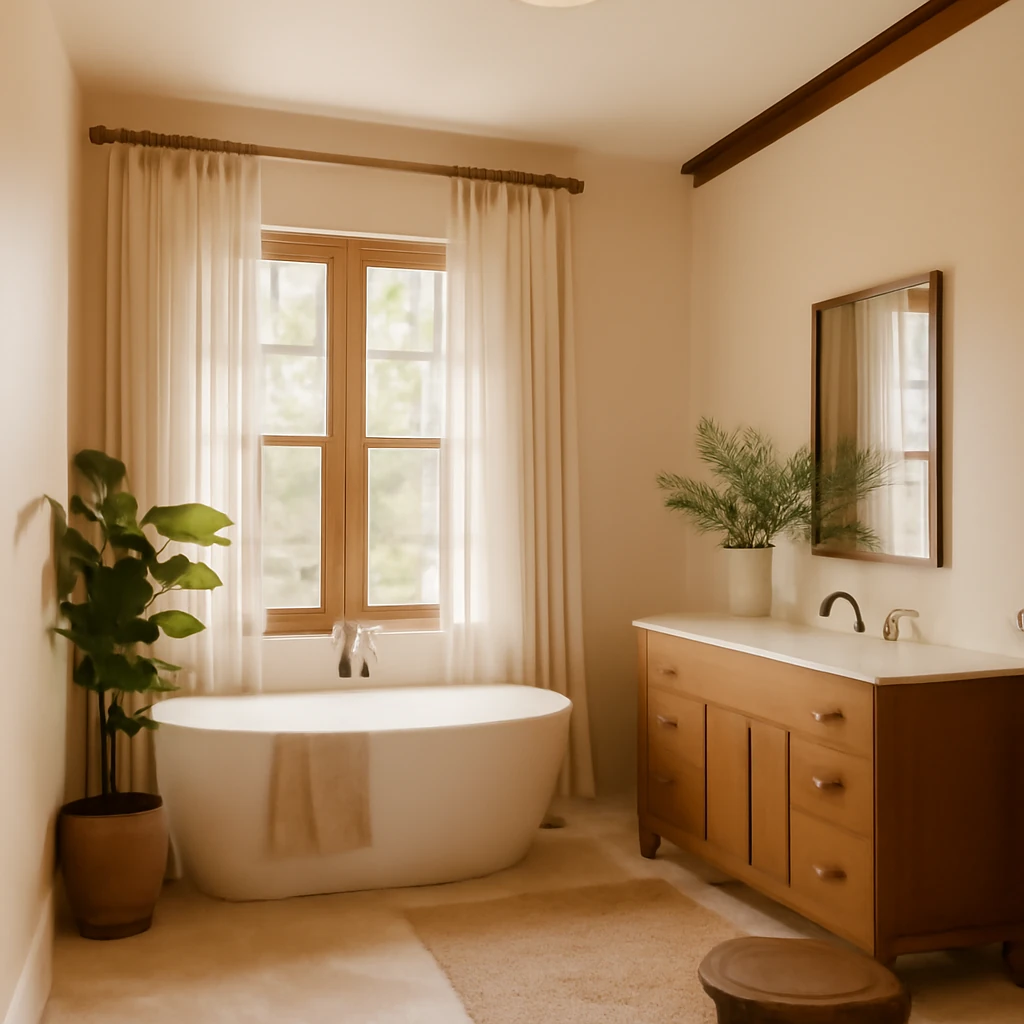
Choosing a bathroom ceiling: practical considerations for European homes
In European homes, the ceiling of a bathroom has to endure constant moisture, fluctuations in temperature, and regular cleaning with specialised products. Yet it is also a pivotal design element: it can set the mood of the room, influence perceived height, and harmonise with wall and floor finishes. This guide compares seven popular ceiling solutions, detailing their strengths, limitations, and real‑world suitability so you can make a well‑informed choice for your project.
When planning a bathroom ceiling, consider a balance of practicality and aesthetics. Are you renovating a compact urban bathroom or a light, airy family bath? Do you prioritise lasting performance, ease of maintenance, or a specific design statement? Below are the core criteria to assess before committing to a material or system:
- Moisture resistance and washability - bathrooms demand surfaces that tolerate humidity, steam and occasional splash‑backs.
- Impact of building movement - new buildings settle, older renovations may shift. Some finishes cope better with movement than others.
- Accessibility of services - consider how easy it is to access pipes, wiring and vents for maintenance or upgrades.
- Seams, joints and gaps - joints can collect condensation and harbour mould if not properly sealed.
- Cost and installation - budget for materials, labour, and possible demolition or prep work.
- Environmental impact - emissions from materials at high temperatures, embodied energy, and recyclability are increasingly important in European design.
- Longevity and aftercare - plan for a finish that will endure 10–20 years with reasonable maintenance.
Seven contemporary options for bathroom ceilings
Below are seven widely used choices in European bathrooms. Each section explains what the option is, how it performs in wet environments, typical aesthetics, and the practical pros and cons you should weigh before installation.
1) Plaster and paint
A traditional, timeless approach, especially in homes where authentic materials are valued. A plaster ceiling that is painted provides a clean, smooth surface and can be finished in matte, satin or gloss sheens depending on light and wall finishes. In practice, achieving a perfectly flat plaster surface requires skilled workmanship. In new-builds, settlement can cause cracks if the substrate shifts, so bespoke preparation is essential.
P advantages
- Preserves room height - plaster plus a thin coat of paint typically adds less than 2 cm to the ceiling.
- Low emissions and natural materials - gypsum, cement and mineral pigments are generally benign when correctly cured.
- Seamless transition with walls - edges can be finished in the same colour for a cohesive look.
Cons
- Risk of mould and damp in poorly ventilated spaces - even with sealants, moisture can lead to staining if ventilation is inadequate.
- Lower durability in humid environments if not expertly applied - movement can produce cracks over time.
- Visible services require extra planning - conduits for lighting may need to be concealed or shaped into the plaster.
If you want a perfectly flat, white, matte ceiling without visible joints, you might opt for a stretch ceiling or gypsum board with a finishing layer. However, plaster remains a viable option in well‑ventilated bathrooms and in schemes aligned with classic or rustic design languages.
2) Tension (stretch) ceiling
A modern favourite for contemporary bathrooms, stretch ceilings involve a pre‑fabricated sheet stretched and tensioned into a frame. They offer a smooth, seamless surface and can be finished in high gloss, matt or satin. LED backlighting behind the membrane creates a soft, diffuse glow that can replace traditional ceiling fixtures.
P advantages
- Excellent moisture resistance and easy maintenance - wipe with a damp cloth to remove soap scum or water marks.
- Water‑proofing capability - some systems can withstand accidental seepage up to a specified load, providing a practical safeguard in multi‑storey buildings.
- Conceals plumbing and wiring effortlessly - ideal for awkward service runs.
- Consistent finish - no visible joints, light and colour can be customised with backlit options.
Cons
- Installation requires skilled tradespeople - DIY installation is not recommended.
- Height reduction - most systems reduce ceiling height by 5–10 cm, which may affect low‑ceiling rooms.
- Limited light fitting flexibility - once the ceiling is in place, changing light positions can be more involved.
One compelling reason to choose a tension ceiling is its potential for hidden illumination and a sleek, contemporary vibe. In Europe, it is a common choice in kitchens with open plan layouts and in bathrooms where a high‑tech aesthetic is desired while maintaining robust moisture resistance.
3) Gypsum board (drywall) with paint
Gypsum board, often known as plasterboard or drywall, is a versatile substrate that can be installed with a perimeter frame and finished with a plaster skim or paint. For bathrooms, moisture‑resistant boards (blue or green variants) are standard, and these may be labelled as GKLV or GLV in some markets. The system is practical for renovating spaces where existing ceilings are uneven or damaged, providing a clean base for further decoration.
P advantages
- Excellent for levelling irregular ceilings - a clean, straight surface is achievable at a relatively modest cost.
- Low emissions - boards themselves do not emit harmful substances under normal use.
- Conceals rough finishes and enables neat integration of vents, lights and diffusers.
- Durable when properly installed - with correct moisture treatment and sealing, it lasts well in damp environments.
Cons
- Reduced ceiling height - the required frame and plaster layer will subtract roughly 10–15 cm.
- Requires careful moisture management - not all boards are equally resistant, ensure the right grade and protective coatings.
- Multistage process - involves framing, boarding, sealing and finishing, which may extend installation time.
Gypsum board is a practical choice for contemporary bathrooms where precise geometry, a clean light aesthetic and easy access to services are priorities. It pairs well with both wall tiling and painted surfaces and is compatible with most lighting schemes.
4) Decorative plaster or liquid wallpaper
Decorative plasters and liquid wallpapers offer tactile textures and a strong sense of character. Microcement, venetian plaster, mineral plaster and similar finishes can create a seamless surface that resists humidity when properly formulated for bathrooms. Liquids wallpapers are third‑generation wall coverings adapted for high‑moisture zones, some brands offer moisture‑resistant versions suitable for ceilings when applied by trained installers.
P advantages
- High durability with proper application - long service life when installed per product guidelines.
- Low profile and cohesive look - can create a smooth, uninterrupted ceiling that reads as part of a continuous material palette with walls.
- Design versatility - a wide range of textures, pigments and finishes from matte to subtly grained.
Cons
- Cost and expertise - premium finishes require skilled applicators and can be price‑y.
- Complex removal - sculpted or thick textures can be difficult to remove or revise later.
In European bathrooms, decorative plasters are often chosen for projects where natural materials and artisanal detailing are key. They pair beautifully with natural stone, timber accents, and warm neutrals, but require careful maintenance to preserve moisture resistance and colour stability.
5) Wallpaper on the ceiling
Vinyl‑based, washable wallpapers on ceilings can deliver a surprising range of looks. High‑quality vinyl or fabric‑backed wallpapers with a moisture‑resistant coating are essential for damp rooms. For ceilings, select wallpapers designed for wet environments, with patterns or textures that disguise imperfections in the substrate. To mitigate potential damage from humidity, consider applying wallpaper only to sections of the ceiling or pairing it with a moisture‑resistant base.
P advantages
- Design flexibility - vast ranges of patterns and finishes, from soft textures to subtle matt sheens.
- Lightweight and easy to install - for quick refreshes or budget renovations.
- Low height impact - generally does not contribute significantly to a reduction in ceiling height when applied as a thin layer.
Cons
- Longevity varies - even with high‑quality vinyl, expect 5–7 years of durability in damp spaces.
- Preparation matters - surface must be thoroughly dried, primed and flat for a lasting bond.
- Concealed wiring challenges - careful planning is needed to route lighting without compromising the wallpaper.
Wallpaper on ceilings can deliver playful, energetic rooms, but it is best reserved for spaces where the ceiling remains relatively closed to moisture, such as a guest bathroom or a secondary loo. For primary family bathrooms, many designers reserve wallpaper for walls only, with a moisture‑resistant ceiling finish for durability.
6) PVC panels
PVC panels are a cost‑effective solution for quick, calm renovations. They come as flat sheets that clip onto a lightweight framework and are easy to clean. In damp spaces, PVC panels are commonly used because they resist moisture and respond well to routine cleaning with non-abrasive cleaners. However, critics argue they can look less refined than other finishes and may feel less luxurious in high‑end interiors.
P advantages
- Economical and quick to install - ideal for updates on a tight budget or a rapid refresh.
- Effective concealment of uneven ceilings and concealment of pipes and ducts.
- Simple maintenance - wipe clean with a damp cloth to remove water marks or soap residue.
Cons
- Aesthetics can feel utilitarian - the design language can be perceived as less refined in premium schemes.
- Seams are visible - happy designers aim for seamless panels or careful alignment to reduce visual disruption.
- Environmental considerations - some formulations emit volatile substances when heated, look for low‑emission variants and request product certifications.
As a more eco‑friendly alternative, certain metal or timber look panels are available, though these tend to carry higher price points and maintenance considerations. In many European bathrooms, PVC panels are used for guest or secondary bathrooms where speed and budget take priority, while more premium homes opt for plaster, gypsum boards or stretched membranes to achieve a higher level of finish and longevity.
7) Cassette (paneled) ceilings
Cassette or paneled ceilings, built from modular tiles fixed to a frame, offer a high‑end contemporary appearance. They are highly durable, moisture resistant and easy to access for servicing. The panels can be glass, metal, aluminium, or watertight acrylic, enabling a virtually maintenance‑free ceiling with a refined finish. In European bathrooms, cassette systems are typically found in larger or renovated spaces where a more architectural ceiling is desired.
P advantages
- Excellent moisture resistance and robustness - durable in damp environments with professional installation.
- Full access to services - individual tiles can be swapped or removed for maintenance without destroying the entire ceiling.
- Design versatility - a wide range of materials and finishes, including reflective or translucent options for dramatic lighting effects.
Cons
- Higher upfront cost - both materials and installation are relatively expensive.
- Height reduction - depending on the profile, some systems remove noticeable ceiling height.
- Heavier weight and more complex installation - typically requires professional teams and precise framing.
Cassette ceilings blend practicality with a premium aesthetic, making them a popular choice in luxury bathroom projects and in interiors where architectural artistry is valued. They work particularly well in larger bathrooms or en‑suite spaces that allow for a generous ceiling treatment.
Design directions: choosing for a European bathroom
How should you decide which ceiling to choose? The following design guidance helps translate function into form, ensuring your ceiling complements the rest of the space while staying true to durable, easy‑to‑maintain European standards.
- Universal baseline: matte white, one level - a safe, timeless option that suits any size and style. It keeps the room feeling calm and airy while maximising perceived height.
- Small bathrooms: consider a darker, matte top section - a slightly deeper tone above creates a sense of enclosure that makes the space feel intimate and private, without shrinking the ceiling visually.
- Bold colours and graphic patterns - can transform a compact space into a playful jewel box or a serene sanctuary, but be mindful that intense colour or large patterns can visually reduce height in tight rooms.
- Reflective surfaces - mirror‑like, glossy or metallic ceilings are generally considered anti‑trends for bathrooms today, they can be visually bold but may overemphasise reflections and affect comfort for some users.
- Multi‑level constructions - especially those with complex curved shapes using plasterboard or GKL, tend to visually reduce height and can feel heavy. Simpler, flatter ceilings are usually more universally flattering in European layouts.
In contemporary European bathrooms, the two most popular ceilings are the stretch membrane and gypsum board with paint. They balance modern aesthetics with resilience to moisture and ease of maintenance. PVC panels remain a pragmatic option for fast refurbishments and budget projects, while decorative plasters offer rich texture for more bespoke schemes. Cassette systems, though less common in homes, provide a luxury finish and excellent service access, ideal for larger, more architectural spaces.
To help you visualise the options, here are practical planning tips you can apply across European contexts:
- Match the ceiling to the overall material palette. A seamless ceiling with walls in natural stone, timber, or plaster will feel cohesive if you select finishes with similar tonal depth and texture.
- Prioritise ventilation. The right ceiling and ductwork plan reduces condensation and mould risk, extending the life of the finish and preserving indoor air quality.
- Plan for lighting early. If you intend to use LED backlighting or concealed uplighting, ensure the ceiling system can accommodate heat dissipation and wiring without compromising durability.
- Consider future adaptability. If you expect to remodel or re‑tile in 10–15 years, choose a system that allows easy updates and access to services.
- Assess environmental impact. Look for low‑emission materials (class M1 or similar) and request documentation on VOC emissions and fire safety compliance.
What is most popular today in European bathrooms?
Current trends favour lightweight, durable and aesthetically restrained ceilings that blend with a wide range of styles - from minimalist Nordic to warm rustic cottages. The stretch ceiling and gypsum board options dominate new bathrooms for their clean lines, moisture resistance and long service life. PVC panels, while economical, are often used for quick refreshes or auxiliary bathrooms where a fast turn‑around is priority. Decorative plasters and high‑quality wallpapers are more niche, frequently reserved for high‑end renovations or spaces designed to showcase texture and craftsmanship. Cassette ceilings, though elegant, typically appear in larger, more architectural interiors and are less common in compact urban bathrooms.
In practice, a good design approach is to combine resilience with restraint. For many European homes, a matte, pale ceiling (either plaster with paint or a gypsum board finish) acts as a quiet, versatile backdrop for contemporary lighting, natural textures and soft wall colours. If you seek a dramatic feature, a backlit stretch ceiling or a refined cassette system can deliver a high‑end statement while remaining easy to maintain.
Practical guide to selecting the right system for your bathroom
To help you navigate decisions, here is concise guidance aligned with European bathroom projects:
- For rapid refreshes on a modest budget, consider PVC panels with a minimal frame. They offer straightforward installation and straightforward cleaning, with an uncomplicated maintenance routine.
- For a modern, seamless look with softened light, a backlit stretch ceiling is an excellent choice. Ensure installers provide certified testing for moisture resistance and edge sealing.
- When a perfectly flat surface is essential for wall finishes or light fixtures, gypsum board with a moisture‑resistant core is reliable, provided the installation is performed by a skilled team and the surface is properly sealed against damp.
- If you value texture and artisanal character, decorative plasters in conjunction with natural materials on walls can create a cohesive, tactile environment. This is best suited to well‑ventilated spaces and projects with a strong design narrative.
- For durability and simplicity in a small space, either a light plaster finish or a neutral, matte painted ceiling will stay timeless and easy to maintain.
- Where budget and time constraints dominate, vinyl or washable wallpaper applied to the ceiling can offer surprising variety, but reserve this approach for spaces with limited exposure to daily moisture or pair with moisture‑resistant sections where necessary.
- Cassette systems present a premium option for larger bathrooms that can justify the higher installation cost. They deliver elegant, modular finishes with superb service access but require careful planning and professional execution.
Ultimately, the best approach is to integrate your ceiling choice with your overall bathroom concept - materials, lighting, colour and ventilation work in concert to create a space that is both beautiful and enduring in the heart of a European home.
You may also like these articles
 Bedroom
Is It Time for a New Mattress? A Practical European Guide to Sleep Comfort
A practical European guide to knowing when to replace your mattress and how to choose a new one.
Living room
Creating a Classic English-Style Living Room for Modern European Homes
Timeless English living room ideas for European homes, with warmth, texture and thoughtful zoning.
Interior Design
Interior Design for European Private Homes: Styles, Layouts and Tips
Timeless interior ideas for European private homes.