
Explore interior trends, AI design insights, styling guides and real transformations
Modern Classic: Reimagining Neoclassical Interiors for European Homes
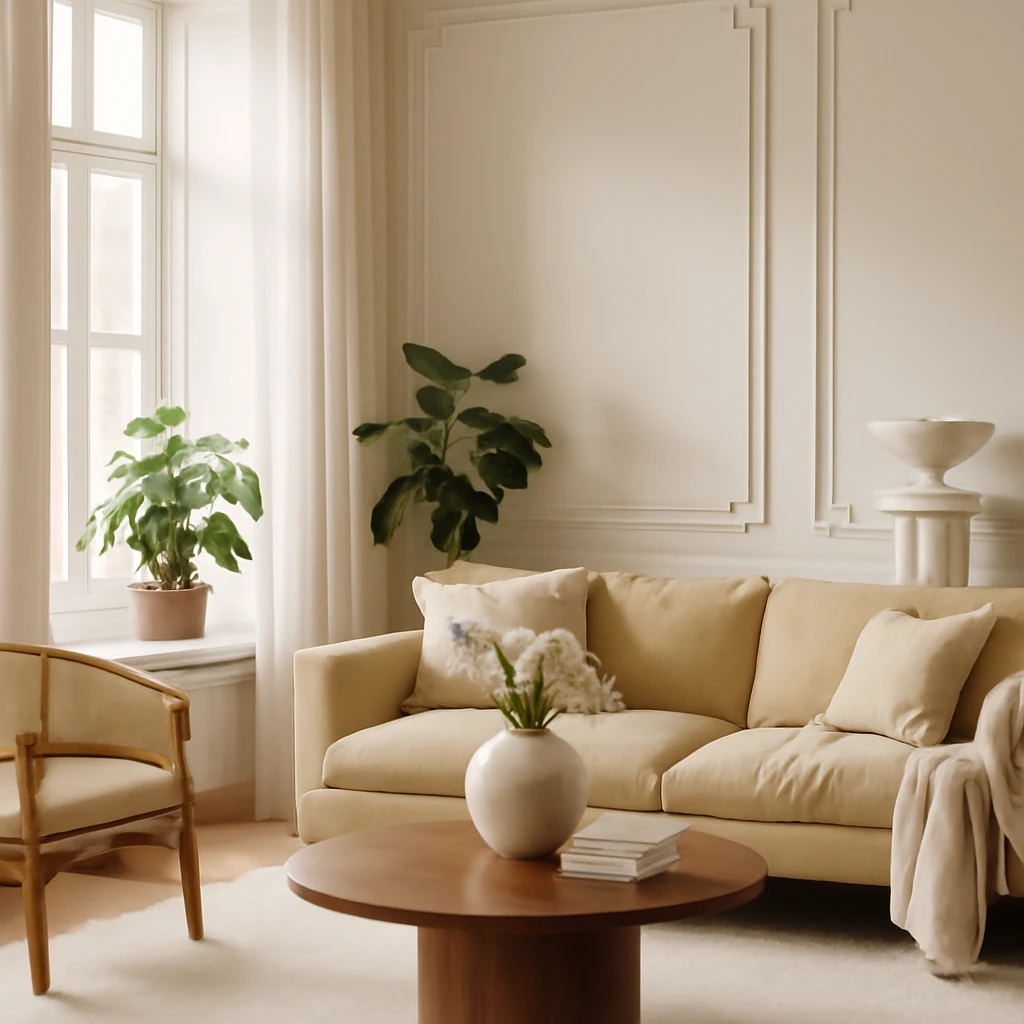
The enduring appeal of the modern classic
Design professionals across Europe recognise the modern classic as a timeless, versatile approach to interiors. It blends heritage with today’s living realities, delivering a look that feels luxurious yet practical. Unlike the grand, palace-inspired schemes of the past, contemporary classic design is purpose-built for modern apartments and houses alike. It understands how we live now - open-plan layouts, efficient storage, and the subtle integration of technology - while preserving the sense of drama and refinement that defines classical aesthetics.
In the contemporary European home, the classical ethos often manifests through restrained elegance rather than ornament for ornament’s sake. The aim is to create spaces that feel timeless, coherent, and comfortable, rather than theatrical. The result is a living environment where elements from classical, neoclassical, and even Art Deco or Empire inspirations sit alongside contemporary furniture and materials, forming a curated, cohesive whole.
History and transformation of the modern classic
The term modern classic, or neoclassicism, traces its lineage to era-spanning design movements. Historically, the classical vocabulary drew on ancient Greece and Rome, then evolved through Baroque, Rococo, and Neoclassical periods. In today’s interiors, those historical references are selectively reinterpreted to suit compact city apartments and contemporary floorplans. The aim is not to replicate a palatial interior but to borrow certain principles - clarity of form, refined proportion, and a disciplined colour and material palette - and adapt them to 21st‑century living.
Historically, wealthy households treated certain rooms as distinct domains. Kitchens, for example, were utilitarian spaces separate from the ceremonial drawing rooms. Modern living reverses that logic: the kitchen is an integral part of daily life, dining rooms are flexible, and every zone - kitchen, living, and work - must function well as part of an open-plan rhythm. Baroque opulence is rarely appropriate for a compact apartment, yet the essence of drama, texture, and quality remains desirable. The modern classic recognises this and translates it into deft proportions, durable materials, and subtle detailing that stands up to everyday use.
Foundations of contemporary neoclassicism
The modern classic draws from a lineage of influential styles, but three elements keep reappearing in European schemes: geometry, material richness, and restrained decor. Below is a concise map of the historical references most relevant to today’s interiors, followed by how designers reinterpret them today.
- Ancient Classical - symmetry, balance, and geometry inform the spatial logic: clear axes, measured proportions, and refined surfaces. White marble, stone, and mosaic floors often reinforce a sense of order and form.
- Baroque - dramatic effect delivered through scale, contrast, and expressive details. In modern interiors, this influence appears as carefully chosen accents rather than overwhelming abundance.
- Rococo - graceful curves, delicate ornament, and a light touch. In contemporary contexts, curves are integrated sparingly with a modern neutral base to avoid heaviness.
- Classical revival and Empire - a disciplined approach to decoration, with a preference for strong lines and regimental details such as pilasters or mouldings used as architectural accents.
- Art Deco - a pared-down luxury that emphasises texture, geometry, and high-contrast materials. In modern classics, Art Deco informs the use of bold veneers, metallic accents, and sculptural furniture pieces.
In practice, contemporary neoclassicism often sits somewhere between restrained elegance and ornate drama, with three prevailing directions: a strict, geometry-led approach, a more ornate, patterned language, and an English or Parisian mood that blends tradition with a cosy, liveable warmth.
Three directions of neoclassical interiors
While the pure forms of classical architecture remain relevant, three contemporary directions provide practical routes for European homes:
- Strict geometry - a disciplined approach that uses straight lines, clear silhouettes, and high-quality materials. This direction favours monochrome or restrained palettes and makes the most of architectural details such as pilasters, cornices, and subtly moulded walls.
- Ornate patterning - a maximalist route that celebrates decorative motifs drawn from Baroque, Rococo, and Art Nouveau influences. Patterned wallpapers, friezes, and sculptural furniture are used judiciously to avoid overwhelming smaller spaces.
- English- or Parisian-inspired mood - a romantic, comfortable take on classical forms. It combines noble woods, soft textiles, botanical or travel-inspired decor, and a tapestry-like sense of warmth without losing architectural clarity.
In practice, many European interiors fuse these approaches, selecting a dominant direction for each room while allowing elements from other traditions to appear as accents. The result is a coherent home that feels both timeless and contemporary.
Key characteristics of modern classical spaces
Despite diverse expressions, certain characteristics unite modern classical interiors across Europe. These features help the style read as cohesive rather than contrived, even in modest urban dwellings.
Architectural rhetoric
Classical interiors thrive on architectural language. Columns, pilasters, and mouldings provide texture and structure, guiding the eye through a space. In smaller rooms, designers apply architectural details sparingly - perhaps a fine cornice or a single, well-proportioned decorative panel - so the room retains air and light. The goal is architectural clarity: rooms that feel designed rather than decorated.
- In living rooms and hallways, consider a single, bold architectural feature - an inset cornice, a framed mirror, or a paneled wall - to anchor the scheme.
- In open-plan interiors, ensure the defined zones unite through shared materials, a common colour family, and a consistent rhythm of lines and motifs.
Premium natural materials
Classical interiors long rely on expensive, natural materials. Think richly grained woods, marble, travertine, and lime-washed plaster. Decorative painting and wall finishes may incorporate fresco-inspired textures or subtle glazing to heighten depth. In contemporary contexts, such materials are used with restraint, scaled to the room size and budget, ensuring longevity and a sense of premium craftsmanship.
Measured geometry
Whether the geometry progresses in straight lines or elegant curves, the geometry of a room should feel deliberate. Repeated motifs - such as a series of vertical pilasters, a sequence of doorframes with consistent mouldings, or a repeating parquet pattern - forge unity. The eye travels smoothly from one feature to the next, and the space reads as a curated composition rather than a collection of separate objects.
Rich, deliberate decoration
In classic spaces, decoration is chosen with intention. Paintings, sculptures, vases, and fine textiles contribute texture and colour without cluttering the eye. The aim is to establish a dialogue between surfaces - walls, floors, furniture, and textiles - that feels layered, but not busy. Lighting plays a crucial role: well-chosen chandeliers, wall sconces, and shaded lamps create depth and theatre without overwhelming the room.
Decoration and fashioning of mood
Decorative choices split along two poles: restrained luxury and elevated opulence. The former uses neutral tones, subtle textures, and refined finishes, the latter introduces deeper colours, tactile fabrics, and expressive objects. Either way, the space should feel architecturally coherent and comfortable for daily life.
Nuances to consider when planning a modern classic home
Translating classical vocabulary into a home requires sensitivity to space, light, and routine. Here are practical principles to guide a European project.
Not a tech-forward aesthetic
Classical detailing and contemporary technology can coexist, but the look itself leans away from visible gadgets. When planning a neoclassical kitchen or living area, reserve sightlines for the essential appliances and hide or disguise others behind clean cabinetry. The goal is to preserve the timeless mood rather than to showcase the latest gadgetry.
Avoiding incongruent forms
Classic interiors do not harmonise well with ultra-sleek contemporary silhouettes if used in excess. Very glossy, high-gloss plastic surfaces or ultra-modern storage systems can disrupt the flow. Instead, blend modern hardware and furniture with carved wood, traditional upholstery, and natural stone to maintain a tasteful balance.
Maintenance and durability
Materials honouring classical taste often require thoughtful care. Light-colour marbles may need periodic sealing, wood veneers benefit from climate control and routine polishing, and plaster ornaments should be protected from knocks. The long-term payoff is spaces that age gracefully, retaining their beauty with a sense of history.
Implementing modern neoclassicism in a European home
When translating theory into practice, designers in Europe consider room size, ceiling height, natural light, and the rhythm of daily life. Here are practical strategies for real homes - apartment blocks in bustling city centres, and family houses in leafy suburbs alike.
Neutral bases with expressive textures
Start with a calm, light base for walls and ceilings - soft whites, warm greys, or pale creams - to maximise daylight. Introduce texture through lime plaster, subtle venetian plaster, silk wallpapers, or fabric wall panels. A textured plaster on a single feature wall can provide depth without overpowering the room.
Timber and stone as anchors
Timber floors - oak, elm, or walnut - anchor the space, while marble or limestone brings a sense of luxury. Choose a consistent palette of timber tones to unify spaces, ensuring furniture and architectural details are cohesive rather than competing statements.
Furniture language that talks to history
Select pieces that reflect classical proportions: upholstered sofas with refined legs, chaise longues with gentle curves, and credenzas or sideboards with simplified mouldings. The trick is to balance heavy, traditional silhouettes with clean-lined contemporary pieces, creating a dialogue between eras rather than a pastiche.
Colour palettes that whisper rather than shout
In modern classics, colour is used strategically to emphasise form. A restrained palette - creams, dove greys, warm taupes - provides a quiet backdrop for richer accents. When deeper tones are introduced, such as navy, charcoal, or forest green, they anchor schemes and highlight architectural details and texture.
Lighting as architecture
Light is essential to classical ambience. A grand chandelier can be balanced with understated wall lamps and recessed lighting to avoid visual overload. In smaller spaces, wall-washed lighting or carefully positioned lamps can sculpt shadows, accentuate mouldings, and lift the room’s mood without diminishing room size.
Room-by-room guidance for a modern European home
Living room
The living room is often the stage for the modern classical look. Start with a comfortable, well-proportioned sofa and a pair of chairs that create intimate conversation clusters. A central coffee table with elegant geometry - clean lines and a refined finish - acts as a focal point. Consider a fireplace or a fireplace‑like feature as the anchor for the room, even if a real fire is not feasible. If the space is long and narrow, place architectural elements such as a console or bookcase along one wall to create a visual corridor that guides the eye through the room.
- Keep decorative objects to a curated minimum - one or two paintings or sculptures, a few vases, and one or two tactile textiles like a plush throw or a linen rug with a subtle pattern.
- Use textiles to soften lines: a wool or cashmere throw, a boucle or velvet upholstery can add warmth without shouting.
Bedroom
A classic bedroom often features a prominent bed with an elegant headboard, supplemented by benched seating or a pair of nightstands with refined hardware. Drapery should be substantial but balanced, framing windows without overpowering the room. A wall panel or moulding detail behind the bed can reinforce the classical language. In smaller bedrooms, the emphasis should be on scale and proportion - keep furniture lean and avoid bulky pieces that crowd the space.
- Soft, luxurious textiles - linen bedding, cashmere throws, and velvet cushions - enhance the sense of comfort and refinement.
- Storage should be discreet: integrated wardrobes or furniture with clean lines help preserve an uncluttered atmosphere.
Kitchen
In contemporary European kitchens designed with a neoclassical sensibility, the goal is to marry utility with refinement. Cabinets in light, natural wood or painted finishes with crisp, classic detailing can create a timeless backdrop for modern appliances. Consider a contrasting island with a marble or stone top to introduce a sense of ceremony and material depth. It is common to pair marble, a carved wooden island leg, or chrome hardware with concealed storage to maintain an uncluttered look.
- Prefer subtle, traditional hardware in brass or brushed bronze to echo classical warmth.
- Backsplashes can be practical yet refined - think marble, glazed ceramic, or a restrained mosaic that nods to history without competing with contemporary surfaces.
Bathroom
The classic bathroom often features marble surfaces, brass or bronze fixtures, and decorative trims. Contemporary interpretations may use larger-format slabs with a softer edge and more minimal decorative details. A tonal palette - cream, beige, with a touch of graphite or charcoal - creates an elegant, spa-like atmosphere. Consider a freestanding bath as a sculptural focal point, paired with a traditional-style vanity or a modern, streamlined alternative for practicality.
Entrance hall and transitional spaces
The hallway sets the tone for the home. A restrained approach - wainscoting, simple cornices, and a well-chosen console or seating - can signal the classical language without feeling formal. In narrow corridors, keep fittings to a minimum and employ mirrors or light-coloured finishes to enhance the sense of space.
Children’s room
For a modern classic approach to a child’s room, aim for a calmer palette with playful but tasteful details. Use durable, easy‑to‑clean materials and add architectural cues - panelled walls, a small canopy, or a ceiling medallion - to introduce refinement while ensuring practicality for daily life.
Decor and textiles: restrained versus expressive approaches
Two broad decor currents run through modern classical spaces. The restrained approach uses calm textures, subtle patterns, and quiet luxury to create a serene environment. The expressive approach embraces richer textiles, more generous ornament, and bolder colour or pattern, but always in a controlled manner that respects the room’s architecture.
- In the restrained direction, choose fabrics like linen, wool, or muted bouclé in neutral tones. Allow the form and surface quality of furniture to carry the room’s sophistication.
- For a more decorative direction, introduce textiles with refined patterns or soft colour contrasts - think a damask or a delicate floral print - paired with lamps and artwork that share a common tonal foundation.
What to remember about modern neoclassicism
- Historic classical styles are numerous, and some elements translate well to modern interiors. Realising them in full in a standard apartment is rarely feasible, rather, select the most enduring elements and interpret them with contemporary restraint.
- Contemporary neoclassicism tends toward minimalism in many spaces, using a few select elements from classical vocabulary - such as mouldings or natural materials - while keeping the overall form clean and quiet.
- There are three popular directions for neoclassical interiors: strict geometry, ornate patterning, and English or Parisian-inspired moods. Each has distinctive features and can be adapted to different room types.
- Entrances, kitchens, bathrooms, and other service zones are kept more understated than the living spaces to preserve the overall integrity of the style while catering to daily use.
Final reflections: designing for a European sensibility
Europe’s architectural diversity - ranging from Parisian apartments to Nordic houses and Mediterranean townhouses - lends itself to a refined version of the modern classic. The strongest projects treat classical vocabularies not as a costume but as a language: a set of tools to shape space, light, and texture. The result is interiors that feel cultivated and luxurious without becoming ceremonial. For designers and homeowners alike, the modern classical approach offers a robust framework: a calm, durable palette, architectural clarity, and a sense of lineage that allows contemporary life to flourish within a well-composed, humane environment.
In summary
- The modern classic is a flexible concept that respects history while embracing today’s living patterns. It can be applied across a range of European homes, from compact city flats to larger townhouses.
- Key ingredients include architectural detailing, premium natural materials, disciplined geometry, and well-considered decoration. The balance between restraint and expression defines the success of a neoclassical interior.
- Three contemporary directions - strict geometry, ornate patterns, and English/Parisian mood - offer practical pathways depending on the room, the size of the space, and the client’s lifestyle.
- Practical advice focuses on neutral bases, meaningful texture, quality furniture, and lighting that sculpts space, rather than overwhelming it with ornament or technology.
References for design approach and planning
When embarking on a modern classic project, collaborate with a design team that speaks both architectural language and interior craft. Seek examples that demonstrate proportion, material quality, and timeless finishing. A balanced project will feel both contemporary and enduring, capable of ageing gracefully as trends evolve and as family life changes.
You may also like these articles
 Kitchen Design
Mastering the U‑Shaped Kitchen: practical layouts for European homes
Maximise storage and flow with a practical U‑shaped kitchen for European homes.
Tips & How-To
Preparing for the Handover: A Comprehensive European Guide to New-Build Flats
A practical guide to inspecting and accepting a European new-build flat.
Tips & How-To
Curtains for the Kitchen: European Styles, Fabrics and Functional Tips
A practical guide to European kitchen curtain styling.