
Explore interior trends, AI design insights, styling guides and real transformations
Ergonomic Kitchen Layouts: Practical Design for Easy Work
Fundamental principles of ergonomic kitchen design
In contemporary European homes, the kitchen functions as a vibrant hub where cooking, dining and socialising blend. Ergonomics is not merely about aesthetics, it governs how you move through the space, access appliances, and perform everyday tasks without fatigue or risk. A well-planned kitchen minimises unnecessary steps, reduces effort, and enhances safety - everyday routines become swifter, more pleasant, and less stressful. This guide distils proven principles that translate into a practical, adaptable layout for a range of room shapes and sizes.
- Define clear work zones. Separate zones for cold storage, preparation, washing and cooking, but keep them sufficiently close to enable fluid transitions.
- Provide adequate circulation. Aisles and paths should be wide enough for safe two‑person use as well as unimpeded movements when carrying heavy loads. A practical target is 1.2–1.65 metres of clear width for main traffic routes.
- Stability of levels and alignments. Align countertops, appliances, and wall cabinets to minimise reaching and bending. Consistent heights help keep posture neutral and wrists comfortable.
- Prioritise safety and accessibility. Position hot surfaces away from traffic routes, provide generous clearances in front of appliances, and plan storage that makes everyday items easy to reach without leaning or twisting.
Configurations explained
The shape of a kitchen strongly influences how comfortably you work, especially in European homes where space plans vary from compact city flats to open‑plan living spaces. The main configurations you are likely to consider include:
- One-wall kitchen – A compact, linear layout that works best in narrow rooms or deep plan projects. Aim for a minimum width of 1.7–1.8 metres. Place the key work zones along a single wall: sink near the centre, with the hob and cold storage at either end to keep movements efficient and energy use manageable.
- Galley or parallel layout – Two parallel runs facing each other create a practical kitchen corridor. On one side, organise storage and the sink, on the opposite side, place the hob and preparation area. Aisle width should be kept between 1.2 and 1.65 metres to allow comfortable passing and safe operation.
- L-shaped kitchen – Suitable for medium‑sized spaces, this configuration allows a natural work triangle while preserving space for dining or living zones. The corner is used cleverly for storage tall units or a compact fridge column to optimise flow.
- U-shaped or peninsula (P-shaped) kitchen – In larger rooms, this layout offers abundant storage and multiple work surfaces. A peninsula or connected island can extend the work triangle and create a subtle barrier between cooking and social areas.
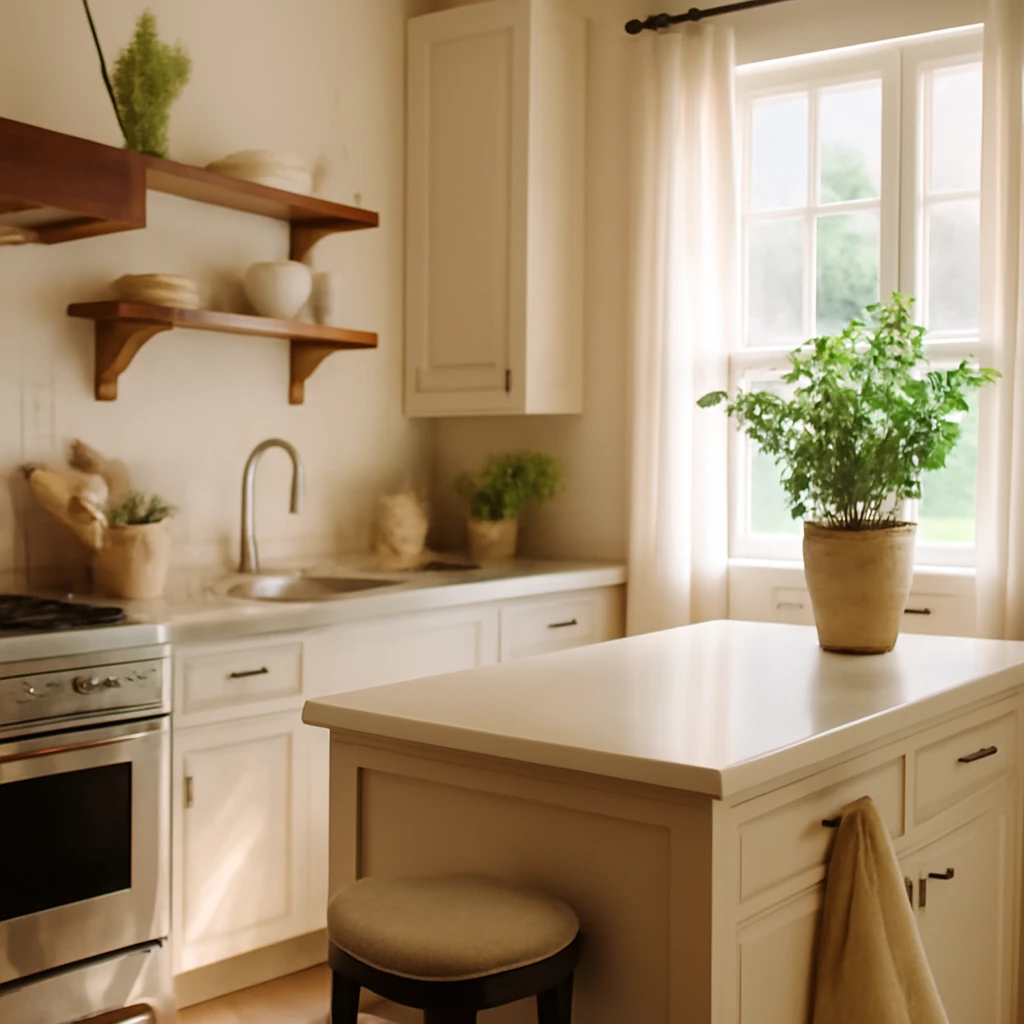
- Island kitchen – The island anchors the plan, offering additional prep space, seating, or even a secondary cooking zone. The standard island height is 90 cm, lift one edge to 120–130 cm to form a casual bar while preserving knee clearance and traffic flow around the island.
The path of movement: the work triangle
A practical kitchen minimises wasted steps. Visualise the primary journey from the refrigerator to the main work surfaces, then to the sink and the hob. The traditional work triangle remains a useful mental model, though it adapts to open spaces and contemporary workflows. The combined length of the three sides should generally not exceed 6 metres. Maintain a comfortable clearance between the hob and sink - ideally at least 40 cm - to avoid splashes and interruptions to the cooking process. If space permits, a slightly larger distance can accommodate a standing prep area adjacent to the sink without breaking the flow.
Clearances and safety
Every kitchen component requires appropriate clearance to operate cleanly and safely. When planning, consider the entire arc of each appliance’s doors and drawers. For a built‑in oven or hob, allocate a front clearance of at least 110 cm for safe operation. Opposing cabinetry should not obstruct access, a straight run with a low‑profile aisle is preferable to cramped passages. A practical principle is to reserve 90 cm of space in front of drawer units to let you pull out bins, trays, and cookware without colliding with a neighbouring cabinet.
Dishwashers typically demand more space than freestanding appliances because loading and unloading require a full clearance. Allow a minimum of 100 cm of unobstructed space in front of the dishwasher to perform tasks comfortably. These clearances support ergonomic posture and reduce the risk of accidents when loading heavy dishes or heavy pots.
Safety essentials in practice
The kitchen demands ongoing attention to fire, heat, and sharp objects. Position the hob away from busy traffic routes to reduce the chance of collisions with hot pans. Do not place a hob directly in a corner where it is difficult to reach pots safely, allow a buffer of at least 30 cm between the hob and adjacent walls or refrigeration. The distance from the hob to a window should be at least 45 cm to minimise the risk of heat transfer to fabrics or the need to shelter from drafts. The extraction hood is most effective when installed at a height of roughly 70–75 cm above an electric hob, or 75–80 cm above a gas hob. This ensures efficient ventilation without overloading the system or creating noise disturbances elsewhere in the home.
Ergonomic work heights
Worktop height is a fundamental ergonomic decision. The top should allow the cook to work with a neutral spine and relaxed shoulders. A common guideline for a person around 1.70 m tall is a countertop height of about 85 cm. However, many European kitchens default to 90 cm as a standard to accommodate a range of tasks beyond basic chopping, such as kneading dough or rolling pastry. When planning, assess the primary user’s stature and consider adjustable or multi‑height configurations if possible. If the home hosts multiple cooks with varying heights, consider a mix of standard and lower work surfaces or a secondary island with a different height that supports comfortable use for everyone.
Upper storage should not force excessive reaching, aim to keep the bottom edge of wall cabinets around 45 cm above the work surface. Heavy items and bulky cookware are best stored in lower drawers or tall pantry units to minimise bending and elevate ease of use.
Universal island: a central hub
Islands are powerful because they create a new “working triangle” and expand surface area for preparation, service, and informal dining. A well‑designed island can house a secondary sink or hob, provide a resting area for utensils, and serve as a social focal point. The standard island height is 90 cm, which suits most users, for casual seating, consider raising one edge to around 120–130 cm, forming a bar‑height zone that invites conversation without compromising legroom for seated guests. The island should be positioned with at least 100 cm of clear space on all sides to maintain safe, unobstructed movement around the work zone and to keep appliances accessible without crowding the walkway.
Materials, finishes and ergonomic considerations
Ergonomics is not only about geometry, material choices influence comfort and usability during long cooking sessions. Durable, easy‑to‑clean work surfaces - such as quartz, stainless steel, or solid surface composites - reduce fatigue and make maintenance straightforward. Edge profiles should be gentle or rounded to reduce the risk of injury when passing close to surfaces, soft‑close drawers minimise pinching from repeated opening and closing. Non‑slip flooring improves footing stability in wet or greasy conditions, consider textures that provide grip without creating a tired step when standing for extended periods. The colour and finish of fronts should help maintain visual calm and reduce eye strain, particularly in kitchens that double as living spaces.
Lighting and electrical planning
A layered lighting approach is essential to ergonomic function. Combine bright yet warm ambient lighting with focused task lighting along work zones. Under‑cabinet lighting dramatically improves visibility on work surfaces and reduces the need to lean or twist to illuminate ingredients. Electrical layouts should anticipate multiple small appliances, charging stations for digital devices, and the flexibility to reconfigure zones as needs change. Consider incorporating USB outlets at the island and near the dining area for convenience, while ensuring that sockets are placed according to local electrical regulations and are accessible without requiring awkward reach.
Smart kitchens: enhancing ergonomics with technology
Modern European homes are increasingly embracing intelligent kitchen systems. Induction cooktops offer precise control and rapid heating with lower surface temperatures near the user. Programmable lighting, sensor taps, and integrated ventilation can simplify routines and improve energy efficiency. When integrating technology, design spaces to be future‑proof: allocate additional power supply points, repurposeable docking areas for new devices, and modular cabinetry that can accommodate evolving appliances without major renovations.
Putting theory into practice: a practical checklist for European homes
- Measure accurately – Record room dimensions, door swings, window placements, and fixed elements. A precise plan prevents clashes with furniture and improves the accuracy of the final layout.
- Choose a configuration that fits the room – Align the layout with the room’s geometry and your cooking habits. In compact spaces, a well‑designed one‑wall or galley can be incredibly efficient, in open plans, an island can redefine zones.
- Sketch to scale – Create a scaled plan showing appliance footprints and clearance zones. A realistic layout helps you spot potential bottlenecks before installation.
- Position the work triangle thoughtfully – Place the fridge, sink, and hob to form a natural circle of activity with minimal crossing paths, ensure at least 40 cm between sink and hob and maintain generous front clearances for doors and drawers.
- Plan storage with daily use in mind – Store heavy items in lower cabinets, keep frequently used items within easy reach, and locate tall pantry units where they won’t encroach on work zones. Upper cabinets should sit about 45 cm above the work surface for comfortable access.
- Allocate island space wisely – If an island is included, ensure a minimum of 100 cm of circulation around it and decide if it will host seating, a secondary sink, or a cooktop. Adjust island height if necessary to create a bar zone without compromising work surface functionality.
- Integrate lighting and power thoughtfully – Plan layered lighting and sufficient sockets near islands and workstations to support multiple tasks and devices without clutter.
- Test for accessibility – Consider the needs of all household members, including children and older adults. Ensure there is enough space to access storage and operate appliances independently and safely.
Adapting to European homes: unique considerations
Across Europe, homes range from compact urban flats to generous, open‑plan spaces. When designing kitchens, address the building envelope, floor coverings, ventilation, and local building regulations. Energy efficiency should guide material choices and appliances, with emphasis on well‑insulated cabinetry, heat‑resistant surfaces near cooking zones, and windows that can be opened safely without interrupting airflow around hot surfaces. Collaboration with a professional kitchen designer can tailor layouts to your body measurements, daily routines, and family dynamics while ensuring compliance with local codes and standards. The result is a kitchen that feels personal, coherent with the dwelling, and capable of accommodating changing needs over time.
Case studies: small spaces, open plans, and flexible zones
Smaller urban rooms benefit from a thoughtfully designed galley or L‑shaped configuration, optimising every square metre and enabling a compact yet efficient work triangle. In open‑plan interiors, an island can provide a natural boundary while preserving social interaction between cooks and guests. Larger homes may justify a U‑shaped layout or a true island with integrated seating and a secondary prep area. In all cases, the aims remain the same: clear zones, adaptable storage, safe clearances, and comfortable working heights. A well‑considered design can transform even modest spaces into highly functional, welcoming kitchens that support both daily meals and festive gatherings.
Conclusion
Ergonomic kitchen design is about translating a body of knowledge into a living space that respects human scale, promotes safety, and anticipates daily needs. By combining deliberate layout choices, appropriate clearances, ergonomic work heights, and flexible surfaces - whether a compact one‑wall kitchen or a generous island plan - European homes can achieve kitchens that are efficient, pleasant to use, and capable of evolving with their owners. When planning, prioritise data‑driven decisions, measure meticulously, and partner with professionals who understand both universal principles and local regulations. The result is a kitchen that feels effortless, stylish, and truly fit for life.
You may also like these articles
 Tips & How-To
Eight online planners to design a European home in 3D
Plan, visualise and budget your European home with eight accessible online planners.
Tips & How-To
Four DIY tables from boards: four models with plans and practical guidance
Four practical board-based tables you can build at home, with clear plans and finishing tips.
Tips & How-To
Maximise European Furniture Savings with Promo Codes
A practical guide to European promo codes for furniture and home décor.