
Explore interior trends, AI design insights, styling guides and real transformations
Five clever micro-makeovers for tiny European kitchens
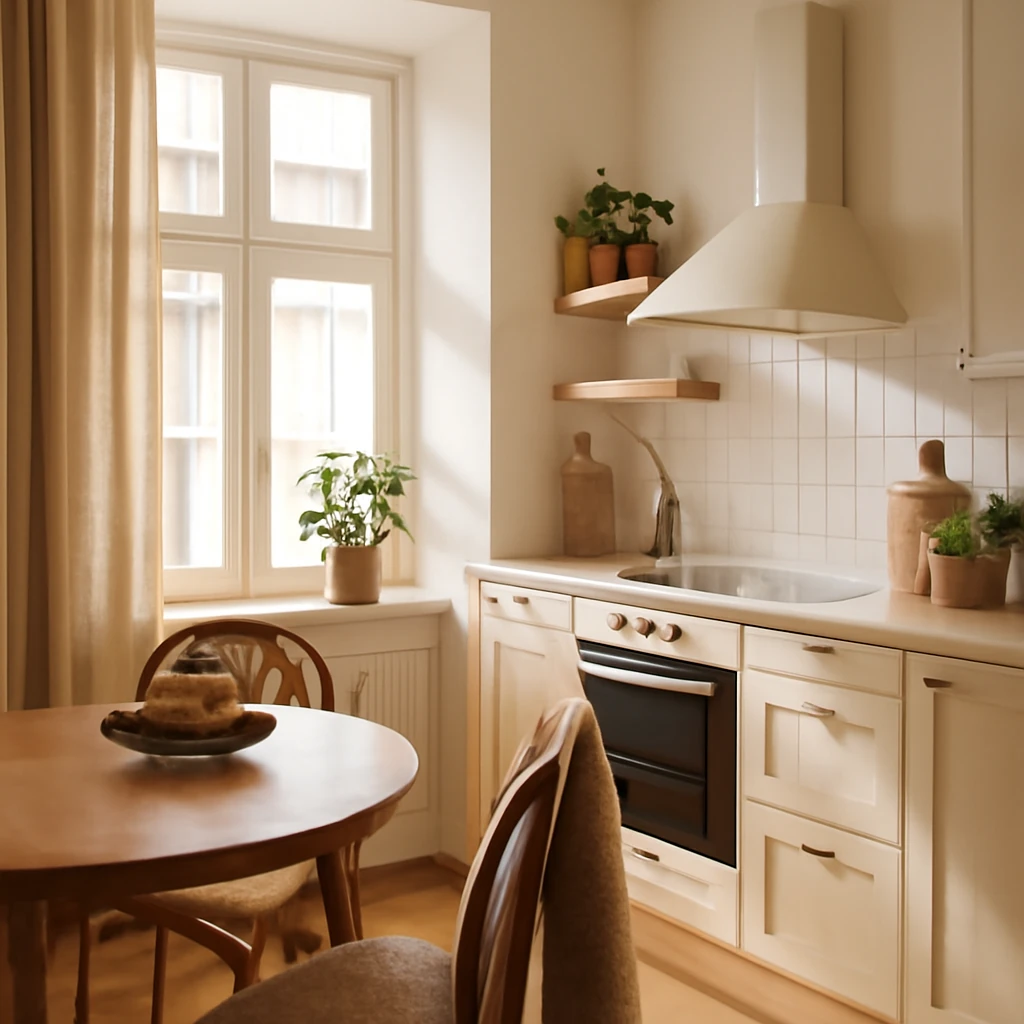
Rethinking Europe’s tiniest kitchens: five transformative makeovers
Across Europe, many homes feature compact kitchens tucked into modest flats, maisons and townhouses. The challenge is familiar: a tiny footprint, low ceilings and layouts that date back several decades. Yet with precise organisation, considered storage, and finishes that bounce light, a 4–7 m² kitchen can become a fully functioning culinary hub that also accommodates dining and socialising. Here are five European micro-kitchens where thoughtful planning, built-in appliances and bold design prove that small spaces can deliver big results.
Glass blocks and a bar on the windowsill
In a compact flat with a traditional 6 m² kitchen, the original layout wasted space around a doorway and a small window. The design team repositioned the door to another wall, freeing valuable area for storage and movement. They retained the window but extended the opening between kitchen and living area. Glass blocks, selected with a grout to match the wall tile, filter brightness into the room while preserving privacy and a sense of delicacy. The splashback tile was hand-made by the craftsperson on site, adding a unique texture that reflects European craft heritage.
Upper cabinets were sacrificed in favour of an open shelf, visually lightening the ceiling line. The lower cabinetry provides ample storage, while the range hood, fridge and washing machine were painted to harmonise with the cabinetry for a cohesive, streamlined composition. The long countertop extends to the window, creating a practical bar on the windowsill - perfect for quick breakfasts or a coffee corner that doubles as a social perch.
Bold colours and integrated appliances
Another compact kitchen, this time in a rental flat, demanded a design that could stand out in a competitive market while remaining robust for everyday use. The team removed the doorway to the kitchen, opening it up to the living area and creating a sense of continuity in the open-plan space. A modular kitchen system was assembled with care, ensuring every centimetre was utilised. Fridge and microwave were concealed behind panels, while the hob was integrated into the worktop to maintain clean lines and maximise workspace.
The colour palette drew on local architectural cues: terracotta tones recall historic rooftops, green hints reflect aged window sills, and muted blue nods to the nearby sea. A compact banquet-style dining area sits adjacent to the kitchen, powered by a small, tidy bench-seat design that folds into the wall when not in use. A delicate decorative programme - featuring motifs inspired by regional flora and fauna - adds personality without overpowering the space.
Terracotta façades and smart storage
In a 1960s-tooled flat that previously suffered from an ill-placed entry, the renovation repositioned the kitchen entrance, freeing space for a well-planned storage module. The kitchen joinery was executed with a striking contrast: upper cabinets finished in deep terracotta, while lower sections used wood-toned laminates to simulate warmth and natural materiality. The approach creates a tactile, modern look that reads as contemporary yet respectful of the building’s history.
Storage was organised with purpose: tall overhead cabinets house rarely used items, an angled corner module contains dry goods, and pull-out drawers in the base units keep cutlery, cookware and every-day items close to hand. The work surface is finished with a vertical, peach-tinted tile that echoes the colour of the terracotta but softens the palette. A concealed counter on the wall hides a small appliance unit, while the floor is laid with ceramic tile featuring a retro geometric motif to inject personality without competing with the overall calm aesthetic.
Compact appliances and a round table
A city-centre, one-bedroom apartment presented a long, narrow kitchen that had never seen a comprehensive refresh. The architect enlarged the doorway to a generous width and rebuilt the cabinetry along a single wall using standard, space-saving modules. Appliances were chosen for their compact profiles: a fridge only 49 cm wide and a two-burner hob ensure essential functions remain while leaving room to move. The gas supply was relocated under the worktop, freeing the wall for a full-height splashback and multiple electrical outlets for small appliances.
Opposite the work zone, a round table on a single pedestal provides a convivial dining area without dominating the space. Two small, comfortable stools complete the setup and can be tucked away when necessary. Light walls and restrained furnishings help the room feel larger, while careful placement of the table allows easy circulation around the kitchen and into the living area. The result is a bright, functional kitchen that behaves like a much larger space.
Open shelves and bold palettes
In a 44 m² apartment, the kitchen needed an update that reflected the owner’s sociable life as an event planner who hosts frequently but cooks infrequently. The team abandoned a conventional full-height cabinet run in favour of a lighter, more flexible arrangement. A compact refrigerator and a microwave-enabled oven were tucked behind panels, while the open shelves above the worktop store frequently used items and add visual airiness.
Some clever storage features sit beneath the workbench: narrow drawers under the oven hold foil, parchment and small tools, while a corner pull-out unit keeps essentials within reach. The dining area was relocated to the living room, leaving a modest kitchen corner for quick meals and drinks. An arch-length mirror on the kitchen wall reflects light from the living space, visually extending the room and creating a sense of continuity between zones. The floor is clad in a durable tile that resists spills and cleans easily, while walls are finished in a light, uplifting colour with a bold accent in the open shelving palette to inject personality without overwhelming the space.
Key principles for European micro-kitchens
- Open layouts and intelligent zoning: When possible, remove non-structural doors to join the kitchen with the living area, creating a more flexible space and better light distribution.
- Integrated appliances: Use panels to hide fridges, dishwashers and microwaves behind cabinetry to sustain a continuous, streamlined look.
- Extending worktops: Extend the countertop along a windowsill or a wall to create a built-in bar or a casual dining zone without sacrificing storage.
- Smart storage: Combine tall pantry units, corner modules and drawer optimisers to maximise every centimetre and keep surfaces clutter-free.
- Light and colour: Use light-coloured walls, reflective surfaces and strategically placed tiling to amplify natural light and make the space feel larger.
- Material contrast: Pair terracotta or warm-toned upper cabinets with wood-inspired lower panels to achieve depth while retaining a contemporary feel.
- Open shelves sparingly: Open storage works well for frequently used items and decorative touches, but balance with closed storage to maintain calm in tight spaces.
- Ventilation and safety: Even in small kitchens, ensure effective extraction and safe gas/electric connections with professional installation and compliant components.
Across varied European contexts, these strategies demonstrate that small kitchens need not be a compromise between function and atmosphere. With careful planning, a limited footprint can become a highly liveable, aesthetically compelling space that supports both everyday meals and social occasions.
You may also like these articles
 Tips & How-To
The art of deep cleaning: a practical guide for European homes
A practical, eco-conscious deep-clean plan for European homes.
Interior Design
Harmonising Doors and Floors: Seven Design Principles for European Homes
Master the art of matching doors with flooring across Europe.
Small Spaces
Compact living, big possibilities: planning a 6x6 metre home across Europe
Small footprint, smart design: five layouts for a 6x6m home.