
Explore interior trends, AI design insights, styling guides and real transformations
Layered bedside lighting: reading, ambience and sleep in European bedrooms
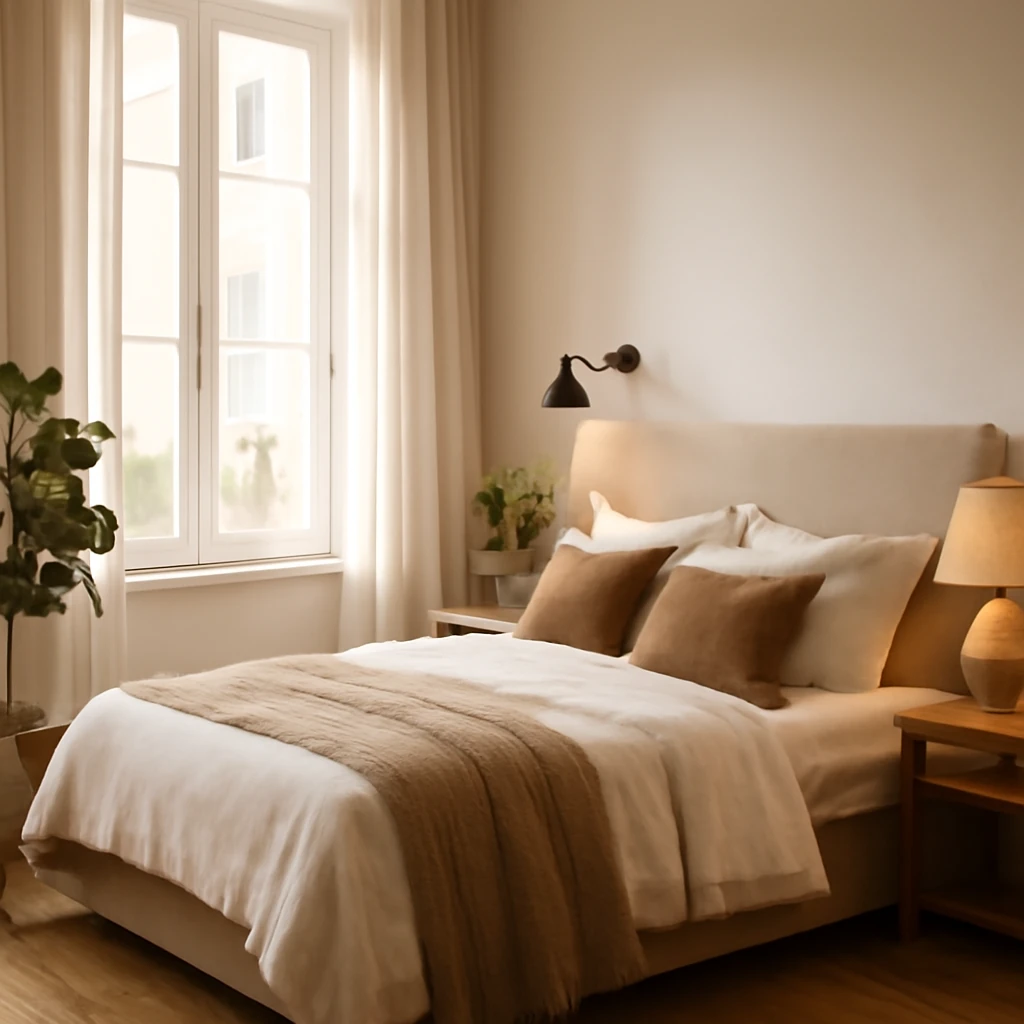
Layered bedside lighting for reading, ambience and sleep in European bedrooms
Good lighting at the edge of the bed is more than a practical detail. It shapes how we read, relax and drift into sleep. In Europe, where homes vary from compact city flats to refined interiors in historic buildings, a layered approach to bedside lighting helps you tailor the atmosphere to both activity and time of day. The goal is to create zones of light that can be combined or separated, controlled with ease, and aligned with healthy sleep routines.
In contemporary bedrooms, a thoughtful lighting scheme integrates three levels: warm ambient light to soften the room, task lighting for reading or device use, and a subtle accent or night-time glow that guides without waking. The following guidance translates established design principles into practical Europe-wide applications, with adaptable ideas for new builds, renovations and compact urban spaces.
Decide the function of your bedside lighting
Before choosing fixtures, determine how you will use the space around the bed. The same bed can serve as a reading nook, a screen-watching zone or simply a place to unwind. Each activity benefits from a different light quality and placement.
- Reading or working in bed - directed light: choose lamps that cast a focused beam onto your page or screen without glare on your eyes. Look for a shade with a controlled opening, an adjustable head or a small shade that concentrates light downwards. A lamp with a shallow tilt and a swivelling head enables you to aim light where it is needed and away from your partner.
- Watching videos or scrolling - diffuse light: when screens are involved, diffuse ambient light reduces contrast and eye strain. A closed shade or a fabric diffuser softens the beam and spreads light more evenly across the room.
- Both tasks - dual sources: for versatility, pair a directional wall sconce with a secondary diffuse lamp on the nightstand or a soft backlit headboard panel. This arrangement allows you to read with one light and relax with a subtler glow when the screen is in use.
- Night-time glow - gentle ambience: a low-level, warm glow helps orient you without interrupting sleep. Options include low-wattage LED strips along the headboard, a concealed uplight behind the bed, or a small table lamp kept at a dim level.
In European interiors, these layers are often expressed through a mix of wall sconces, table lamps, and sometimes integrated headboard lighting. The aim is to avoid a single, bright centre light that washes out atmosphere and increases glare when you are awake but still trying to sleep.
Directional reading lights - placement and height
For task-focused bedside lighting, the light should strike the reading material without creating shadows from your head. A well-positioned lamp head should be adjustable so you can angle light precisely where you need it. In practice, place reading lights just above the level of the pillow line or on the bedside table at roughly the same height as your shoulder when seated upright in bed.
Recommended characteristics: partially open downwards facing shade, small tilt range, and a head that can be rotated. Look for a lamp with an efficient LED source and a shade that blocks direct glare while delivering a clear pool of light onto the page.
Diffuse light for screens and evenings
Diffuse lighting is ideal when you are watching a screen or reading on a device. A shaded glass or fabric diffuser softens the light, reducing contrast and eye strain. Position this light higher than a direct reading lamp, and ensure it bathes the room evenly without creating hot spots on the screen.
Dual sources for flexible evenings
If you enjoy both reading and screens, a dual approach works best. Consider fixtures that offer a bright, focused beam on one side and a softer, ambient glow on the other. For example, a pair of wall sconces with contrasting finishes or forms can provide a balanced composition that complements a modern European bedroom.
Ambient accents and low-level glow
Soft lighting near the bed helps with orientation in the dark and can create a relaxing mood. LED strip lighting behind the headboard, a foot of concealed lighting along the baseboard, or a small plug-in night light are all viable options. Keep brightness low and colour temperature warm to preserve melatonin production when you prepare for sleep.
Integrated headboard lighting as a design feature
In contemporary European designs, headboard illumination is a popular way to add both function and texture to the wall behind the bed. Linear LED panels, recessed shelf lighting, or soft backlighting behind canvas panels can create a cosy backdrop and highlight architectural details. If you opt for integrated lighting, ensure the system is dimmable and easy to operate from bed or via a central control.
Bedroom lighting for children and families
Children require safety and simplicity. Bedside lights in a child’s room should be shatterproof and mounted securely, with no small parts that could detach. For younger children, consider a low, diffuse night light paired with a daytime reading light on the other side of the bed. As children grow, you can introduce adjustable task lighting while keeping a warm ambience for wind-down routines.
Plan how you will switch the bedside lamps on and off
Control is as important as placement. A flexible control strategy reduces clutter and makes it easier to manage light from the moment you enter the room or lie down to sleep. Here are practical approaches that work across European homes.
- Independent switches: give each bedside lamp its own switch so you can light just one side for reading while your partner sleeps. Use two separate wall switches or a two-gang switch on the same plate.
- Dual control: if you want both lamps to switch together, connect them to a single switch or install a smart dimmer that controls both units in tandem.
- Multiple controls: for convenience, choose fixtures with remote controls or compatible smart home hubs. A remote or app can adjust brightness and even colour temperature without leaving the bed.
- On-tap convenience: some lamps include a simple pull chain or button on the head or base. For families, avoid pulls that may be reached by children or that could snag bedding.
When planning a renovation or new build, think about the wiring layout first. Determine where sockets and switches will be placed relative to the bed, and consider a separate lighting circuit for the bedroom to allow nighttime dimming without activating other rooms. If you are installing built-in headboard lighting, plan the location of the power feeds and ensure there is a convenient access point for maintenance.
What to do if there is no wiring near the bed
Not every room has ready-installed conduits for bedside lamps. In Europe, you can still achieve refined lighting with alternatives that suit older buildings or rooms where wall wiring is challenging.
Plug-in bedside lamps
Plug-in lamps on each side of the bed are a straightforward option. Choose slender, well-proportioned fixtures that can be positioned on slim nightstands and easily plugged into nearby sockets. Use cord concealers or raceways along the back edge of the nightstand to keep cables tidy and out of the way.
Battery-powered or rechargeable lamps
Battery-powered lamps offer freedom of placement and are ideal for rooms where wiring is constrained. Look for models with long-lasting LED sources and a convenient charging dock. For security and aesthetics, select units with a low-profile footprint and a soft diffuser to minimise glare.
Integrated bed lighting in the furniture
One alternative is to embed lighting within the bed frame or headboard structure. This approach requires careful design and electrical work but can yield a seamless, high-end effect with minimal visible wiring. When executed well, integrated lighting supports a calm, uninterrupted sleep environment.
Choosing bulbs and finishes for European bedrooms
Lighting quality is defined by the lamp, the bulb and how the light interacts with colour and texture in the room. The right combination supports both practical tasks and mood. Here is a practical framework for selecting bulbs and finishes that suit European homes.
Understand the lamp requirements
When purchasing a bulb for a bedside fixture, check two key specifications: maximum wattage and the socket type. Most contemporary bedside lamps use LED bulbs with either E27 or GU10 bases. LEDs deliver high efficiency and long life, and are available in a wide range of colour temperatures and brightness levels.
Lighting manufacturers typically provide a wattage limit on the lamp label. Do not exceed this limit as it can shorten the life of the socket or create heat buildup. If a lamp is rated for 60 W max, choose an LED with a brightness equivalent that fits within that limit, often around 6–12 W for a warm, comfortable result.
Brightness and lumen guidelines
Brightness is measured in lumens. For bedside reading lamps, aim for 400–600 lumens at the lamp head when you want a clear reading light. For ambient or decorative lighting, 150–300 lumens is typically sufficient to create a relaxing glow without overpowering the room. If you want a single lamp to serve dual purposes, a dimmable option with adjustable brightness is ideal.
Colour temperature and mood
The colour temperature of bulbs is measured in kelvin. For bedrooms, warmer temperatures are generally more conducive to sleep. A warm white around 2700–3000 K creates a cosy, intimate ambience. For reading tasks, you may prefer a slightly cooler light, around 3500–4000 K, but keep it dimmed to avoid stimulating wakefulness. Some smart bulbs offer tunable white, allowing you to shift from warm to cooler light as the evening progresses.
Colour rendering index and quality
CR I is a measure of how accurately a light source reveals colours. A higher CRI (80–90+) is beneficial in bedrooms where you want natural-looking skin tones and textiles to appear as intended. When selecting lamps and bulbs, prioritise high CRI values for comfort and visual richness.
Dimming and control options
Dimming is essential in a good bedside setup. A dimmer switch or a smart bulb allows you to reduce brightness for winding-down moments and to raise it for reading. If possible, choose fixtures that offer a smooth dimming curve and can be controlled via an easy-to-reach switch, a remote, or a mobile app. For larger bedrooms or multi-zone plans, consider a central dimming system that coordinates light levels across different fixtures.
Lighting styles to suit European bedrooms
Classic and traditional
Classic bedside lighting often features refined metals such as brass, bronzes or patinated finishes with glass or fabric shades. These fixtures exude timeless elegance and pair well with timber furniture and warm textiles. In modern European bedrooms, a restrained classic can anchor a contemporary palette, acting as a bridge between old and new elements.
Provence and cottage-inspired schemes
Provence or cottage-inspired lighting embraces soft colours, gentle curves and natural materials. Look for lamps with aged finishes, fabric shades in neutral hues, and delicate detailing. The outcome is a cosy, romantic atmosphere that complements light woods, linen and soft pastels.
Scandinavian minimalism
Scandinavian lighting favours clean lines, functional form and muted palettes. Bedside fixtures in matte metals or light woods with simple shades or diffusers work well in rooms that prioritise order and daylight. A minimal aesthetic does not mean dull, it relies on quality materials, precise proportions and careful light distribution.
Minimalist approach
Minimalist bedside lighting reduces visual noise. Think slim profiles, barely-there cables, and fixtures that double as architectural elements. In minimalist bedrooms, the lighting system should feel deliberate and unobtrusive while still offering the required brightness and control.
Practical tips for safe and elegant implementation
- Plan early: decide on the light layout before renovation. This ensures wiring, outlets and switches are in the right places for both comfort and code compliance.
- Distance from the bed: for reading lights, position the light source so that it targets the page without shining directly into the eyes of the reader. A typical guideline is to keep the lamp head about 40–60 cm above the pillow line.
- Height for ambient lighting: diffuse ambient lighting should be higher than reading lights, often installed behind or above the headboard at around 90–110 cm above the mattress level to wash the wall evenly.
- Switching logic: give priority to convenient control. If you have multiple lamps, consider two-wall switches or a smart hub that can regulate scene lighting from the bedside or via a single app.
- Safety first in children’s rooms: choose non-breakable shades and secure fixings. Avoid dangling cords and ensure that any cords are kept well clear of bed edges and climbing routes.
- Cable management: use cord channels or discreet clips to keep cables tidy and away from sleep surfaces. In older buildings, plan for routes that minimise running cables across walkways or under the bed.
- Quality over quantity: a small number of well-chosen fixtures and bulbs with good beam control will outperform a proliferation of generic lights that create glare or misdirected shadows.
Quick-start checklist for European bedrooms
- Define the primary tasks you perform in bed and choose fixtures to support each activity.
- Decide whether you want independent lamps or a shared control for both sides of the bed.
- Choose warm ambient lighting for wind-down moments and a brighter, adjustable task light for reading.
- Plan the height above the mattress for reading lamps and the height for ambient lighting behind the headboard.
- Consider integrated headboard lighting if you want a seamless, architectural effect.
- Ensure bulbs are dimmable and provide a warm white around 2700–3000 K for evenings, reserve an option around 3500–4000 K for occasional tasks.
- Address wiring early in renovation or opt for plug-in or battery-powered solutions where wiring is not feasible.
- Prioritise safety for children by selecting robust fittings and keeping cords out of reach.
Layering bedside lighting is not merely about adding lamps. It is a design strategy that supports a healthy sleep cycle, heightens comfort, and enhances the personality of a European bedroom. With thoughtful placement, appropriate fixtures and careful control, you can create a space that is effortlessly elegant, highly functional and wonderfully conducive to rest.
You may also like these articles
 Bathroom Design
Painting Bathroom Walls: Debunking 6 Myths for European Wet Rooms
Debunking myths about painting bathroom walls in Europe.
Tips & How-To
Curtains that transform a European home: practical guidance on fabric, length and colour
Essential curtain guidance for European homes, room by room.
Renovation
Attic Design in Europe: Room Types, Styles and Finishes
Transform under-eaves spaces into bright, liveable rooms with expert attic planning.