
Explore interior trends, AI design insights, styling guides and real transformations
Lighting the Living Room: Zoning, Layers and European Style
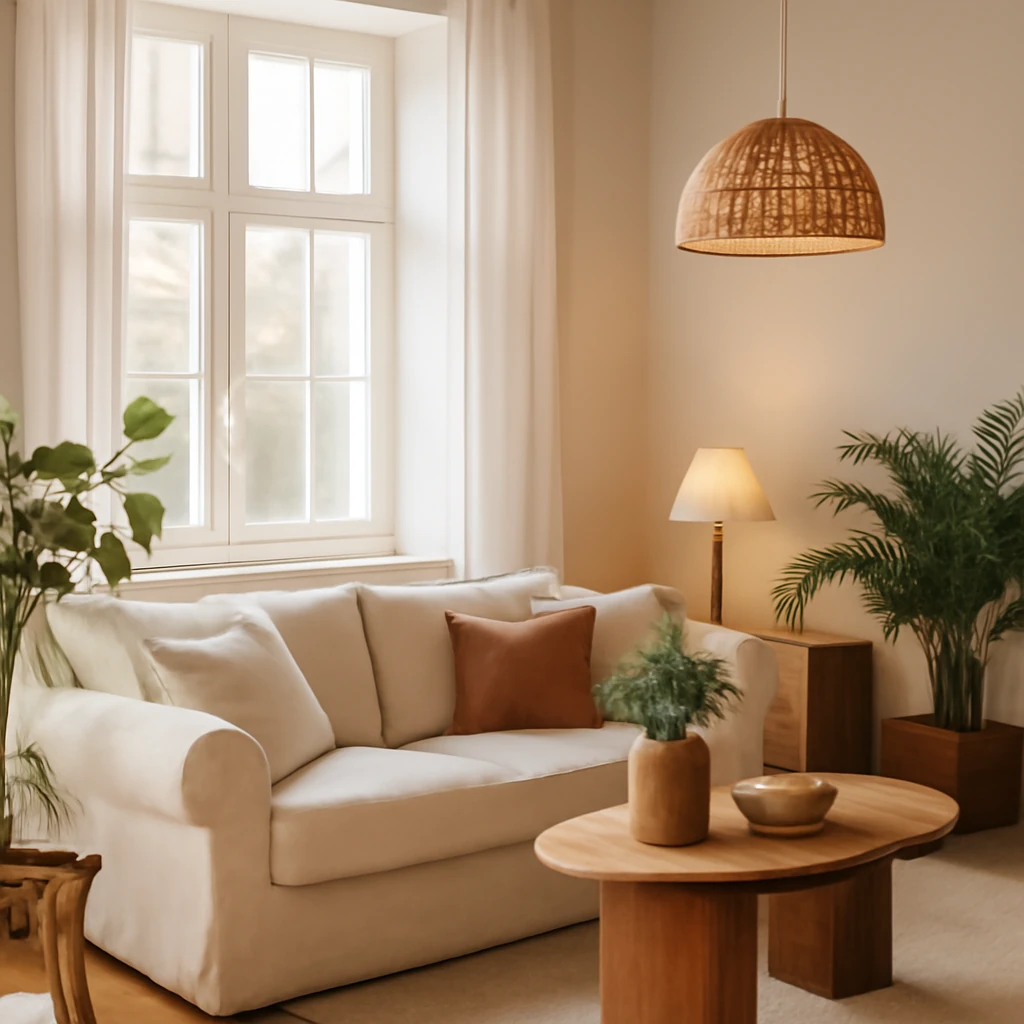
Everyone knows the idea of using a single ceiling light to “get by” in a large living room. In practice, one luminaire is rarely enough to create comfortable, flexible spaces. This article explains why multiple lighting layers matter in European homes and how to deploy them across different living environments.
Four types of lighting in the living room
General light - ceiling
General light provides the base level of visibility and ensures the room reads coherently. A single ceiling fitting often creates glare at the screen and uneven light fall. For evening tasks such as reading or sewing, additional light layers are essential, whether from recessed spots, a floor lamp, or directional fixtures.
Local light - for specific zones
Local lighting illuminates the task area and is positioned at eye level or just above for comfortable illumination of hands. It can be wall mounted, on the floor, or perched on a table. When planning zones, ensure that the light complements the activity: reading, gaming, or crafting.
Decorative light - for accents
Decorative light adds texture and mood but is not a primary source. Used to highlight a sculpture, a bookshelf arrangement or a architectural feature, it can elevate the room without increasing glare.
Smart lighting - for the TV
Smart lighting behind the television or monitor provides dynamic background illumination that adapts to the image. It reduces eye strain and enhances perceived contrast. Modern systems offer affordable solutions that can be installed retrospectively in most screens.
Eight lighting zoning scenarios
Lighting zoning acts like a screen between different activities within one room. You can create several zones that serve distinct purposes without crowding the space with light. The following practical scenarios cover common European living room layouts.
- Scenario 1. One room, one activity
What light is needed: primary general light.
Use a well-diffused ceiling light that evenly spreads light across the room. This ensures clear visibility for tasks such as tidying, cleaning, or general socialising.
- Scenario 2. Socialising and board games
What light is needed: diffuse ambient light plus local task lighting.
Arrange a comfortable seating area and place a table or coffee table as the focal point. Add a floor lamp or wall light at eye level to illuminate game pieces without causing glare on screens or printed cards.
- Scenario 3. Movie watching
What light is needed: smart backlighting or diffuse local light.
In addition to the general light, provide soft surround lighting around the screen or a shaded lamp to reduce glare and eye strain during film viewing.
- Scenario 4. Dinner with family
What light is needed: local light over the dining area and decorative lighting.
Position a pendant or a small chandelier above the dining table to create a defined focal point while keeping the rest of the room softly lit.
- Scenario 5. Evening gatherings
What light is needed: local diffuse light plus decorative accents.
Combine ambient lighting with subtle architectural or decorative accents to create a intimate, relaxed atmosphere.
- Scenario 6. Working space
What light is needed: ceiling light plus a local directional task light.
Ensure the workspace is well lit without glare. A ceiling wash can provide general illumination, while a designed desk lamp or adjustable wall light offers targeted brightness for documents or screens.
- Scenario 7. Kitchen in the living room
What light is needed: ceiling light plus local directional lighting.
In open-plan layouts, include ceiling spots for general light and under-cabinet or pendant lighting to illuminate work surfaces and the dining area separately as needed.
- Scenario 8. Bedroom in the living room
What light is needed: ceiling light plus local lighting above the bed or seating area.
Provide a soft, diffuse ceiling light along with adjustable reading lamps near the bed or sofa for late-night comfort without fully brightening the room.
Features of lighting in different living rooms
When selecting fittings for the living room, consider not only the inhabitants’ habits but also the architectural character of the space. European homes range from compact city apartments to expansive open-plan living areas, and lighting should respond to both form and function.
Low ceilings - light upwards
Directing light toward the ceiling visually lengthens walls and creates a sense of airiness. Wall sconces and adjustable ceiling fittings can balance height and provide a comfortable reading glow when directed upwards. If light is emitted toward the ceiling, the room reads larger and less oppressive, while downward illumination can highlight a coffee table or a favourite book in the hands of someone seated.
Compact living rooms - wall lighting
In smaller spaces, avoid crowding the floor with large lamps. Instead, employ wall sconces, shelf lighting and discreet LEDs integrated into storage. A layered approach where wall washes and indirect light create depth makes a compact room feel more expansive without sacrificing ambience.
Nattering around ceilings - colour temperature and materials
Ceiling treatments vary across Europe, from plaster to timber panels. The lighting approach should respect the ceiling finish, LED sources with appropriate colour temperature can interact with surfaces to create warmth or clarity. Recessed or surface-mounted LEDs on plaster ceilings yield a clean finish and enhance the room’s proportions, while timber ceilings can be warmed with light that emphasises natural texture.
Natal lighting near stretch ceilings
Stretch or fabric ceilings can be sensitive to heat. Use cool-running LEDs and maintain a safe distance from the ceiling surface to avoid heat damage. Where possible, position light sources away from the fabric or embed them within suitable profiles to preserve the ceiling’s appearance.
What fittings suit the living room
Ceiling spots
Flat-profile spots offer broad illumination but can feel clinical if overused. Modern designs project light outward while controlling glare, working well above seating areas and cabinetry. Consider a mix of directional spots over the sofa and plainer spots across the rest of the ceiling to maintain balance.
Track systems
Track lighting fixtures mounted on a rail can pivot to illuminate specific zones. They are ideal for dynamic zoning, allowing light to glide to where it is needed. Tracks can be installed on standard ceilings or within more complex ceiling constructions.
Chandeliers
A single centrepiece or multiple units can act as a design anchor. Choose models that harmonise with the overall décor rather than competing with other elements in the room.
Pendant lights
Pendants vary in form and scale, they are well suited to delineate dining zones or illuminate a coffee table while keeping other zones calm and unfussy.
Height guidelines for hanging lights
When planning the drop, consider the furniture height and the recommended clearance from the fixture. A simple method is to add the furniture height to the desired clearance, then subtract this total from the ceiling height to determine the hanging length. For example, dining tables typically require a drop around 75–85 cm above the tabletop, depending on ceiling height and the fixture's design.
Recessed lighting
Perimeter lighting integrated into ceilings creates a soft glow and a decorative edge. It is particularly effective in open-plan spaces or rooms with tall ceilings, providing a warm base layer without overpowering features.
Wall sconces
Wall lamps come in decorative and task-focused varieties. Decorative sconces add ambient glow, while task sconces provide focused illumination for reading or working at a chair or sofa.
Wall lanterns and wall lamps
Consider two types: a decorative wall light for mood lighting and a directional wall light for reading. The right placement along a seating wall can create a balanced, comfortable atmosphere without creating hotspots.
Standalone lighting
Floor lamps and table lamps offer flexible lighting without major renovations. Use them to add sculptural accents or to light corners and seating without dominating the space.
How much light should be in the living room
To achieve comfortable illumination for a typical European living room, a practical guideline is around 150 lumens per square metre. The required light level is influenced by ceiling height and room layout, so calculations should be adjusted with a height coefficient as shown below.
- Ceiling height 2.7–3.0 m: coefficient 1.2
- Ceiling height 3.1–3.4 m: coefficient 1.5
- Ceiling height 3.5–4.5 m: coefficient 2.0
For example, a living room of 15 m2 with a ceiling height of 2.7 m would require about 2700 lumens (15 × 150 × 1.2). In practice this means a combination of several light fittings distributed evenly to avoid glare and dark corners.
Checklist: how to assemble lighting for the living room
- List all activities that occur in the living room and identify a suitable lighting scenario for each.
- Determine the light type for each action: bright directional light or soft diffuse lighting at eye level, or light at the hands for tasks.
- Plan locations for the lights: seating area, desk or work surface, reading nook, dining zone, and so on.
- Choose fittings that suit the space and maintain balance with the room's proportions and finishes.
In designing a lighting plan for a European living room, consider how the space will be used across seasons and times of day. A well conceived scheme offers flexibility, energy efficiency and a cohesive feel across open‑plan layouts common in many European cities.
You may also like these articles
 Small Spaces
How to Make a Small Room Feel Bigger: 20 Simple Tricks
Clever design tips to visually enlarge compact European spaces.
Kitchen Design
Provencal Kitchens: Rustic European Charm for Modern Homes
A guide to Provencal kitchen design across Europe, blending rustic charm with modern living.
Tips & How-To
Light Kitchens Across Europe: Colour, Texture and Style
Bright, easy-to-maintain kitchens across Europe: tips on colour, texture and lighting.