
Explore interior trends, AI design insights, styling guides and real transformations
Layered Lighting for European Living Rooms: A Practical Guide
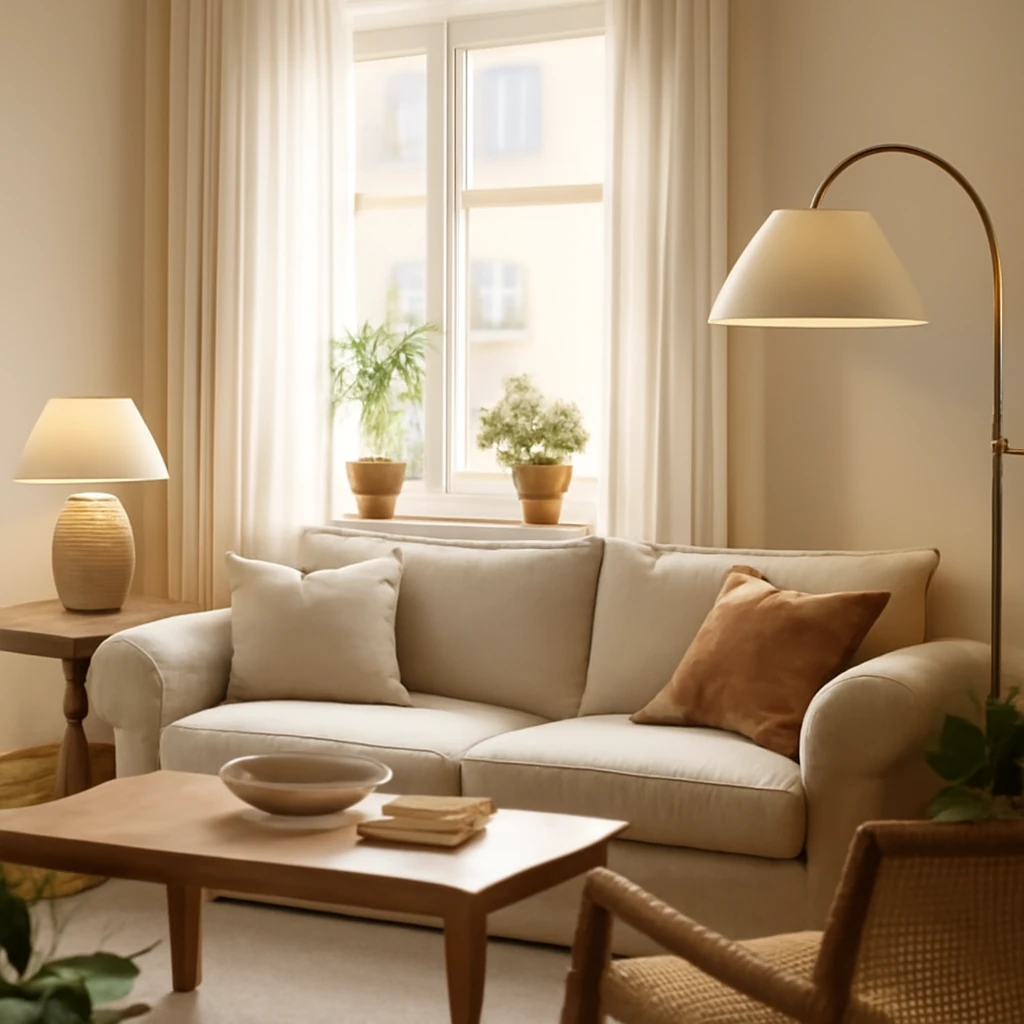
Lighting is a foundational element of design in a European living room. It shapes mood, defines zones, and enhances every activity from relaxing with family to entertaining guests. The goal is to create a flexible, well-balanced lighting scheme that supports habit and function while contributing to the room’s atmosphere and character. A thoughtful approach combines three core layers of light, precise positioning, and intelligent control so that illumination can be dimmed, redirected, or intensified as the day unfolds. This article guides you through a practical framework for planning, specifying, and implementing layered lighting in contemporary European living rooms.
Ambient lighting
Ambient lighting is the foundation of any living room scheme. It provides general illumination that allows everyday activities to take place comfortably without eye strain. In most European homes, ambient lighting comes from ceiling fixtures such as chandeliers, flush-mounted ceiling lights, or recessed luminaires. The objective is to create a soft, even wash of light that fills the room and establishes a coherent backdrop for furniture, textures, and architectural details.
When selecting ceiling fittings, consider the room size, ceiling height, and the overall interior style. A classic chandelier can anchor a seating area with a sense of splendour, while a modern pendant or a cluster of streamlined luminaires can emphasise a contemporary temperament. In larger rooms, multiple ambient sources can be positioned to avoid dark corners, with zones receiving slightly different levels of light to reduce contrast and prevent glare. In all cases, choose fixtures with dimmable LEDs and a colour temperature in the warm to neutral spectrum - roughly 2700K to 3000K for cosy rooms, up to 3500K in more functional spaces or guided dining areas - so the light remains flattering to skin tones and materials.
One practical principle is to centre the primary ceiling light in the geometric middle of the room, or above a key focal element such as a sofa group or coffee table. In spaces with open plans or social dining areas, it is common to position a pendant or a small cluster above the dining table to provide defined illumination without creating harsh shadows on guests’ faces. For rooms with lower ceilings, ensure the fixture height keeps sight lines clear and avoids impeding movement - typically the bottom of the pendant should sit around 2.1 m from the floor, rising to a slightly lower height when positioned above a dining table or a reading nook.
Local and task lighting
Local lighting refers to light sources placed to illuminate specific tasks or micro-areas within the room. It is essential in living rooms because the space supports several activities: reading, working on a laptop, playing board games, or enjoying a cosy evening in front of the TV. Distinct task lighting helps create a comfortable environment by delivering targeted brightness where it is needed most, while keeping the rest of the room softly illuminated.
Good task lighting typically involves a combination of floor lamps, table lamps, and wall-mounted sconces. Placing a floor lamp beside a sofa offers a convenient reading light without projecting glare toward the television screen. A well-positioned table lamp on an end table provides gentle illumination for conversation and casual dining, while a wall sconce mounted at the right height can create a warm glow that enhances texture and colour in upholstery and artwork.
When designing task lighting, consider the height and direction of light. A floor lamp should typically stand between 1.5 m and 1.8 m tall, with the shade directing light downward or softly outward. Table lamps should be proportionate to the furniture they sit on - neither swallowed by the surface nor towering over it. Wall-mounted lamps are most effective when the light is aimed away from reflective surfaces, such as a television screen, to minimise glare. In a well-balanced plan, task lighting supports the living area’s activities without overpowering the ambient layer.
Accent and decorative lighting
Accent lighting is used to draw attention to architectural features, artworks, textiles, or pieces with personal significance. In European interiors, this layer adds drama and depth, transforming flat surfaces into theatre for the eye. The most common tools are adjustable spotlights, track lighting, picture lights, and cove lighting. These sources allow you to control the intensity and angle of illumination, creating focal points that invite exploration and conversation.
A popular approach is to use adjustable spotlights to highlight a current focal feature - such as a painting, a sculptural object, or a textured wall. Track lighting offers flexibility, enabling several directional lamps to be rotated and aimed as the room evolves. When using accent lighting, be mindful of balance: a single prominent light can be striking, but multiple smaller accents should be coordinated in colour temperature and brightness to avoid a cluttered or over-lit effect.
Accent lighting is not merely about brightness, it’s about contour. Subtle, selective illumination can reveal material richness - the weave of a rug, the veining of marble, or the sheen of a metallic surface - while maintaining comfortable ambient levels elsewhere. As a rule, keep accent lights at a lower output than ambient sources, and position them to avoid direct glare into eyes or onto reflective surfaces.
Smart and automated lighting
Many European homes now integrate smart lighting systems that can control multiple circuits, adjust brightness, and create personalised scenes. The advantage of smart lighting is not only convenience but also energy efficiency. Smart controls allow you to programme scenes that match daily routines or special occasions, and to adjust lighting in response to occupancy, daylight availability, or mood. A well-designed smart layer can be operated via a wall panel, a mobile app, or through voice assistants, providing tactile, intuitive interaction with the lighting scheme.
Key considerations when implementing intelligent lighting include the ability to individually dim zones, the compatibility of fixtures with reliable dimming technologies, and the integration with other smart home systems. For living rooms, practical scenes might include: a cosy “evening” scene with warm, low-intensity ambient lighting, a bright “reading” scene near seating, and a cinematic scene for movie nights that minimises screen glare while sustaining a soft surround glow. Motion sensors can be deployed in public circulation areas to provide hands-free illumination when needed, or to gently wake lighting as you enter the room.
Zoning and spatial planning
Living rooms are multi-functional spaces. A successful lighting plan recognises distinct zones and assigns appropriate lighting levels to each, supporting different activities without creating conflicts in brightness or colour balance. Common zones include the seating area, the dining space, and potentially a work corner or console area near an entry.
To define these zones, light should be layered rather than uniform. For example, a dining table benefits from a central pendant with a warm output that is strong enough to illuminate the table surface, while surrounding seating areas should be bathed in a softer, more diffuse light. The seating zone benefits from a combination of ambient light and task lighting, such as a floor lamp or a wall-mounted reading light. If a fireplace or feature wall is present, accent lighting can highlight its texture to dramatic effect without overpowering other zones.
Fuel for thoughtful zoning is a lighting plan that considers natural daylight. In European homes, daylight varies with the season, building orientation, and window treatments. A well-calibrated scheme uses higher ambient brightness during daylight hours and allows for flattering, dimmable layers as daylight declines. The aim is to keep contrast comfortable - neither a glare-filled room nor a dim, claustrophobic nook - and to ensure that each zone remains usable and inviting from multiple seating positions.
Designing a plan: practical guidelines
Transitioning from idea to installation involves precise planning. Here are practical guidelines to help you translate concept into a coherent, functional lighting plan for a European living room:
- Avoid glare on screens: Do not position wall lights directly opposite a television or computer screen. Light should illuminate the space but not reflect into the viewing area, which can cause discomfort and fatigue.
- Proportions and mounting height: The height at which wall fixtures are mounted, as well as the general scale of luminaires, should relate to the room’s proportions. In most living rooms, wall sconces are placed to promote balanced illumination, typically with their centre around eye level when seated. If the room has a classical interior, a symmetrical arrangement often looks most harmonious.
- Ceiling heights and pendant drops: For rooms with standard European ceiling heights (approximately 2.4–2.8 m), keep ceiling fixtures at a height that allows comfortable movement beneath them. If the pendant hangs over a dining table, drop the fixture a little to create a defined focal point without obstructing conversation or viewing angles.
- Functional lux levels: Strive for about 150–300 lux in living and lounge zones for comfortable everyday activities, with higher levels near reading or work areas - around 300–500 lux - for short periods. Dining areas may be planned at 250–400 lux on the table surface, depending on the finish of the tabletop and the desired ambience.
- Colour temperature and mood: For living rooms, a warm to neutral spectrum (2700–3000K) contributes to a welcoming atmosphere, while slightly cooler temperatures (3000–3500K) can improve visibility in task-rich areas without feeling clinical.
- Dimming and controls: All primary light sources should be dimmable, and scenes should be programmable. A single control system that regulates ambient, task, and accent layers yields the most flexible, user-friendly experience.
- Quality of light: Prioritise high Colour Rendering Index (CRI) lamps, ideally above 90, so colours read accurately under artificial light. This is especially important for fabrics, wall colours, and artwork that you want to appear true to life.
- Energy efficiency: LED luminaires with efficient drivers deliver longer life and lower running costs. Plan for a mix of fixed and adjustable fixtures that maximise daylight usage while remaining adaptable as functions shift.
- Cable management and aesthetics: Conceal wiring neatly and select fixtures with clean lines that complement the room’s architecture. Where visible wiring is part of the design, make it deliberate and visually cohesive.
- Maintenance and accessibility: Choose fixtures that are easy to service and replace lamps in high or awkward positions. Accessible controls reduce friction for daily use and long-term satisfaction.
Designer tips
To refine a living room lighting plan, designers often rely on a set of practical guidelines drawn from experience across European residences. Here are ten actionable tips you can apply when shaping your own scheme:
- Discretion over decoration: When choosing a statement light, exercise restraint. A striking piece should be the primary focus, with other lighting kept simple to avoid visual competition.
- Subtle contributions in pastel spaces: If walls are in pastel tones and furniture remains light, a sculptural floor lamp or a refined table lamp can introduce personality without overwhelming the palette.
- Balance with multiple layers: Use a combination of decorative lighting and focused spots to delineate zones, the dining area benefits from a dedicated pendant, while the seating area thrives on softer ambient light.
- Minimalist elegance: For pared-back, contemporary interiors, consider a metal pendant with a clean, circular silhouette to maintain a calm, uncluttered look.
- Centrality in expansive rooms: In generous spaces with lustrous surfaces, a single, well-proportioned chandelier positioned centrally can create a strong, unifying moment.
- Three-layer approach for small rooms: In compact living rooms, use three lighting layers to delineate distinct tasks and zones - this helps the space feel organised rather than cramped.
- Reading comfort near sofas: Place a table lamp or a floor lamp beside the seating area where reading occurs to reduce strain and keep the mood intimate.
- Elegant illumination for special occasions: A crystal or finely cut glass chandelier can elevate the atmosphere for entertaining, provided it sits harmoniously with the rest of the scheme.
- Accent with LEDs behind screens: Subtle LED backlighting behind a TV or within a display niche can add depth and warmth without creating glare on the screen.
- Dark rooms crave light: If the space tends to be dim, layer more light rather than relying on a single source. A unified, controllable system makes a small room feel comfortable and versatile.
Beyond these tips, a well-considered lighting plan respects the space’s architectural identity, the surrounding neighbourhood, and the occupants’ daily rhythms. In European homes, where daylight hours shift with the seasons, the ability to adapt lighting levels quickly is particularly valuable. The most successful projects combine practical guidance with a sense of place, ensuring that light, as a design material, contributes to comfort, function, and narrative.
Practical considerations and case-building hints
Every living room is unique, and the best lighting design reflects its architecture, natural light, and how people live in the space. Consider these practicalities as you move from concept to construction:
- Meet the room’s personality: Choose lighting that communicates the room’s character - classic interiors benefit from refined symmetry and warm metal finishes, while modern spaces welcome pared-back profiles and crisp lines.
- Daylight-aware planning: Assess how sunlight shifts through the room across seasons. Position fixed lighting to complement daylight rather than fight it, keeping window exposures and reflective surfaces in mind.
- Future-proofing: Design your scheme with an eye to change. A modular approach - where lights can be moved or replaced without major alterations - saves time and cost as tastes evolve.
- Accessibility and safety: Ensure controls are within easy reach from the most-used seating positions, and plan for reliable operation in case of power outages, including battery backups or manual dimmers in critical zones.
- Sound considerations: In some spaces, lighting can influence acoustics indirectly through reflections. Avoid hard, high-gloss surfaces facing light sources where possible, or balance with textiles to soften echo.
In summary: building a cohesive lighting language
A comprehensive living room lighting plan in a European home blends ambient, task, and accent lighting with smart controls and carefully considered zoning. It respects architectural form and interior style, supports a spectrum of activities, and remains flexible as habits change. The most persuasive schemes are not merely about brightness, they are about rhythm, texture, and atmosphere - lighting that feels inevitable, yet highly adaptable to daily life and special occasions alike. By starting with a clear understanding of zones, choosing high-quality, dimmable LED fixtures, and coordinating colour temperatures, you can craft a living room that shines with timeless appeal and modern efficiency.
You may also like these articles
 Interior Design
A sunlit Provençal-inspired home: warmth, light and crafted charm
A sunlit, Provence-inspired family home blending light, colour and handmade details.
Bathroom Design
Painting Bathroom Walls: Debunking 6 Myths for European Wet Rooms
Debunking myths about painting bathroom walls in Europe.
Tips & How-To
A practical guide to sofa cleaning: expert tips for European homes
Master sofa cleaning with practical, European-focused tips.