
Explore interior trends, AI design insights, styling guides and real transformations
11 Designer Ideas to Style Your TV Zone in the Living Room
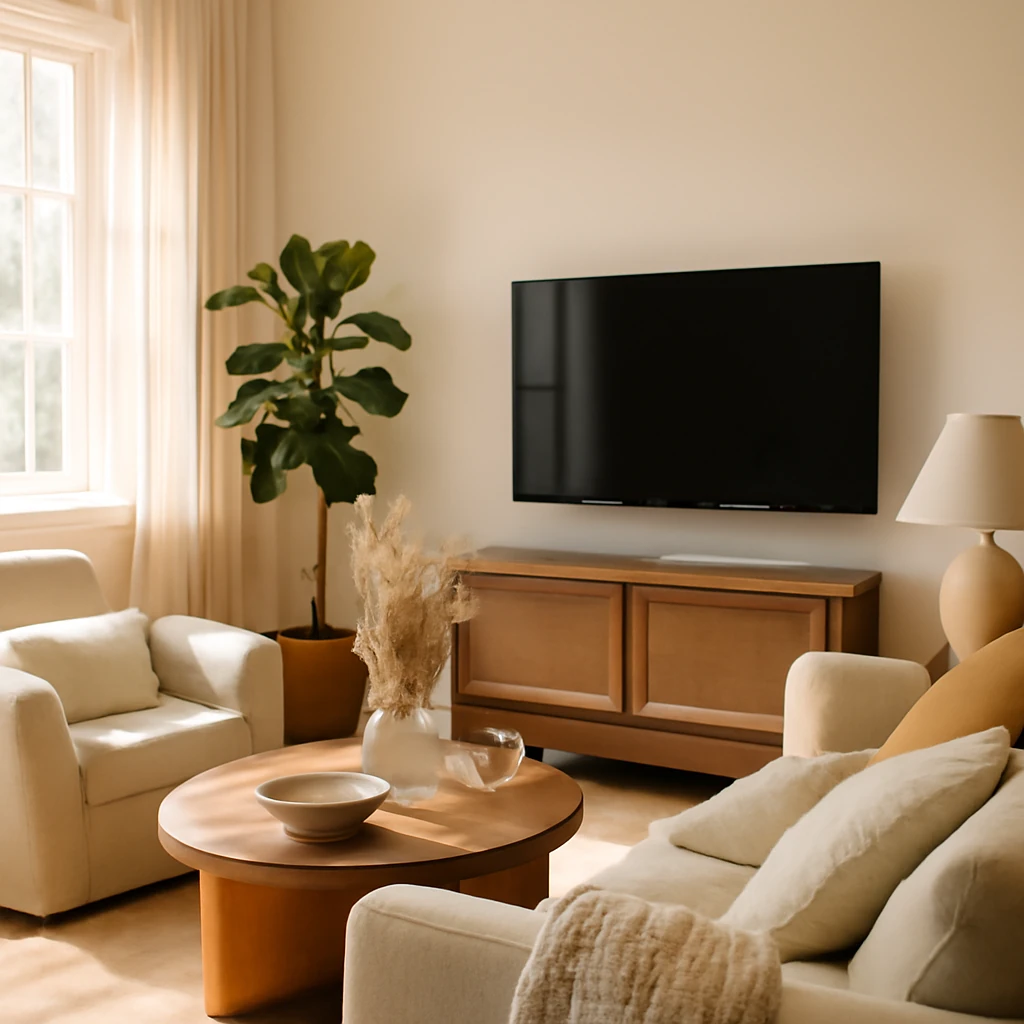
Creating a harmonious TV zone is now a core consideration in European living rooms. As open-plan layouts become more common, the challenge is to integrate the screen so it supports the room’s aesthetic rather than disrupts it. Thoughtful design can balance media needs with lighting, acoustics and storage, while offering flexible configurations for small apartments and generous homes alike. The following eleven ideas provide practical, stylish approaches for concealing, framing and positioning televisions in varied interiors - from traditional brick and wood backdrops to minimalist recesses and bespoke joinery. Each concept emphasises cable management, material language and proportion, with attention to the way light, texture and colour influence viewing comfort. Whether you favour a classic, contemporary or craft-led look, there are strategies here to help you craft a living room that remains calm, cohesive and fit-for-purpose even when the screen is on.
1. Against wooden veneer wallpaper
One of the most reliable ways to soften a TV screen is to place it against a wall finished in wooden veneer wallpaper. This neutral backdrop reduces the screen’s visual weight and creates a natural texture that speaks of warmth and tactility. In European interiors, wood veneers can be chosen in light ash, warm oak or richer walnut tones to echo flooring in a parquet pattern such as French or herringbone layouts. Pair the backdrop with a low, unobtrusive media console in a matching finish to maintain continuity. If the room has wooden doors or cabinetry, keeping the veneer language consistent helps the TV retreat into the wall without disappearing completely from sight. Consider soft, indirect lighting on either side of the wall to minimise glare and to cast a gentle glow around the screen.
Practical note: ensure the wall finish is non-reflective and that the ventilation around the back of the TV remains adequate. A shallow recess or a slim frame around the screen can further reduce its prominence, turning it into a calm, textured anchor for the room rather than a focal point.
2. In a frame
Rather than viewing the television as a standalone device, some designers opt to place it within a wide, light-coloured frame or gallery-style surround. The effect is not simply decorative - a frame can visually integrate the TV with surrounding artworks or photographs, so the screen reads as part of a curated composition. In practice, achieve this by mounting the display on a wall where the frame can extend beyond the screen to include margins that resemble a picture frame. The surrounding mouldings or plaster detailing should be minimal yet precise, so the frame remains a deliberate design element rather than a distraction. Neutral wall colours with a touch of texture, such as plaster or limewash, work well to avoid competing with the picture rail or cornice lines that are common in European interiors.
Tip: choose a frame depth that mirrors nearby shelving or cabinetry to preserve a balanced, orderly look across the wall.
3. Camouflage with frames and mats
For a refined, art-forward look, the TV can be staged as a canvas within a series of frames and mountings that resemble a gallery wall. The screen itself can be paired with a selection of mat boards or lightweight frames in black, white or metallic finishes to echo other wall-mounted pieces. When the screen is off, the display becomes a curated collage, while the moment you switch it on, it still reads as a contemporary artwork. The trick lies in choosing frames that do not overpower the wall, opt for slim profiles and matte finishes to avoid glare. If the room features a wall of cabinetry or open shelves, align the frame with their lines to create a cohesive, intentional rhythm.
To minimise visible cables, use a transparent or recessed cable conduit that runs within the wall or behind the frame. This solution keeps the focus on design rather than on electronics.
4. Above the fireplace
Mounting a television above a fireplace is a classic configuration in European homes, particularly where the chimney breast forms a natural focal point. When designed thoughtfully, the arrangement achieves a balanced, dual-purpose wall that blends media with social living. The key is proportion: the fireplace and the TV should sit at similar visual weights, with softer materials surrounding them to avoid a stark contrast. Consider elevating the mantel or adding a shallow, discrete shelf around the screen to house remotes, speakers or decorative accessories. If possible, select a wall finish that radiates warmth without excessive heat exposure, modern fireplaces often include updated flue designs that reduce airflow toward the screen. Adequate ventilation beneath the TV is essential to prevent overheating and to sustain screen longevity.
Lighting plays a major role here: wall washers or indirect LED strips placed at the top of the fireplace opening can create a gentle halo that offsets the glow of the screen in the evening.
5. Built into the wall
Creating a recess for the TV within a wall can deliver a sleek, minimalist effect that feels truly contemporary. In practice, this approach requires careful coordination with structural elements in the room: the wall may be reinforced to accommodate the TV’s depth, and the media equipment can be hidden within a nearby wardrobe or cabinet behind the screen so cables and devices remain out of sight. A recess also helps with acoustics by allowing the screen to sit flush with the wall, reducing reflections. For a polished finish, seal the front edge with a slim frame or a continuous plaster return that aligns with surrounding walls. In European interiors, this approach is often paired with full-height joinery that conceals not only the screen but also a service area for cables, consoles and game devices.
Note: a professional installation is essential to ensure proper ventilation, safe cable routing and seamless access for maintenance.
6. TV as an art object
The modern TV can be a compelling art object in its own right. When the screen is off, it can display still-life imagery, a rotating artwork library, or a curated family gallery. In this mode, the screen acts as a moving canvas that complements the room’s art collection rather than competing with it. To maximise this effect, choose a screen with a low-profile bezel or a display that sits behind a shallow recessed frame. A motorised lift or hinged panel can reveal the screen only when needed, preserving a gallery-like aesthetic the rest of the time. If your space allows, pair the TV with a lighting plan that highlights the surrounding artwork and matter-of-factly integrates the screen within the wall’s rhythm.
For a truly cohesive look, select a wall colour and texture that harmonise with the frame or border of the displayed artwork. The result is a room where technology plays a supporting, rather than dominant, role in daily living.
7. Against a brick wall
A brick wall provides a robust, timeless backdrop that can define a media zone without overpowering the room. When set against a brick surface, the TV benefits from a restrained, slim console or a low, wide unit that keeps the screen at comfortable viewing height. In European interiors, exposed brick often sits alongside other natural materials - timber, stone and leather - so aim for a warm, cohesive palette that echoes the wall’s texture. White, grey or taupe cabinets work well to bring lightness, while dark timber accents add depth. If the open-plan layout includes a kitchen or dining area nearby, a brick backdrop can visually separate the TV area from the rest of the space without creating a hard boundary. Cable management remains crucial: use discreet channels or run cables within the wall to preserve the brick’s rustic appeal.
Keep lighting minimal and controlled with dimmable LEDs to prevent reflections on the screen while preserving the brick’s character in daylight.
8. In a niche
A dedicated nook or niche is ideal when the aim is to create a dedicated media corner without encroaching on the main seating area. A tall cabinet or floor-to-ceiling unit can frame the TV, with the surrounding shelves or cupboards serving as storage for media devices, books and decorative objects. The critical factor is scale: ensure the niche is proportionate to the room and to the screen, so it doesn’t feel overwhelming or diminutive. Lighting within the niche can be used to highlight the display area and soften reflections on the glass surface. In European homes, tall joinery often integrates with seating furniture, creating a continuous line that enhances the perception of space. Ventilation remains essential to maintain device longevity and to prevent heat build-up.
With the right configuration, a niche becomes both a functional media hub and a styling feature that contributes to the room’s architectural language.
9. TV in a mirror-window
One of the more theatrical yet practical solutions is to conceal the TV behind a mirror-window or shuttered panel. When the screen is off, the panel behaves as a decorative mirror or window, when it is switched on, it reveals a high-definition display. This concept is particularly appealing in living rooms with traditional or transitional design language, where a classic mirror can coexist with modern technology. The mechanical system should be designed for easy operation, with a wall-mounted mechanism or concealed track that allows the panel to glide smoothly. Ensure the mirror is treated to resist condensation or steam, especially if the TV area is near a kitchen or fireplace. A light backdrop around the mirror enhances visibility of the screen when it is in use and preserves the space’s overall brightness.
Accompany this with soft ambient lighting that complements the reflective surface and creates a warm viewing atmosphere.
10. Classic, unobtrusive
Sometimes the simplest solution is the strongest: a TV placed on a traditional console, sideboard or floating shelf can be perfectly harmonious within many European interiors. Choose storage furniture with clean lines and a finish that matches surrounding woodwork or cabinetry. Elevate the look with cable management that disappears behind the furniture and with subtle, integrated lighting to highlight the display area without drawing attention to the electronics. This approach works well in rooms with a mix of modern and classic elements, where the media unit serves as a transitional piece that ties different stylistic moments together. For living rooms with a formal character, consider a console with a slight profile and generous leg room to keep the space feeling open.
Practical considerations include the screen’s viewing height in relation to seating and the furniture’s depth, so the screen sits comfortably without crowding the space.
11. Hidden in a wardrobe
For truly uncluttered spaces, a full-height wardrobe can conceal not only clothing but also a substantial TV zone. A sliding-door wardrobe hides the screen behind one panel, when a viewing session is required, the door slides away to reveal the TV and a compact media shelf. This configuration is especially valuable in bedrooms or compact living areas where space is at a premium. The wardrobe can incorporate a dedicated electrical and data hub, with concealed channels for cables, remote control receivers and any game equipment. The key is to plan the wardrobe’s depth and door mechanism so it does not impede the room’s circulation or the wardrobe’s primary storage purpose.
When the TV is hidden, consider a secondary lighting plan that activates during viewing to maintain a balanced ambience without creating glare on the screen.
Across all these ideas, the guiding principles remain the same: ensure proportion, optimise lighting, manage cables cleanly, and select materials and finishes that reinforce the room’s overall character. A well-designed TV zone should feel integrated, not inserted, into the living room - a place where technology supports daily life while preserving the space’s beauty and comfort.
You may also like these articles
 Colour & Materials
Olive Green Interiors: A Timeless European Palette
A practical guide to olive green interiors across Europe: palettes, pairings, and room-by-room tips.
Kitchen Design
Small Kitchen, Big Style: Designing a 12 m² Kitchen Across Europe
Smart layouts and finishes for a 12 m² kitchen you can live in.
Tips & How-To
Hallway Floor Tiles: A Comprehensive Guide to Design and Laying
A practical guide to selecting and laying hallway tiles across Europe.