
Explore interior trends, AI design insights, styling guides and real transformations
Smart design for compact European bathrooms: space-saving solutions
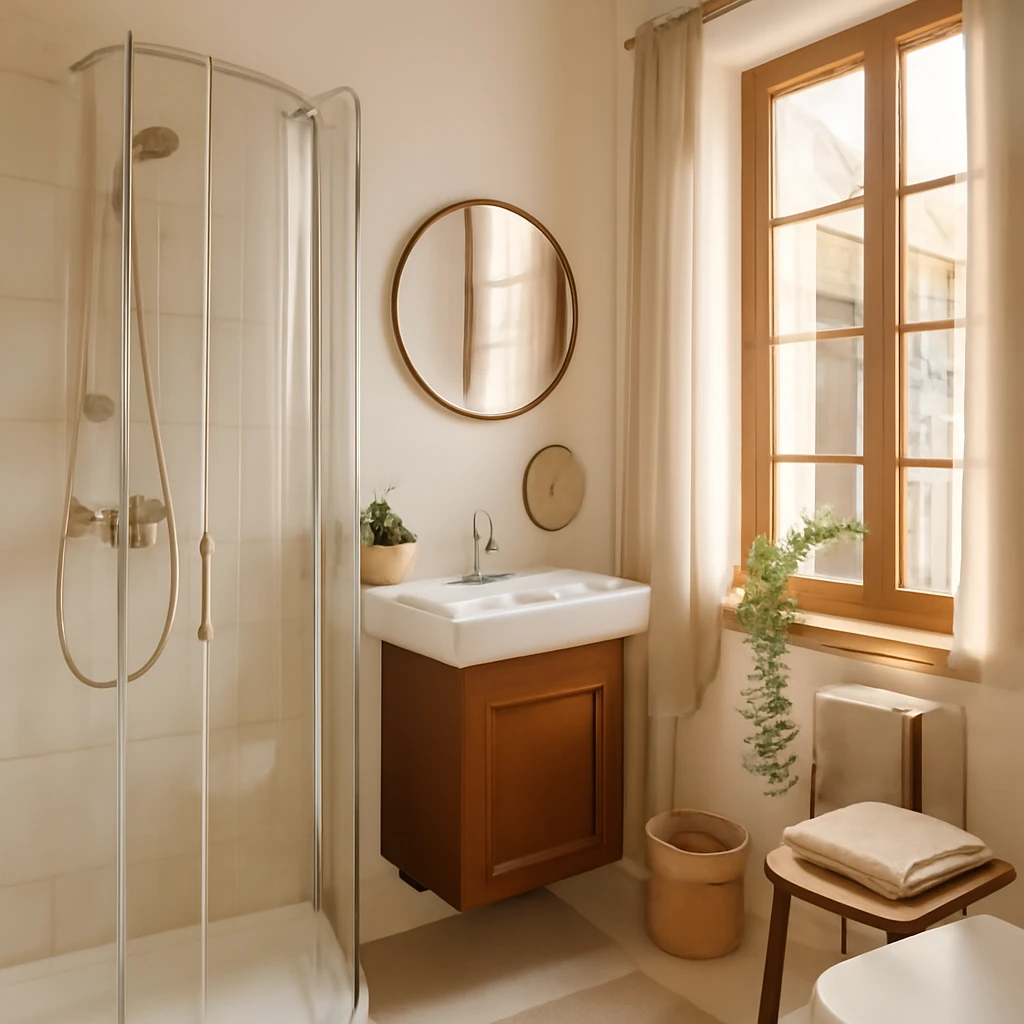
Planning a small bathroom: space planning and zoning
Designing a compact bathroom is an art. In busy European cities, bathrooms must combine function with calm aesthetics, making the most of every centimetre. Before any on-site work, create a detailed design brief and a zoning plan that shows how all zones relate: wet area, storage, vanity and circulation. In compact rooms, every element must be chosen and positioned with precision, without compromising ergonomics.
Key steps to guide the space planning include several practical decisions:
- Install a tall, narrow storage unit. Prefer closed cabinetry designed to resist humidity, for example with moisture-resistant finishes. Closed storage keeps everyday items out of sight, reduces visual clutter and is particularly important in family homes or where pets are present.
- Place a towel warmer as high as is convenient to reach - considering that users need easy access without bending or stretching.
- Choose a wall-hung toilet with a concealed cistern or a compact vanity unit to free floor space. These configurations read as modern and simplify cleaning, while visually expanding the room.
- If the bath is used only occasionally, consider replacing it with a luxurious shower enclosure, there are many efficient solutions that fit small footprints without sacrificing comfort.
- Maximise wall storage by placing shelves or hooks above the doorway or on any free wall to keep everyday textiles tidy and within reach.
With the right approach, even a small bathroom can be comfortable, organised and aesthetically coherent.
Colour and materials for small bathrooms
Colour can alter perception as much as proportion. Light colours with subtle textures play a critical role in making a small bathroom feel larger and more inviting. In European homes, a palette built around pale neutrals - such as creams, beiges, pale blues, soft greens and blush tones - works well across many styles from minimalist to coastal to contemporary. The goal is to reflect light and create a sense of openness while ensuring durability in a moisture-rich environment.
White ceilings are a universal trick to lift the perceived height of a room. The floor should be coordinated with the ceiling, either matching or staying one or two shades darker to delineate planes subtly and visually extend the ceiling line. For small rooms, large-format tiles tend to compress space, instead, choose small-format porcelain, ceramic or natural stone tiles in restrained patterns and textures.
Consider textures and finishes: glossy, matte and semi-matted surfaces can co-exist to add depth. A controlled mix - such as a satin tile with a high-gloss vanity mirror or a textured panel - gives personality without clutter. To foreground the architectural details, mirrors are a simple but powerful tool, they bounce light around the room and visually double the space.
Important note: for small bathrooms, select materials in smaller scales. Large panels or oversized tiles can visually shrink the room. Mosaic patterns are best approached with care, an experienced installer will be essential to avoid misalignment and an uneven finish.
Tile layouts matter. When tiling, a deliberate grout colour that matches the tile helps unify the surface, making it read as a single plane rather than a patchwork. A simple design intent - continuous plaster or tile with consistent grout - will help the eye travel smoothly around the room.
As a practical example, many European designers follow a principle of aligning the wet zone with a clearly defined boundary, using reflections to expand the perceived footprint. A well-chosen mirror on one wall can visually extend a 2.5–3.0 m² bathroom, while a tall, slender storage unit that stretches vertically can reclaim air and light in a compact plan.
Small bathroom with toilet: compact strategies
In many European homes, the bathroom is combined with the toilet. The challenge is not just fitting fixtures, but creating a calm, coherent space where each element serves function and style. The following approaches are widely adopted by professional designers when working with compact bathrooms that include a toilet:
- Custom or semi-custom furniture ensures everything fits precisely - avoiding wasted centimetres. Wall-hung cabinets, mirrors and open shelves should be selected with depth and mounting constraints in mind. In tight spaces, bespoke units can be designed with a focus on ergonomic reach and efficient storage.
- Consider a wall-hung toilet and a compact sink. Replacing a conventional bathtub with a quadrant or corner shower can liberate essential space, while a small shower cubicle remains visually comfortable and accessible.
- During refurbishment in older buildings, check the condition of plumbing and consider concealing or reorganising pipes behind panels. The aim is to provide easy access for maintenance without ripping out finished surfaces.
- Every material choice adds thickness. Wall coverings, tiles and skirtings all contribute to overall depth, so thickness should be accounted for at the design stage to ensure new fixtures still fit.
- Think about service continuity - planning for access to valves and pipes before closing walls can save time and cost later on. If access is blocked, you may lose the opportunity to renovate without major disruption.
For materials, durable, moisture-resistant options are essential. Suitable candidates include cement-based, ceramic or porcelain tiles in small formats, and paint systems rated for bathrooms. When selecting finishes, balance longevity with elegance, aiming for cohesive surfaces that read as one unified space rather than a collage of separate zones.
There are practical examples of successful layouts using a 2.1–3.0 m² footprint with a compact toilet-and-sink suite and a corner shower. These cases illustrate how a well-considered arrangement can transform a cramped area into a tranquil, easy-to-clean bathroom with a refined look.
Small bathroom without a toilet: liberating design options
A bathroom without a toilet offers greater design latitude and can be treated as a dedicated spa-like space or a practical daily wear area. The key remains efficient use of space and light. The following strategies are popular among European designers for such layouts:
- Illumination is critical. Instead of a single central light, deploy multiple low-profile luminaires to create layered, zoned lighting. This approach helps define wet and dry zones and reduces glare, while enabling better energy efficiency.
- Concealment of services is essential. Use slim plastic or composite panels to enclose pipes, valves and plumbing behind smooth surfaces that can be cleaned and maintained easily.
- Opt for a compact, corner sink and wall-hung vanity or integrated cabinet. This maximises usable floor area and makes cleaning easier. If space allows, choose a slender, wall-mounted storage column to extend vertical storage without crowding the floor.
- Avoid heavy suspended ceilings, instead, prefer light, moisture-resistant solutions such as PVC layouts or plaster with a low-profile gloss finish. Light colours will intensify the sense of height and airiness.
- Where door movement matters, consider a sliding door. If a hinged door is preferred, ensure it opens outwards and clears the corridor to avoid constraining space.
Recent projects demonstrate how a carefully planned, toilet-free bathroom can feel serene and expansive, even in a compact footprint of around 2.5–3.0 m². The design emphasis is on clarity of line, tactile materials and a restrained palette to create an atmosphere of calm and contemporary refinement.
Small bathroom with a shower (no bath)
For tiny bathrooms that omit the bath, the shower becomes the focal point. The space planning strategy and finishing details remain crucial, with some nuances specific to shower enclosures:
- Choose between a ready-made shower cabin or a customised unit. The latter offers the advantage of finishing surfaces within the shower zone to achieve a seamless aesthetic. Cost is often similar for both approaches when assessed in the context of the full project budget.
- A corner shower is typically the most efficient use of space, occupying around 1 m² and providing ample access for cleaning and daily use.
- In the shower area, consider mosaics or non-slip tiles and coordinate grout with tile colour to maintain visual cohesion. If multiple colours are used, ensure colour transitions are kept to internal corners for a clean, uninterrupted look.
- For water quality concerns - with higher salt or chlorides in the supply - consider darker-tinted glass to minimise visible mineral deposits over time. Avoid installing ceiling lights inside the shower, instead, place towel hooks and a small shelf at a distance of around half a metre from the showerhead to keep toiletries handy and dry.
- Minimalism is the recommended approach. A restrained palette, clean lines, and concise detailing ensure the space remains uncluttered and easy to maintain.
These design choices create a compact, coherent bathroom that feels larger than its actual footprint. A well-executed shower project demonstrates how less can be more in a small space, delivering both comfort and style.
In summary, achieving an elegant, functional small bathroom requires attention to scale, materials, light, and planning. With expert help, even the most modest footprint can perform like a generously proportioned room.
Common questions about small bathrooms
Which bath to install in a small bathroom?
Corner bath for space efficiency. Other options include baths with a narrowed foot area to reduce width, a shower cabin, or a shower tray for the ultimate economy.
How to place a washing machine in a small bathroom?
Install the washing machine beneath a sink or within a compact under-sink cabinet, ensuring all joints are well-sealed to prevent leaks.
How to style a small bathroom?
Focus on vertical storage, minimalist design, and light colours. Consider a corner sink, compact fixtures, and a slender vanity to maximise floor space. With professional guidance, a tiny room can still be stylish and comfortable.
What colour to choose for a small bathroom?
Light colours are recommended. Options include white, pale grey, soft blues, mint, and pale lilac. Employ cool-toned palette accents to create a fresh, airy vibe.
You may also like these articles
 Small Spaces
Designing brilliance in 25 m²: four studio transformations across Europe
Compact studios, bold layouts, European flair.
Renovation
Attic Design in Europe: Room Types, Styles and Finishes
Transform under-eaves spaces into bright, liveable rooms with expert attic planning.
Interior Design
Reflecting Light and Space: Hallway Mirrors for a European Home
A practical guide to choosing and placing hallway mirrors across Europe.