
Explore interior trends, AI design insights, styling guides and real transformations
Curtains for the Kitchen: European Styles, Fabrics and Functional Tips
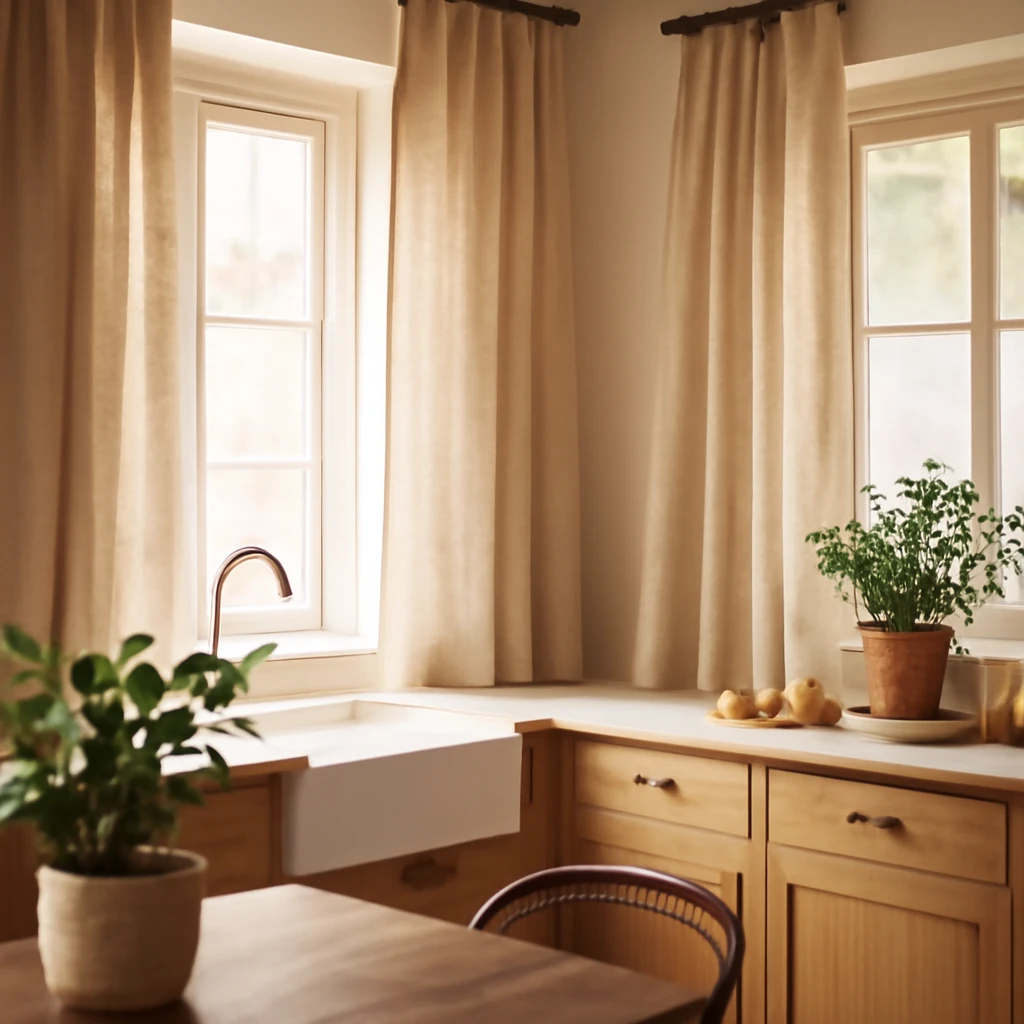
Introduction: the kitchen curtain as a design element
In European homes, the kitchen is more than a place to cook, it is a social and everyday workspace where light, warmth and practicality meet. Curtains for the kitchen therefore matter not only for privacy and light control, but also as a tactile element that adds texture, colour and atmosphere. A well-chosen window treatment can unify adjacent zones, soften strong architectural lines, and subtly reflect the dwelling’s overall style. This guide offers a comprehensive approach to choosing kitchen curtains that suit modern European interiors, from compact city apartments to open-plan kitchens in new-build developments.
Key principles: how to approach kitchen curtains
1. Include curtains in the design brief
The mistake many make is treating curtains as an afterthought. They should extend the same design thinking as the rest of the kitchen. Ideally, the curtain treatment is specified by the interior designer who created the scheme for the room. If you commission blinds or textiles separately, request a visualisation that shows the window in the context of the full kitchen. A collage or 3D view will reveal how the window treatment interacts with cabinets, worktops, seating and lighting, making it much easier to assess proposals from suppliers or curtain makers.
In practice, projects across European cities prioritise cohesive visual language: a palette, a fabric character, and a silhouette that relates to the materials used in the kitchen. When there is a single design studio responsible for the entire interior, the result tends to be more harmonious and easier to maintain over time.
2. Create a unified styling across connected spaces
When a dwelling features sightlines between rooms - such as an open-plan kitchen-dining area or a corridor view into the kitchen - it’s important that the window treatments read as a single family, even if the fabrics and textures differ. The aim is coherence, not uniformity. Shared elements such as colour, fabric type or the general form of the treatment help tie zones together without becoming monotonous.
In practice: imagine a kitchen that opens into a living zone, the same lightness of voile or a coordinated colour story can extend through both spaces, while heavier drapes may appear only where needed for privacy or heat control. A project visualisation should include the interior across all zones to allow assessment of the overall effect.
3. Address specific tasks with intention
Curtains on a kitchen window can perform several roles at once. The most common functions are:
- diffusing or blocking daylight to reduce glare on screens or work surfaces;
- framing or concealing a view from outside;
- providing protection from drafts while not obstructing ventilation;
- contributing to the overall interior aesthetic and colour balance;
- supporting or enriching the kitchen’s design language.
4. Consider window height and layout
The length of curtains is often dictated by the room’s proportions and the amount of floor visible. In smaller kitchens, shorter curtains that finish at or just below the windowsill can make the space feel airier. In larger kitchens or those with higher ceilings, floor-skimming drapery or full-length Roman shades can emphasise vertical proportions and create a sense of grandeur. The ideal is to have the fabric resting lightly on the floor or stopping about half a centimetre above it in order to avoid drag and dirt collection.
Long curtains may be practical where there is no dining area directly beneath the window and no obstruction to cooking, but if the window is close to a hob, a short or removable option may be safer and easier to keep clean. In busy family kitchens, consider alternatives such as Roman shades, roller blinds or venetian blinds that can be easily wiped down.
Selecting fabrics and finishes: what to consider
To determine the right fabric, start by answering a few practical questions about sun exposure, activity near the window and the look you want to achieve:
- From which direction does the sun rise and when does it pass by the kitchen window? Is dimming required at certain times of day?
- Which zone of the room sits closest to the window? Could a long curtain obstruction be problematic near a sink or food preparation area?
- Is there a pleasant view beyond the window that you want to frame or protect from?
- Do people outside see into the kitchen? Is privacy a priority?
- Will the kitchen rely on natural ventilation or is there a mechanical system in place?
With these answers in mind, you can choose materials that balance light, privacy, ease of cleaning and aesthetics. Curtains can either admit soft daylight, diffuse it gently, or block it more completely, depending on the fabric and weave. They can reveal a landscape beyond the window or create a controlled, cocoon-like atmosphere inside the room.
Natural fibres: cotton and linen
Cotton and linen are valued for their breathability and natural texture. They help promote air movement, which is advantageous in kitchens. They also soften angular architectural lines and bring a tactile quality that enhances the warm, lived-in feel of European kitchens. The main caveat is that pure natural fibres wrinkle more easily and may soil more quickly than synthetic options. They also require careful maintenance to avoid shrinkage after washing and to preserve their drape.
Natural fabrics are best suited to kitchens where there is adequate ventilation and range hoods or extractor fans. In high humidity areas, or spaces with a lot of steam, consider applying a water-repellent or stain-resistant treatment, or couple natural-fibre curtains with a washable backing or lining that facilitates cleaning without compromising the textile’s character.
- In small city apartments, light cotton or linen curtains can create an airy, contemporary vibe that pairs well with pale woods and neutral cabinetry.
- In larger homes with countryside or coastal light, natural fabrics contribute to a relaxed, tactile aesthetic that complements stone or timber surfaces.
Practical synthetics: durability and ease
Modern synthetic fabrics offer excellent performance for kitchen use: they hold their shape, resist creasing, and are easier to wash and dry. They can be manufactured in a wide range of opacities - from near-sheer to blackout - and with finishes that resist staining and fading. Some synthetics still retain a natural look, while others mimic linen or cotton textures with a crisp, contemporary hand. A key consideration is odour absorption: certain synthetics can retain cooking odours, so frequent washing or impregnated finishes can help maintain freshness.
For daily life, synthetic curtains are a practical choice in high-traffic kitchens or where windows face busy streets. They allow for many combinations of light control and privacy without compromising ease of cleaning.
- Consider blackout or near-blackout options for late workdays or kitchen-TV viewing without glare.
- Choose easy-care finishes that are machine-washable and colourfast for frequent laundering.
Protection from street life: velvet and jacquard
Velvet and jacquard fabrics bring a sense of luxury and depth to the kitchen, particularly in more traditional or neoclassical schemes. They are excellent at blocking light and reducing drafts, and their rich texture adds a sense of texture and acoustic warmth to a space. However, velvet and jacquard can be high-maintenance in busy kitchens: velvet attracts dust and odours, and jacquard may require more careful cleaning to preserve its texture and weave. For this reason, these fabrics are best suited to kitchens where the window is not directly over the cooking zone or where ventilation keeps the air clean and fresh.
Where they are used, it is common to pair a heavy drape with a lighter, easier-to-clean underlayer such as a sheer or a light voile. This combination allows for flexible control of light and visibility while protecting the investment in more luxurious fabrics.
Transparency and lightness: sheer voile
Sheer fabrics - voile, organza, tulle or light nets - are ideal for admitting daylight while preserving some privacy. They soften the room and give a sense of airiness, which is especially valuable in compact kitchens or spaces with limited wall area for heavy drapery. Sheers can be layered with a more substantial curtain or used alone in rooms where the view out is as important as the interior aesthetic.
Carefully chosen sheers balance light transmission with privacy. They also provide a lightweight backdrop for a brighter, more saturated palette in the kitchen décor. When placed behind a sturdier panel, the sheer provides a transition between the outside world and the kitchen’s interior palette.
Popular styles: practical and decorative options for European kitchens
Drapes and curtains
Heavy drapery or lined curtains are a classic choice in many European interiors. They offer excellent light control and privacy, and can be used to anchor a tonal palette or introduce colour and texture. When used in kitchens, consider combining them with a lighter sheer to keep daylight adjustable without sacrificing privacy. The combination of a dense outer layer with a delicate inner layer is widely used to achieve both warmth and versatility.
Design ideas include alternating two drapes in different but complementary colours, using a long, uninterrupted valance or a tailored pelmet to rest above the window, or opting for a crisp, architectural line that aligns with cabinetry and architectural detailing. The choice depends on the kitchen’s overall architecture, the height of the ceiling, and the window’s scale.
Roman shades
Roman shades offer a neat, civilised solution that provides a refined look with practical performance. A single, well-cut panel creates a smooth façade that can be layered with a sheer or paired with a light-toned roll or panel blinds for varied light control. Roman shades are particularly effective in compact kitchens where space is at a premium, as they stack neatly and stay close to the glass.
- Consider subtle vertical structuring in the pattern or colour to emphasise height and keep the ceiling feeling generous.
- Choose pull cords or motorised operation for ease of use in high or hard-to-reach locations.
Roller blinds
Roller blinds are a quintessential solution for European kitchens, combining clean lines with robust performance. They are easy to operate, quick to install, and come in a wide range of opacities - from translucent to block-out. For kitchens, roller blinds offer practical advantages: simple maintenance, compact appearance, and the ability to finely adjust light levels. Modern roller fabrics also include anti-stain finishes and easy-wipe surfaces, which make them particularly suitable for busy cooking environments.
When used in kitchens, roll-ups are often employed as a single treatment for each window or as a unifying treatment across multiple openings in a larger kitchen. If privacy or street-view is a concern, choose a higher-opacity option that blocks visibility while preserving a soft, diffuse glow.
Venetian blinds
Venetian blinds - whether wooden, aluminium or synthetic slats - offer precise control over light and privacy. They are highly versatile, easy to wipe, and suited to contemporary and traditional spaces alike. Wooden or wood-look slats bring warmth and texture, while aluminium or synthetic versions offer a cooler, more minimalist aesthetic. Choice of slat width affects the perception of the window and room: wider slats read as more contemporary and can visually enlarge the window, narrower slats are more traditional and offer finer light control.
Colour and palette: how curtain colour shapes the kitchen
Colour is a powerful tool in curtain selection. It can unify a scheme, anchor a room, or provide the accent that completes the interior narrative. Here are common directions and their effects in European kitchens.
White curtains
White or near-white textiles brighten the space, create airiness and pair beautifully with minimalist or Scandi-influenced kitchens. They reflect light and can highlight natural materials such as timber or stone. In smaller kitchens, white curtains can visually expand the room while remaining easy to refresh with cushions and accessories in other hues.
- White linen blends offer a soft, breathable feel, they pair well with pale cabinetry and stone worktops.
- Where steam is frequent, choose fabrics that resist staining and are easy to launder without losing their whiteness.
Beige and natural tones
Beige curtains create a warm, grounded backdrop that supports wooden textures and earth-toned palettes. They are especially effective in traditional or rustic-inspired kitchens, as well as in modern spaces that seek a neutral, durable canvas for colour accents in cabinetry, tiling or small appliances.
- Beige works well with oak or walnut finishes and pairs nicely with navy, forest green or deep blue accents.
Grey and charcoal
Greys offer a sophisticated, neutral foundation that can deepen the palette or serve as a quiet counterpoint to bold cabinetry or vibrant tiles. Lighter greys read as contemporary and expand light luminance, while charcoal can ground a space and accentuate architectural lines. Pair dark curtains with lighter walls to maintain balance and avoid a heavy, closed feel.
Mustard and warm ochres
Mustard and related warm yellows inject energy and personality into kitchens that rely on natural wood or stone. Used thoughtfully, these colours can highlight features such as a timber island or brass hardware, creating a cosy, sunny atmosphere that remains refined and timeless.
Blue, greens and cool hues
Soft blues and greens evoke a sense of freshness and natural light, making them ideal for kitchens with sea- or countryside-inspired schemes. These colours can mimic the sky, water or surrounding foliage, subtly extending the landscape into the interior and promoting a calm, balanced mood.
Pinks and lilacs
Pastel pinks and lilac tones add warmth and a touch of romance to the kitchen. They can be used as an accent to lift a predominantly neutral space, or as a gentle contrast to white or grey cabinetry for a softly contemporary look.
Red accents
Red curtains should be used sparingly, as a focal point or detail rather than as a dominant field. If red appears, it is usually in trims, piping, or decorative tassels, set against a calmer field to avoid overwhelming the room.
Interpreting curtain styles by interior language
Different interior styles in Europe have distinct expectations for textiles. The following guide pairs common styles with appropriate curtain logic, helping you make coherent choices with the rest of the kitchen design.
Neo-classical and traditional interiors
In neo-classical spaces, curtains often employ luxurious fabrics, with light trims, tassels or pelmets to accentuate architectural detailing. Fabrics may be silk-blends, damasks or heavy cottons with a refined hand. The emphasis is on quality, subtle gloss, and a sense of timeless elegance. Use coordinated drapery with a lighter sheer to soften the room while preserving privacy when required.
Scandinavian and minimalist kitchens
In Nordic-inspired kitchens, the preference is for simplicity and function: plain, light fabrics with clean lines, often in whites, creams or soft neutrals. Rollers or flat-panel blinds are common, paired with sheer layers to maintain a sense of airiness. The focus is on natural light, texture, and quiet sophistication rather than ornament.
Japandi and contemporary fusion
Japandi style blends Japanese and Scandinavian influences, favouring restrained forms, natural textures and a restrained palette. Curtains tend to be minimal: simple Roman shades, subtle linen blends or light-toned roller blinds that harmonise with wood tones and stone surfaces. The overall look remains calm, orderly and uncluttered.
Bohème and Provencal influences
Bohème-inspired kitchens welcome colour and pattern, but textiles should feel cohesive within the artful mix of pattern and texture. Provencal-inspired schemes lean toward light cottons, voile and white-washed wood, with gentle, rustic embellishments such as crochet or lace trims on light curtains. The result is an easy, sun-kissed mood that complements ceramic tiles and warm terra-cotta accents.
Modern classic and refined contemporary
In modern-classic interiors, there is a balance between luxury and restraint. Curtains may combine refined fabrics with crisp silhouettes - such as tailored drapes with a flat-front lining or a neat pelmet. The objective is a polished, cohesive look that supports a contemporary kitchen without veering into ostentation.
Practical tips: planning, visualisation and procurement
To translate design ideas into a successful purchase, consider the following steps:
- Create a mood board that includes fabric swatches, colour samples and hardware finishes to ensure the curtain works with cabinetry, tiles and countertops.
- Use 3D visualisation or a photomontage to test how different fabrics, lengths and light levels influence the overall feel of the kitchen.
- Measure accurately: window height, width, distance to the floor, and any obstructions such as cabinetry or appliances. For open-plan spaces, measure sightlines to gauge how a window treatment will read from moving parts of the room.
- Consider the operating system: manual cords, twist cords, or motorised options. In frequently used or hard-to-reach kitchens, motorised or remote-controlled systems offer convenience and consistent operation.
- Account for maintenance: kitchen textiles need easy cleaning. Confirm washability and determine whether the fabric can be machine-washed, dry-cleaned, or needs professional care.
- Budget for the full package: the curtain itself, lining, hardware (rods, rails, rings, pelmets), and installation. A well-structured estimate helps prevent surprises and ensures that the finished look aligns with the design intention.
Maintenance, care and longevity
Kitchen curtains are subject to heat, humidity, cooking odours, and frequent handling. Regular maintenance helps preserve their appearance and function. Practical guidance includes:
- Choose fabrics with stain resistance or easy-care finishes, consider protective coatings that can withstand routine cleaning.
- For natural fibres, consider breathable linings that protect the fabric from staining while maintaining drape and texture.
- Clean according to fabric care instructions. In many European homes, machine-washable curtains are preferred for busy kitchens, provided the fabric is rated for washing at home.
- Use a full, neutral-toned under-layer or lining to improve privacy and light control without adding bulk to the room.
Case for a layered approach: combining layers for flexibility
A layered window treatment - such as a light sheer paired with a heavier curtain or a dual-layer roller system - offers maximum flexibility for kitchens. It enables you to:
- let in daylight and maintain a view when wanted;
- shade the room during peak sun and keep privacy when needed;
- add texture and colour without compromising the kitchen’s functional quality.
Final thoughts: a practical framework for European kitchens
Choosing curtains for a kitchen is not simply about fabric and colour, it is about how the window treatment interacts with the room’s architecture, traffic patterns, and daily routines. The most successful solutions reflect a balanced approach: appropriate light control, robust performance for busy spaces, and fabrics that contribute to the room’s mood and style. Start with your design brief, assess the window’s position and the room’s geometry, and then select fabrics and styles that harmonise with the overall interior language. Visualise the outcome in 3D or with a collage, and confirm all practicalities - cleanability, durability, and ease of use - before placing an order.
Closing note: essential takeaways
- Integrate curtains into the design brief from the outset to ensure cohesion with the kitchen’s materials and lighting design.
- Choose a layering strategy that balances privacy, light, and view, especially in open-plan homes.
- Match fabrics to the kitchen’s activity, opt for natural fibres where humidity is well managed, or durable synthetics for high-traffic zones.
- Consider the space’s style when selecting colour and texture - white for lightness, neutrals for versatility, or richer fabrics for a luxurious touch.
- Plan for maintenance and practicality: washing, wiping, and ease of access should guide fabric and hardware choices.
What to plan next
Before making a purchase, gather swatches, create a simple mood board, and obtain digital visualisations that place the proposed window treatments in the context of the full kitchen. This approach helps ensure that the final result is not only aesthetically pleasing but also practically suited to European kitchen life, now and for years to come.
You may also like these articles
 Tips & How-To
Growing with grace: how to choose a child bed that fits your European home
A practical guide to sizing, safety, and styling for children's beds across Europe.
Bedroom
Six practical tips for selecting European bedding that enhances sleep and style
Master the art of bedding with six expert tips for comfort and style.
Small Spaces
Designing a 12 Square Metre Room: European Compact Living
A practical guide to making a 12m2 room feel spacious, stylish and functional.