
Explore interior trends, AI design insights, styling guides and real transformations
Dressing tables for European homes: clever layouts for compact spaces
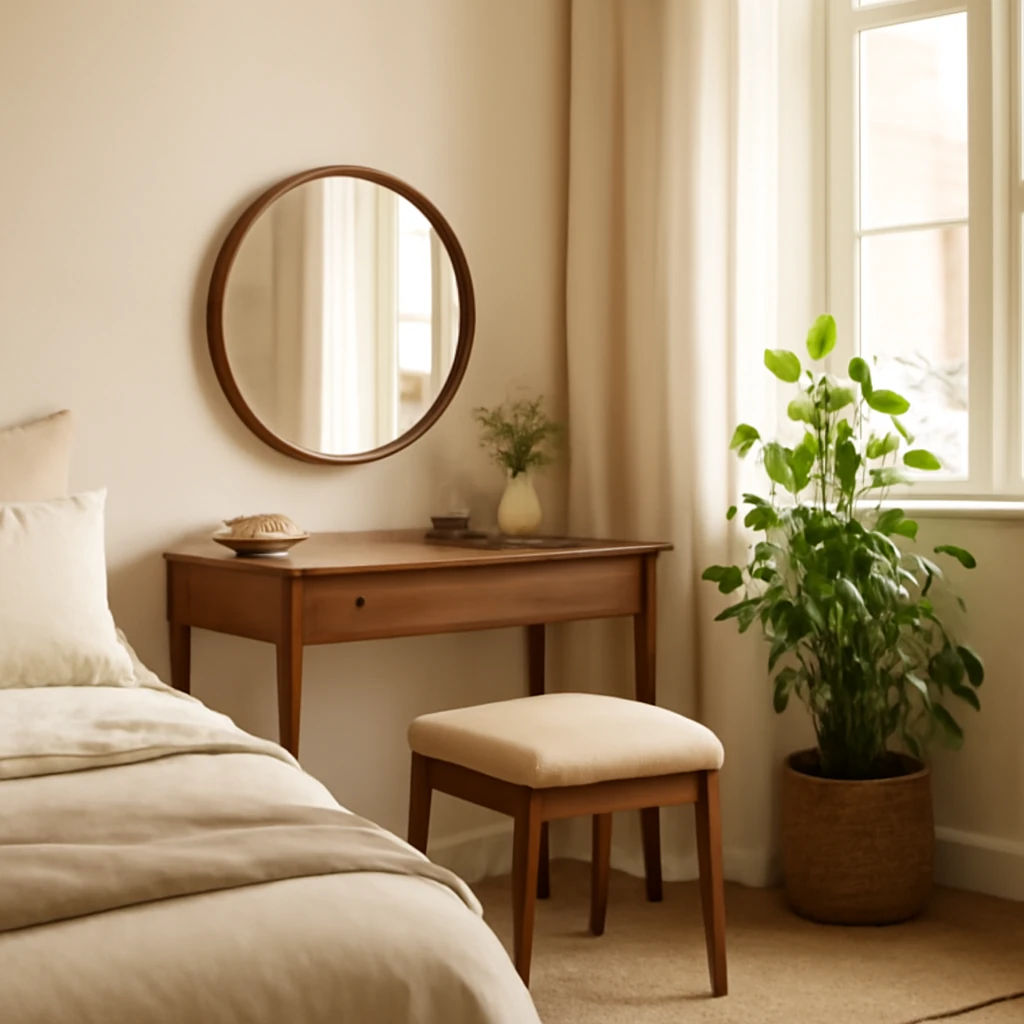
Introduction: why a dressing table can work in European homes
In many European flats, especially in city centres, space is a precious commodity. A dressing table - also known as a vanity - can be a welcome haven for makeup routines, skincare and a touch of self‑care. Yet it is not always essential, and there are clever ways to integrate one without sacrificing floor area. This guide offers practical strategies for selecting, locating and organising a dressing table in compact apartments across Europe, with a focus on function, flexibility and timeless design.
Define your strategy
- Do you prefer sitting to apply makeup, or are you comfortable standing by a mirror?
- Would you accept a 2‑in‑1 solution (a dressing table that also works as a bedside table or a desk)?
- Should the grooming zone be in the bedroom, or could it sit in a bathroom, hall or utility area?
- How much cosmetics do you store in drawers, or is a tray on the surface enough?
- Is concealing clutter important to you?
These questions help set a framework for choosing the right piece and for locating it where it will be most efficient and aesthetically pleasing in a European home.
What kinds of dressing tables are commonly available
With an integrated mirror
The defining feature of a dressing table is a mirror integrated into or closely paired with the surface. The mirror may be mounted centrally on the table, tucked beneath a lid, or mounted as a separate composition such as a fold‑out or side panel. Some designs include additional features - tilting sections, built‑in lighting around the perimeter, or a dedicated grooming mirror. Many models incorporate drawers and shelves for storage. Without a mirror, the piece functions more like a desk or console and is less suited to traditional vanity tasks.
In practice, a mirror is essential for a fully functional vanity, consider how the mirror will be used in relation to lighting and seating when planning a small space.
Materials
Wood and its derivatives
Solid wood conveys elegance and durability but can be costly. A practical alternative is veneered wood or engineered panels (such as medium‑density fibreboard or fibreboard with a laminate finish) that convincingly mimic natural timber. However, care is important: surfaces in light woods may show wear and stains more readily, so consider sealants or durable finishes if you expect heavy daily use.
For a flexible, durable option that suits evolving interiors, many designers favour veneer or laminated panels with a protective top layer that resists cosmetics and liquids.
- In contemporary European interiors, mixed materials - wood with metal or glass - are common to achieve a balanced, timeless look.
- Wood tones ranging from pale ash to warm walnut integrate well with existing joinery and flooring.
Glass
Tempered or laminated glass surfaces offer a light, nearly invisible profile that can visually enlarge a tight space. Glass is easy to clean and can be replaced cheaply if damaged. However, the cool surface may feel less comfortable to touch for long sessions, and in households with small children, additional protective edges or mats may be advisable.
- Glass tops pair well with slender metallic frames for a contemporary aesthetic.
- Consider rounded edges or a frosted finish to soften the appearance in intimate spaces.
Metal
Metal frames or supports add urban sophistication and can be paired with glass, wood or stone surfaces. They’re particularly suited to industrial, minimalist or mid‑century modern interiors. Finishes range from brushed nickel to matte black brass, which can anchor the vanity within a broader architectural language.
Size and proportions
Minimum depth for a practical dressing surface is about 26 cm, with 60 cm as a comfortable maximum. The deeper the surface, the more comfortably you can lay out cosmetics, brushes and tools. Narrow options are useful in narrow corridors or niches, a broad surface is advantageous for makeup routines that involve multiple products.
Optimal depth for makeup is typically 40–45 cm. This depth allows space for essential products, a cosmetics bag, and a well‑organised tray or organiser. Drawers of this depth are the most ergonomic for quick access and visibility of items.
Standard height is around 75 cm, but the ideal height should reflect the user’s stature. In practice, you can choose standard desks or vanities up to 80 cm high, or use a compact surface paired with a legged seat or stool if you need a higher or lower height.
Length depends on the configuration: whether there are built‑in lighting, drawers or rolling storage under the surface. In a larger room where a dedicated vanity is feasible, a longer table provides more space for daily items and creates a calm, organised appearance.
What to do if space is tight
Use a window ledge
A dressing surface placed on a sunny window ledge can be a practical solution in kitchens, living rooms or compact bedrooms. Natural daylight is ideal for makeup, and a well‑placed mirror can catch sunlight at different times of day. When natural light isn’t reliable, add ceiling or wall lighting near the window and a couple of portable lamps to ensure balanced illumination for all tasks.
Replace a bedside table with a 2‑in‑1 solution
In small bedrooms, consider a bedside piece that also functions as a vanity when needed. By day it serves as a table with a lamp on top, by night it can host a mirror and cosmetic storage inside drawers or on a pull‑out surface. This reduces furniture redundancy and frees floor space.
Anchor in a corner
Corner vanities, designed to sit flush against two walls, optimise otherwise wasted space. A compact desk or console topped with a mirror can become a functional grooming zone without intruding on the room’s main circulation path.
Use a chest of drawers with a wall mirror
A tall chest of drawers paired with a wall mirror can substitute a traditional vanity. When using this arrangement, light placement becomes important: position lamps at face height to illuminate the face evenly, and consider wall lighting that reduces shadows.
Integrate a console as a grooming station
A slim console with a drawer or two can serve as a discreet vanity, especially in narrow hallways, living areas or multi‑purpose rooms. The mirror can be hung above, and a couple of compact light fixtures will provide the necessary brightness without dominating the space.
Hide a vanity in a wardrobe or behind doors
For ultimate concealment, concealment is practical in a walk‑in wardrobe or a built‑in wardrobe with a lift‑up or sliding door. The mirror can be mounted inside the door, and a pull‑out surface or a shallow shelf can hold essentials when needed.
Vanity in the bathroom
In some European homes, a compact vanity in the bathroom makes perfect sense, particularly where space is unusually tight elsewhere. Ensure the area is well‑ventilated to protect cosmetics and mirrors from humidity, and choose waterproof finishes for durability.
What to sit on
Universal option - a pouf
A pouf is a practical, unobtrusive seating solution that can slide under the surface when not in use. Many models include internal compartments for spare towels, a hairdryer or other essentials. A padded seat provides comfortable, easy access during makeup routines without consuming precious floor space.
For longer sessions - a chair or an armchair
If you spend extended periods at the vanity (for example, editing photographs, blogging or applying makeup for shoots), choose seating with a supportive back and comfortable depth. In compact spaces, a compact armchair or a chair that tucks entirely under the table helps maintain flow and ease of movement.
How to hang the mirror correctly
When seated, aim to view roughly the centre of the mirror. The mirror should be at least half the length of the table to avoid excessive cropping of your reflection. If the table is small, position lighting near the edges of the mirror so that illumination falls evenly on the face. If the mirror is wider, consider mounting some lights on the mirror itself to maximise evenness of light across the entire face and neck.
How to light the vanity
Daylight plus artificial light
The cornerstone of good makeup lighting is even illumination with minimal shadows. Daylight is ideal, so placing the vanity near a window can be beneficial. If the window is not ideal or lighting changes with the time of day, supplement with artificial light that mimics natural daylight. A well‑lit vanity prevents colour distortions and helps you apply makeup more accurately.
Artificial lighting options include dedicated mirror lighting or a combination of wall lamps and overhead sources. If the space is limited, consider two wall lamps at either side of the mirror and a slim overhead light that provides broad, diffused illumination without glare.
Side lamps
A minimal setup consists of two wall sconces or small lamps mounted at shoulder height on either side of the mirror. Aim for a shade that softens light while minimising glare. The distance between lamps should be roughly 75–100 cm, depending on the mirror's width and the seating height. Lamps with diffusers or matte finishes help create an even, flattering glow rather than harsh hotspots.
Additional top light
If the distance between side lamps exceeds 100 cm or if shadows become a problem, add a top light directly above or just above the mirror. Choose a fixture with a diffused, non‑blinding beam. Position lighting so it illuminates the face without reflecting harshly in the mirror.
When selecting bulbs, be mindful that some LEDs can distort colours. Choose bulbs with a neutral daylight colour temperature (roughly 4000–4500K) and a colour rendering index (CRI) of 80% or higher to ensure skin tones and makeup shades read accurately on the mirror.
Storage organisation
In the drawers
If the vanity depth exceeds around 40 cm, drawers alone may not suffice. Use dividers, organisers and transparent containers so items can be easily reached from the surface. A well‑organised drawer system reduces the need to rummage and keeps cosmetics in good condition.
In a separate storage unit
If the vanity does not include extensive storage, complement it with a rolling trolley or a small storage cabinet that can be placed beside or underneath the table. This keeps larger items accessible yet out of sight when not in use.
Cosmetics refrigeration
Professional makeup artists sometimes store particular products in a cosmetics refrigerator at cool temperatures to maintain freshness. This is not essential for everyone, but it can be beneficial for certain formulations, masks and skincare routines, especially in warmer climates. If you choose this option, keep the unit away from heat sources and ensure the cabling is tidy and safe.
Closing thoughts: practical guidelines for European homes
1. A dressing table can work in any room if it serves a clear function and respects the room’s proportions. In some layouts, a kitchen or a laundry area can offer surprisingly convenient space for grooming routines, particularly in open‑plan flats where a dedicated room would be impractical.
2. When selecting a vanity, prioritise function over form if space is limited. A compact surface with a well‑designed storage plan will often outperform a larger piece that feels heavy or visually dominant in a small room.
3. The size and configuration should reflect how you plan to use the space. If you spend a short time applying makeup daily, a slim console with a mirror and a few drawers may suffice. If you perform more elaborate routines, allocate space for a larger surface, more drawers and a comfortable seating option.
4. Lighting is non‑negotiable for makeup. Combine daylight with adjustable artificial light and ensure the colour of bulbs renders skin tones accurately. Position lights to avoid glare and shadows, and balance brightness to reduce eye strain during longer sessions.
- For example, in compact European bedrooms, a slim console with a wall‑mounted mirror and a couple of side lamps can become a stylish, functional vanity without sacrificing floor space.
- In mid‑sized flats, a 120–150 cm long vanity with integrated drawers can provide ample storage while remaining proportionate to the room.
- In larger master suites, you can opt for a more expansive table with deeper drawers, a dedicated chair or small armchair, and more customised lighting to create a spa‑like atmosphere.
Ultimately, the best vanity solution is the one that integrates seamlessly with your daily routine and your home’s architectural language. With thoughtful proportions, versatile storage and well‑planned lighting, a dressing table can become a calm, well‑lit sanctuary in a European home, enhancing both everyday practicality and personal ritual.
You may also like these articles
 Furniture
Dolphin mechanism sofas: space-saving comfort for European living spaces
Discover the dolphin sofa mechanism: easy unfolding, robust build, and compact design for modern European interiors.
Small Spaces
Compact living: eight ways to curate a stylish small living room
Eight clever strategies to create space, comfort and style in a compact living room.
Living room
Living Room Design in European Homes: Space, Light and Comfort
Timeless, flexible living rooms for European homes: light, texture and adaptable zones.