
Explore interior trends, AI design insights, styling guides and real transformations
Smart dining table solutions for compact European kitchens
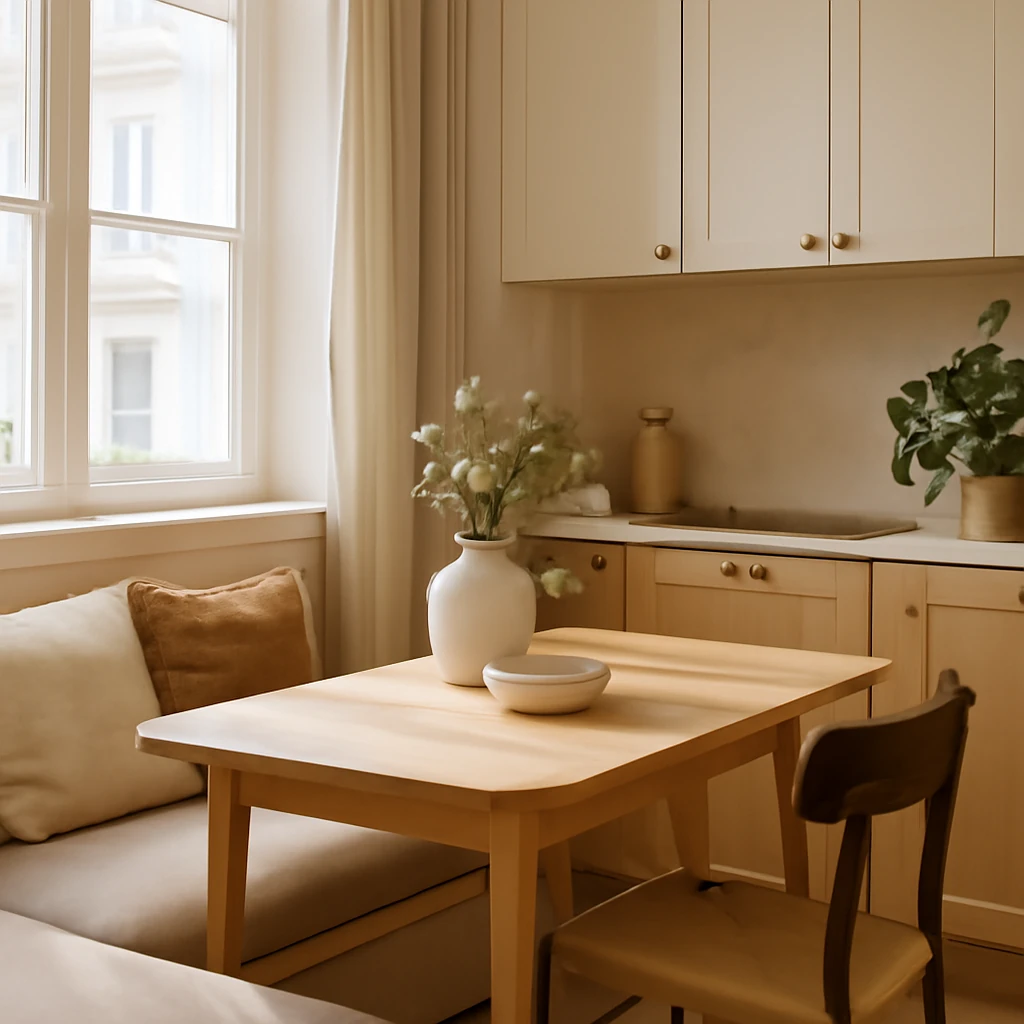
Why a dining table matters in a compact European kitchen
In many European homes, kitchens double as social hubs and everyday living spaces. Even where square metres are precious, the dining area remains essential: it anchors daily meals, supports homework and remote work, and contributes to the rhythm of family life. A well-considered dining table is more than a surface for meals, it shapes traffic flow, lighting, acoustics and the overall perception of space. The right table can make a tiny kitchen feel expressive, organised and welcoming, while a poorly chosen one risks crowding circulation and compromising comfort. This guide translates timeless principles of design into practical choices for compact kitchens across Europe, with emphasis on form, function and longevity.
To optimise a small kitchen, think of the table as a modular element, capable of shifting its role from casual breakfast spot to extended dining for guests. European homes vary from compact city flats to longer, open-plan layouts, the approaches below are universal, but the emphasis is on adaptability, ease of maintenance and visual lightness that helps spaces breathe.
Before selecting a table, map the available footprints, door swings, and zones for preparing food and cleaning. A clear diagram of furniture organisation reduces the risk of partial obstructions and creates a calmer daily routine. The aim is a table that can be tucked away when not in use, without sacrificing comfort when it is needed. The following sections explore shapes, mechanisms, materials and colours that perform well in small kitchens across Europe.
Key criteria for choosing a dining table in a compact kitchen
- Footprint and layout: Measure the length and width of the potential site, including space for chairs to be pulled out and for people to move around. A table that leaves at least 90 cm of clearance for walking and 60 cm for chairs at rest is a practical baseline.
- Seat count and flexibility: Consider everyday use (2–4) and occasional gatherings (4–6). Look for extendable or modular options that can grow without consuming extra space on non-use days.
- Clearance and ergonomics: Ensure knee room and elbow room align with human comfort standards. Pedestal legs are often preferable in tight spaces to maximise leg room.
- Mechanisms and storage: Discover whether the mechanism is simple to operate, sturdy, and self-storing when not in use. Avoid systems that require heavy lifting or repositioning.
- Durability and maintenance: European kitchens demand surfaces that resist spills, heat and daily knocks. Choose materials with cleanability, stain resistance and long-term availability of replacement parts.
- Style alignment: The table should harmonise with the kitchen’s materials, colour palette and hardware, ensuring a cohesive look even in restricted spaces.
Shapes that suit small European kitchens
Shape is the first language a table speaks in a room. In compact spaces, certain geometries offer practical advantages while others create intimate, sociable atmospheres. Here are the most reliable options, with notes on where they excel in European layouts.
Round tables: warmth and sociability
Round surfaces cultivate convivial dining experiences and eliminate sharp corners that can intrude into tight corridors. A central pedestal leg design keeps the space beneath visually open, allowing chairs to pull in closer without colliding with a leg. When space allows, a round table can transform into an oval with a shortening extension, subtly increasing capacity for larger gatherings. In modern flats, a compact round table placed near a window can serve as a cheerful morning hub while also folding into a central dining arrangement for guests at night.
Practical tip: choose a diameter between 90 cm and 110 cm for everyday use in a three- to four-person setting, if you regularly host five or more, look for oval variants that extend to about 140–160 cm in length. Pedestal bases are particularly advantageous in kitchens where walls line the room or where chair leg clearance is a concern.
Rectangular tables: classic and versatile
Rectangular tables are the workhorse of many European kitchens. They adapt to most layouts, can be positioned along a wall to save space, or placed centrally to encourage face-to-face dining. When room permits, a rectangular table that seats four as standard, expanding to six with leaves, is an efficient choice for daily meals and occasional dinners. For kitchens with a long, narrow footprint, consider a table with a slim profile and compact depth, paired with slim chairs to preserve movement corridors.
A practical approach is to use a wall-aligned configuration for routine meals and deploy extension leaves only when needed. If you prefer a table not attached to the wall, opt for a version with sturdy legs at the corners or a trestle base that provides generous leg room. The key is a balance: a surface long enough to seat your household, yet shallow enough not to dominate the room’s width.
Curved, oval and soft-edged tables
Soft-edged shapes soften the visual scale of a compact kitchen and help spaces feel more inviting. An oval or gently curved rectangle can offer more seating with less crowding at the ends, particularly in narrow kitchens. These shapes also reduce the likelihood of bumped elbows when passing between the cooking zone and the dining area. In contemporary European interiors, curved edges are often paired with minimalist metal bases or integrated seating to maintain a light, airy feel.
For small rooms, a semi-circular seating module or a half-round extension can deliver a social, friendly dining set without monopolising the floor plan. When using curved options, ensure the chairs themselves mirror the table’s silhouette to maintain harmony and rhythm in the space.
Corner and wall-mounted options
A corner unit or wall-mounted drop-leaf table makes exceptional sense in ultra-compact kitchens. Corner tables exploit every centimetre of available space, and many designs allow the table to fold down or retract when not in use. This approach works well in galley kitchens, narrow alleys, or kitchens with irregular layouts. Wall-mounted or corner tables may pair with tall stools, creating a casual breakfast bar that doubles as extra prep space when needed.
One caution: ensure the wall supports the load, and factor in the clearance required for folding mechanisms and chairs. A robust mounting system and high-quality hinges are essential for longevity, especially in high-traffic family homes.
Narrow and long: console and bar-style solutions
In some European homes, particularly in city dwellings, a slender console or long, narrow table acts as a dining surface while occupying minimal width. Paired with slim chairs or high stools, these configurations create a discreet, unobtrusive dining zone that can be closed off with a curtain or screen when not in use. If you choose a console, aim for a depth of 30–45 cm for a true slimline look, or 60–80 cm for a more substantial surface that still fits through tight doorways.
Bar-height options, or breakfast bars integrated with a kitchen island, are another efficient plan. They provide informal seating and a natural zone for quick meals without creating a separate dining room. Consider a balance of materials and finishes so the bar area reads as a cohesive extension of the kitchen rather than a separate counter.
Drop-leaf, folding and extendable tables
Flexibility is the greatest asset of small spaces. Drop-leaf and folding tables, often wall-mounted or with lightweight frames, can be lowered after meals to reclaim space. Butterfly leaves, concertina leaves, or self-storing extensions are common mechanisms that offer extra seating when needed and compact stowage otherwise. When selecting, test one-hand operation for ease of use and inspect the hinges for smooth, quiet operation. For busy households, a mechanism that locks securely in both closed and extended positions is essential to avoid accidental movement during meals.
Extending and transforming tables: grown with your space
Transformable tables - from extendable rectangles to round-to-oval converters - provide maximum adaptability. Look for tables with leaf storage inside the table or a dedicated drawer system that keeps extra leaves or grills of leafs. A well-designed mechanism should feel solid yet effortless, with minimal risk of misalignment. In European homes, converting designs often feature a clean architectural look: timber or metal frames with a light, uncluttered surface that can seamlessly disappear when not in use. These tables offer a clever solution for hosting dinners without permanently consuming your precious floor area.
Table surfaces and durability: materials that perform in European kitchens
Material choice is crucial in busy kitchens where spills and heavy use are common. The most enduring options include solid hardwoods - such as oak, beech or ash - renowned for their resilience, warmth and natural beauty. Solid wood has a timeless quality that ages gracefully, though it can be more costly and requires regular care to prevent drying and cracking.
Engineered woods and veneers provide a more budget-friendly yet robust alternative, with stable performance against humidity changes often encountered in kitchens. Laminate surfaces offer practicality: easy to clean, resistant to stains and scratches, and available in a broad palette of colours and textures. Glass table tops, typically tempered for safety, introduce lightness and reflect natural and artificial light, making small kitchens feel more expansive. Glass can be combined with metal or wooden legs to achieve a contemporary look that remains easy to maintain.
Plastic and composite materials have improved significantly, delivering durable, wipe-clean surfaces in a variety of shapes and finishes. They are particularly useful in family kitchens where durability and price are both important considerations. For those drawn to tactile surfaces, stone resin tops or porcelain composites offer a premium, low-maintenance option with excellent resistance to heat and moisture.
Colour and light in small European kitchens
Colour decisions can dramatically influence the perceived size of a room. In compact spaces, light colours tend to reflect daylight, opening up the room and reducing visual heaviness. White, ivory, warm creams and pale greys are reliable foundations. Soft, cool tones - like chalk, mist, and powder blue - work well with natural wood tones or metal legs to create a calm, sophisticated palette. For a touch of personality, introduce colour in a restrained manner: the edge of the table, a subtle painted base, or a textile detail on chairs. Contrasting table edges can anchor the dining zone without overwhelming the space.
Colour and material coordination with the rest of the kitchen
To achieve a cohesive look, repeat materials and colours across cabinetry, countertops and hardware. If the kitchen features lighter upper cabinets and a slightly darker island, a wooden round table with a light finish can echo the warmth without visually weighing the room. Alternatively, a glass top with pale timber legs can maintain airiness while creating a distinct dining area within an open-plan plan. The aim is harmony - each surface should support the others, creating a unified narrative rather than competing focal points.
Materials explained: durability, maintenance and European conditions
Natural wood surfaces benefit from regular protection against moisture and heat. Wipe spillage promptly and use appropriate treatments, oils or waxes to maintain the wood’s surface and colour. Engineered wood or veneers offer a durable alternative with less susceptibility to warping in humid kitchens, though their edges can be vulnerable to impact and heat. Glass tops require careful handling to avoid scratches and fingerprint marks, consider frosted or privacy finishes if glare is a concern. For busy households, a laminated or ceramic-topped surface provides easy cleaning and long-term resilience, while still delivering the look you want. When selecting materials, consider the climate and indoor humidity typical of your region, and choose finishes that resist sun fade if your dining area is near a window.
Ergonomics and comfort: how to size for people, not just space
Correct dimensions ensure comfort and reduce fatigue during meals. A standard dining table height is around 75 cm, with chair seats typically at 45–48 cm. There should be a minimum of 65 cm of knee clearance beneath the table for comfortable seating. When planning seating, allocate about 60 cm of width per person and 40–45 cm of depth for a comfortable sit. Pedestal bases can offer more legroom than four legs, which is often beneficial in tight kitchens where bench seating or integrated stools are used. If your room is shallow, a narrower table with shallow chairs might be preferable to a deeper surface that dominates the room's balance.
Storage, maintenance and longevity
Consider how the table will be stored when not in use. A folding or drop-leaf table can reclaim floor space, but ensure the mechanism is robust and easy to operate with minimal force. Extendable tables should store leaves securely within the table or a dedicated drawer. Heavy or frequent extension mechanisms may benefit from a soft-close or self-lubricating hinge system to reduce wear over time. Regular cleaning routines - using appropriate cleaners for wood, glass or veneer - will extend the life of your surface and preserve its appearance for years.
Practical planning for European homes: a short checklist
- Measure the dining footprint plus chair pull-out space, plus a buffer for movement.
- Choose a shape that maximises seating without overbearing the room.
- Prefer pedestal or cantilever bases to maximise legroom.
- Prefer cold-laminate or wood finishes for easy cleaning and durability.
- Consider extendable or drop-leaf mechanisms for adaptability.
- Coordinate colour and materials with cabinetry and worktops.
- Test the table’s reach and seating position to ensure comfortable dining for all family members.
Window seats, bays and other integration ideas
In many European homes, the window seat or bay provides a natural dining edge. A compact, shallow table positioned across a window can offer pleasant views while enabling dining to occur without blocking the light. If the window reveals a heating source or a south-facing sun, choose materials with good stain resistance and UV stability. A bench or built-in seating along the window line can be an elegant, space-saving solution, with stackable stools tucked underneath when not in use.
How to choose for your home: a practical approach
Every kitchen is unique, and the best choice aligns with how you live, cook and entertain. Start by listing the most common daily tasks: breakfast, homework, casual meals, plus occasional dinners. Then list constraints: available width, doorways, and the path to the fridge and sink. With a clear brief, visit showrooms or browse online with a measured plan. Bring sample swatches of your cabinetry and flooring to test how a new table’s colour and texture will harmonise. Ask about warranties and replacement parts for the mechanism if you anticipate heavy use or wish to keep the piece for many years.
Carefully curated ideas: professional guidance and practical tips
Consult a professional when adapting a small kitchen to accommodate a larger dining surface. A joiner or carpenter can help you create a seamless built-in or semi-permanent solution that blends with your kitchen’s architecture. For open-plan spaces, consider soft zoning as you introduce a dining table: lighting, rug, and seating can anchor the dining zone without physically closing it off. In all cases, aim for clean lines, restrained detailing and materials that age gracefully. A well-chosen dining table becomes a reliable workhorse in daily life and a source of comfort during gatherings.
Closing thoughts: a lasting and flexible centrepiece
Choosing a dining table for a compact European kitchen is about balancing function, form and future-proofing. The right table should feel almost invisible in a busy space - yet its presence should be felt as a source of calm, sociability and ease. By prioritising height and legroom, selecting an adaptable mechanism, and coordinating materials and colours with the rest of the kitchen, you create a dining zone that grows with you, rather than one that forces you to compromise. A small kitchen can radiate warmth and sophistication when equipped with a thoughtful table that respects geometry, craft and everyday life.
You may also like these articles
 Small Spaces
Smart Studio Design: Maximising Space in Small European Homes
Practical, stylish strategies to maximise space in European studio flats.
Kitchen Design
Ergonomic kitchen heights: tailoring countertops to you
Practical guidance for matching kitchen countertop heights to your comfort.
Bathroom Design
Screening the Bath: Four Simple Screens for European Bathrooms
DIY bathtub screens: four practical European methods.