
Explore interior trends, AI design insights, styling guides and real transformations
The Chair You Need: How Size, Shape and Tilt Define Comfort in European Homes
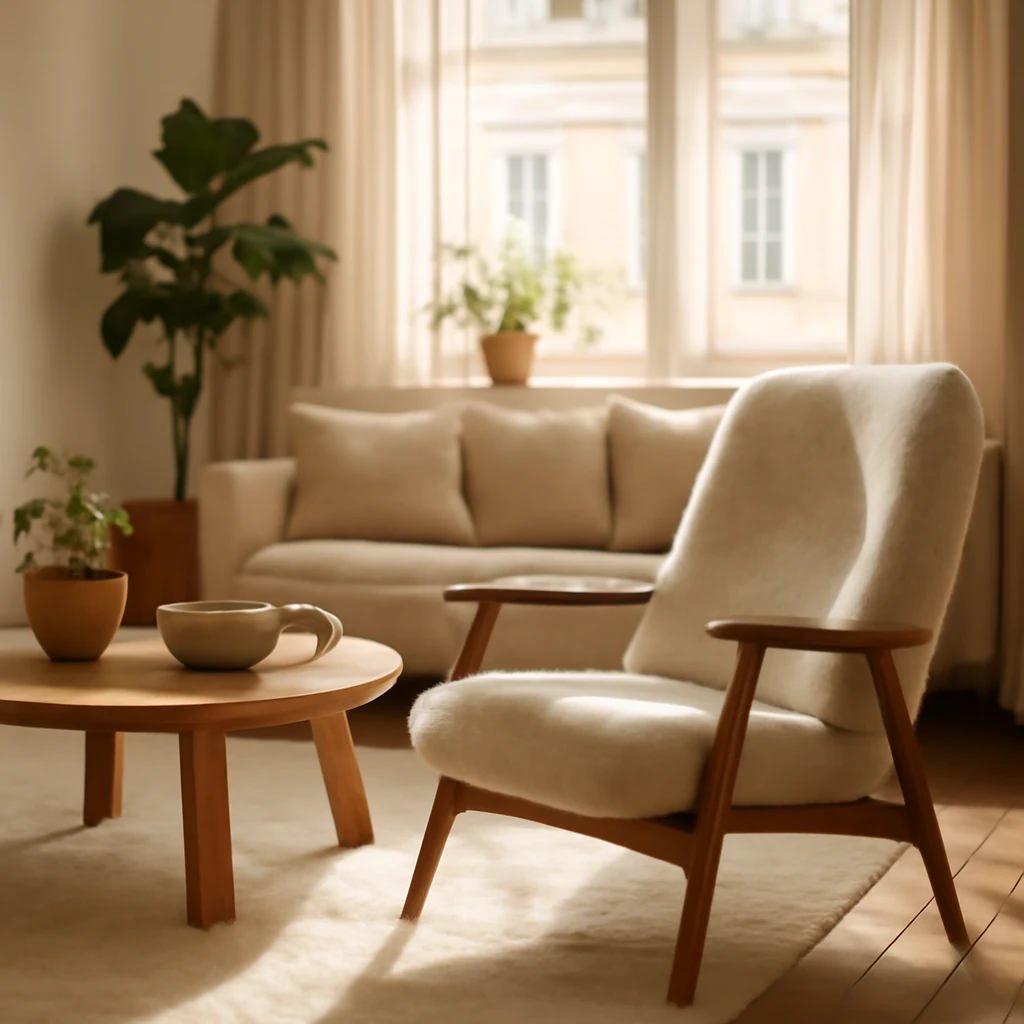
The chair as a design and wellbeing ally
In European homes, a chair is more than a decorative accent. It is a tool for daily life: a seat at the dining table, a workstation companion, a corner for reading, and a perch for family moments. The right chair must be proportionate to the user, the task, and the room. When scaled and shaped correctly, it supports good posture, reduces fatigue and becomes a durable design element that ages gracefully with the space.
Size matters because the human body is diverse. A chair that looks perfect at first glance may not fit your legs, spine, or arms. The goal is not just visual harmony, but a seat that encourages comfortable, neutral alignment by default - so you can sit well without constant micro-adjustments.
Why we fidget on chairs
Poor seating goes beyond aesthetics. When a chair is too high, too deep, or lacks lumbar support, our bodies instinctively shift. Over time, these habitual compensations can contribute to discomfort or musculoskeletal strain, particularly in the neck, shoulders and lower back. In busy homes and offices across Europe, the risk is similar: a chair that invites slouching, a sudden knee twist, or a perch on the edge of the seat can become a common pattern of movement rather than a controlled posture.
- Wrist, neck and upper back tension.
- Excessive strain in the spine, shoulders and upper torso.
- Inward curvature of the lower back or lordosis.
- Torso twist, with one leg resting on the other to compensate.
Why it is hard to sit correctly
Most of us know the basics - elbows at roughly 90 degrees, feet flat on the floor, knees aligned with hips. Yet maintaining these positions for long periods is demanding. Distractions, workload, and a chair that fights your natural posture all contribute to slouching and fatigue. The solution is not constant self-correction but a chair engineered to support the correct posture as a default.
Body shapes vary, and the angles between thighs and seat, as well as the position of the spine, differ from person to person. Those differences are defined by seat height, seat depth, backrest height and tilt, and the presence or absence of armrests. The right combination creates a seating envelope where the body sits comfortably without striving.
Standard sizes and who they suit in Europe
European furniture standards aim to accommodate a broad spectrum of adults. While there is no universal one-size-fits-all, typical guidance suggests the following ranges as a starting point for comfortable seating:
- Seat height: commonly around 42–48 cm from the floor. This accommodates most people with average leg lengths, allowing feet to rest flat on the ground.
- Seat depth: roughly 38–46 cm. Depth should support the thighs without pressing behind the knees.
- Backrest height: enough to provide lumbar and upper back support, typically 45–60 cm above the seat depending on the chair’s purpose.
- Seat width: 40–50 cm is a comfortable range for most users, with wider options for broader frames.
- Armrests: presence and height should enable relaxed shoulders and arms, without forcing the user to lift the elbows or hunch the shoulders.
When a chair is used regularly for long periods, it is common to prioritise features that conform to European ergonomic guidelines and recognised standards for seating comfort. While individual preferences vary, these ranges provide a reliable baseline for selecting chairs that work in a broad range of homes and workplaces.
How to choose a comfortable chair
By height
Start by testing the chair. Sit fully on the seat and press your back against the backrest. Your spine should feel supported without needing to lean forward or lean back excessively. If the height is correct, you should observe the following alignment:
- knees bent at about 90 degrees
- tailbone and knee aligned, with thighs resting parallel to the seat
- feet planted firmly on the floor
If any of these points fail, the chair is not the right fit and you should continue your search.
By seat depth
The seat should allow you to sit with your spine supported while the edge of the seat does not press into the back of the knees. When sitting back fully, there should be a small but comfortable clearance between the front edge of the seat and the back of the knees. If you feel the edge pressing into the calves or you slide forward, seek a chair with a shallower seat depth or an adjustable depth mechanism.
By backrest shape and tilt
Back support is one of the most important factors. A good backrest should follow the natural curve of the spine and offer some degree of lumbar support. The tilt angle should be chosen for the intended use:
- for long work sessions or studying - a straight back with a gentle 5–10° rearward tilt helps distribute body weight evenly along the spine;
- for reading or laptop use on the lap - a more reclined backrest at 15–30° promotes a relaxed, less straining posture;
- for rest or casual sitting - a reclining backrest of 30–55° with head support supports the neck and shoulders more fully.
A subtle lumbar support feature or a chair with an adjustable lumbar region can be especially beneficial for people with mild lordosis or lower-back sensitivity. The shape of the backrest, including any small straight section in the mid-back area, can help counteract postural fatigue during long periods of sitting.
By width and height of armrests
Armrests should relieve the upper back and shoulders, not lock the shoulders in an elevated or tense position. When seated, forearms should rest comfortably on the armrests with elbows at approximately 90°. Shoulders should remain relaxed and not rise toward the ears.
Self-check: is this chair right for you?
A well-fitting chair passes a simple self-check. When seated, confirm the following:
- feet are flat on the floor and knees stay at a 90° angle
- there is a small gap between the front edge of the seat and the back of the knee
- the backrest fully contacts the spine, supporting the lumbar region
- the head remains aligned with the spine, not leaning forward or backward unnaturally
- the hips are not squeezed or pressed against the edges of the seat
- the arms rest comfortably on the armrests without lifting the shoulders
- the chair does not constrain movement or feel unstable
Choosing chairs for the kitchen and for the bar
Dining chairs - match the table
Kitchen chairs must harmonise with the dining table height, which in modern European homes is typically around 74–76 cm from floor to tabletop. For comfortable dining seating, aim for chairs with seat heights of about 42–48 cm. When selecting, consider the following:
- whether the chair sits entirely under the table when the table edge is near the seat, especially if the table has a decorative apron or a narrow top edge
- the space between the seat and the tabletop to ensure thighs have enough room and that the legs do not collide with the table’s edge
- the distance between table legs to make sure several chairs can slide under the table without scraping each other
For kitchens with fixed cabinetry or thick tabletops, test a few seat heights to ensure comfortable clearance for long meals or work sessions at the table.
Bar stools - for high counters
In European homes, many kitchens feature high counters or breakfast bars. Bar stools need to be taller than dining chairs, typically with seats in the region of 65–75 cm high. Consider these practical guidelines:
- the gap between the seating surface and the counter should be roughly a third of the stool height, leaving about 25–30 cm of leg room for comfortable positioning
- note whether the stool includes a footrest or a foot support bar, in shorter stools the lack of a footrest can lead to fatigue, especially for extended sitting
- the seat-to-counter height difference should allow for a relaxed posture with shoulders dropping and arms resting on the tabletop without hunching
- if a stool lacks a backrest, ensure there is a sturdy footrest or crossbar to support the legs
Choosing a chair for work or study
For daily computer work or study, a chair with extensive adjustability is highly beneficial. A certified ergonomic office chair - featuring adjustable seat height, backrest tilt, lumbar support and preferably adjustable armrests - can dramatically improve comfort and reduce fatigue over long sessions. If your study or work involves only a few hours a day, a well-chosen dining chair or a soft, ergonomically informed occasional chair can be a viable alternative. The advantages in this case typically include:
- a broader palette of colours and finishes to suit interiors
- easier integration with home styles than a feature-rich ergonomic desk chair
- generally lower cost compared with dedicated office seating
When using a non-specialist chair at a desk, ensure the desk height and leg space remain unobstructed by drawers or pedestals. The chair should still promote neutral posture, with feet flat and hands positioned comfortably at the keyboard or on a document surface.
Working chairs and workstations in European homes
In designing a functional workspace, align the seat height with the desk’s work surface. A conventional desk height is around 72–75 cm, which pairs well with chair seats of 42–48 cm. For longer sessions, consider chairs with adequate lumbar support, a slightly reclined backrest, and arms that do not force the shoulders upward. The aim is a seating system that reduces the tendency to adopt awkward postures when concentrating on tasks or scrolling screens.
Chairs for children and adolescents
Children require seats that adapt as they grow, while encouraging correct posture from a young age. A proper school or study chair should deliver adjustable height and straightforward support without overbearing features that encourage slouching or leaning on one arm. Key considerations include:
- Adjustable legs. A smoothly adjustable seat height accommodates growth and varying leg lengths.
- Upright backrest. For work at a computer, a chair with a backrest that is vertical or only slightly inclined helps maintain an appropriate line of sight to the screen without excessive neck tension.
- Minimal or no armrests. Chairs with armrests can cause a student to perch and lean, which may contribute to scoliosis over time if not well designed.
- Back support should engage the lower back and mid to upper spine to encourage an upright posture.
- The distance between the chest and the edge of the tabletop should be about 8–10 cm. This allows comfortable elbow positioning without hunching.
- The table edge should sit a few centimetres below chest level so the student can rest forearms on the surface without rounding the shoulders.
- There should be a clear space between the knees and the table edge to accommodate leg movement.
- Feet should rest flat on the floor or on a footrest if the chair is high.
- The seat front edge must not press into the thighs or hinder blood circulation.
- There should be space between the back of the knees and the chair’s backrest to avoid compression.
- There should be no pinching between the seat and backrest as the student moves.
The humble stool: a versatile extra seat
Stools are compact, easy to tuck away and handy for occasional use in kitchens, bars and informal zones. They are not typically designed for long-term sitting, but when chosen with care, they provide a flexible seating option without crowding the space. A standard stool height of around 45 cm works well for many setups, though counter heights may require higher options. When selecting stools for a home, be mindful of the room’s scale and the surrounding furniture to ensure the stool can be stored neatly when not in use.
- Simple, durable stools with smooth edges reduce the risk of snagging clothing or catching on fabrics.
- Choose stools with a stable base and a comfortable seat, especially if they will be used by children or elderly family members.
Putting it all together: practical tips for European homes
To create seating that is both beautiful and practical, consider the following overarching guidelines:
- Always test chairs in person where possible. Sit fully on the seat, back against the backrest, and ensure there is room to adjust without feeling constrained.
- Prioritise adjustability. A chair that allows you to alter seat height, tilt and armrest position will adapt to different tasks and family members over time.
- Think about the room’s scale. A chair should neither dominate a small space nor disappear in a large room. Material choices, leg shape and colour can help achieve balance with surrounding furniture.
- Consider the intended use. A dining room chair, an office chair and a lounge chair each require different features to perform optimally.
- Materials matter for comfort and maintenance. Upholstery should be soft enough for long sittings, but easy to clean. Leather, fabric, and performance textiles each have pros and cons in European homes with varied climates and lifestyles.
- Account for flooring. Floor materials such as wood, stone or carpet affect chair stability and wear. Non-slip feet or protective glides can extend the life of both chair and floor.
In the end: a chair that fits you is a design decision
A chair’s true value lies in how well it fits the person, the task, and the space. While standard dimensions offer a reliable starting point, the real test is how the seat supports you over time. Focus on alignment, comfort and ease of movement, and allow room in your interior for chairs that will remain comfortable as you and your family grow and change. The right chair is not a passing trend, it is a component of living well in a European home.
Final considerations
When selecting seating, remember:
- Match the chair to the task and the table height for both dining and work zones.
- Prioritise ergonomic features that support a healthy spine and relaxed shoulders.
- Choose chairs that reflect the room’s scale and the textures of the space for cohesive interiors.
- Consider children’s needs with adjustable seating that encourages good posture from a young age.
Practical examples for European interiors
In modern European open-plan homes, the kitchen island, dining area and living zone often form a single, fluid space. The seating choices within this space should acknowledge several constraints: the island height, the distance to the dining table, the size of the living area, and the existing palette. Neutral-toned legs with colour or upholstery that echoes the room’s textiles can unify the scheme. A mix of seating options - slim dining chairs for under-table clearance, a few high stools for the island, and a comfortable desk chair for a compact workspace - can create a balanced, adaptable interior that serves daily life and occasional gatherings alike.
In summary
Choosing the right chair is a careful blend of ergonomics, proportion and personality. By assessing height, depth, backrest support and armrest comfort, you can identify seating that enhances posture, reduces fatigue and integrates elegantly into European homes. With thoughtful selection, your chairs become everyday tools that elevate the way you live, work and share meals together.
You may also like these articles
 Tips & How-To
Clever Kitchen–Living Room Design: Zoning, Layouts and Details for European Homes
Master the art of a cohesive kitchen–living space with European zoning tricks and timeless style.
Tips & How-To
DIY Wooden Decor: Crafting Warm, European-Style Interiors
Create bespoke wooden accents with easy techniques for European interiors.
Kitchen Design
Provencal Kitchens: Rustic European Charm for Modern Homes
A guide to Provencal kitchen design across Europe, blending rustic charm with modern living.