
Explore interior trends, AI design insights, styling guides and real transformations
11 Elegant Napkin Folds to Elevate Your Festive Table
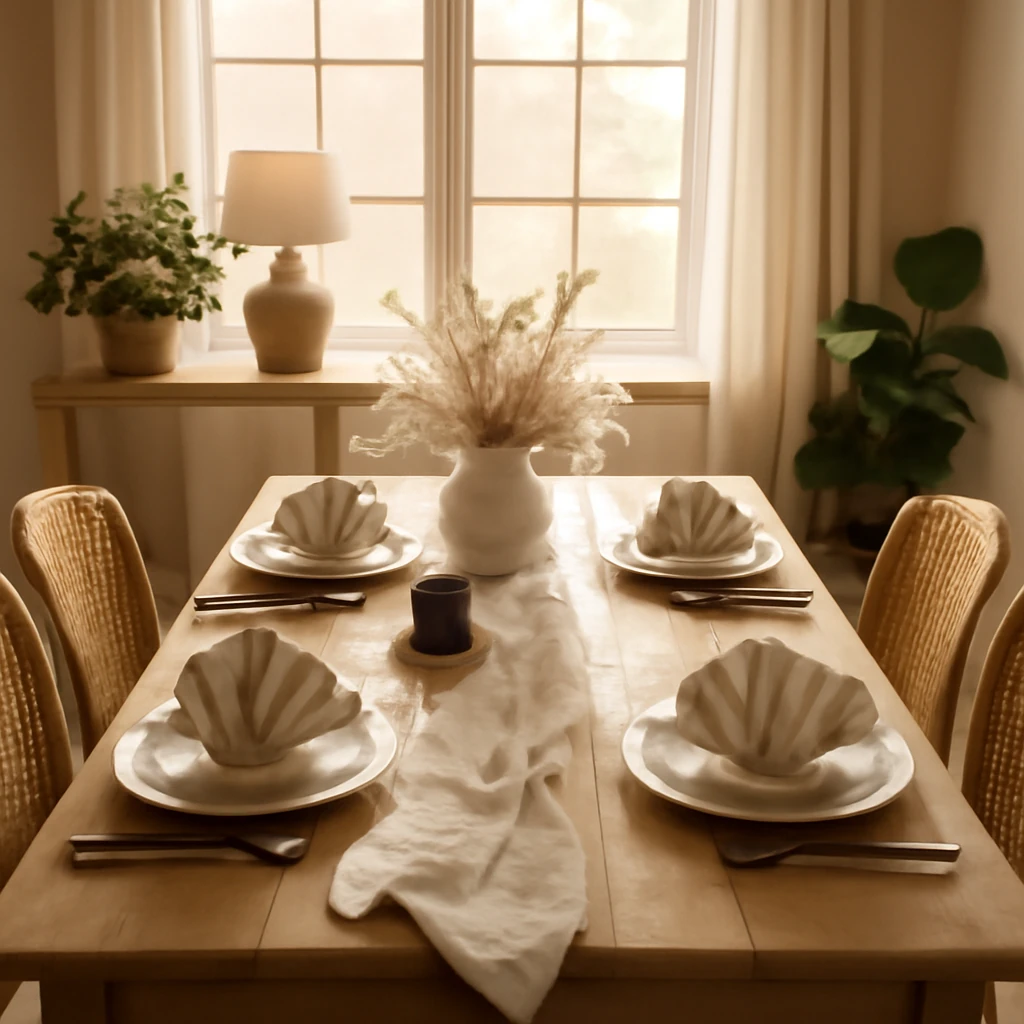
Why napkins matter at the festive table
In European dining traditions, napkins are more than a practical accessory, they set the tone for the meal, reflect the season, and announce the level of formality. The right textile - linen for crisp edges, cotton for a softer drape, blends for ease - combined with thoughtful folds, creates a refined tabletop without clutter. Whether you live in a compact city apartment or a spacious seaside home, well-chosen napkins and considered folding elevate the entire experience.
Choosing the right napkin for the occasion
Napkin choice helps define mood. Consider three textile families:
-
Natural fibres - linen and cotton: The classic choice. Linen holds a sharp fold, recovers well after laundering, and brings a subtle sheen. Cotton offers a softer finish and forgiving creases, which can be charming when styled deliberately.
-
Blended fabrics: Cotton–viscose or cotton–polyester blends combine ease of care with good drape. They’re excellent for more intricate folds as they resist excessive shrinkage.
-
Synthetic materials: Polyester and related blends are highly stain-resistant and easy to care for, but they do not absorb moisture in the same way. Pair them with napkin rings or a crisp iron to maintain a polished look.
Size matters. For elaborate, sculptural folds, opt for square napkins with sides of at least 50 cm, for simpler arrangements, 35–40 cm squares work well. Always ensure the napkin folded form sits neatly on the plate and does not overwhelm the place setting. Prepare textiles by washing (following care labels), pressing while slightly damp, and storing flat or rolled to minimise creases.
Size, preparation and care
Proper preparation helps every fold look crisp and stay in place during a service. Here are practical guidelines for European homes and venues:
-
Linen: Wash with a mild detergent, iron while damp on a hot setting, and consider a light starch for extra crispness. Linen can soften with use, which is desirable for more relaxed gatherings but may be restrained for formal events.
-
Cotton: Machine wash warm, tumble dry low or line dry, and iron when slightly damp to maintain clean edges.
-
Blends: Follow manufacturer recommendations, they typically tolerate frequent washing and retain fold lines well.
Layout and symmetry matter. Align napkins with the plate edge and ensure folds are evenly spaced from the centre or from the rim of the plate. A neat napkin ring or a simple decorative touch - such as a sprig of herb or a slim ribbon - can complement the fold without obscuring the design.
11 napkin folds for a stylish table
From timeless classics to contemporary geometries, the following folds are practical for a variety of European settings - from intimate family suppers to formal banquets. Each fold is described with practical steps suitable for home kitchens and professional venues alike.
One-Pocket Fold
A simple, elegant fold that creates a small, tidy pocket to hold a menu card, a single bloom, or cutlery laid along the napkin edge.
- Fold the napkin in half from bottom to top to create a tall rectangle.
- Fold the top edge down toward the centre to meet the bottom edge, forming a neat square.
- Turn the square over.
- Fold from the right edge toward the left to create a long strip with a pocket at the base.
- Fold the napkin in half again from right to left.
- Secure with a slim ribbon or a decorative tie at the fold line.
- Place a small decorative element or cutlery within the pocket as desired.
French Envelope Fold
This classic presentation is well suited to formal dinners or hotel banquets, providing three neat pockets for cards, place cards, or a small keepsake.
- Fold the square twice: from bottom to top, then from left to right.
- Fold the top-right corner of the first layer diagonally downward toward the bottom-left corner.
- Repeat with the second and third layers, maintaining equal gaps between folds.
- Turn the fabric over.
- Fold the left edge toward the centre, then the right edge over it to close the envelope.
Diamond Fold
Also a staple in classic table settings, this fold, once crisp, reads well in metal cutlery-adorned or plain settings alike.
- Fold the napkin in half from bottom to top, then from left to right to form a square.
- Turn the square so the crease runs to the bottom, lift the left and right corners toward the centre to create a diamond shape with a central crease.
- Fold the first layer up slightly, then the second and third layers only partially to keep a sense of depth.
- Gently press the left and right corners toward the centre, stacking them to form the diamond’s sides.
Heart Fold
Perfect for romantic dinners or Valentine’s occasions, especially in rich reds. The heart is both inviting and visually charming.
- Fold the napkin in half to make a rectangle, bottom to top.
- Join the right and left corners at the top to form a diamond shape.
- Fold the outer corners inward to create the upper points of the heart.
- Turn over and fold the remaining edge to reveal the heart shape.
- Open the folded piece and place it on the plate, or slip the napkin through a ring for extra definition.
Tree Fold
A festive option for winter celebrations, seamlessly adaptable to Christmas tables or winter gatherings across Europe.
- Fold the napkin in half to form a square, then fold again to a smaller square.
- Rotate so the folded edge lies at the bottom, unfold the top layer slightly to create a trunk-like base.
- Fold the top layers back in stages, ensuring equal spacing between levels to resemble a pine silhouette.
- Turn the napkin and tuck the upper edges outward to form additional tiers.
Lily Fold
Regal and architectural, the lily folds work well for formal dinners or gala events, offering a sculptural note without excessive complexity.
- Fold the napkin in half to create a rectangle.
- Fold the top corners toward the centre to form a triangle, then bring the side corners inward to create a diamond.
- Open the sides to reveal the petals, adjusting to emphasise the blossom’s symmetry.
- Relax the petals into a rounded shape and, if desired, thread the napkin through a ring so the blossom sits atop the table.
Cutlery Inside Fold
A contemporary take that hides the cutlery within the napkin for a neat, uncluttered presentation. Suitable for modern or minimalist tables.
- Fold the napkin from bottom to top to create a triangle.
- Place the cutlery along the bottom edge of the triangle, centered.
- Fold the bottom corners inward toward the centre, then roll the napkin up toward the top.
- Secure the roll with a small band or a slim ribbon to keep the cutlery in place.
Quick Triangle Fold
Fast, reliable, and stylish, this fold is ideal when time is tight or for casual gatherings with a chic edge. It also pairs nicely with napkin rings for a hint of structure.
- Form an isosceles triangle by folding the napkin in half along the long axis.
- Fold the right edge inward toward the centre, aligning with the left edge to create a smaller triangle.
- Again fold the right side toward the left to balance the triangle’s width.
- Adjust the base so the triangle rests flat on the plate.
Decorative Leaf Fold
Vivid and light, the leaf fold works beautifully for spring or summer tables, or when you want a botanical motif without heavy forms.
- Fold the napkin diagonally to form a square, then fold the square in half to create a triangle.
- Starting from the base, accordion-fold the napkin in two directions to form a fan-like leaf.
- Gather the folds toward the stem end and secure with a slim band or ring, pull the stem slightly to reveal a leaf shape.
Envelope Fold
An original way to conceal a note, place card, or small cardholder inside the napkin. The envelope stays tidy and readable from above.
- Fold the square toward the centre to create a smaller square.
- Bring the left and right corners into the middle, tucking the bottom edge inside to form an envelope-like pocket.
- Roll or fold the top edge to create a distinct cap, leaving a small opening for items to be placed inside.
Lotus Fold
A refined homage to origami, the lotus brings an Asian-influenced elegance to European tables, ideal for upmarket dinners and cultural events.
- Fold all four corners toward the centre to form a square with a cross crease.
- Turn the square over and repeat with the new orientation to create layered petals.
- Carefully tuck the corners outward to reveal the petal shapes, adjust to ensure symmetry.
- Open slightly to display a graceful blossom on the plate.
In addition to these folds, consider how the overall table aesthetic influences your choice. Neutral napkins in ivory, slate, or taupe can harmonise with a wide range of tableware and decorations, while bolder hues pair well with metallic accents or seasonal florals. For festive occasions, consider a restrained palette with a single statement fold to avoid visual overload. And for casual gatherings, a handful of simpler folds can create a cohesive yet relaxed tableau.
Styling the table: textiles, colour and coordination
Folding is only part of the story. The table setting should be coherent in colour, texture, and material. Here are considerations to help you design harmonious European tablescapes:
- Texture pairing: Pair a crisp linen napkin with a smooth ceramic plate for high contrast, or with a subtly textured charger for a warmer, tactile table.
- Colour strategy: Neutrals provide a sophisticated backdrop for seasonal accents, bold napkins can act as the table’s focal point, particularly when folded into architectural shapes.
- Cutlery presentation: When folding encloses cutlery, ensure the arrangement is practical and visible from the guest’s side. A simple ribbon or ring helps the napkin maintain its form during service.
- Seasonal accents: Small sprigs of herbs, citrus peel, or a single blossom placed in the open fold can elevate the presentation without overcrowding the plate.
- Storage and maintenance: Store folded napkins flat or rolled between service events to preserve the crisp edge and ensure they’re ready for the next setting.
Practical tips for hosting across Europe
Whether you’re hosting a Christmas dinner in the north, a summer feast in the Mediterranean, or a formal banquet in central Europe, napkin folds offer an accessible route to cohesion and elegance. Consider the following practical recommendations:
- Know your audience: For formal events, lean toward clean lines, neutral palettes, and careful symmetry. For family celebrations or seasonal dinners, you can weave more playful folds and colour accents into the decor.
- Venue and scale: In smaller rooms, avoid overly bulky folds that block light or create visual clutter. Choose lighter textiles with crisp folds for a modern, airy feel.
- Seasonality and symbolism: Align fold types with the occasion - heart folds for intimate celebrations, tree folds for winter gatherings, lotus for cultural or contemporary evenings.
- Care and longevity: Proper laundering and pressing extend the life of linen and cotton napkins. For rental venues, provide clear care instructions to ensure napkins return in prime condition.
Closing thoughts: crafting a refined European table
The art of napkin folding is a quiet, expressive craft that enhances any table. By selecting appropriate materials, sizing carefully, and combining folds with thoughtful styling, you can create an atmosphere that resonates with European sensibilities - elegant, versatile, and warmly welcoming. The folds above are guidance, not rules. Let your eye for balance, your memory of shared meals, and your personal taste steer the final composition. In the end, a well-folded napkin is not merely decorative, it is a signal that guests are honoured, meals are prepared with care, and the table is prepared for memorable moments.
You may also like these articles
 Tips & How-To
Sizing Your Bedside Tables: A European Guide to Proportion, Function, and Style
How to pick bedside tables that fit bed, room and routine.
Tips & How-To
European Home Staging: A practical guide to selling or renting faster with style
How staging and pre sale tweaks can accelerate European property sales and lets
Furniture
Choosing pet-friendly upholstery: anti-scratch fabrics for European homes
Pet-friendly fabrics that resist claws without compromising style.