
Explore interior trends, AI design insights, styling guides and real transformations
Room Dividers: Zoning Solutions for European Homes
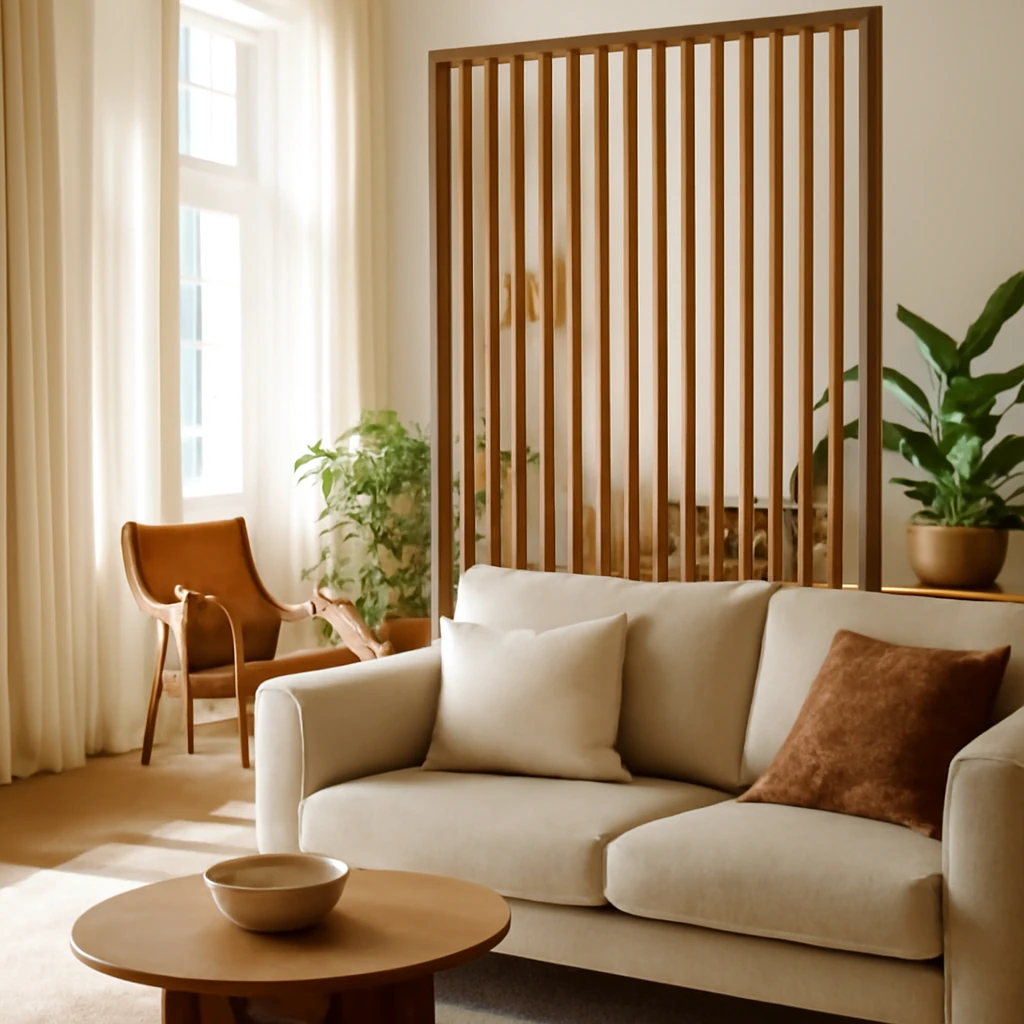
Room dividers: smart zoning for European homes
Open‑plan living is a hallmark of many contemporary European homes, especially in city centres where space is precious. To balance sociability with privacy, homeowners turn to room dividers - functional, aesthetic, and often quick to install compared with full‑scale construction. These elements are sometimes referred to as 'fake walls' by builders, yet in practice they are used to carve out zones without committing to a new structural wall. The versatility of partitions allows a kitchen to whisper into a living area, a sleeping alcove to soften the bustle of the living room, or a home office to tuck into a quiet corner. In this guide, we examine the main types of partitions, what to expect in terms of cost and performance, and how to choose the right solution for your home in Europe.
Room divider options: materials and styles
Material choice governs not only aesthetics, but acoustics, moisture resistance, load‑bearing capacity and installation speed. We group typical options by how they are constructed and used in European homes.
1. Brick partitions
Brick partitions represent a traditional, robust approach. They create a solid, sound‑blocking division that can carry wall finishes and fixtures. Brick is synonymous with permanence, so it is usually chosen during substantial renovations or in homes designed for long‑term use. The main caveats are weight, the need for precise structural planning, and a longer, dustier construction process that generates waste. In many European urban homes, brick partitions are reserved for zones requiring maximum acoustic separation or for loft‑style contexts where industrial character is part of the design language. If you opt for brick, you should engage a structural engineer and a licensed contractor to ensure the floor, ceiling and services can accommodate the new element.
2. Aerated concrete partitions
Autoclaved aerated concrete (AAC) or other lightweight concrete blocks are popular for interior partitions across Europe. They offer a practical balance of strength, air circulation and modest weight. AAC is easy to cut, provides decent sound attenuation, and can be finished with plaster, tiles or paint. The blocks are bulky, so think about how they affect room dimensions and door openings. Because of their texture and joint lines, finishing tends to be smoother if plastered, for damp areas, applying a moisture‑resistant finish is advisable.
3. Timber partitions
Timber partitions provide warmth and a natural aesthetic that pairs well with Scandinavian or rustic European interiors. They are lighter than brick or concrete, quick to assemble, and can be designed as a visible feature or as a discreet division. A typical timber partition uses a framed structure with vertical battens or studs, then is clad with boards, panels or plasterboard. If used extensively or in damp spaces, select treated timber and ensure a vapour barrier to manage humidity. For stability, especially in larger rooms, consider a robust frame design such as a perimeter frame with diagonal bracing. Natural timber warms spaces but requires maintenance against moisture and wear over time.
4. Plasterboard partitions (drywall)
Drywall partitions, often known as plasterboard walls, are the most common solution for flexible zoning in modern flats and new‑build homes. They are lightweight, straightforward to install, and finish well with paint, wallpaper, or tile. A plasterboard partition is typically erected on a metal or timber frame, allowing for a rapid transformation of space. Important considerations include ensuring the structure is continuous from floor to ceiling for stability and avoiding heavy fixtures directly on the wall unless reinforced. If you need partial height or open louvres, plasterboard can be turned into decorative niches or soffits to improve ventilation and light distribution.
5. Plasterboard slabs with tongue‑and‑groove joints (PGP)
In some European projects, wall assemblies use a refined plasterboard system that locks through tongue‑and‑groove joints, creating a near‑seamless interior wall with good sound isolation. These systems are typically installed on a metal framework with jointing compounds and finishing plasters. They provide a fast route to rigid partitions and work well in bathrooms or kitchens when moisture‑resistant boards are used. Finishes range from painted plaster to decorative plaster or tile, depending on the room’s function. While not load‑bearing like brick, these partitions offer robust performance for light or mid‑weight walling and are cost‑efficient with proper finishing.
6. Glass partitions and glass blocks
Glass partitions are a modern favourite for European homes seeking light continuity and visual expansion. They can be clear, frosted, or textured, and can incorporate framed or frameless configurations. Glass blocks offer a tactile, volumetric approach to zoning while maintaining strong light transmission and a sense of openness. For damp spaces, tempered or laminated glass with appropriate seals resists moisture and provides enhanced safety. In open‑plan schemes, glass partitions can run from floor to ceiling with slim frames or even be freestanding as panels. When privacy is required, integrated translucent film, sandblasted textures or smart glazing options can soften visibility while preserving daylight.
7. Sliding partitions
Sliding wall systems are particularly effective in compact environments or when you want to reconfigure space quickly. A track or floor‑to‑ceiling rail system allows panels to glide aside, creating either a private room or an expansive, single space at will. You can choose solid panels, glazed variants or a combination, depending on the desired balance of light, sound and privacy. For larger openings, consider bi‑fold or pocket doors that disappear into a concealed cavity. Plan for adequate clearance and ensure that rails are secured to robust elements of the building structure, otherwise, movement can become noisy or unstable over time.
8. Decorative partitions
Decorative screens, folding screens, room dividers with metal, wood or textile insets, or bespoke fabric curtains provide a flexible approach to zoning. They may be movable or fixed as part of a designed gallery wall. These elements offer a notable stylistic impact and can be easily updated as trends or moods shift. In European interiors, decorative partitions are frequently used to introduce colour, texture and material contrasts without completely slicing a space into separate rooms.
Which partitions to choose: guidance for your home
Choosing the right partition hinges on function, climate, room size and budget. Consider the room's typical use, the level of privacy you require, and how much light you wish to preserve. In practice, many European homes blend several approaches: a glass‑framed partition to demarcate a living area from a dining zone, with a decorative timber screen as a soft visual cue, or a lightweight plasterboard wall to create a dedicated dressing area within a bedroom suite. The goal is to achieve a balance between form and function that supports daily life while enhancing the interior’s character.
Key decision factors include:
- Sound insulation. For spaces that must remain quiet - bedrooms, personal offices, study corners - aim for partitions with high acoustic performance. In many European projects, plasterboard on a resilient channel, or gypsum‑based boards with dedicated acoustic ratings, or a brick/block with substantial mass, deliver better sound control. If you need true isolation, you may combine a double‑wall approach with mineral wool insulation in the cavity.
- Light and permeability. Glass partitions keep spaces bright and visually connect rooms. If privacy is a concern but you still want daylight, use frosted or textured glass or translucent panels with sheer curtains. Consider the room’s orientation and the availability of natural light when deciding on wall thickness and glazing.
- Moisture and durability. Kitchens, bathrooms and laundry zones require moisture‑resistant materials. For example, use moisture‑resistant plasterboard in humid areas, or glass partitions with sealed edges. Timber partitions should be properly treated for humidity, and brick or concrete partitions should be finished with appropriate coatings to resist stains and mould.
- Style and budget. The choice of material is closely linked to design language. Natural timber introduces warmth, metal and glass deliver a modern vibe, traditional brick can establish a robust, architectural look. Your budget will steer the decision, plasterboard and timber are typically the most economical options, while full masonry is the most costly and time‑consuming.
- Structural and regulatory considerations. Any substantial interior wall change may trigger local planning rules or building regulations. In many European countries, you may not need formal planning permission for internal partitions, but you should check with your local authority and obtain the necessary approvals if the partition affects load‑bearing elements, plumbing, or electrical routes. A licensed contractor or architect can guide you on the correct process and ensure compliance with safety standards.
Before proceeding, it’s wise to discuss your plan with a qualified contractor or interior designer. They can assess the building’s structure, confirm whether a new wall would require a load‑bearing assessment, and advise on how to reposition or protect services such as electrical cables or water pipes. A European renovation often benefits from a staged approach: confirm the structural feasibility, select the materials, and then plan the finishing details to achieve a cohesive look that integrates with existing finishes (flooring, ceiling detail, and colour palette).
We’ll work with you to determine the best approach for your space and project. A professional design and build team will account for the building's original structure, ensure the partition aligns with European safety and energy performance standards, and provide a long‑term plan for maintenance and potential future alterations. They can also assist with planning approvals or permit processes where required, easing the path from concept to completion.
Practical guide to installing room dividers
That moment when you bring a partition into your home should feel like an upgrade, not a disruption. Here are practical steps to manage the project smoothly.
- Define goals and space. Visualise how you want the space to function. Sketch zones, note where natural light comes from, where outlets are located, and how HVAC returns air. This helps choose a partition that supports ventilation and comfort as well as aesthetics.
- Choose materials and finish. Pick a material that fits the room’s tone and climate. Decide whether you want the wall to be load‑bearing or purely decorative, and whether you’ll finish with paint, plaster, tiles, or fabric.
- Assess structural implications. For heavy partitions (brick, concrete), engage engineers and builders early. They will confirm supports, fixings, and load paths and may require temporary support measures during construction.
- Plan for services. Ensure that walls do not obstruct essential services. If wiring or plumbing passes through the area, consider alternative routes or access panels and plan for safe anchorage of fixtures, sockets and switches.
- Establish finishing details. Decide on edge details, door or opening configurations (if the partition includes a doorway), and the aesthetic treatment (colour, texture, pattern). Finishing decisions tie the new partition to the rest of the interior.
- Prepare for maintenance. Choose robust materials and finishes that resist wear in high‑traffic zones and endure seasonal humidity fluctuations in European homes.
For a seamless result, enlist a licensed contractor with experience in interior partitions. They will coordinate with licensed electricians and plumbers, ensure soundproofing is correctly installed, and help you secure any necessary approvals. A well‑planned installation not only improves the layout but also enhances energy efficiency and acoustic comfort across the home.
Budgeting and timeline: what to expect
Costs for interior partitions vary widely across Europe, driven by the chosen material, the room dimensions, finishing level, and labour. As a rough guide, installed partition costs can be categorised as follows (per square metre, excluding finishes and doors):
- Plasterboard partitions – €40–120 for materials and framework, finishing and painting typically brings the total to €85–180 per m2.
- Gypsum plasterboard on a stud frame (GKL) with moisture‑resistant boards – €60–140 per m2, depending on moisture‑resistance level and acoustic performance.
- Pazogrebnevye partitions (tongue‑and‑groove gypsum boards) – €70–150 per m2, depending on system and finishing.
- Timber partitions – €120–300 per m2, influenced by timber grade, panel design and finish.
- Aerated concrete (gas concrete) partitions – €200–600 per m2, depending on block density and finish.
- Brick partitions – €550–1,100 per m2, plus site preparation and waste removal for a heavy, long‑term solution.
- Glass partitions – €350–900 per m2, depending on glass type, framing and privacy options.
- Sliding partitions and systems – €500–1,000 per m2 (including tracks and hardware), with higher costs for large or complex configurations.
Keep in mind these figures are indicative and reflect typical market variations across European cities and rural areas. The total project cost will also depend on finishes, door inserts, electrical work (sockets, lighting integration), and whether any structural modifications are required. A professional assessment during a measured survey will yield a precise quotation and a realistic timetable from demolition (where applicable) to final finishing.
Advice for designers and homeowners: practical tips
When planning a partition, think beyond function and consider how it contributes to daily life and the interior’s design narrative. The right wall can be a sculptural element, an architectural feature or a practical spine of the home. Here are practical suggestions to guide decisions.
- Use light‑coloured finishes on partitions to maintain a sense of airiness in small spaces. Light tones help reflect daylight and visually expand rooms.
- Pair opaque and transparent elements to balance privacy with openness. A glass midsection with a timber frame or a glazed insert can create a soft, modern rhythm in the space.
- In damp environments, select moisture‑resistant boards or glass solutions that tolerate humidity without warping or degrading.
- Consider integrated storage. A plasterboard partition can incorporate shallow alcoves for shelving, or a timber wall can feature built‑in niches to keep surfaces clear.
- Explore soft textures. Decorative screens or fabric panels can soften acoustics and add tactile contrast to a room, without making the space feel closed off.
- Ensure accessibility. When installing partitions, verify that door widths, passage clearances and floor transitions comply with local accessibility guidelines and are practical for everyday use.
- Plan for lighting. Consider how track lighting, recessed fixtures or wall‑wash lighting can interact with the partition, highlighting texture or creating atmospheric zones.
Common questions about room dividers
What is a room divider?
A room divider is a vertical element that separates a space into functional zones. It can be a permanent wall, a semi‑permanent screen or a movable partition that allows flexible reconfiguration of the space as needed.
How do you build a wall?
Building a wall requires a clear plan, correct material selection and adherence to building standards. Start with a suitable frame or base, secure the structure to the floor and ceiling, then finish with paint, plaster, tile or wallpaper to achieve a cohesive look. For any substantial or load‑bearing installation, rely on qualified professionals to ensure safety, stability, and compliance with local regulations.
How can I create a divider cheaply?
Low‑cost options include plasterboard partitions on a lightweight frame or timber screens. Both approaches provide flexible zoning at a fraction of the cost of masonry. If you want to keep costs down, opt for simple finishes such as paint or wallpaper, and avoid heavy hardware that adds labour time.
Final thoughts: designing with partitions in mind
Interiors evolve. A well‑considered partition can adapt to life changes - from growing families to remote working needs, from new storage demands to the desire for quiet corners. In European homes, the best partitions combine durability with lightness, and design with a sense of proportion that respects the building’s architecture. Whether you choose a glass panel to maintain daylight, a timber screen to bring warmth, or a solid mass to muffle noise, the objective is a space that feels cohesive, flexible and humane. With careful planning, a properly executed partition enhances the flow of rooms, optimises use of every square metre and contributes positively to the home’s overall atmosphere and value.
You may also like these articles
 Small Spaces
Designing brilliance in 25 m²: four studio transformations across Europe
Compact studios, bold layouts, European flair.
Interior Design
Timber and Texture: European Interiors for Wooden Homes
Timber interiors across Europe blend natural warmth with modern design for every style.
Tips & How-To
Smart Wardrobe Solutions for Modern European Bedrooms
Smart wardrobe ideas to maximise European bedroom space.