
Explore interior trends, AI design insights, styling guides and real transformations
Smart Wardrobe Solutions for Modern European Bedrooms
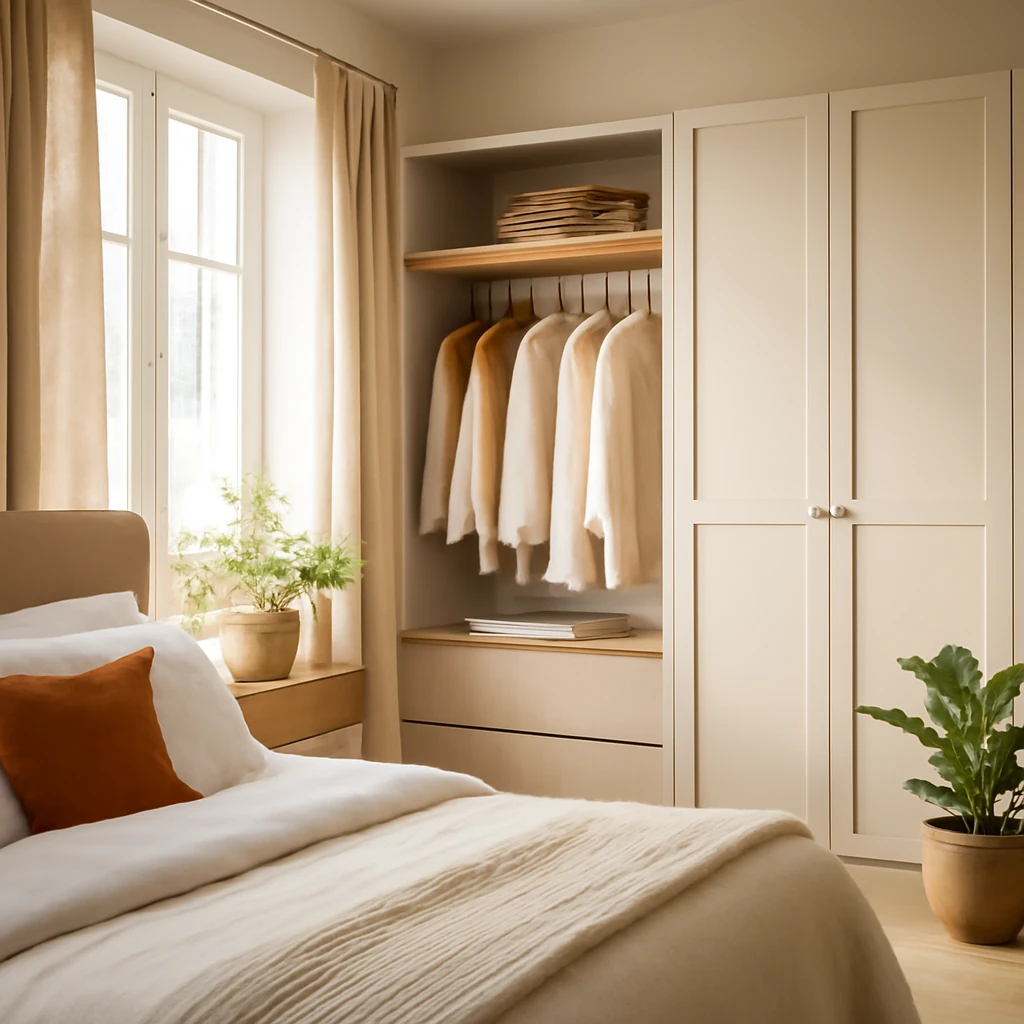
Planning and designing a bedroom wardrobe
In contemporary European bedrooms, designers are increasingly favouring built-in or walk-in wardrobes over sprawling freestanding cupboards. The result is a space that feels calmer, more organised and easier to maintain, while still delivering generous storage for clothing, footwear and accessories. The aim is to create a wardrobe that disappears into the room design, rather than dominating it. This article offers practical guidance on where to place a wardrobe in a bedroom, even when space is constrained, and how to choose a style that harmonises with the room as a whole.
Dimensions and initial calculations
To work out how much space you need for garments, begin by counting the total volume of clothing and footwear you plan to store. Add a contingency of around 10% to accommodate future additions. A straightforward method is to sum the volumes of your current wardrobes and scale up accordingly. Don’t forget to reserve space for any related equipment you intend to keep in the wardrobe, such as a vacuum cleaner, ironing board or steamer.
In practical terms, consider a few standard references for depth and access. A single-rail hanging section is typically around 50 cm deep, with a 10 cm allowance for the garment bulk. If you align hangers perpendicular to the wall, it is possible to reduce depth to around 30 cm, but you will noticeably limit how much you can store. When planning, it is wise to include a minimum 50–60 cm clearance in front of the wardrobe to allow easy access and movement. For deeper storage or for a more generous wardrobe, 60–70 cm is common, particularly where shelves and drawers are incorporated on both sides of the rail.
If you intend to keep larger items such as a vacuum or other bulky appliances within the wardrobe, allocate a dedicated space or a shallow enclosure within the loftier portion of the design. This helps avoid cramping the main garment zones and keeps the area tidy over time.
Space planning: essential zones
A well‑planned wardrobe area should feature at least two zones: a circulation zone and a storage zone. The storage zone may run along a perimeter wall, span two adjacent walls to form an L-shape, or occupy an alcove or niche depending on the room’s geometry. When selecting the optimal depth and layout, consider the size of your hangers and the number of clothing categories you need to accommodate. A typical depth of 50–60 cm supports long garments and folded items, while maintaining comfortable access. If you have a larger footprint, you can extend shelving and add more drawers or organisers. For compact rooms, a shallower depth can be balanced with taller, two‑level storage to maximise vertical space.
As a rough planning rule, allow a clear circulation space of at least 90 cm in front of the wardrobe for comfortable movement, with 80 cm being acceptable in longer corridors or narrow layouts. For standing or turning inside a compact wardrobe area, consider an 80 cm square zone as a practical minimum, though wider is always more comfortable.
Choosing a unified style
The wardrobe’s style should reflect the overall interior language of the bedroom. Use materials, colours and finishes that harmonise with the walls, flooring and any furniture pieces already in the room. Matching the wardrobe to the bedroom’s palette creates a cohesive look, while a subtle contrast can highlight the storage area without breaking the design flow.
Contemporary styles
Most modern wardrobes draw on contemporary aesthetics characterised by clean lines, minimal hardware and an emphasis on function. For small spaces, open‑frame modular systems with visible shelving and baskets can feel lighter and more flexible. In larger rooms, wardrobes with sleek, lacquered facades or glass inserts can convey sophistication while keeping a restrained silhouette. Decorative details should be restrained, consider glass or metal accents as light reflectors rather than focal points.
Practical tips for contemporary wardrobes
- favour modular components that can be reconfigured as needs change
- choose sliding doors to save space in tight rooms
- use light interiors inside the wardrobe to maximise visibility
Classic and timeless elegance
A classic wardrobe often prioritises craftsmanship and refined detailing. When space allows, individual cabinets, drawer units and upholstered seating can infuse a sense of luxury. Timber veneers, mouldings and decorative cornices contribute warmth and texture, while maintaining a calm, organised look. If space is limited, a streamlined version with concealed hardware and fewer ornamentations can still feel timeless by focusing on proportion and quality materials.
Interior ideas for classic wardrobes
- consider integrated lighting to accentuate the wardrobe’s silhouette
- use multi‑function modules that combine hanging, folded storage and drawers
- align with the bedroom’s architectural details to preserve harmony
Eco and natural styling
An eco or nature-inspired wardrobe uses natural materials and restrained colours to create a serene, grounded atmosphere. Think warm woods, stone tones and soft textures. The interior can feature rattan baskets, woven dividers and open shelving to celebrate simplicity and sustainability. For smaller spaces, pale woods or whitewashed finishes help reflect light, while keeping the look cohesive with the rest of the room.
Designing an eco‑style wardrobe involves focusing on materials that age gracefully and harmonise with the bedroom palette. A well‑considered combination of timber surfaces, tactile fabrics and low‑VOC finishes can produce a calm, healthy ambience without overloading the space.
Wardrobe placements in the bedroom
Wardrobe layouts depend on room size, shape and how many clothes you intend to store. Here are common configurations, with practical notes on how to implement them in European homes.
Along a wall
A linear wardrobe occupies a long wall or a portion of it. Doors can be hinged or sliding. Sliding doors are particularly beneficial in narrow spaces as they do not require clearance to open. If space permits, deep shelves and pull‑out baskets improve organisation. When the room is compact, consider closing the wardrobe with doors to create a seamless, uncluttered surface, in larger rooms, open shelving or glass panels can add lightness and visual interest.
- linear systems are efficient for longer walls
- sliding doors maximise room for movement
- interiors should be well lit to enhance visibility
In the corner
Corner wardrobes are an excellent solution for smaller bedrooms. An L‑shaped configuration makes use of two walls while keeping the central floor area open. The depth can be tuned to suit the room, 60–70 cm is typical for comfortable access, with shallower options available if the space is particularly tight. Corner units can be fully enclosed or feature open shelves on one leg for a lighter feel.
- optimises awkward floor plans without crowding the room
- consider a mirror on the door to enhance light and perception of space
In an alcove
Built‑in wardrobes within an alcove or niche are among the most efficient solutions in European flats. The depth can follow the actual wall recess, often allowing 40–60 cm of storage without compromising circulation. Doors may be bi‑fold, sliding, or completely concealed for a minimalist effect. A corridor or passage should remain clear to avoid crowding the space.
Behind a bedhead or as a room divider
For larger bedrooms, a wardrobe positioned behind the bedhead or used as a partition can create distinct zones without introducing heavy furniture. This approach is particularly effective in open‑plan suites or city apartments where room layouts are fluid. Ensure that access to the wardrobe remains convenient from both sides if it forms a divider.
In a separate room
If space permits, dedicating a separate wardrobe room is ideal for those with extensive wardrobes or for homes undergoing renovation. A dedicated space allows for bespoke lighting, ventilation, and tailored storage, unencumbered by bedroom functions. Careful planning is required to ensure the bedroom remains comfortable and well‑lit, with a clear path between spaces.
Organisation of internal space
Internal planning is where a wardrobe earns its keep. The objective is to prioritise the most frequent items and to create logical, intuitive zones that reduce the time spent searching for outfits. Here are essential components and strategies for efficient wardrobe organisation.
Rods, rails and hangers
The core of any wardrobe is its hanging space. Plan for a primary rail at around 1.0–1.6 m from the floor for shorter garments and jackets, with a second rail higher up (approximately 1.6–1.75 m) for longer items such as coats and dresses. In compact rooms, a double‑tier rail system can maximise hanging without expanding depth. For shorter items, a lower rail dedicated to shirts, blouses and trousers helps maintain order.
In addition to traditional rails, pantographs or extending arms on tracks can provide flexible storage for off‑season clothing. Use a system that allows you to adjust the position of rails as your wardrobe evolves.
Shelves, drawers and compartments
Shelving is essential for folded garments, bags, jewellery and accessories. Consider a mix of full‑width shelves for comfortable stacking and narrower shelves for footwear and boxes. Drawers are valuable for keeping small items tidy, dividers within drawers help maintain order. Adjustable shelving is especially convenient, enabling you to tailor the interior as your wardrobe grows or changes with the seasons.
Modular and built‑in solutions
Modular fittings offer speed and flexibility. Pre‑designed modules can be installed with minimal wall alteration, reducing the need for drills or major renovations. For homeowners who plan to relocate or re‑configure spaces, modular systems provide a practical, scalable solution. When using modular components, it is crucial to measure accurately to ensure a snug, balanced fit within the room’s geometry.
Small‑space tips for internal organisation
- assign separate zones for long garments, tops, skirts and trousers
- use pull‑out baskets and boxes to keep smaller items tidy
- incorporate clear or light‑coloured interiors to enhance visibility
Lighting and ventilation inside the wardrobe
In a closed wardrobe, lighting is not a luxury but a necessity. LED strips or compact ceiling fittings can illuminate every shelf and rail, helping you locate items quickly. For walk‑in wardrobes, consider a controlled lighting plan that activates when the door or sensor is touched. If the wardrobe is fully enclosed, ensure there is adequate ventilation to prevent damp and odour build‑up. If installation of an active ventilation system is not feasible, options such as perforated doors or timber slats can promote natural air exchange while maintaining privacy.
Modular fillings and ready‑made configurations
One increasingly popular approach is to select a modular interior package that arrives as a set of pre‑assembled components. This strategy reduces installation time, avoids on‑site drilling, and allows you to adjust the configuration as storage needs change. When choosing a modular filling, ensure that the individual modules align with your room dimensions and that there is a coherent sequence of heights, depths and doors across the entire wardrobe.
Practical considerations for modular systems
- verify exact exterior dimensions to ensure a precise fit
- opt for modular components with adjustable shelves and rails
- select a finish that complements the room and is easy to maintain
In practice: planning checklist for a European bedroom wardrobe
- assess the bedroom’s shape and available footprint, prioritising circulation space
- determine the wardrobe’s primary function: long garments, folded items, or a combination
- decide on depth and door type (sliding vs hinged) to maximise space and access
- choose a style that harmonises with the room’s overall palette and materials
- plan internal organisation: rails, shelves, drawers, baskets and dividers
- consider lighting and ventilation options within or around the wardrobe
- explore modular or built‑in solutions for flexibility and future changes
Finished spaces: styling and cohesion
The finished wardrobe should feel like an integrated part of the bedroom, not a separate contrivance. Achieve cohesion by echoing the room’s materials, such as timber, stone or fabric finishes, and by continuing the same colour story across doors, interiors and adjacent furniture. If the bedroom features a calming, pale palette, light interiors inside the wardrobe can help reflect ambient light and prevent the space from feeling cramped. In a room with stronger colours, consider wardrobes with neutral fronts to balance the visual weight and maintain serenity.
Practical case scenarios for European homes
European bedrooms range from compact city apartments to more generous family spaces. Each scenario benefits from a tailored wardrobe strategy that respects the room’s natural light, circulation needs and architectural details. For a narrow bedroom with a single wall available for storage, a slim, sliding‑door wardrobe that spans the length of the wall can maximise horizontal storage without encroaching on living space. In a room with an alcove or niche, a customised built‑in wardrobe can exploit the recess, creating generous storage while keeping a neat, uncluttered appearance. For a loft or open‑plan suite, a wardrobe that doubles as a room divider helps define zones while preserving an uninterrupted sense of space.
Final reflections
Designing a wardrobe for a European bedroom is less about creating a dominant piece of furniture and more about engineering a quiet, efficient backbone for daily life. The best wardrobes are those that disappear into the room’s architecture - yet remain highly functional, adaptable and aesthetically aligned with the rest of the interior. By balancing depth, access, lighting and materials, you can create a storage system that feels spacious, organised and timeless.
Key considerations at a glance
- Space and circulation: plan for comfortable movement around the wardrobe with clear pathways.
- Depth and access: 50–60 cm is a practical starting point, deeper configurations demand careful space planning.
- Door type: sliding doors save space, hinged doors can offer full accessibility and a sense of enclosure.
- Interiors: light finishes increase visibility, adjustable shelving supports long‑term flexibility.
- Lighting and ventilation: integrate lighting and ensure airflow to prevent damp and odour.
- Style and cohesion: align wardrobe finishes with bedroom materials for a unified look.
- Modularity: consider modular or semi‑custom systems for adaptability and easier installation.
Closing thought
A carefully planned wardrobe is more than a storage solution, it is a strategic part of the bedroom’s architecture. In European homes, where space is often at a premium, the most successful designs are those that blend form and function, weaving practicality into a considered, elegant aesthetic. Whether you opt for a sleek contemporary system, a refined classic arrangement or a natural, eco‑minded approach, the goal remains the same: to create a storage sanctuary that supports daily life with clarity, calm and an enduring sense of style.
You may also like these articles
 Tips & How-To
Preparing for the Handover: A Comprehensive European Guide to New-Build Flats
A practical guide to inspecting and accepting a European new-build flat.
Tips & How-To
New Year Decor for European Homes: Budget-Smart, Stylish Ideas
Timeless, budget-smart festive ideas to transform any room this New Year.
Tips & How-To
Six elegant ways to decorate the wall above the dining table
Six stylish ideas to elevate the dining-wall space.