
Explore interior trends, AI design insights, styling guides and real transformations
Bedroom Curtains 2025: Trends, Tips and Styles for European Homes
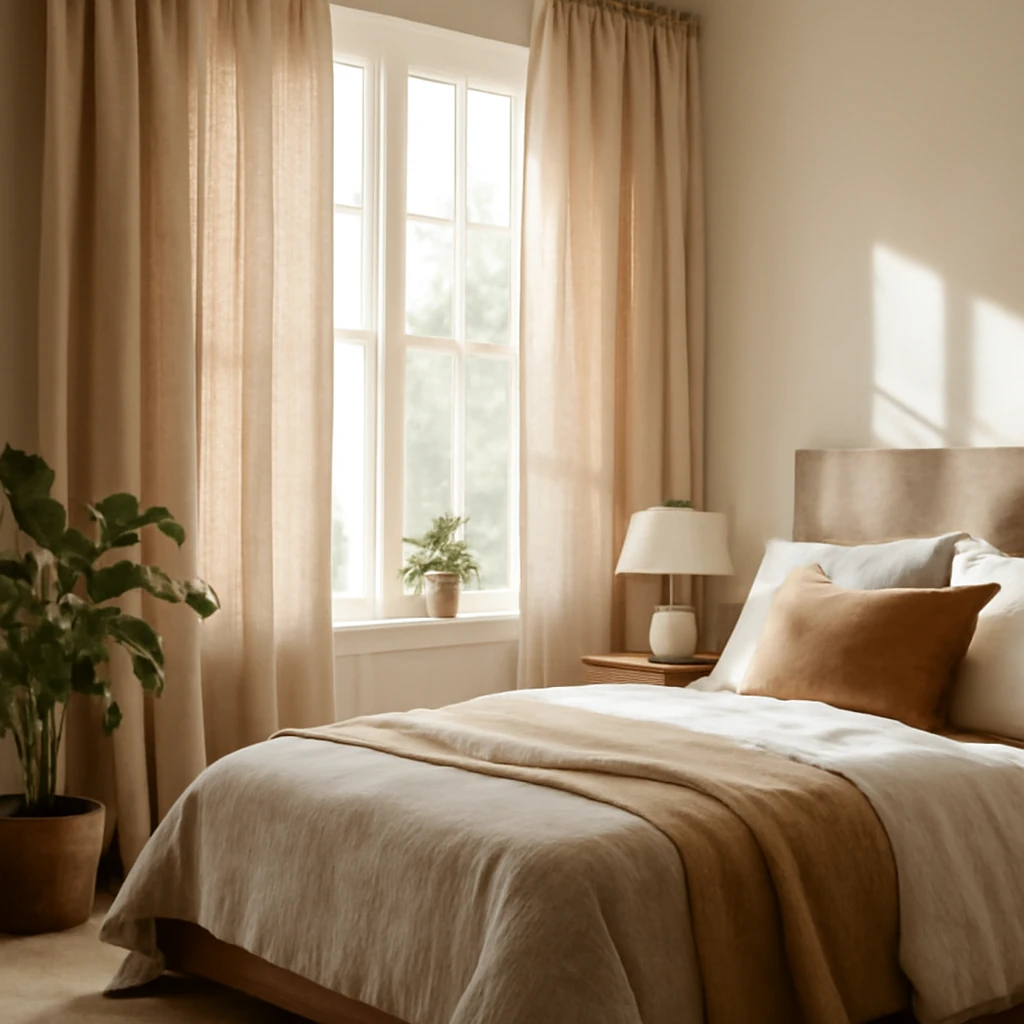
Why window treatments matter in the bedroom
In European homes, the bedroom is more than a place to sleep - it is a sanctuary where light, privacy and temperature interact with textures and materials. The right curtains influence how restful a space feels, how you experience daylight, and how the room interacts with the rest of the home. For 2025, designers emphasise textiles that combine comfort with refined aesthetics, delivering calm and warmth without compromising practicality. This guide presents current thinking on bedroom window coverings suitable for a range of architectural styles and climates - from sunlit Mediterranean apartments to cooler northern homes, from compact city flats to generously proportioned bedrooms.
Textile requirements for a restful bedroom
- To achieve effective darkness and create ideal conditions for sleep, choose fabrics with substantial density, ideally with blackout lining. This is especially important for windows facing bright streets or for night-shift schedules.
- Layering remains a practical and elegant approach: heavy drapes paired with lighter fabrics, or sheer panels with opaque curtains, can reduce noise and soften the acoustic environment of a bedroom.
- Natural and hypoallergenic fibres, such as linen and cotton, help maintain a healthy microclimate. They also feel pleasant against the skin and age well with use.
- Even in spaces where simplicity prevails, durability matters. Opt fabrics that resist fading and retain their shape after washing, while withstanding occasional cleaning without losing softness or drape.
- Coordinate textile choices with wall colour, furniture and decor to create a cohesive, harmonious look. A well-balanced window treatment should complement the room rather than shout from the window.
Colour palette for bedrooms in 2025
The bedroom curtain colour can act as a focal point, blend with the walls, or serve as a quiet backdrop. In 2025, versatile neutrals sit alongside muted plant-inspired tones and deeper hues to create atmosphere and depth. The following palette is widely applicable across European interiors.
Beige
Beige remains a foundational neutral that works with almost any scheme - from opulent classical styling to soft minimalism and eclectic mixes. Beige curtains create a calm, unified backdrop and pair well with both warm and cool accents. They read well in silk-like sheens as well as in matte textiles such as linen or cotton, making them a versatile choice for year-round comfort. When used in sunlit rooms, beige softens glare while maintaining warmth, and it integrates gracefully with natural textures like wood, rattan or cork.
Grey
Grey is practical and adaptable, offering a spectrum from pale pearl to deep GRAPHITE. It does not overpower a space, making it ideal for calm, minimalist interiors or loft-inspired schemes. The key is selecting a fabric with texture - velvet, satin, or linen blends add subtle interest and prevent the tone from feeling flat. Grey curtains pair beautifully with pastels, jewel tones, or rich, dark woods, creating a sophisticated canvas for design accents.
Green
Green in its subdued forms - olive, sage, eucalyptus or olive-toned emerald - brings a touch of nature indoors without overwhelming the senses. The hue works best when aligned with the overall colour scheme: cool greens with blue or grey undertones soften a room, warmer greens pair well with browns, beiges and warm whites. Fabrics with natural textures enhance the colour’s organic feel, whether in linen, cotton, or brushed blends. Depending on fabric density, green curtains can appear soft and airy or richly saturated, contributing to a resilient, lifestyle-friendly mood.
Dark navy
Deep navy introduces an element of refined drama, especially in spaces that balance light and shadow. It suits traditional, contemporary and eclectic interiors alike, and pairs gracefully with warm woods, marble, or metallic accents. A navy panel can feel cocooning and intimate, while remaining timeless when used in plain fabrics or with a restrained pattern. For smaller rooms, combine navy curtains with lighter walls and a narrower window frame to keep the space perceptually open.
Pastel tones
Soft pastels - powder blue, peach, lavender, blush or pale lemon - create a light, airy atmosphere, ideal for bedrooms designed to feel open and soothing. Paired with natural materials such as light oak, linen, and ceramic finishes, pastels calm the senses and prevent over-stimulation. They are particularly effective in spaces that rely on natural daylight and soft textures to establish a serene palette.
Chocolate
Chocolate brown adds warmth and sophistication, especially when used with beige, olive or soft greys. Rich, textural fabrics like velvet or jacquard heighten the sense of luxury, while lighter contrasts - cream or ivory - keep the look balanced. Chocolate curtains work well in rooms focused on natural materials or on a modern minimalist base that benefits from a grounded, timeless accent.
White
White curtains brighten spaces and can visually widen a room, making them particularly effective in small or darker bedrooms. They are versatile across styles, from Scandi to ultra-minimalist. White textiles pair well with vibrant accent colours or with subdued palettes to maintain a crisp, clean ambiance. In white, layering remains crucial: a sheer underlay with a heavier panel offers flexibility for daylight control and privacy.
What curtains will be on trend in 2025
When selecting fabrics and treatments, it is helpful to think about how a curtain communicates with the rest of the interior. Trends in 2025 emphasise a balance between restraint and expression, aiming for textiles that support architecture while offering tactile appeal. The main directions below can be integrated across European homes, from city apartments to maisonettes.
Two-tone curtains
Two-tone curtains introduce visual interest without overpowering a space. This approach can be executed with contrasting tones within the same fabric, or by pairing a lighter drape with a darker border. For layered configurations, a lighter sheer paired with a darker, solid panel creates depth and adaptability for changing light throughout the day. The crucial rule is to ensure the colours harmonise with the overall palette of walls, furniture and textiles, so the window remains a coherent part of the room.
Heavy drapery
Bold, well-structured drapery continues to provide a formal counterpoint to lighter furnishings. Deep folds and substantial fabrics convey a sense of luxury and are particularly effective in cooling, quiet interiors where texture and shadow play a central role. Upholstered headboards, dark wood furniture, and metallic accents can all be harmonised with heavy drapes in solid colours or subtle textures such as damask or jacquard.
Layering
Layered window treatments advance both functionality and aesthetics. Combining a dense outer panel with a lighter inner layer - such as sheer linen or gauze - offers flexible light control and enhanced insulation. In some rooms, integrating two different textures of the same colour can create a calm, monolithic effect, in others, contrasting textures provide tactile depth while preserving cohesion with the décor.
Gradient
A gradient or ombré effect, either within a single fabric or across a pair of panels, adds nuance while remaining subtle. Gradients work well in contemporary interiors and can be employed to transition between wall colours or to connect the window with architectural features. Gentle transitions from light to medium tones are often the most versatile for European interiors where light quality varies with latitude and climate.
Natural motifs
Textiles featuring nature-inspired motifs - florals, leaves, or botanical textures - remain a strong trend, but with restrained scales and believable colourways. When used in curtains, these patterns should remain modest enough not to compete with the rest of the room. Pair them with solid-colour loungers or upholstery to maintain balance while celebrating a love of nature and the outdoors.
Ideas for different styles: how to choose curtains to match the décor
Understanding the relationship between window treatments and the room’s style helps ensure a cohesive look. The following guidelines translate across European homes and climate zones, providing practical starting points for common aesthetics.
Minimalism
For a minimalist bedroom, select curtains with clean lines and restrained detail. Solid, unpatterned fabrics in white, ivory, beige, grey or taupe are ideal. Opt for simple roli or roller blinds, combined with a sheer for daylight control, and a hidden track system to keep lines uninterrupted. Natural or blended fibres such as linen and cotton work well here, as do matte textures rather than shiny finishes. The goal is a calm, uncluttered surface that lets form, light, and material quality define the space.
Scandinavian style
Scandinavian interiors value light, airiness and natural materials. Choose light-colour curtains in flaxen, stone or soft white, with a touch of texture from linen blends. Linen or cotton drapes, either unpatterned or with very gentle textures, are ideal. Consider a lightweight sheer to preserve daylight. Minimalist hardware, such as concealed tracks or slim aluminium poles, keeps the focus on material and light rather than hardware. A softly layered approach - sheer under a light-colour panel - delivers the characteristic Nordic warmth without heaviness.
Neoclassical
In modern classical interiors, curtains often mingle opulent textiles with tailored restraint. Look for thick, tactile fabrics in deep neutrals or subtle tones of blue, taupe, or gold-warm greys. Consider single-colour drapes with a refined texture (damask, jacquard, or raised weave) and pair with delicate sheer panels. Decorative yet not overly ornate tracks or rods can act as quiet architectural accents. The overall effect should feel stately, with a nod to traditional tailoring and a contemporary, light-filled atmosphere.
Contemporary
Contemporary bedrooms benefit from a restrained, versatile approach. Choose clean, straight lines and timeless colours within the 60/30/10 rule: 60% main shade, 30% secondary, 10% accent. Use roman or roller blinds for a neat profile, or slim-panel curtains in solid shades to maintain a calm, cohesive look. Subtle patterns in geometric or abstract forms can add interest without dominating the space. Concealed tracks or hidden fixtures help preserve a crisp silhouette, especially in compact European rooms.
Eco style
Eco-conscious bedrooms stress natural materials and sustainability. Opt for curtains made from linen, organic cotton, hemp blends, or bamboo fibres. Colours range from warm beiges and earthy greens to subdued blues and terracotta. Minimal ornamentation ensures a calm, earthy aesthetic, while wooden or bamboo rails extend the natural theme. The overall appearance should feel organic, breathable and easy to care for, supporting a healthier indoor environment.
Loft
Loft-inspired bedrooms combine raw texture with comfort. Use robust fabrics such as flax blends or scooped wool in graphite, slate, charcoal or natural wool tones. Roll or Roman blinds in coarse textures offer the required industrial edge while softening the space. If the room features brick walls or concrete floors, select curtains that balance those surfaces - darker tones can ground the room, while lighter layers prevent it from feeling oppressive.
Measurement, installation and care: practical guidelines
Precise measurement and thoughtful installation ensure that the chosen curtains perform as intended and look their best. Here are practical steps suitable for European windows of varied shapes and sizes:
- Measure the window itself, not the wall, to determine the drop. Decide whether you want the curtains to hang just inside the frame or to extend to the floor. Floor-to-ceiling installations often make rooms feel larger and more elegant.
- Allow for fullness. For rod-pocket or track-mounted curtains, fullness should typically be 1.5 to 2.5 times the width of the window, depending on fabric weight and the desired drape. Heavier fabrics benefit from more fullness to create graceful folds.
- Choose track or rod hardware that complements the room’s scale. Concealed tracks create a clean line ideal for minimalism, while decorative rods can add character in neoclassical or loft-inspired spaces.
- When layering, treat the outer panels and inner sheers as separate elements. The inner layer should be slightly shorter in drop to avoid blocked light at the sill unless a precise alignment is desired for a particular aesthetic.
- Consider the climate. In colder climates, thicker drapes improve insulation, in warmer climates, lighter fabrics with a sheer layer preserve daylight while controlling glare.
- Maintenance matters. Select fabrics with washable finishes or easy-care attributes, and consult care labels for washing and ironing requirements. For sustainable Europe-wide living, consider reusable or reusable-cleanable fabrics that retain appearance after repeated cleaning cycles.
Care and maintenance tips
- Regularly shake out dust and vacuum lightly with a soft upholstery attachment to preserve texture and colour.
- Follow fabric care instructions. Linen and cotton blends can often be machine washed on gentle cycles, while velvet and jacquard may require dry cleaning or professional laundering.
- Avoid direct heat sources and excessive sun exposure for long periods to minimise fading, rotate curtains seasonally if possible to even out wear.
- To refresh creases, lightly steam or iron on the appropriate setting, using a pressing cloth to protect sensitive fabrics.
The European context: integrating curtains with architecture and daylight
European homes vary from compact city flats to larger family houses with high ceilings and expansive fenestration. Curtains should respect window proportions, wall thickness, and the level of daylight throughout the year. For southern latitudes, blackout or heavy lining improves sleep during long summer days, in northern climates, softly layered textures enhance insulation and acoustic comfort without creating a heavy feel. The most versatile approach across Europe is to combine a practical, high-performance outer panel with a lighter inner layer, enabling quick light adjustment and a refined aesthetic.
Conclusion
Bedroom curtains in 2025 strike a balance between quiet luxury and everyday practicality. By choosing fabrics with durable performance, palettes that harmonise with the room, and well-considered layers that adapt to light and seasons, European homes can achieve spaces that are both restorative and stylish. Whether you favour minimalist clarity, Nordic warmth, or refined neoclassical elegance, the curtain decisions you make in the bedroom will influence comfort, acoustics and mood for years to come. The guiding principle is thoughtful restraint: textiles should enrich the room without overpowering it, while offering the flexibility to adjust to the changing rhythms of daylight and life.
You may also like these articles
 Kitchen Design
Provencal Kitchens: Rustic European Charm for Modern Homes
A guide to Provencal kitchen design across Europe, blending rustic charm with modern living.
Living room
The European Living Room: Planning, Palette and a Timeless Way to Light
Inspiration and practical guidance for European living rooms.
Bedroom
Creating a Teenager’s Bedroom: European Styles, Zoning and Comfort
Smart, stylish ideas for a teenage girl’s European bedroom.