
Explore interior trends, AI design insights, styling guides and real transformations
Kitchen Curtains 2025: Trends, Styles and Fabrics Across Europe
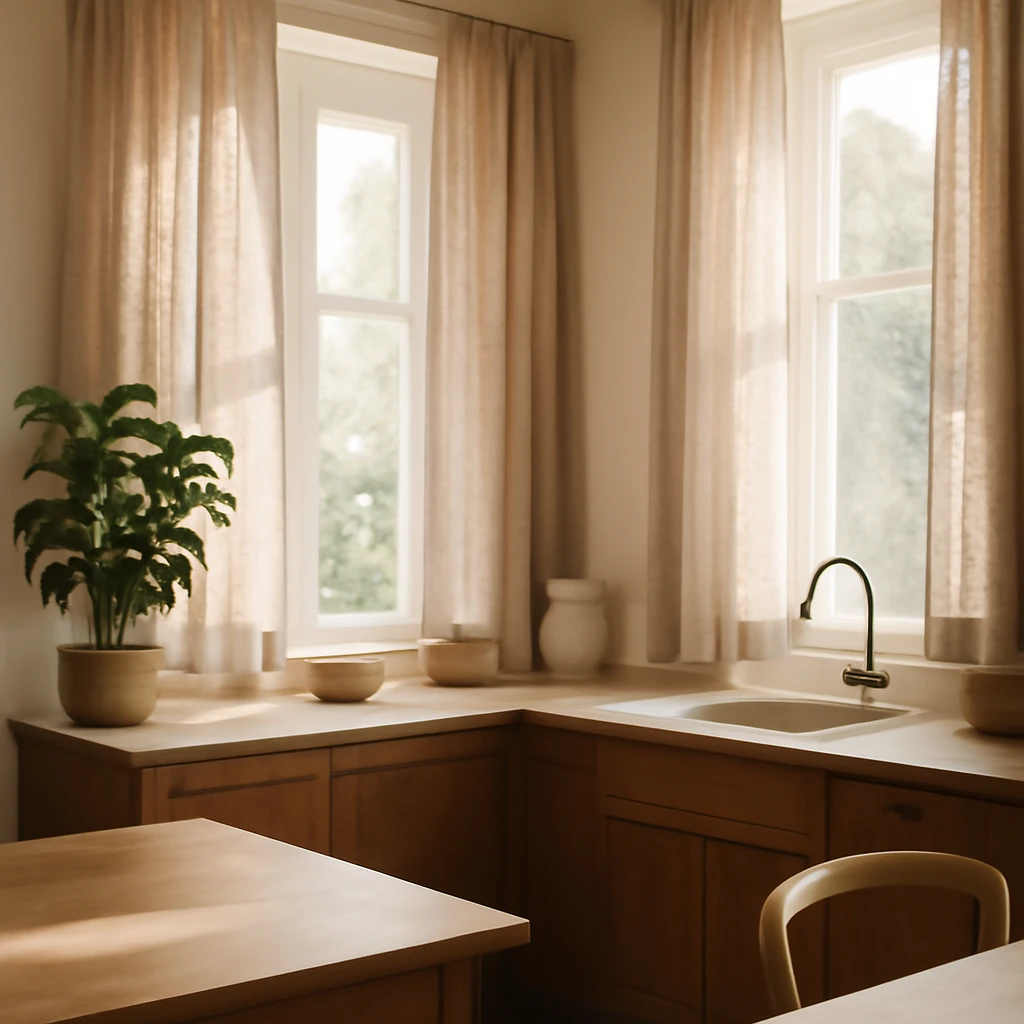
Introduction: curtains for the kitchen in 2025
Windows in the kitchen play a crucial role far beyond mere light control. They shape atmosphere, influence ventilation, and, in a space exposed to humidity, grease and heat, they demand fabrics that perform as well as they look. In many European homes, the kitchen is a living hub - bright, social and, at times, compact. The curtains chosen for this room must strike a balance between practicality and style: they should soften glare, resist damp, be easy to clean, and still feel contemporary as trends evolve. In 2025, the guiding principle is textiles that stay enduringly useful while delivering a refined, understated aesthetic. This article distils the latest thinking on kitchen curtains across Europe, covering the main models, fabrics, and care routines that help textiles endure the rigours of modern cooking spaces.
All you need to know about kitchen curtains in 2025
The requirements for kitchen textiles are shaped by environment, lifestyle and the degree of architectural light control you want. In Europe, designers emphasise fabrics that tolerate regular washing, resist odours and moisture, maintain their colour and shape, and integrate with a wide range of kitchen styles - from compact city flats to open-plan family spaces.
Textile requirements
- Ease of care. Fabrics should withstand regular laundering or be wipe-clean where appropriate. Materials with dirt- and water-repellent finishes are highly valued, enabling quick spot cleaning without heavy tumbling or reshaping.
- Moisture resistance. Kitchens emit steam and vapours, textiles should resist absorption to reduce mould risk and odours.
- Odour resistance. Dense weaves or fabrics with protective finishes help limit absorption of cooking scents, keeping textiles fresher for longer between washes.
- Heat resilience. Curtains must retain their shape and colour when exposed to heat near cooking surfaces and under intense sun through windows with southern exposure.
- Practicality of operation. Choose designs that do not obstruct window opening or kitchen ventilation, and that are easy to operate with hands or dish-drying towels nearby.
- Light control. Kitchens benefit from adjustable light, so consider layers - sheer or voile paired with a heavier option or roller/roman blinds for flexible shading when cooking.
- Safety. In proximity to hobs, opt for flame-retardant or treated fabrics, and keep long trailing elements away from heat sources.
Design should support the kitchen’s overall style while remaining uncomplicated and functional. In Europe, many kitchens combine simplicity with natural textures, so the textiles often act as a subtle, tactile complement rather than a dominant decorative feature.
Popular models for 2025
Below are the main curtain styles you’ll see in European kitchens in 2025. Each option has practical advantages and works well in different layouts, from open-plan spaces to compact rooms.
Portières (full-length drapes)
Portières add warmth and a decorative touch to larger, open-plan kitchens or those adjoining living areas. They can soften the room and shield from sun and drafts. Because long drapes can trap odours and dust, this style is best suited to spaces with good extraction and regular ventilation. When selecting fabrics, favour materials with moisture-repellent finishes or those treated to resist stains. In smaller kitchens, opt for lighter-weight fabrics with a clear texture to avoid overwhelming the space.
In contemporary European design, portières are often hung on decorative rails or mounted on concealed tracks that become a feature in their own right. Richly textured fabrics, such as boucle or woven jacquards, can serve as a focal point when paired with a pared-back surrounding palette.
Roman blinds
Roman blinds offer a compact, tidy profile that works particularly well in smaller kitchens. When raised, they reveal a neat stack of fabric above the window, when lowered, they provide complete privacy or light filtering. Moisture-resistant versions and vinyl-coated fabrics are common, making them practical for damp environments. Roman blinds are well suited to a layered scheme: combine with a sheer panel or lightweight voile for daytime diffusion of light and an additional layer at night.
Roller blinds
Roller blinds present a sleek, minimalistic look and a close fit to the window, delivering excellent sun protection when chosen in blackout or light-filtering fabrics. They are easy to clean and hold their shape well in high-humidity spaces. For kitchens, moisture-resistant finishes and wipe-clean surfaces are desirable. Roller blinds can be paired with a sheer or light curtain to soften the space when needed or left bare for a crisp, contemporary aesthetic.
Voile and light fabrics
Voile, tulle and other light, semi-transparent fabrics are valued in European kitchens for their ability to admit daylight while maintaining privacy. These fabrics are typically paired with another layer or used on their own when the view or the overall design warrants a lighter touch. Because voile can be delicate, choose handlings that are gentle, and stagger washing schedules to keep the fabric from becoming transparent over time.
Short curtains and café curtains
Short curtains, including café curtains, are ideal for smaller kitchens where full-length drapery would dominate the window. They keep the window clear for air flow and radiators, while still contributing texture and softness to the space. Short-length options are easy to maintain and can be styled with a variety of fabrics - from crisp cottons to relaxed linens - that suit many European kitchens and regional design preferences.
Suitable fabrics for European kitchens
The right fabric choices make a kitchen curtain perform as well as it looks. European homes vary from coastal to continental climates, so fabrics should be robust, easy to care for and adaptable to the room’s lighting needs. Here are the main options and what they offer.
- Polyester – a durable, moisture- and stain-resistant synthetic that holds colour well and is machine-washable. It’s a practical baseline for active family kitchens and high-traffic spaces.
- Cotton with finish – natural cotton treated with a water- or stain-repellent finish. It keeps the natural feel of cotton while offering improved resilience to kitchen conditions.
- Linen with synthetic blend – a mixed fabric that captures linen’s relaxed texture with the added resilience of synthetic fibres. It resists wrinkling better than pure linen and still feels tactile and warm.
- Jacquard – a heavier weave with a textured pattern that holds its shape and colour, suitable for traditional or modern interiors. In kitchens, select jacquards with moisture protection to maintain longevity.
- Blackout or dim-out – ideal for strong sun exposure or where precise light control is essential. Blackout fabrics offer privacy and temperature regulation, which can help keep kitchens cooler on hot days.
- Voile or sheer fabrics – lightweight, airy options that diffuse sunlight softly while preserving privacy. Best used as an additional layer or in spaces with ample daylit windows.
When selecting fabrics, consider how the weave and finish interact with odour absorption, cleaning methods and storage. Fabrics with protective finishes are easier to keep clean and maintain their colour through repeated washes.
Trends for 2025: what to expect for kitchen curtains
The 2025 trends underline a movement toward calm, durable textiles that blend with the architectural lines of European interiors. Here are the main directions shaping kitchen curtain design this year and likely into the next few seasons.
Portières without voile: pared-back layering
In smaller spaces or in kitchens where practicality rules, the layered look of multiple fabrics is softened. The current preference is for portières without a second, sheer layer. If a second layer is desired for depth, choose a fabric with a strong texture or a visually rich weave to give the window presence without overwhelming the space. A striking, decorative curtain rail or rod can serve as a focal accent in minimalist or contemporary interiors, providing a clear design statement without adding excessive bulk.
Concealed rails and integrated lighting
Minimalism continues to influence curtain hardware. Concealed rails create a clean silhouette, ideal for contemporary European kitchens. Subtle integrated lighting, such as LED cove lighting above concealed tracks, can simulate a sense of height and add a soft glow to the window area. This combination of restraint in hardware and warm lighting can make a kitchen feel more spacious and refined, especially in compact apartments or open-plan layouts.
Background textiles
The trend toward background textiles means curtains that harmonise with the surroundings rather than compete with them. This often translates to fabrics in tones that echo cabinetry, worktops or wall colours, with textures that create depth rather than loud patterns. In modern European kitchens, the emphasis is on calm palettes - stone greys, sand, greiges - and tactile surfaces such as woven textures or subtle embroidery that adds interest without drawing the eye away from the room’s architectural lines.
Natural theme
Natural materials and earthy tones remain timeless across European interiors. For curtains, expect linen and cotton-based fabrics in warm beiges, creams, soft olives and terracottas. Botanical motifs are reinterpreted in quiet, tonal ways, or entirely avoided in favour of solid colours and gentle textures. This approach pairs beautifully with wood tones, stone, and soft lighting to create a serene kitchen atmosphere that remains resilient to changing fashion.
Light fabrics and airy silhouettes
While blackout remains important for some south-facing kitchens, the broader trend favours lighter fabrics that invite daylight while offering privacy. Voile, voile blends and breezy cottons provide a sense of airiness, which is especially welcome in European climates where natural light changes with the seasons. Layering remains key: light curtains that soften the sun, paired with a more solid panel when extra shade is needed.
Colour and texture as the unifying thread
Textiles act as a unifying element across a kitchen’s palette. In 2025, designers encourage fabrics that mirror the tones of cabinets, countertops and tiles. Subtle variations in texture - ribbed, crinkled or textured weaves - offer visual interest without introducing busy patterns. The goal is to create cohesion, with curtains acting as a soft, living backdrop that complements the room’s materials rather than competing with them.
Care and maintenance: keeping kitchen curtains looking fresh
Kitchen textiles endure a demanding environment. Regular maintenance extends their life and ensures they continue to perform well as the design era evolves. Here are practical guidelines to help textiles stay in good shape year after year.
- Frequency of washing. Plan to wash kitchen curtains every 1–2 months, or more often in households with heavy cooking or smoking. Lightweight fabrics can usually withstand more frequent cycles, while thicker, treated fabrics may require gentler handling.
- Washing temperatures and methods. Lightweight and synthetic fabrics are typically machine-washable at 30–40°C. Heavier or more delicate textiles may require a delicate cycle or hand washing. Always follow care labels and, when in doubt, opt for a professional cleaning service.
- Drying and ironing. Natural fibres such as cotton and linen may need a light ironing to remove wrinkles, ideally while still slightly damp. Synthetics generally respond well to steam ironing or air-drying without pressing.
- Spot and stain treatment. Tackle grease and food stains promptly with a mild detergent or a vinegar-water solution. Avoid aggressive scrubbing that can damage fibres. For synthetic fabrics, specialised stain removers can be effective, always test a hidden area first.
- Dust and air exchange. Regularly vacuum or wipe textiles with a soft brush to remove dust. For natural fibres, periodic airing outside on a dry day helps prevent musty odours and preserves fabric integrity.
- Finishing treatments. Anti-static and water-repellent finishes can help textiles resist dust, moisture and staining. If applying finishes, ensure they are compatible with the fabric type and do not alter the drape or colour excessively.
- Flooring and window considerations. When windows are opened frequently or the kitchen is close to the living area, ensure the curtain length and movement do not interfere with nearby appliances or heating vents. For safety near hobs, maintain clearances and select fabrics with appropriate flame-retardant properties or finishes.
With a consistent maintenance routine, kitchen curtains can retain their colour, texture and function for many seasons, adapting gracefully to evolving interior schemes and seasonal lighting shifts across Europe.
Practical guidelines for choosing and installing kitchen curtains
When selecting curtains for a European kitchen, a few practical considerations can streamline decision-making and ensure long-term satisfaction.
- Size and fit. Measure precisely: width should allow for gentle fullness even when retracted, and height should accommodate the room’s proportions and radiator or sill clearance. In compact kitchens, avoid excessive pooling or long drapes that trap odours or gather grease near cooking zones.
- Layering strategy. Layering remains popular for its versatility. A light voile or sheer combined with a higher-performance panel or blind offers daytime brightness with easy switch to full privacy or shade at night.
- Hardware selection. Concealed tracks or minimalist rails deliver a streamlined silhouette. If you prefer a decorative touch, choose a rail or rod finish that complements other metal accents in the room, such as taps, appliance handles or lighting fixtures.
- Colour and texture decisions. In European kitchens, the prevailing tendency is to harmonise textiles with cabinetry and worktops. Subtle textures - woven, ribbed or slub weaves - add depth without visual clutter. Pair warm neutral palettes with natural materials for a timeless look, or employ a restrained colour to echo a feature tile or a statement appliance.
- Safety and maintenance near cooking zones. Prioritise fabrics with low flammability options and avoid long, dangling elements in heat-prone areas. In the kitchen, frequently used fabrics should be easy to clean and quick to dry, to minimise disruption to daily life.
Designing with curtains: a European perspective
Across Europe, the kitchen is increasingly conceived as part of a single living space. Curtains contribute not only to light control but to the room’s sense of proportion and comfort. A well-chosen textile can unite cabinetry, flooring and countertops by picking up shared undertones - warm beiges that echo oak surfaces, cooler greys that complement stainless steel, or soft greens that soften stone finishes. In modern urban homes, a restrained curtain palette with rich textures can convey sophistication without competing with architectural details or high-contrast tiling.
Summary: building lasting appeal with the right curtains
Choosing kitchen curtains in 2025 is about balancing practicality with refinement. The best textiles are those that respond gracefully to the daily rhythm of the kitchen: they resist moisture and odour, clean up easily, and maintain their shape and colour through repeated washing. They can be layered for flexible light control, yet designed with a clean, unobtrusive line that supports a contemporary European aesthetic. By selecting fabrics with robust finishes, pairing them with thoughtful hardware, and adopting a modular layering approach, homeowners can create kitchens that feel calm, inviting and resilient - solutions that endure as trends shift and seasons change.
Notes on sustainability and responsible sourcing
Sustainability remains a priority for European design. When selecting curtains, consider fabrics that are produced with low environmental impact, such as recycled polyester options or natural fibres obtained from responsibly managed sources. Look for textiles with durable finishes that extend product life, reducing the need for frequent replacements. Where possible, choose local or regionally produced textiles to support nearby manufacturing ecosystems and reduce transport-related emissions. Finally, consider repairability: fabrics that can be trimmed, recycled or repurposed at the end of their life help minimise waste and align with circular design principles.
Final thoughts: turning trends into timeless kitchen textiles
2025 offers a compelling blend of utility and elegance for kitchen curtains. By prioritising fabrics that perform under humidity, heat and odours, and by adopting layered, adaptable solutions with concealed hardware and soft textures, you can create a kitchen that remains stylish as fashion shifts. The European context - varied climates, architectural traditions and a growing emphasis on sustainability - encourages smart, restrained choices that stand the test of time. Whether you favour minimalism, contemporary classic or a natural, tactile palette, the right curtains can anchor your kitchen design and elevate everyday meals into a refined living experience.
You may also like these articles
 Renovation
Refreshing Your Kitchen Countertop: DIY Techniques for European Homes
Four practical DIY methods to refresh a kitchen countertop across European homes.
Colour & Materials
The Rise of Chenille: Soft Luxury for European Living Rooms
Soft luxury meets practicality: chenille sofas reshaping European interiors.
Tips & How-To
Capitonné Headboard: A DIY Guide to Luxurious Tufted Upholstery
Transform an old frame into a luxe capitonné headboard with foam, fabric and tufting.