
Explore interior trends, AI design insights, styling guides and real transformations
Spa style bathrooms for 2026: natural tones, curved forms and tactile textures
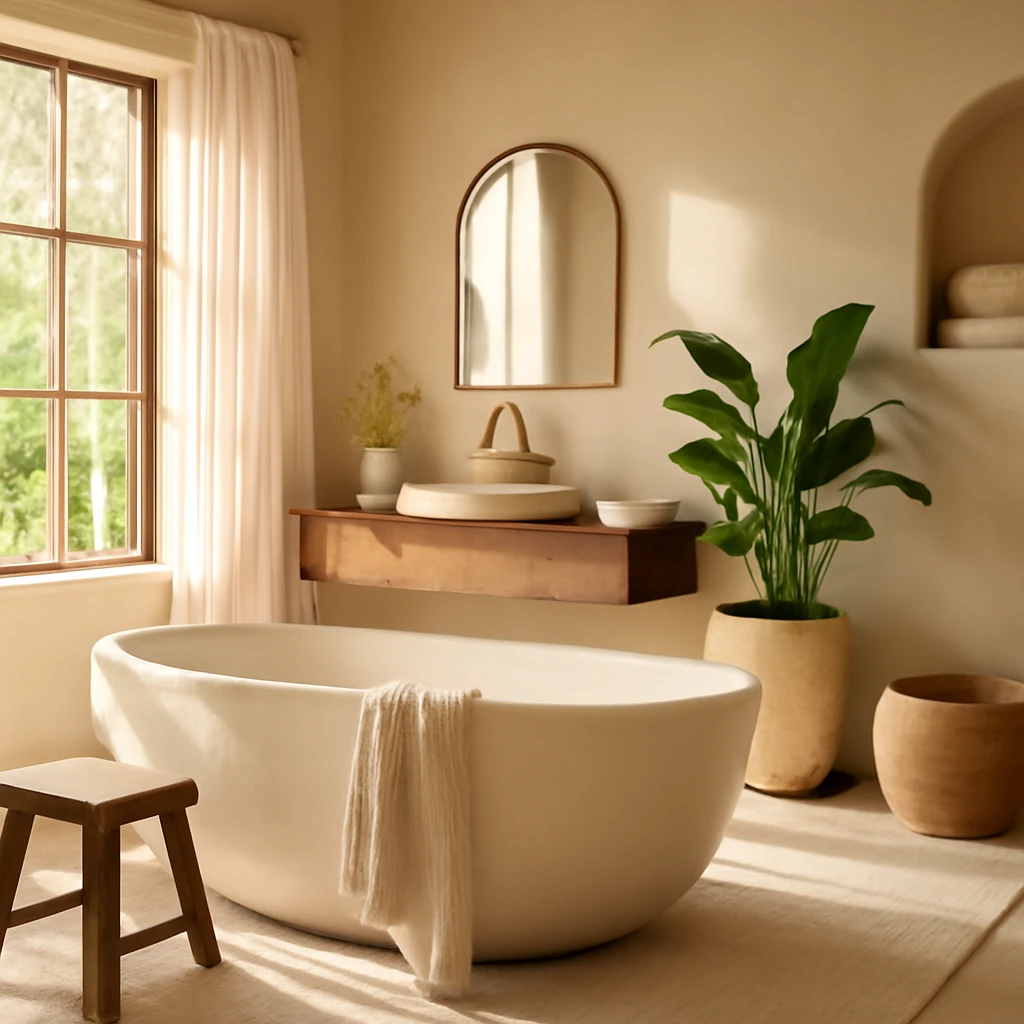
Bathroom trends 2026: a spa like European approach
Today the bathroom is no longer a purely functional space. In European homes it behaves as a retreat within the home, designed with the same care as living rooms or bedrooms, but with materials and finishes chosen for their moisture resistance. The trends for 2026 embrace calm, warmth and tactility, while integrating intelligent technologies to improve comfort and efficiency. In this article we examine the driving forces shaping contemporary bathroom design across Europe, from colour palettes to lighting schemes, materials to storage systems, and the stylistic languages that will define the year ahead.
Colours - natural and soothing
The drive towards ecological living informs the palette in every room, including bathrooms. Natural tones and a restrained, monochromatic base create a spa like atmosphere that feels timeless and civilised. Bright, clinical whites retreat to the background, while earthy hues become the foreground, pairing beautifully with timber, stone and warm lighting.
Earthy tones such as sand, terracotta, warm beige, olive and warm grey offer a sense of stability and comfort. They work particularly well with natural woods and stone, where one material can read as a texture rather than simply colour. In practice, bathrooms of 6–12 m2 benefit from a restrained palette with a focus wall or a heavily textured tiling in a single colour family to avoid visual clutter.
For a contemporary yet serene look, designers often combine light stone or porcelain surfaces with timber details and soft, sea glass inspired accents. The result is a calm, restorative space where light and material come together rather than compete.
Forms - rounded and approachable
In 2026 the philosophy of renovation in bathrooms is that the space should invite rest and recovery. Aggressive, angular forms are eschewed in favour of rounded edges and softened silhouettes. This applies to vanities, basins, baths and even the taps, where curved spouts and gentle radii are preferred. In larger spaces this may include a freestanding, sculptural tub or a curved shower enclosure that delineates zones without visual heaviness.
Even in compact spaces, rounded corners can be introduced through the shape of sinks, vanity fronts and shelving units. The essential idea is to soften the room, making it feel cosy yet contemporary, with a sense of sanctuary rather than utility alone.
Materials - tactile textures that endure
Texture is at the heart of 2026 bathroom design. Surfaces are chosen not only for appearance but for the sensation they offer when touched. Wood and stone are back, revered for their warmth and organic beauty, while modern substitutes deliver resilience in wet zones.
Wood and stone
Timber veneers and composite woods play a key role, particularly when finished with moisture resistant coatings. Wood looks especially refined when paired with stone basins or countertops, or when used on vanity doors to soften the geometry of a room. Natural stone or stone imitation surfaces provide depth and a tactile richness that elevates the entire bathroom. The challenge is to use moisture resistant varieties or protective finishes that keep their beauty for years in European climates where humidity and temperature variation can be significant.
Medium to dark woods with clear grain, applied as veneers on cabinet fronts or panels, help to ground the space. Pairing wood with porcelain stoneware or natural stone creates a calm, tactile environment that is both practical and luxurious.
Concrete and microcement
Concrete inspired textures remain popular as a soft, living backdrop rather than a cold industrial finish. Microcement or microtopped concrete walls and floors create a seamless continuum that reads as a refined canvas for other materials. In 2026 this look is much less about the industrial vibe and more about warmth and tactility, especially when paired with warm lighting and timber details. Use on walls and floors as a cohesive field, or as a base for a drama wall or feature element.
Applications include wet zones, shower walls, floor runs and even vanity bases where a monolithic appearance is desired. The key is to balance the coolness of the material with warmer tones in the rest of the space to avoid a clinical feel.
Glass blocks and translucent screens
Glass blocks and translucent glass screens recur as a practical aesthetic tool. They enable light to pass through while preserving privacy and grip as a sophisticated architectural feature. In wet zones they help to diffuse light softly and control glare, while maintaining a clean, minimal silhouette that suits contemporary European homes. When used with subtle frosted effects, they lend the space a refined, timeless quality.
Grout - contrast as a design decision
A bold grout line can turn a standard tile installation into a modern architectural statement. Contrasting grout, whether darker or lighter than the tile, creates depth and emphasises the geometry of the tiling. It is a practical update that can refresh a bathroom without a full renovation. Alternatively, a monochromatic grout can unify a busy pattern or a multi-tonal palette, letting texture and material take centre stage.
- In compact spaces a lighter grout can visually expand the surface area, while a darker grout can ground the design and hide routine wear over time.
- Replacing the grout during a refresh is a cost‑effective way to achieve a major transformation with limited disruption.
Focal point - the accent wall
Many European schemes place emphasis on a single accent wall rather than a full-wall tiling narrative. A carefully chosen wall can be finished in a bold tile, a rich plaster, or a textured panel to set the mood without overwhelming the room. A wall finished in a solid, high quality tile with a subtle variation or a decorative pattern can offer a focal point that remains timeless, particularly when the rest of the space stays restrained.
Floor and ceiling - decoration in their own right
The bathroom floor deserves the same attention as any other surface. A statement floor can be created with large format tiles or a bespoke textured finish that radiates warmth underfoot. If the ceiling is taller or the room generous, designers often treat the ceiling as a design surface in its own right, using painted tones, subtle colour shifts or a soft reflective finish to heighten the sense of space and light.
Textures - embracing imperfection
Wabi sabi inspired textures that celebrate human touch are a hallmark of 2026. Surfaces that appear hand finished or deliberately imperfect - glazed textures with slight drips, irregular edges on bespoke ceramic pieces or sinks with organic shapes - add character and depth. This approach makes bathroom surfaces more forgiving in daily use and helps the room feel vibrant and authentic rather than flawless and clinical.
Technologies - practical and discreet
Smart functionality is now a given in a well considered European bathroom, designed to enhance comfort and reduce resource consumption rather than to shout for attention. The most effective technologies are those that blend seamlessly into the design, providing convenience and efficiency without visual clutter.
Wall and floor heating
Hydraulic or electric underfloor heating remains a staple in bathrooms, but in 2026 attention shifts to wall heating or radiative panels that can contribute to comfortable ambient temperatures when stepping out of the bath or shower. Integrated controllers enable scheduling by time or humidity, so heating operates only when needed, reducing energy use while maintaining a pleasant environment.
Smart and economical fixtures
Economical taps and aerated fixtures are standard in contemporary renovations. Water flow and temperature are controlled with precision through aerators and flow restrictors, while still delivering a satisfying experience. Concealed systems and minimal visible hardware preserve the calm aesthetic of the space.
Sanitaryware - bold yet refined
Sanitaryware in 2026 is as much about the statement it makes as its function. Accent taps in bold colours or high contrast finishes are common, while classic chrome remains timeless in many settings. Black, white and metallic finishes are popular combinations, with a trend towards pairing coloured hardware with neutral basins for a graphic yet balanced effect.
Accent taps and bold finishes
Kitchens often influence bathroom hardware through bold colour or high contrast finishes. A bright faucet, a statement shower head, or a wall mounted basin with contrasting trim can become the room’s focal point. When used with a restrained palette, these elements can deliver a memorable yet cohesive look that remains versatile over time.
Centre drainage baths and spa style basins
Baths with central drains and free standing or wall mounted basins are popular choices, especially where there is space to create a shallow spa zone. If the bathroom is compact, a compact freestanding tub or an integrated bath‑shower combination can read as a single sculptural form that still serves practical needs.
Mirrors - frameless and expansive
Frameless mirrors that extend across a full wall are prevalent as a way to create a sense of space and light. The reflective surface helps to bounce light around the room, visually enlarging the space while contributing to a seamless modern aesthetic. Many designers opt for mirrors with edge illumination to provide even, shadow free lighting for grooming tasks, while maintaining a minimalist silhouette.
Storage systems - hidden and organised
In 2026 eliminates visual clutter by concealing storage behind recessed panels, pocket doors or integrated cabinetry. Concealed storage designed to sit flush with walls helps to create a sense of calm, while practical shelving and closed units keep the space tidy and easy to clean. The aim is to keep everything out of sight, while ensuring that daily essentials are within easy reach at the correct height.
Lighting - thoughtfully staged
Lighting in a bathroom has moved beyond bright task light to a layered, mood enhancing approach. A combination of task lighting near mirrors for grooming, ambient lighting for general illumination, and accent or decorative lighting for atmosphere creates a flexible environment that supports different routines and times of day.
Different scenarios are considered in planning the lighting design. A bright, even wash around the mirror is essential for shaving or makeup. For relaxation, dimmed, warm lighting near the shower and bath promotes a calm ambience. Chromotherapy with soothing hues can be incorporated into dedicated lighting zones for a spa like experience, especially in larger bathrooms.
Ceiling and concealed lighting
Ceiling mounted fixtures still feature prominently, but there is a growing emphasis on hidden lighting within niches, under shelves or along the back of vanity units. This approach minimises glare and creates a soft, envelope like glow that enhances the perception of space and adds to the sense of serenity in the room.
Current styles for European bathrooms in 2026
The styling language for bathrooms in 2026 moves away from a rigid fashion led approach and towards a cohesive, interior wide design philosophy that aligns with the rest of the home. The bulk of the trends can be grouped into five main families, each offering a distinct but compatible route for renovation projects across European cities and climates.
Minimalism with warmth
Minimalist bathrooms in 2026 prioritise light, space and function, but the look is now more human and warm. Materials with subtle textures and natural colours soften the austere lines, while concealed storage and restrained detailing keep surfaces clean and uncluttered. Furniture is compact and designed with clean silhouettes so that every centimetre counts in smaller apartments.
Scandinavian calm with practical storage
The Scandinavian approach is characterised by white walls tempered by natural wood, grays and pale neutrals. The key is to balance brightness with softness and to provide clever storage so that open shelving does not become a visual burden. Open storage can coexist with closed units if planned carefully, delivering both ease of access and a tidy aesthetic.
Neo classical restraint
Neo classical bathrooms combine geometric clarity with refined materials such as marble, porcelain and warm metals. The look is light and elegant, with gentle decorative touches that do not overwhelm the overall calm mood. Lighting and mirrors are carefully considered to amplify the sense of space and luxury without appearing ostentatious.
Eclectic harmony
Eclectic bathrooms mix textures, tones and eras to reflect personality while maintaining balance. A bold tile, a sculptural vanity, and a vintage style mirror can sit alongside contemporary fittings if the palette remains cohesive. The trick is to establish a quiet base and let one or two elements provide the signature.
Japandi influence
Japandi in bathrooms combines the light, airy feel of Scandinavian design with the restrained, natural warmth of Japanese aesthetics. The emphasis is on simple forms, soft rounded corners, low furniture profiles and a natural palette that stays faithful to honesty of material. Storage remains elegantly integrated, allowing the space to feel unforced and serene.
Conclusion - the quick take
The season of 2026 for European bathrooms is defined by a return to nature and tactility combined with intelligent and discreet technology. The strongest cues are natural forms and textures, minimal but warm colour palettes, architectural yet humane design details, and hidden storage that keeps surfaces calm and easy to maintain. Accents are allowed, but they are deliberate rather than decorative for decorations sake. The overall aim is a space that feels spa like, refined and functional, supporting daily routines as well as moments of quiet refuge.
Q and A - answers to common questions
How can I make a small bathroom look larger without sacrificing style?
Choose a restrained palette of natural tones and a single wall colour. Use large format tiles with minimal grout lines or seamless microcement to create a continuous field. Keep storage integrated into walls and avoid freestanding furniture that blocks light paths. A frameless, full wall mirror can visually extend the space, and well positioned lighting will lift the ambience.
What materials are best for moisture resistance and longevity?
Porcelain tiles, ceramic wall coverings with moisture resistant finishes, natural and engineered stone, concrete or microcement, and timber treated with marine grade or moisture resistant finishes are popular choices. Ensure robust waterproofing in all wet zones and select coatings suitable for frequent cleaning and humidity.
Should I include a coloured fixture or keep everything neutral?
coloured fixtures can inject personality and become a key design moment. When used, pair them with a calm, neutral backdrop to maintain balance. If you prefer a timeless approach, opt for chrome, black or brushed metallic fittings and let the texture and shape provide the drama.
What lighting configurations deliver the best results?
A layered approach works best: a glare free mirror light for grooming, ambient ceiling light for general illumination, and softer, indirect lighting to create a spa like mood. Consider dimmable options and moisture rated fittings for safety and flexibility.
How can storage be hidden without compromising accessibility?
Neatly integrated cabinetry within the wall, toe kicks providing concealed storage, and recessed niches for essentials keep surfaces clear. Plan zones for daily items at eye level and reserve higher or deeper storage for less used products. Motorised or soft close mechanisms improve usability in damp environments.
You may also like these articles
 Bedroom
Creating a Teenager’s Bedroom: European Styles, Zoning and Comfort
Smart, stylish ideas for a teenage girl’s European bedroom.
Interior Design
Timber and Texture: European Interiors for Wooden Homes
Timber interiors across Europe blend natural warmth with modern design for every style.
Small Spaces
Wardrobe partitions: smart zoning for European homes
Smart wardrobe partitions transform small European homes.