
Explore interior trends, AI design insights, styling guides and real transformations
Choosing Bedroom Curtains: Styles, Comfort, and Coherence
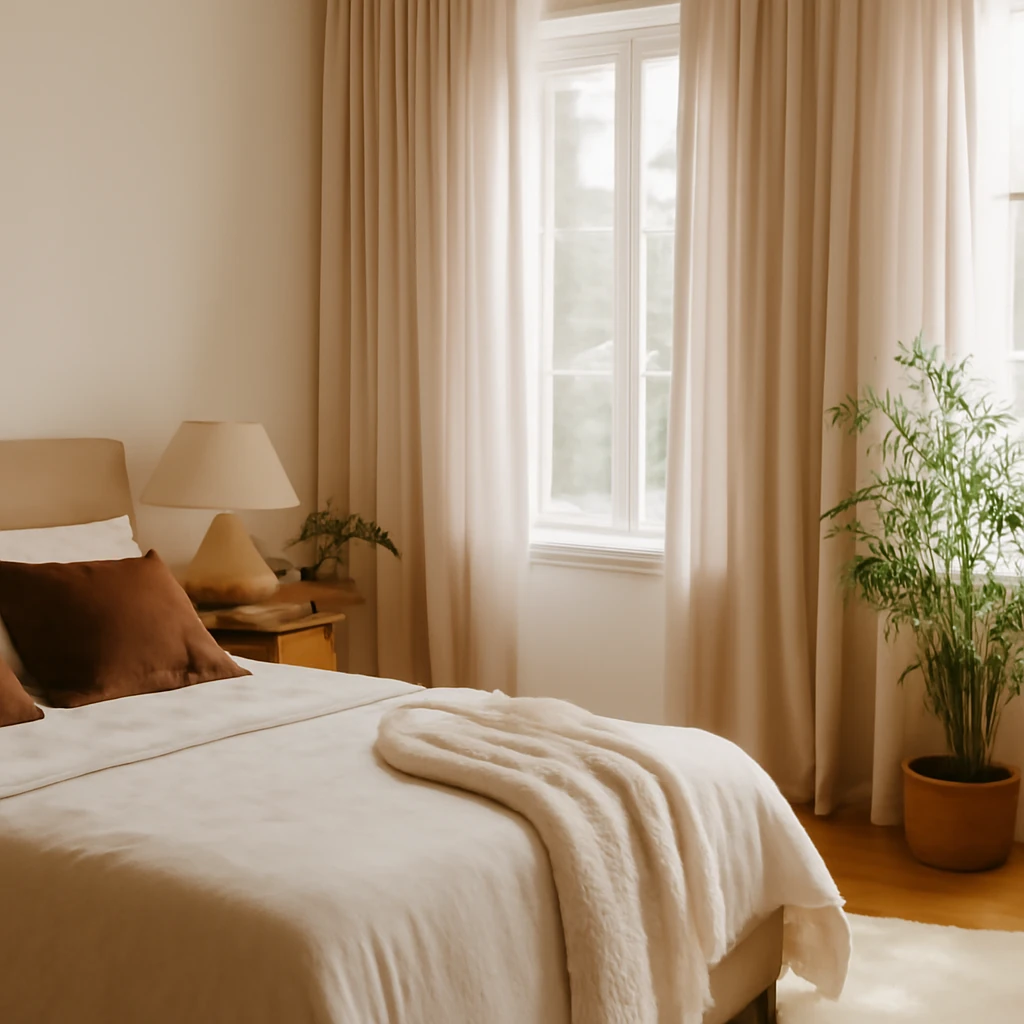
Introduction: Curtains as a design element in European bedrooms
In many European homes, window coverings do more than block light. They are central to thermal comfort, privacy, acoustics, and aesthetic balance. A well-considered approach to curtains can transform a bedroom from a simple sleeping space into a sanctuary that supports restful nights and energising mornings. This article offers a practical, design-led framework for choosing bedroom curtains, with European sensibilities in mind: compact urban spaces, heritage architecture, and sustainable materials.
How to choose curtains for the bedroom
There are four core criteria to guide your decision-making when selecting bedroom window coverings:
1. Light filtration and privacy
Light control is not just about darkness, it shapes circadian rhythms, mood, and wakeful hours. Blackout fabrics offer maximum darkness, essential for shift workers or light sleepers in cities with bright street lighting. Dense fabrics can soften daylight to a comfortable glow, creating a cosy semi-dark atmosphere that aids relaxation. Sheer fabrics allow daylight to filter in gently, maintaining privacy while brightening the room. The orientation of the window, the season, and the sun's path influence the best choice for each room.
Tip for early risers: If you welcome sunrise, opt for light weaves, voile or semi-opaque fabrics, which let sunlight enter softly. Layer them with a heavier panel to control privacy after dark.
Tip for night owls: If you prefer a deeper sleep, select blackout or dense drapery options. Look for textiles with tight weaves or reflective linings. Check how closely the fabric sits to the glass, contact with the window reduces light penetration, and a well-designed track can minimise gaps.
2. Material: durability, feel, and care
Material choice affects how the curtains wear over time, their drape, and how easy they are to maintain. Natural fibres such as cotton and linen offer tactile appeal and environmental benefits but may fade with sun exposure. Synthetic options like high-quality polyester provide longevity and ease of care. Silk and velvet introduce luxury and depth but demand disciplined maintenance and care. In addition, consider how the fabric wears in your climate and how it will look in different lighting throughout the year.
- Weight and density: Heavier fabrics block light and dampen noise more effectively and create a substantial look, lighter fabrics create airiness and a softer silhouette.
- Lining and interlining: A lining improves finish, reduces fading, and adds body. An interlining provides extra warmth in cooler climates and can improve drape.
- Texture and finish: Matte textures absorb light for a cosy feel, while glossy or satin finishes reflect light and enhance opulence. Consider how reflections interact with wall colour and artwork.
3. Colour and pattern
The colour of window coverings sets the emotional tone of the room. Calm neutrals such as beige, dove grey, ivory, and soft blues are excellent for restful sleep and can make a bedroom feel larger. Bold colours or prints act as a deliberate accent and can inject personality or drama. The key is to ensure harmony with the broader colour palette of the room, including walls, furniture, and textiles.
Strategies include matching curtains to wall colour for a seamless, cohesive look or using contrasting tones to create visual energy. In smaller bedrooms, lighter hues increase perceived space, larger rooms can accommodate richer tones and more generous patterns. Pattern scale matters: small rooms benefit from subtle, small-scale patterns, large windows can carry larger repeats without overwhelming the space.
Practical tip: When in doubt, test swatches next to the wall or soft furnishings in the room, ideally at different times of day to assess mood and light handling.
4. Functionality: mounting, operation, and maintenance
Consider how the curtains will be opened and closed. Eyelets or grommets create crisp, architectural folds, curtain loops or a concealed track yield a clean, streamlined look. A lining and the method of mounting – whether a rod, a track, or a recessed installation – affect both aesthetics and performance. Modern options include motorised systems and smart home integration, which can be particularly useful in bedroom setups that aim for convenience or accessibility.
Also consider practicalities: weight compatibility with the chosen hardware, the availability of maintenance services, and how to clean the fabric. If you rent, consider solutions that do not alter the walls or windows permanently, such as removable tracks or tension rods with secure mounting.
Types of curtains for the bedroom
European bedrooms benefit from a range of window coverings, each with its own look and function. Below are common choices and how they can be used in different interiors:
Classic drapes
Mounted on a decorative rod or concealed track, these are long panels that can be heavily pleated or softly draped. They work with a wide range of fabrics - from heavy, luxurious velvets to lighter cottons - allowing generous fullness and elegant folds. They are favoured in traditional or neoclassical interiors but may require more space and can be bulky in compact rooms.
Roman blinds
Roman blinds fold into neat horizontal layers when raised. They sit close to the window, offering good insulation and a sleek profile that suits modern and transitional bedrooms. They are ideal for smaller rooms but require careful cleaning to preserve their crisp appearance.
Roller blinds
Roller blinds wind around a tube and sit flat against the glass. They are quick to install, compact, and available in a wide range of opacities - from sheer to blackout. They can feel minimal, but textured or coloured options can soften and warm a room. For a more sophisticated look, pair them with a shear or drape on a separate track for layering.
Venetian blinds
Horizontal or vertical slats allow precise light control. They can be made in wood, faux wood, aluminium, or composite materials. Venetian blinds are highly practical, easy to clean, and suit contemporary or coastal interiors. In bedrooms, choose soft finishes and avoid heavy metals that can feel clinical if overused.
Panel track coverings
Panel tracks bring a contemporary, modular aesthetic with large fabric panels that glide smoothly on a track. They work particularly well for oversized windows, glass walls, or balcony doors and can be paired with sheer layers for added ambience. They offer great flexibility in urban settings where floor-to-ceiling windows are common.
Designer tips for selecting curtains
To create a cohesive and relaxing bedroom, align window coverings with the overall interior concept. Here are guidelines used by professional designers across Europe:
- Style compatibility
Curtains should echo the room’s style. Classic interiors benefit from rich, heavy fabrics with flattering drape, Scandinavian spaces lean to natural materials and pale tones, minimalist rooms suit sleek rollers or panels. Consider how drape, linear forms, and hardware reinforce the design language of the space.
- Coordination with textiles
Curtains should harmonise with bed linens, throws, cushions, and rugs. They can blend with wall colour for a seamless look or serve as a deliberate accent in a neutral room. Layering textures - linen, wool, velvet, or silk - adds depth without visual clutter.
- Practical considerations
Accurate measurement is essential before ordering. Record window width and height, including reveal depth and any obstructions. Consider the width of the track or rod, the amount of stacking space when the curtains are open, and the overlap needed for privacy. Weight considerations affect hardware choice, and care requirements differ by fabric type - natural fibres may need gentle cleaning, while synthetics often tolerate machine washing or dry cleaning.
- Trends
Contemporary bedroom fashion embraces natural textures, custom layering, and sustainable materials. Think mixed coverings: sheer panels with opaque curtains, warm neutrals, and a restrained palette that feels serene. Sustainable linings and responsible sourcing are increasingly important in European design studios.
- Scale and proportion
In small rooms, tall, narrow windows benefit from a high, expansive treatment to create the illusion of height. In larger spaces, generous drop and generous fullness can evoke theatre and drama without overpowering the room.
Pro hacks from industry professionals
- Visual correction for narrow rooms
If a bedroom is long and narrow, extend the visual width by applying horizontal patterns or stripes and mounting a track the full width of the wall. A curtain system that spans the entire width helps to visually pull the space wider.
- Lightweight fabrics for small spaces
In tight rooms, avoid heavy drapes. Lightweight materials such as linen blends or semi-sheer fabrics create airiness and prevent crowding the space. Pair with a wider track to maximise the openness.
- Symmetry in square spaces
In square rooms, symmetrical arrangements feel balanced. Use a pair of curtains flanking the window, echoing across both sides to achieve calm, harmonious proportions.
- Brighten low-light rooms
For bedrooms with limited daylight, select light-colour curtains in warm neutrals. White, beige, or pale pastels reflect available light and brighten the space, while avoiding heavy, dark textiles.
- Ceiling height and track placement
To visually raise a room with low ceilings, hang the rail as close to the ceiling as feasible and run the curtains to the floor. This elongates the wall line and creates an impression of height.
- Window layout and curtain layering
In rooms with multiple windows or unusual shapes, consider a mixed solution: roller blinds for day-to-day control paired with a decorative panel of heavier drapes for evenings.
If you’re unsure how to select bedroom curtains, consult with a professional design studio. A personalised consultation can tailor window coverings to your space, ensuring the room remains restful, cohesive, and stylish.
You may also like these articles
 Tips & How-To

11 Elegant Napkin Folds to Elevate Your Festive Table
Master 11 stylish napkin folds to transform festive tables across Europe.
Small Spaces
Designing a Narrow Hallway: European Strategies for Light, Storage and Flow
Smart layouts, light finishes and compact storage transform narrow halls.
 Trends
Rethinking Ceilings: European Trends in Finishes, Light and Form
A guide to European ceiling design trends, materials, lighting and colour.