
Explore interior trends, AI design insights, styling guides and real transformations
Wardrobe Materials: A European Guide to Longevity, Form and Finish
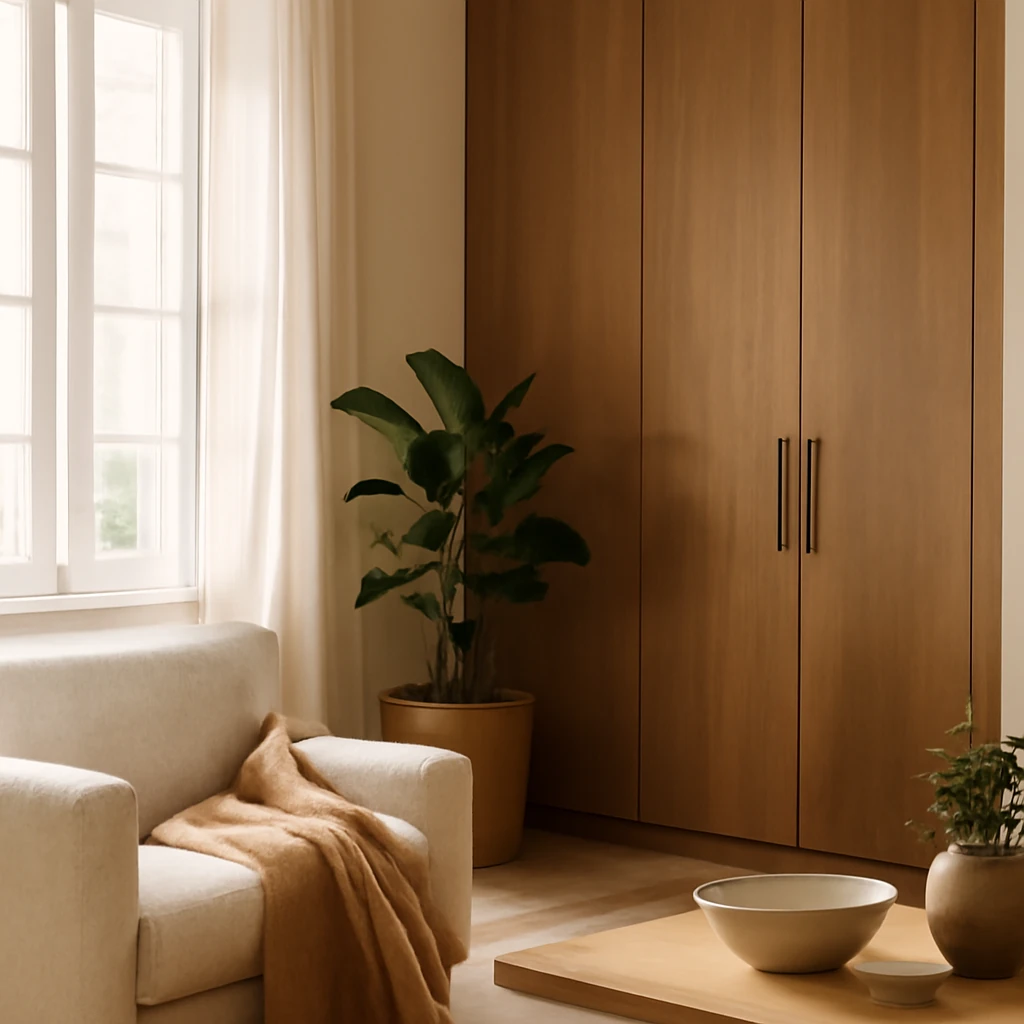
Wardrobe materials: a practical guide for Europe
Choosing a wardrobe is rarely just about the look or the price. The true test is how the material performs over time: does it meet safety expectations, resist the stresses of daily use, and respond well to the conditions of European homes - from humid coastal climates to drier continental interiors. This guide unpacks the most common wardrobe materials, how they behave in real rooms, and how to pick solutions that stay looking good for years without breaking the bank.
Materials commonly used for wardrobes
Laminated particleboard (LPB) - affordable and adaptable
Laminated particleboard, often formed from compressed wood particles bonded with resin and faced with decorative laminate, is the workhorse of affordable, mass-produced furniture. It’s widely used for both the carcass and the doors of many wardrobes because it offers a broad range of finishes and sizes at an accessible price point.
In the manufacturing process, the resin - historically formaldehyde-based - binds the particles, and the resulting board is clad with a laminate that can mimic wood grain, solid colours, or abstract patterns. Modern European LPBs typically meet strict formaldehyde-emission standards, many boards are rated to E1 or better (with E0.5 or E0 available for higher-end products). The key is to choose boards from reputable suppliers, with well-sealed edges and high-quality edge banding, to minimise moisture ingress and edge wear.
Practical considerations:
- Edge protection is essential. Look for solid edging or robust tape around all exposed edges to prevent chipping and swelling in humid rooms such as bathrooms or kitchens used as integrated wardrobes.
- In damp environments, ensure the wardrobe has moisture-resistant construction and a well-sealed back panel to reduce moisture transfer.
- Laminate surfaces are resilient to scuffs, but deep scratches or standing water can still affect the core if edges are compromised.
- For frequent relocations or reconfigurations, LPB is convenient for assembly but can be challenging to dismantle repeatedly without damaging the panels.
In Europe, LPB is common in budget to mid-range wardrobes. It pairs well with various door finishes, from plain laminates to more elaborate foils and textured surfaces, enabling a coherent look across a room or a home. If the aim is to curb cost while maintaining a contemporary aesthetic, LPB is a reliable starting point - but plan for long-term care and possible upgrades as styles evolve.
MDF - ideal for fretwork and refined finishes
MDF stands for Medium Density Fibreboard. It is composed of wood fibres bonded under heat and pressure with natural resins, creating a smooth, dense core that accepts detailed milling and precise routing. Unlike traditional particleboard, MDF tolerates intricate profiles, bevelled edges, and decorative fillets, making it a favourite for facades that feature decorative mouldings, inset panels, or sculpted detailing.
Because the core is very uniform, MDF takes finishes evenly. It can be painted, coated with foil or laminate, or veneered to achieve a natural wood appearance. In many European projects, MDF is used for the front-facing doors and panels, while the carcass may be LPB or plywood to balance cost and structural stability. MDF’s density also makes it robust enough to sustain milled patterns and complex shapes without splitting.
Key advantages:
- Excellent for milling and decorative work, such as fillets, score lines, and fretwork.
- Wide range of finishes: painted, laminated, veneered, or foiled.
- Typically more moisture resistant than high-sulphur particleboard when properly sealed, but still benefits from careful humidity control.
Note on cost: MDF is generally more expensive than LPB, but it provides a hard-wearing surface for refinishing and more sophisticated details. In European homes, a common approach is a carcass built from LPB with MDF doors, enabling both cost efficiency and a refined finish.
Wood veneer - beauty with considered care
A veneer is a thin slice of real wood applied to a core panel, often MDF or LPB. Veneers deliver the authentic look of solid wood at a lower price or with a lighter environmental footprint than full timber construction. The result can be striking, with a natural wood pattern that changes subtly with lighting and air, giving warmth and tactility to the wardrobe.
However, veneer is sensitive to humidity and direct sunlight. Prolonged exposure to moisture or UV can cause the veneer to lift, crack, or fade at joints and edges. The quality of the adhesive and finishing layer matters: a well-applied veneer with a protective coating on top will wear better over time. For walls and room corners that experience temperature swings or high humidity, choose veneers with stable cores and robust edge protection, and consider a solid-wood or high-quality MDF backing for stability.
- Veneered fronts can be finished with a clear varnish, tinted lacquers, or deeper stains to mimic the look of exotic or traditional timbers.
- Veneer is a good compromise when you want the character of natural wood without the full price of solid timber.
- For environmentally conscious projects, ensure the veneer and core materials come from responsibly managed sources and that the finishing products use low-VOC (volatile organic compound) formulations.
Solid wood - the premium, time-tested choice
Timber wardrobes, or those crafted from solid wood, embody durability and warmth. In Europe, a solid-wood cabinet can be truly long-lasting, sometimes spanning decades with proper care. The choice of species matters: softer timbers such as pine and birch are more susceptible to dents and warping in variable humidity, harder species like oak, walnut, and beech offer greater resistance to daily wear but require careful climate control and higher initial investment.
Maintenance is straightforward but important. Solid wood benefits from protective finishes - oil, wax, lacquer, or varnish - that create a moisture barrier and help manage swelling or shrinking with seasonal humidity. Regular care preserves finish integrity and reduces the risk of seams opening or doors sticking. In rooms with high humidity or temperature fluctuations (for example, near a heating source or in coastal flats), acclimatisation of timber before fitting is essential to minimise post-installation movement.
When planning a solid-wood wardrobe, consider how it will age with the space. A fully solid-wood cabinet can be timeless and adaptable, but it will require space to breathe and, ideally, a controlled environment. For a more affordable approach without compromising the feel of natural timber, some designers opt for a solid-wood face frame or veneer-topped doors over a robust engineered core.
Shaped surfaces: veneer and solid wood combined
Combining materials is a popular European approach to achieve the look of solid timber with the stability of engineered cores. A common strategy is a solid wood-framed carcass or a sturdy MDF core with a veneer or painted door. This arrangement allows for intricate profiles, contemporary flat panels, or traditional mouldings while keeping costs reasonable and ensuring flat, warp-resistant frontages.
Metal - industrial edge and structural support
Metal is most often used for the framework and support elements of wardrobes rather than the entire structure. In contemporary interiors, metal frames paired with timber, MDF, or glass create a robust, architectural feel. Steel or aluminium frames can provide an airy, lightweight impression while offering strength for freestanding systems, modular wardrobes, or open shelving configurations. In the European design language, metal is typically featured as frames, rails, or rails with integrated hardware rather than as the primary carcass material.
Glass and mirrors - surface decoration and light play
Glass in wardrobe façades can introduce a sense of calm, modern elegance, especially when combined with timber or MDF cores. For safety, tempered or laminated glass is standard. Glass can be clear, frosted, or subtly textured, and some high-end wardrobes use internal glass for internal dividers or decorative panels. Mirrors are commonly used on doors to visually enlarge a space, particularly in compact European apartments. When mirrors are used, ensure they are integrated with proper internal bracing and slip-resistant hardware to avoid rattling or misalignment over time.
Back panels and auxiliary materials: DVP, HDF, plywood
The back panel is often the least visible component of a wardrobe, yet it plays a crucial role in stability, rigidity, and pricing. European manufacturers typically use a mix of materials depending on budget and design intent:
- Low-density fibreboard (DVP): a budget-backed panel useful for basic back panels in economical wardrobes. It’s inexpensive but less rigid than higher-density boards, so it may bow in very large units if not properly supported.
- High-density fibreboard (HDF): the higher-density counterpart, offering greater strength and resistance to warping. HDF is commonly used as a back panel in mid- to high-end wardrobes, especially when paired with a solid framing system.
- Plywood: thin layers of wood veneer glued together to form a stable panel. Ply is robust, dimensionally stable, and resistant to moisture fluctuations when properly selected (often used for back panels in premium systems).
- Fibreboard with coating: back panels may be coated with melamine or laminate, improving moisture resistance and simplifying maintenance.
How to choose: by budget and purpose
When selecting a wardrobe material, balance budget with the task you want it to perform. What might be ideal in one space could be impractical in another. Below are practical decision scenarios commonly encountered in European homes, with guidance on the most suitable material strategy for each.
Task #1: buy a wardrobe quickly and affordably
For customers prioritising budget and speed, a wardrobe with a laminated particleboard carcass and doors is often the default. Ready-to-assemble or flat-pack options are widely available and can be purchased online for home delivery. Choose a plain or lightly textured laminate for maximum versatility across genres and styles.
Typical price range for compact, entry-level LPB wardrobes is modest, allowing for quick replacement if tastes or needs change. However, be aware that repeated disassembly and reassembly can stress the panels at connector points, so plan for a design unlikely to be reconfigured frequently.
Tip: when budgeting, consider the long-term cost of replacements or upgrades. If you anticipate frequent moves or reconfigurations, a more modular system with a tougher core (such as MDF or plywood-backed back panels) may prove more economical in the long run.
Task #2: a budget-friendly wardrobe that still fits a refined interior
In mid-budget scenarios, a wardrobe with a LPB carcass and MDF or veneered doors offers a refined appearance without the price tag of full timber. The façade can be subtly painted to match wall colours or feature a simple decorative milling pattern (fretwork) to elevate the design. This approach combines the resilience of engineered boards with bespoke detailing that can harmonise with contemporary or traditional interiors.
Task #3: a safe, affordable option for a children's room
For family spaces, safety and emissions are paramount. Look for wardrobes with low-emission boards rated E0, E0.5, or E1. If you are concerned about indoor air quality, choose MDF or LPB that is sealed and edge-banded to minimise edge exposure. Some manufacturers offer laminated fronts with water-based coatings and minimal solvent content, which can be advantageous in bedrooms or playrooms.
Practical options include LPB carcasses with MDF or solid wood doors that can be finished with non-toxic paints, water-based stains, or natural oils. If selecting wood finishes, ensure coatings are designed to resist moisture and do not exude volatile compounds over time. For decorative or playful details, consider painted fronts or veneer patterns that can be refreshed without replacing the entire unit.
Task #4: a durable wardrobe for long-term use
Durability is often linked to a combination of materials and construction, rather than a single component. For wardrobes intended to endure, engineers and designers in Europe frequently opt for MDF or plywood cores with solid wood or veneer fronts. This combination offers robust interiors, stable dimensions, and an attractive exterior that ages well with light exposure and humidity swings.
Solid timber front and frame options are also viable for long-term investment. They demand careful climate control, regular maintenance, and proper acclimatisation before installation. If you select timber, ensure the timber is properly dried and finished with a protective layer such as oil or a low-VOC coating to maintain dimensional stability and reduce water absorption.
Task #5: a statement wardrobe with a wow factor
For a design-led approach, consider combinations that juxtapose materials - LPB or MDF carcasses with doors featuring strong veneers, bold laminates, or glass accents. The use of coloured laminates or deep-toned veneers can create a striking focal point in a room. Some designers incorporate metal detailing, illuminated edges, or glass panels to push the piece into the realm of furniture sculpture. When aiming for a high-impact look, plan for reliable internal hardware, concealed hinges, and proper lighting to showcase the wardrobe’s materials without creating glare or heat build-up.
Care and maintenance: how to protect wardrobe materials
European homes vary greatly in humidity and temperature. Controlling these factors helps extend the life of any wardrobe, regardless of material. A few practical practices can make a substantial difference:
- Keep rooms well ventilated and maintain stable indoor humidity, ideally between 40% and 60% relative humidity. Rapid changes can cause panels to bow or edges to lift.
- Avoid placing wardrobes directly against heating sources or exterior walls where temperature swings are extreme.
- Use protective pads under heavy items placed inside drawers to prevent denting and edge chipping.
- Clean laminate and veneer surfaces with a soft, damp cloth and a mild, pH-neutral cleaner. Avoid harsh solvents that can compromise finishes.
- Choose coatings and finishes that are water-based or low in volatile organic compounds (VOCs) for healthier indoor air quality.
- Inspect edges and joints periodically. Re-gluing or resealing exposed edges that show signs of wear can prevent larger issues later.
- When possible, allow timber or veneered surfaces to acclimatise before installation in spaces with dramatic climate differences (e.g., new build flats or conversions with limited ventilation).
What to look for when shopping for wardrobe materials
Beyond the material itself, consider construction quality, sustainability, and service support. Here are practical checkpoints to help you make a credible choice in a European market:
- Emissions certifications: seek boards that meet recognised European standards for formaldehyde and VOC emissions (for example, E0/E0.5/E1 ratings or equivalent, certified by independent test bodies).
- Core structure: a robust carcass is essential for long-term stability. If using LPB, verify that the inner core is adequately sealed and that interior hardware is rated for heavy or frequent use.
- Finish integrity: inspect the finish across doors and panels for consistency, absence of bubbles, edge chipping, or visible seams. A tight, uniform surface signals better durability.
- Hardware quality: hinges, runners, soft-close mechanisms, and corner supports should be strong and well mounted. High-quality hardware reduces wear and helps doors close neatly over time.
- Sustainability: look for timber products with credible FSC or PEFC certification, recycled content in engineered cores, and low-emission coatings. This aligns with European expectations for responsible design and procurement.
- Warranty and service: a clear warranty and reliable after-sales support matter for longevity. Ask about replacement parts for components like sliders, hinges, and edge bands.
Concluding guidance: choosing with confidence
- Guard against short-term trends by focusing on materials with proven durability and stable finishes. MDF and LPB offer practical, dependable options, while solid wood delivers authentic character and longevity when properly cared for.
- Match the material to your environment. In humid or coastal settings, ensure moisture resistance through appropriate cores and seals. In drier interiors, you can favour more intricate profiles and softer finishes without excessive risk of warping.
- Balance budget with future needs. A well-planned combination - LPB for the carcass, MDF or veneer for doors, and a solid timber accent - can deliver a refined aesthetic without prohibitive cost.
- Prioritise emission-conscious choices. Opt for boards and coatings designed for low VOCs and support ethical sourcing for timber components to align with European sustainability standards.
- Design for versatility. Modular systems, adjustable interiors, and door options that can be refreshed over time offer the best chance of keeping a wardrobe aligned with evolving tastes and needs.
Final reflections
In Europe, wardrobes are frequently long-term investments that must perform across living spaces with diverse climates and daily rhythms. The most durable solutions blend engineering with aesthetics: a solid or veneered front, a stable engineered core, and carefully considered finishing. Whether you prioritise the classic warmth of timber, the clean practicality of MDF, or the contemporary edge of metal and glass accents, the right material choice can transform not only how a wardrobe looks, but how it lives in your home - year after year.
You may also like these articles
 Living room
How to size a sofa for a European living room: comfort, fit and function
Master the art of sofa sizing for stylish, well-proportioned living spaces.
Colour & Materials
Wall finishes for European hallways: eight top materials and ideas
Smart, durable hallway finishes and design ideas for European homes.
Small Spaces
Compact Living Masterclass: Zoning, Storage and Style for 30 m² European Flats
Practical strategies to design and zone 30 m² flats across Europe with style.