
Explore interior trends, AI design insights, styling guides and real transformations
A Practical Guide to Green Sofas for European Living Rooms
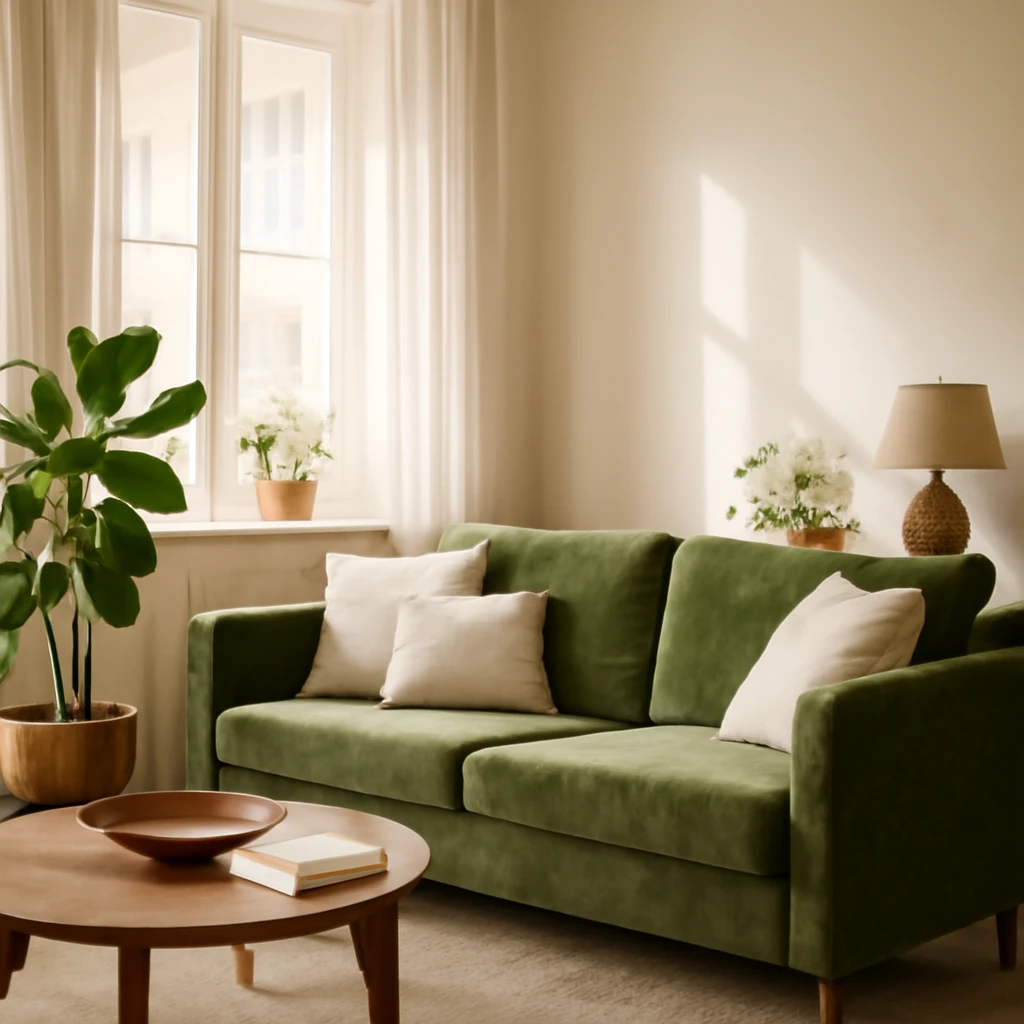
Green sofas in European living rooms
Green has become a confident and versatile choice for sofas across Europe. From compact city flats to generous countryside houses, the right shade can unify a scheme, connect different spaces and bring a sense of calm and vitality. The beauty of green lies in its complexity: it sits on a spectrum formed by mixing yellow and blue, offering everything from fresh lime to deep emerald. When chosen thoughtfully, green tones add warmth without overpowering, and they can sit comfortably within both warm and cool colour palettes.
A spectrum that spans olive to emerald
Green sofas cover a wide family of hues. Deep emeralds pair well with dark woods and brass accents, while olive and sage ground lighter schemes alongside natural textures. In warm rooms, olive or moss greens harmonise with timber floors, in cooler interiors, emerald or teal can create a magnetic focal point. The essential step is to test undertones against other materials in the space and to consider daylight, as natural light shifts colour perception throughout the day.
Soft textures make the colour sing
Fabrics with tactile depth such as velvet, bouclé or brushed wool amplify the perceived richness of green. A lush velvet sofa can feel luxurious in a traditional drawing room, while a textured bouclé yields a cosy, contemporary mood in a living area with softer lines. For maintenance, lighter greens in smooth fabrics may be easier to clean, whereas dark or richly textured fabrics benefit from regular care to retain their character. In European homes where lighting changes with the seasons, selecting a fabric that wears well in both summer sun and winter daylight is essential.
Green as a gentle accent or a bold statement
The intensity of the shade determines how the sofa reads within the room. A saturated green acts as a striking focal point, whereas a muted or mid toned olive blends more discreetly with the surroundings. This makes green sofas suitable for a wide range of aesthetics from restrained minimalism to eclectic schemes. The sofa therefore becomes a flexible base for cushions, rugs and artwork, allowing designers to create rhythm without overpowering the space.
Choosing the right shade for your space
European homes vary from compact city apartments to generous open-plan living areas. Selecting the right shade is about balance, intention and the quality of daylight. In small rooms, a lighter green can feel airier, in larger spaces, a deeper shade can anchor the seating area and add warmth. Consider how the sofa will be used daily, whether for lounging, hosting or family life, and how the colour will interact with surrounding materials.
Universal tones: pine, olive and emerald
Deep greens such as emerald and pine read as timeless and refined. Olive greens offer a relaxed, earthy presence that pairs well with natural materials like timber, stone and linen. These universal tones are forgiving when paired with broad palettes, enabling you to mix warm woods with cool greys and blues, or to layer rich textures for a sophisticated look.
Greens for neutral interiors
In spaces built around neutral backdrops, pale greens such as mint, pistachio or sage can introduce a fresh, uplifting energy without dominating the scheme. These shades work well with light timber floors, soft beiges and pale plaster walls, and they pair nicely with simple patterns and natural textiles. A mint or sage sofa can become a quiet hero that supports a balanced colour story throughout the room.
Bright greens for vibrant spaces
For interiors with strong personality, lime and turquoise can act as accent hues. Lime injects a lively zing that can lift grey or white rooms, while turquoise sits at the intersection of blue and green to create a bright, coastal vibe. Use bold greens sparingly or in textiles and small seating zones to avoid visual fatigue, balance with calmer neutrals in larger furniture pieces.
Green by the design family
Within European manufacturing ecosystems there are many seating options available in a spectrum of greens. When shopping, consider the sofa silhouette, cushion strategy and how the fabric will wear over time. A velvet emerald capsule or an olive bouclé modular sofa can provide a strong identity for a living room, while a lighter sage sofa in a compact frame can fit into a Scandinavian or urban minimal scheme. Choose a fabric that aligns with lifestyle, frequency of use and cleaning needs to ensure longevity.
Green sofas in different interior styles
Green sofas can be incorporated into almost any design language. Here are several popular European aesthetics and how green can work within them.
Classic style
In modern classic interiors a restrained light green can be a refined alternative to beige or grey. For a more opulent effect, emerald or deep olive upholstery with a rich texture can be paired with carved timber, brass accents and traditional patterns. The aim is to let the sofa anchor the room with quiet confidence while other elements provide drama through materiality and detailing.
Modern and contemporary
Minimalist and contemporary spaces favour calm, quiet palettes. Green sofas in neutral or cool tones such as sage against a stone or grey backdrop create a poised centrepiece that does not overwhelm the room. Pair with natural woods, matte metals and precise lighting to sustain a modern mood while allowing the green to act as a focal point through texture rather than brightness.
Mid century modern
Bold greens were a hallmark of mid century design, and today European interiors reinterpret this mood with streamlined silhouettes and tactile fabrics. An olive or emerald sofa with slender legs and clean lines can evoke timeless warmth while remaining thoroughly contemporary. This look benefits from carefully chosen cushions and a curated rug that references the period without reproducing it.
Loft and industrial
Industrial spaces with exposed concrete and brick offer a natural counterpoint for green seating. A sofa in a tactile fabric such as suede or a textured weave softens harsh architectural materials. In larger lofts a substantial green sofa can anchor the space, while in smaller ones a lighter or more muted shade can preserve openness.
Scandinavian simplicity
Nordic interiors favour light timber, pale walls and restrained accents. A soft green sofa can bring the outdoors inside without clashing with the calm palette. Combine with natural fibres, blond woods and neutral textiles to maintain the serene mood of the room.
Pairing a green sofa with other elements
The sofa is typically the largest seating element in a room, so its colour creates a strong visual field. Here are practical ways to harmonise green with surrounding components.
Green with neutrals
A green sofa set against white, grey or beige walls reads as a calm and sophisticated choice. The shade of green can echo the warmth or coolness of surrounding materials. In small spaces, lighter greens help maintain openness, in larger rooms, deeper greens can add depth and character.
Green with contrasting accents
Pairing bold greens with bright accents such as pinks, oranges or terracotta can inject energy into the scheme. Choose cushions and textiles that tie the combination together by repeating a secondary hue in a rug or artwork, ensuring cohesion without uniformity.
Green with natural colours
Natural palettes consisting of earthy browns, stone greys and linen whites create a grounded environment that lets green shine as a natural extension of the landscape. Warm wood tones and stone materials can enhance optical warmth, while cooler woods and metals keep the space contemporary.
Wood furniture and natural materials
Timber furniture in light to mid tones complements green upholstery beautifully. Consider open shelving or a timber sideboard that reinforces a natural feel. Parquet or engineered wood floors provide warmth and texture that harmonises with green seating.
Furnishings and accessories
Integrating a green sofa into a space requires careful planning of other furnishings and decorative elements. A well considered palette and rhythm will unify scales and textures without creating visual overload.
How to pair furniture with a green sofa
Every colour has a weight that influences how much attention it commands. Black is heavy and can dominate a composition, green is also a strong colour, especially in saturated hues, so balance is essential. Offset a bold sofa with lighter pieces such as a slim media console, a delicate coffee table or airy curtains. If these balancing pieces are too heavy or too numerous in colour, the sofa may feel overpowering rather than inviting.
Decor and spatial organisation
Repeating colour across the room creates rhythm and cohesion. If your sofa is green, echo a similar shade in cushions, a rug or a painting, but avoid duplicating the exact shade in every element. Subtle repetition is more dynamic than exact matching. Use contrasts to define zones within open plan spaces, such as a seating area anchored by a rug or a wall painted in a complementary shade.
- Soft cushions in a complementary green hue to create tonal depth
- Textured throws and cushions to enhance tactile richness
- Curtains or blinds that filter light and frame the sofa
- Wall art and small accessories that reflect the sofa colour
- Plants and planters to reinforce the natural theme
- Lighting that highlights fabrics and contours without glare
Decor items and textiles in green tones
Consider a curated range of textiles and decorative pieces in green tones to support the sofa. Think cushions in olive or emerald, curtains in sage, a rug with a green undertone, and wall art featuring botanical palettes. Plants bring a living seasonal element that reinforces the natural associations of green.
In place of a conclusion
- Green sofas are versatile and can brighten an interior without overwhelming it.
- They pair well with both bold and neutral palettes, depending on shade and material.
- A green sofa should be balanced with lighter or contrasting pieces to avoid dominance.
- Incorporate additional green elements through textiles, decor or living plants to reinforce the theme.
To adapt this guidance to your space, consult a professional designer who can craft a colour plan that matches light, scale and lifestyle. With careful selection of shade and texture, a green sofa can anchor a European living room with elegance and calm.
You may also like these articles
 Interior Design
Euro Two-Bedroom Flats: Flexible Layouts for European Living
Smart layouts and stylish zones for compact European homes.
Living room
How to style the wall behind your television: 13 fresh and practical solutions
13 practical ideas to style the wall behind your TV in European living rooms.
 Trends
Kitchen Curtains 2025: Trends, Styles and Fabrics Across Europe
A European guide to 2025 kitchen curtains: trends, fabrics and care.