
Explore interior trends, AI design insights, styling guides and real transformations
Creative Pallet Furniture: A European DIY Guide to Stylish Interiors
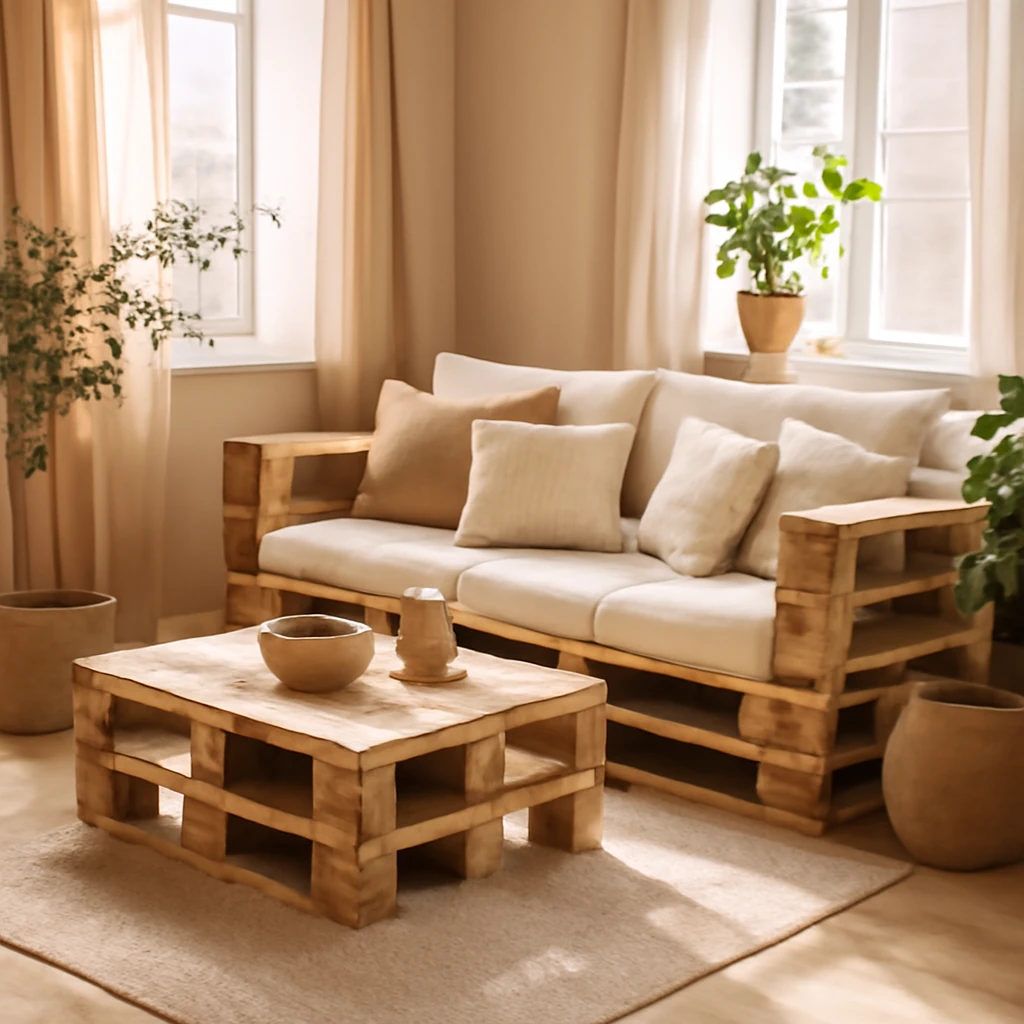
Pallet furniture in European homes
Wooden pallets offer a sustainable, affordable route to flexible living spaces across Europe. Built from standard timber, these modular elements can be repurposed into sofas, tables, beds and storage, enabling homeowners to tailor spaces for daily living, entertaining and relaxation. When properly prepared and finished, pallets provide a robust foundation for interior design that suits city apartments, rural homes and everything in between.
What pallets are and why they matter
Pallets are rectangular platforms designed for efficient handling and transport. In Europe, many pallets conform to European standards such as EUR or EPAL, recognised across the logistics network. Typical European pallets measure 800 by 1200 millimetres and about 145 millimetres tall, constructed from sturdy softwoods such as pine or spruce and joined with nails or screws. The underside features a set of support blocks, creating a stable, liftable surface. The appeal for interiors lies in their rough, natural patina that can be stripped and refined, and in the possibility to assemble custom pieces with basic tools.
European pallet types and standards
European standard pallets (EUR EPAL). These are certified for international shipping and are widely available within Europe. They offer uniform size, loading capacity and compatibility, making them a reliable base for furniture projects.
Other certified pallets. In addition to EUR EPAL variants, there are other certified pallets with equivalent markings that meet European safety and hygiene requirements. These pallets may carry different branding but share standard dimensions and load capacity.
Domestic or unmarked pallets. Uncertified pallets are common in local uses and may vary in size, board width and treatment. When using them for furniture, inspect for clean wood, no significant damage and suitable bearing strength. Ensure that timber is appropriate for indoor or outdoor use depending on the project.
Dimensions, construction and load capacity
The standard European pallet comprises a top deck of boards arranged to form a firm surface, with a bottom arrangement of support blocks. The common size is 800 by 1200 millimetres, with a nominal height of about 145 millimetres. Typical load bearing capacity ranges up to 200 kilograms per pallet, and a well-built pallet weighs around 20 kilograms. For furniture projects, stronger pallets with consistent boards yield safer, longer-lasting pieces, spread loads across larger surfaces and reinforce joints with appropriate fixings.
Decorative elements for the home
Pallets lend themselves to decorative and organising functions beyond furniture. Ideas include:
- Room divider or screen: a lightweight partition that can define zones in a living area or on a terrace, ideal for open plan spaces.
- Key organiser: a rustic wall-mounted rack for the hallway that keeps jackets and accessories tidy.
- Plinths and pedestals: modest plinths for plants or objects that elevate display.
- Plant containers and planters: create oversized plant boxes with built-in drainage for a balcony garden.
- Wall boards and memo boards: paint boards in bold colours to create statement surfaces for notes or photos.
- Outdoor features: swings or benches built from several pallets for garden spaces and social gatherings.
Furniture ideas and project ideas
Tables
- Secure several pallets together to create a wide table surface, attach robust legs or castors for mobility, sand and prime, then paint in a chosen colour. After drying, consider a protective top layer or fit a tempered glass inset for a clean finish.
Sofas and seating
- Construct a sofa by joining pallets with metal brackets, often splitting one pallet to create back support, adding battens to form armrests, then finishing with primer and paint. Top with a mattress or cushions for comfort.
Chairs and benches
- Cut and assemble pallet sections to form frames with strengthened joints, then sand to a smooth finish and seal the timber. Attach cushions for comfort and pair with a matching coffee table.
Beds
- Raise the structure using two layers of pallets for height, secure with screws, finish with protective coating, then place a standard mattress on top, finish with a headboard using additional boards if desired.
Swings
- Link multiple pallets to form a robust platform, drill holes for durable rope or chain attachments, fix to a solid mounting point and finish with soft cushions for comfort.
Shelving and storage
Pallets can be separated into boards or left intact to create rugged shelving units in living spaces or sheds. Combine with metal brackets or joinery to enhance stability.
Where to source pallets across Europe
After delivery, pallets are often treated as waste, however, used pallets can be repurposed into functional furniture. Across Europe there are several channels to source pallets for furniture projects:
- Used pallets from businesses. Industrial merchants, warehouses and logistics providers frequently have pallets available for purchase or collection. Prices vary, but value often lies in bulk purchases or bundle deals.
- Direct from manufacturers or transport companies. Some organisations offer pallets at reduced prices or free when upgrading their stock, arranging a pick-up is common practice.
- Specialist pallet recyclers or refurbishers. These services inspect, clean and repair pallets so they are ready for reuse in indoor or outdoor environments.
- Community marketplaces and local networks. Online boards, local adverts and maker groups can be fertile sources for pallets in good condition, always check for signs of infestation, rot or structural damage.
Preparation and finishing
Before transforming pallets into furniture, a careful sequence of preparation ensures safety, durability and aesthetics. The process generally involves cleaning, dismantling, sorting and finishing. The following practical workflow is widely adopted by designers and experienced hobbyists alike:
Step 1: Inspect each pallet thoroughly. Remove protruding nails and screws, discard boards with cracks or significant warping. Prioritise timber with intact faces for seating and surfaces that will be touched routinely.
Step 2: Dismantle pallets into individual boards and battens. Sort by width and quality to plan the final assembly. Reserve thicker boards for structural elements and thinner boards for decorative surfaces.
Step 3: Sand all surfaces using a random-orbit sander or hand sanding, starting with coarse grit to remove roughness and finishing with a fine grit for a smooth feel. Clean thoroughly to remove dust before finishing.
Step 4: Decide on indoor or outdoor use and apply the appropriate finish. For indoor furniture, water-based sealants or clear varnishes may suffice. For outdoor use or damp environments, select a timber preservative with water repellence and UV protection. Apply multiple thin coats rather than one thick layer for a durable, even surface.
Step 5: Reinforce joints with corrosion-resistant fixings. Use stainless steel screws or powder-coated brackets for outdoor connections to resist weathering.
Step 6: Add cushions, upholstery or fabric coverings designed for the intended environment. Removable covers simplify cleaning and prolong the timber’s life.
Design ideas and practical tips
Successful pallet projects strike a balance between the rough timber and refined finishing. Here are practical tips to help you craft pieces that feel deliberately designed rather than improvised:
- Plan your layout: sketch the intended dimensions and consider proportions, lighting and traffic flow around the furniture. Modular arrangements allow you to reconfigure spaces as needs evolve.
- Combine with other materials: pair timber with metal, glass or fabric to add contrast and tactility. A metal leg system can provide a contemporary anchor for a rustic pallet table.
- Stain or paint with intention: pale whitewash creates a Scandinavian vibe, dark stains offer a modern or industrial mood. Protective topcoats are essential for longevity, particularly in outdoor settings.
- Focus on comfort: timber alone is not enough, cushions with durable, washable covers are key to inviting seating arrangements.
- Consider modular flexibility: design pieces that can be reconfigured as family needs change, for example a sofa that converts into a daybed or a storage unit that doubles as seating.
Care and maintenance
Timber used for pallets responds well to preventive care. Regular cleaning and inspection help spot cracks or signs of wear before they become bigger issues. For outdoor pieces, reapply protective coatings every one to three years depending on climate. Keep cushions dry when not in use and store indoors during harsh winters to prolong life. In damp climates, a moisture barrier beneath outdoor pallets can help prevent timber swelling.
Step by step project: build a small sofa from pallets
Gather six pallets, with at least three dismantled into boards. Clean and sand them thoroughly.
Use two pallets as the base and back frame, attach robust castors to the base for mobility. Cut the backrest from the dismantled boards to the required dimensions, for example 91 cm long by 47 cm high.
Cut the remaining pallets to form armrests approximately 47 cm by 80 cm each, fill the gaps between boards with reclaimed pieces to create a padded surface for seating and back support.
Secure back and arms to the base with appropriate screws, ensuring a stable frame. Sand again, then apply primer and finish with paint or stain. Seal with a protective topcoat suitable for the intended environment.
Place a standard mattress or high-density foam on the frame and add cushions for comfort. For outdoor use, select weather-resistant fabrics and removable covers for easy cleaning and longer life of the timber.
Other practical ideas for pallets in the home
Beyond furniture, pallet boards can be used to create decorative and functional elements that elevate everyday living. For example, modular wall panels, lightweight room dividers or a set of display shelves can introduce warmth and texture without heavy renovation. The approach is highly adaptable, you can choose to leave surfaces exposed for a truly rustic look or apply a finish that aligns with the room’s design language.
Outdoor spaces and the terrace
With proper treatment, pallets perform well outdoors. They can form sturdy garden seating, coffee tables, planters and even small outdoor kitchens when paired with weatherproof hardware. The key is to use timber preservatives, water repellents and UV stabilisers to protect the timber from sun and rain. Accent cushions and weatherproof fabrics extend the life of outdoor furniture and make it comfortable for year-round use.
Safety considerations
Safety should guide every pallet project. Always remove sharp nails and screws, ensure surfaces are even, and verify that fixings are secure. Use stainless steel or corrosion-resistant hardware for outdoor use and consider replacing damaged boards with new timber. If pallets have been treated with chemicals, follow safety warnings and avoid contact with food preparation areas or children’s play zones.
Conclusion: sustainable design that is practical and stylish
Repurposing pallets for furniture merges sustainability, craft and imagination. The approach suits those seeking modest budgets while delivering robust, customised pieces that age gracefully. Across Europe, pallet projects offer a path to interiors and terraces that feel contemporary, warm and connected to natural timber, while supporting a circular economy ethos.
You may also like these articles
 Colour & Materials
Painting Walls: 10 Practical Mistakes and How to Get It Right
Master the art of wall painting with ten expert pitfalls and fixes.
Colour & Materials
Wall finishes for European hallways: eight top materials and ideas
Smart, durable hallway finishes and design ideas for European homes.
Tips & How-To
Epoxy Resin in European Interiors: Ideas, Techniques and Projects
Versatile epoxy resin ideas for stylish European homes.