
Explore interior trends, AI design insights, styling guides and real transformations
From pallet to polished: European pallet furniture for stylish homes
Introduction: pallets as a sustainable design material across Europe
In many European homes, a simple wooden pallet can become the starting point for a world of stylish, functional furniture. Pallets are widely available, affordable and inherently tactile, offering texture, warmth and a craft ethic that resonates with contemporary interiors. In an era of circular design and sustainable living, repurposing pallets fits neatly within responsible renovation, small-space optimisation and creative self-expression. This guide explores how to transform pallets into practical pieces for living and outdoor spaces, while keeping safety, durability and aesthetics at the forefront.
European markets have long relied on standardised timber pallets for logistics, with most of them measuring 800 mm by 1,200 mm. When repurposing pallets for interior projects, it is important to consider the timber quality, treatment and finish. Look for pallets stamped with HT for heat treatment (ISPM 15 standard common across borders in Europe) and avoid pallets that have carried hazardous substances. Always dry and seal timber before enjoying a long-lasting result. The following sections provide practical, value-driven ideas suitable for apartments, townhouses and garden rooms alike.
Safety and preparation: getting pallets ready for interior use
-
Inspect each pallet for damage, protruding nails and loose boards. Remove metal fasteners and check for soft or cracked sections that could compromise comfort or safety.
-
Confirm treatment and cleanliness. Choose pallets marked HT and preferably those that have not stored chemicals. If in doubt, source from reputable suppliers who specialise in reclaimed timber for interiors.
-
Clean thoroughly with warm water and a mild detergent, scrub crevices and corners, then rinse and allow to dry completely for several days in a well-ventilated space. Avoid trapping moisture, which can lead to warping or mould.
-
Sand the timber smoothly using an orbital sander or hand sanding with 120–180 grit, then finish with a finer 220 grit for a silky surface. Wipe with a damp cloth and let dry.
-
Seal and finish. Apply a water-based primer and two thin coats of a clear polyurethane, or embrace colour with a durable wood stain or soft paint. For outdoor pieces, use UV-resistant sealants and consider breathable coatings to prevent timber from cracking in varying climates.
Bedroom project: a platform bed with a pallet headboard
A platform bed crafted from pallets can deliver a substantial, architectural presence without the cost of bespoke joinery. The key is a robust base and a headboard that provides both height and storage potential, while maintaining a light, airy feel for European bedrooms that are often compact.
Design considerations
- Size and scale: choose two or more pallets to form the base depending on mattress width. For a standard double (135–140 cm wide), a compact setup uses two pallets laid lengthways with cross supports, for larger spaces, three pallets can be aligned side by side.
- Headboard integration: create a vertical headboard by standing a pallet on its edge behind the bed. A hinged or fixed panel made from leftover boards can provide a neat finish and extra texture.
- Storage and display: holes or gaps in pallet boards can become clever shelves for books or small accents, ensure edges are sanded and smooth to avoid snags.
- Comfort: add a high-quality, long mattress with a supportive foundation and consider a low-profile footboard to preserve the room’s proportions.
Step-by-step guide
- Plan the dimensions to fit your bed size and room layout. Measure the mattress width and length and decide where the headboard will sit.
- Prepare the pallets: clean, dry and sand thoroughly. Cut if necessary to achieve the desired width, ensuring cuts are square for a clean join.
- Joint the pallets to form a solid base. Use corrosion-resistant screws, reinforced with corner brackets beneath the frame for stability. Employ cross supports every 30–40 cm to distribute weight evenly.
- Construct the headboard from vertical boards or a standing pallet, fixed to the wall or to the bed frame. Sand edges smooth and attach securely to prevent movement.
- Finish with two coats of moisture-resistant sealant or paint in a colour that complements the room’s palette. Consider a muted, earthy tone or a pale, airy colour for a bed that blends with European interiors.
- Complete with a high-quality mattress and suitable base slats. Add soft textiles such as a generous duvet, cushions and a throw to soften the look.
Low-profile lounge pieces: sofas, poufs and coffee tables for balconies and terraces
Balconies, loggias and small courtyard corners benefit from modular, low-profile seating that’s easy to adapt year-round. Pallets are perfect for creating compact lounges with a relaxed, outdoor-friendly aesthetic.
Design ideas
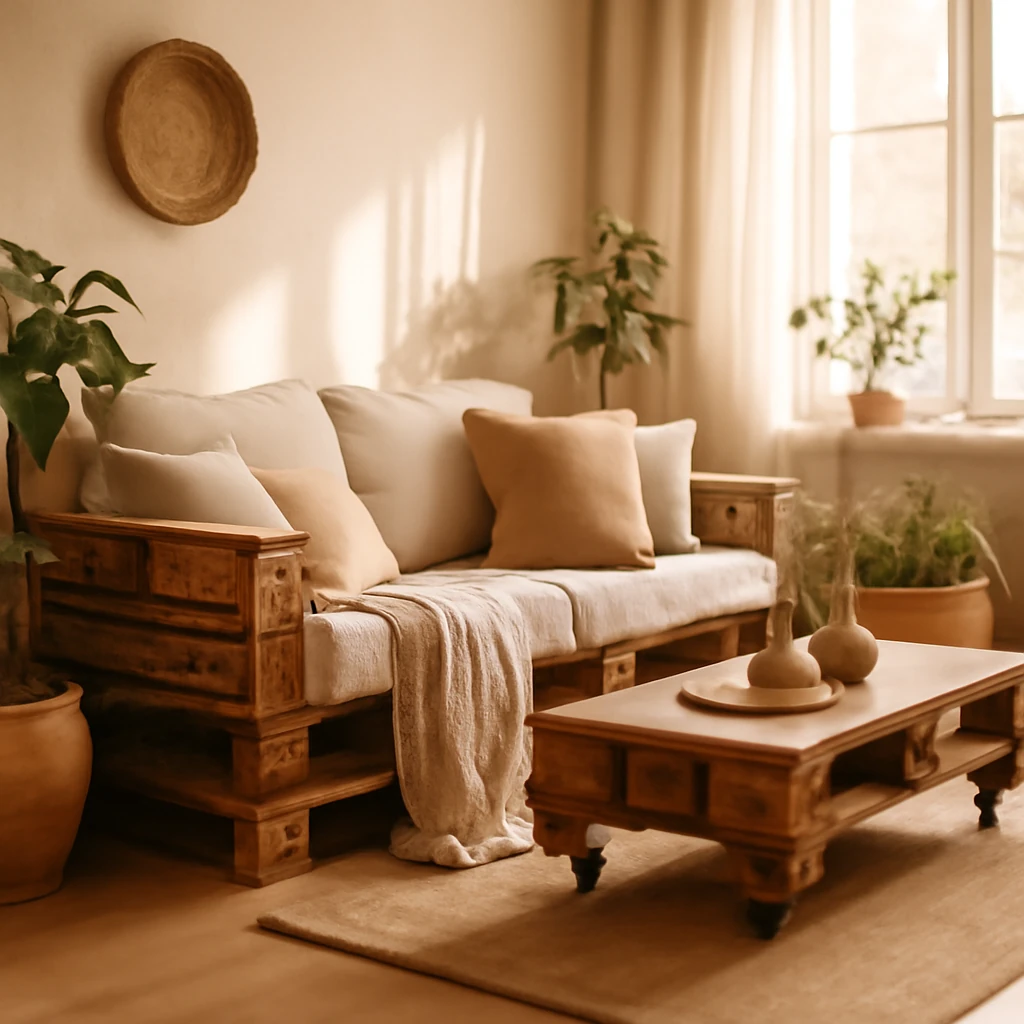
- Low sofas: stack three or four pallet boards to form a seat base, with a comfortable depth. Add additional boards to create an angled back or a straight, clean profile. Fit a weather-resistant cushion on top for a cosy, enduring look.
- Poufs and ottomans: cut pallet sections into square or rectangular shapes, join with screws, and top with outdoor cushions. Use a few as modular pieces that can be rearranged for social gatherings.
- Coffee tables: convert a pallet into a compact coffee table by trimming to height, adding a glass insert or a solid wood top. For a lighter touch, remove the bottom deck boards to reveal a shelf beneath for magazines.
Step-by-step guide
- Measure the space and select pallets accordingly. Aim for a seating height of around 40 cm and a backrest height of 60–80 cm for comfort.
- Disassemble or cut pallets if a more refined profile is preferred. Sand all surfaces thoroughly and remove all splinters.
- Assemble with exterior-grade screws. If outdoors, apply a marine-grade varnish or UV-curing sealant to protect from sunlight and rain.
- Fill gaps with matching timber plugs or filler to create a smooth look. Add cushions with removable covers for ease of cleaning.
- Style with weatherproof textiles, a rug or an outdoor-friendly throw to define the lounge zone.
Shelves, storage and multifunctional units
Palets offer an economical canvas for bookshelves, display units and compact storage towers. When planned with vertical stacking or wall mounting, pallet-based storage can maximise vertical space in rooms with limited footprint.
Practical configurations
- Floating shelves: mount pallet boards to a wall using sturdy brackets. Sand and seal edges to prevent chipping and to create a sleek, continuous line with the wall.
- Wall-mounted bookcase: construct a simple frame with horizontal planks and vertical supports, creating multiple compartments of varying depths for visual interest.
- Mini bar or coffee counter: rebuild a shallow pallet unit as a compact bar or service counter for entertaining, with a concealed storage area behind hinged boards.
Step-by-step guide
- Determine the unit’s dimensions based on the room’s scale and the items you plan to store or display.
- Prepare pallets by removing rough edges and cutting to size. Sand until smooth, wipe clean.
- Assemble with appropriate joinery. For wall-mounted units, ensure fixings are appropriate for masonry or timber studs. Use wall anchors if necessary.
- Finish with a protective coat suitable for the environment - matte or satin finishes are popular for a contemporary European look.
Outdoor swing and playful garden furnishings
Two pallets can become a simple, sturdy swing for the garden or a playful seating element for a sunny plot. With careful mounting and safe seating depth, a pallet swing can be a focal point for family gatherings and afternoon lounging.
Construction tips
- Swing frame: use a timber beam or a robust branch as the anchor point. Attach one pallet as the seat and another as a backrest, or cut boards to create a curved silhouette for comfort.
- Safety: ensure anchorage is secure to prevent wobble. Use weatherproof rope or metal chains rated for outdoor use, check connections periodically.
- Finishing: apply exterior-grade sealant to protect timber from moisture and sun exposure. Add cushions with removable covers for easy cleaning.
Step-by-step guide
- Choose a sturdy mounting point and confirm weight capacities. If possible, mount to a solid beam or sturdy tree branch with protective padding to avoid timber damage.
- Prepare and seal the pallets as described in prior sections. Sand edges for a comfortable seating surface.
- Attach the seat and backrest with strong hardware. Allow space for comfortable leg placement and a gentle tilt.
- Finish with cushions and a weather-resistant fabric for durability and style.
Event-ready and festive: versatile props for outdoor celebrations
A pallet-based bar station, signage display or photo backdrop can elevate an open-air gathering, wedding or rooftop party. Keep the construction simple and modular so pieces can be reconfigured for different events.
Party-ready ideas
- Swap-in panels: create removable panels that can be decorated with fabric, lights or greenery. Mount on a pallet frame for quick assembly and easy transport.
- Mobile bar: fashion a compact bar by attaching a top surface and a small storage shelf beneath. Consider casters for easy relocation.
- Backdrop wall: stack pallets to form a low wall with open slots for hanging garlands or signage. Tie-in with decorative lighting for a festive mood.
Step-by-step guide
- Draft a simple plan that fits the event scale and space. Use modular components that can be reconfigured as needed.
- Prepare the pallets and seal them to withstand outdoor use. Sand thoroughly to avoid splinters on guests.
- Assemble with robust hardware and ensure stability. Add wheels to some modules if mobility is essential.
- Decorate with colours that echo the season and surrounding architecture, keeping instruments and glassware away from wooden surfaces.
Green corners: pallet stands and vertical gardens
Plants bring life to interiors and outdoor rooms alike. Pallets offer a practical, modular framework for planters, herb racks and vertical gardens that work well in European settings with limited space and variable climates.
Ways to integrate greenery
- Plant stands: mount pots to pallet slats or place planter boxes on the lower deck to create a layered display and easy access for watering.
- Vertical garden: fix shallow trough planters or pots to an upright pallet frame. This maximises sunlight exposure and keeps soil away from floor surfaces.
- Hanging lanterns and string lights: accent the green corner with warm lighting to enhance evening ambience while keeping decks tidy.
Step-by-step guide
- Plan the layout and require drainage and water access for each plant. Ensure planters do not trap moisture against the timber.
- Prepare the pallet structure with a sealant suitable for exterior use. Apply a first coat, allow to dry, then add a second coat for protection.
- Attach planters securely to avoid shifts in windy conditions. Use stainless-steel screws or brackets to resist corrosion.
- Plant hardy European varieties that suit the microclimate of the space. Use lightweight soils and composts suitable for container gardening.
Sourcing, budgeting and finishing touches
To maintain affordability while supporting sustainable practices, consider these practical sourcing strategies. Look for pallets through local recycling centres, agricultural supply stores, wood workshops or community exchange networks. In many European cities there are dedicated marketplaces for reclaimed timber and DIY materials where pallets are offered at nominal prices or even for free. When budgeting a pallet project, account for:
- Pallet acquisition: free or affordable, depending on condition and supplier.
- Hardware and fixings: screws, brackets, anchors and hinges suitable for timber and, if applicable, outdoor use.
- Finishes: paints, stains or sealants chosen for indoor or outdoor performance.
- Cushions and textiles: durable, removable covers that are easy to clean and suitable for European climates.
Planning ahead helps avoid a patchwork of mismatched components. When sourcing, consider the timber’s ecological footprint and whether finishes are low in volatile organic compounds (VOCs). The aim is to achieve a cohesive palette and a consistent tonal range across the project.
Maintenance, care and longevity
Pallet furniture can last for many years if properly finished and cared for. Here are practical maintenance tips:
- Regular inspection: check screws and brackets for corrosion or loosening, especially in outdoor settings.
- Cleaning routine: wipe down with a damp cloth and mild soap, then dry promptly to prevent mould and swelling.
- Sealing schedule: reapply sealant or varnish every 1–3 years depending on exposure, outdoor pieces may require more frequent reapplication.
- Cushion care: use removable, washable covers and store cushions indoors during heavy weather or winter months.
Styling and integration with European interiors
Palette and texture are essential to ensuring pallet furniture sits comfortably within contemporary European spaces. Consider these styling notes:
- Colour coordination: pair light timber with cool neutrals - soft greys, stone, sand and off-white - for a calm, modern look. For a bolder statement, choose a single accent colour for cushions and textiles.
- Texture mix: counter the roughness of wood with plush textiles, woven textiles, and ceramic textures to create a layered, inviting feel.
- Proportions: keep the table-to-chair balance harmonious by aligning heights with the human scale, avoid oversized components in small rooms.
- Lighting: incorporate layered lighting - ambient, task and accent - to highlight the timber’s grain and the furniture’s form during different times of day.
Practical examples: adapting to varied European spaces
Whether in a compact Parisian apartment, a Scandinavian-influenced Nordic home or a sunlit Mediterranean terrace, pallet-based furniture can be adapted to suit a range of climates and architectural styles. For interiors with high ceilings and generous window lines, use taller headboards and longer benches to create a sense of proportion. In more compact urban flats, keep pieces modular, stackable and multi-functional to maximise floor space. The beauty of pallet furniture lies in its adaptability: a single system can evolve as needs change - from a storage console during the week to a garden seating arrangement on weekends.
Final thoughts: embracing a considered, budget-conscious approach
Repurposing pallets is more than a cheap hack, it’s a thoughtful approach to furniture making that aligns with contemporary European values around sustainability, craft and design literacy. By investing time in proper preparation, selecting durable finishes and pairing the pieces intelligently with the surrounding architecture, pallet furniture can become a lasting, cherished component of a home. The projects outlined here offer a toolkit for experimentation - from the practical to the playful - helping you create interiors that are warm, resilient and distinctly yours.
Notes on ethics and sustainability
When engaging in upcycling projects, consider the lifecycle of the timber and the environmental impact of finishes. Choose low-VOC products, test products on offcuts first, and dispose of any waste responsibly. If a project involves outdoor use, select hardware and coatings designed for exterior conditions and local climate. In many European cities, community makerspaces and cooperative workshops can provide access to tools, guidance and shared knowledge, enabling you to realise complex pallet designs with professional oversight while reducing waste.
You may also like these articles
 Bedroom
Choosing the Right Orthopaedic Pillow for a Healthier Sleep in Europe
A comprehensive guide to selecting the perfect orthopaedic pillow for European beds.
Tips & How-To
How to Install a Kitchen Worktop: A Practical Step-by-Step Guide for European Homes
A practical, step-by-step guide to fitting a kitchen worktop across European kitchens.
Tips & How-To
Cleaning Wallpaper in Europe: A practical guide to safe maintenance
A practical European guide to cleaning wallpaper without damage.