
Explore interior trends, AI design insights, styling guides and real transformations
Choosing the Right Sofa Filling: From Pocket Springs to PU Foam
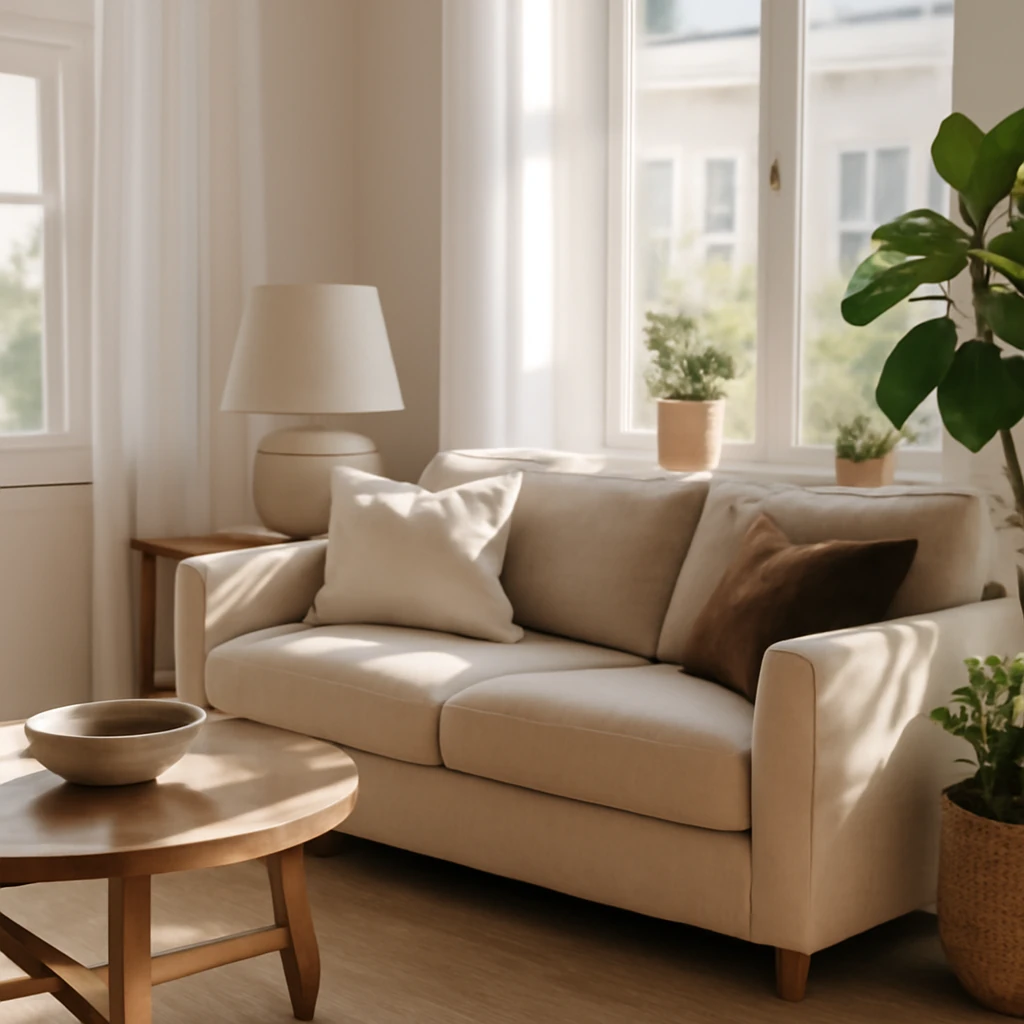
Understanding sofa fillings in contemporary European homes
In the living room, the choice of what's inside the upholstery matters as much as the design on the outside. The filling influences comfort, resilience and how long a sofa stays true to its character. For those equipping homes across Europe, the debate between traditional sprung cores and foam-based interiors remains central. This guide explains the main filling types, their strengths and limitations, and how to select a sofa that fits your daily life, space and budget.
Spring-based sofas
Spring systems have long been the backbone of comfortable seating. They form the core of the seat and back support and, when paired with quality padding and a robust frame, offer lasting comfort. In European markets, three common configurations are Bonnell springs, zigzag (serpentine) springs, and independent pocket springs. Each has a distinct performance profile and is suited to different usage patterns.
Bonnell spring block
The Bonnell block uses interconnected coils arranged in a linked lattice. It is a relatively economical solution that provides a solid, durable base for light- to moderate-use living rooms. The springs offer structural rigidity, but over time they may sag in areas with heavy or frequent use because the support points are not independent. To improve comfort, a layer of foam or padding is often placed above the springs. This option is well suited to rooms where budget is a prime consideration, or to guest rooms that see occasional use.
Zigzag springs - a traditional approach
Zigzag springs, sometimes called serpentine springs, are formed from a continuous strip of galvanised steel bent into a repeated zigzag pattern and fixed to a wooden frame. They provide strong, even support and can last for many years with proper construction and care. However, because the coils are not isolated, the way the system distributes weight can be less forgiving for sleepers with delicate spines or for households that require highly nuanced contouring. They tend to feel firmer and more responsive to movement, which some users prefer for sitting, but others may find less comfortable for long periods of lying down.
Independent pocket springs - for daily use
In a pocket-sprung system, each coil sits inside its own fabric pocket, allowing it to work independently. This produces highly individualised contouring, excellent weight distribution, and generally superior orthopaedic support. For daily sleeping and prolonged sitting, pocket springs are widely regarded as the best of the traditional spring options. The feel can be tailored by adjusting the density of springs per square metre and by how the pockets are arranged - linear versus a staggered (or lattice) layout each bring different benefits. Higher densities provide more precise support for the spine and joints, which is particularly valuable in multi-user households or where heavier occupants share a sofa.
Comfort and expectations - what to look for in spring-based sofas
- Durability and load-bearing capacity - a well-made pocket-spring arrangement can support substantial daily use for many years, with a common expectation of 20–30 years of service when paired with a solid frame and quality upholstery.
- Independent support - pockets offer superior contouring and reduce partner disturbance when one person moves.
- Ventilation and hygiene - the space between springs promotes air circulation, contributing to a drier, more hygienic sleeping surface.
Considerations for spring-based sofas
- Weight limits - per-seat load capacities of around 110–130 kg are common for Bonnell and Zigzag systems, pocket springs often exceed these figures, especially at higher densities.
- Long-term resilience - the longevity hinges not only on the springs but on the frame, connectors, and upholstery. A well-engineered spring sofa with a reinforced frame can outlive most foam alternatives when cared for properly.
- Repair and replacement - if a spring system starts to creak, sag, or deform, repairs can be costly, and replacing a complete spring unit is sometimes necessary.
Polyurethane foam (PU) sofas
Foam interiors have surged in popularity across Europe for their affordability, design versatility and lighter weight. PU foam cores are composed of a cellular matrix that delivers elasticity and resilience, making both seating and sleeping comfortable. The performance of PU depends heavily on density and the type of foam used. In practice, density correlates with support and longevity: a minimum density of around 30 kg/m³ is often recommended to maintain loft and prevent rapid compression. Foam cores can be produced in several forms to suit a wide range of sofa designs.
Foam types commonly used in sofas
Sheet PU foam - budget-friendly
Sheet foam is manufactured in large sheets and cut to the sofa’s shapes. It represents a cost-effective option for many mid-market pieces. While it can be firm and supportive, the typical loads it supports per seat are around 100 kg. Over time, the foam tends to lose loft more quickly than higher-density foams, leading to a softer feel and reduced cushioning life.
Latex-boosted PU foam - premium comfort
Latex-infused PU foam combines a foam base with natural or synthetic latex to improve elasticity, breathability and recovery after compression. This hybrid tends to offer more pronounced bounce and resilient support, and it can accommodate heavier users more comfortably - often up to about 120 kg per seat. It is a popular choice for those seeking a balance between comfort and durability, with a lighter, more responsive seating experience than standard sheet foam.
Moulded PU foam - for designer shapes
Moulded or cast PU foam is produced directly in shaped matrices to create cushions with non-standard contours. This high-density option yields excellent elasticity and shape retention, with capacities commonly reaching around 130 kg per seat. The trade-off is often reduced air permeability, which can translate to a firmer feel and less breathability compared with higher-end foams or spring systems.
Advantages of PU sofas
- Lightweight and easy to move - beneficial for reconfiguring rooms or relocating furniture.
- Extensive choice of firmness and feel - from soft and cushioned to firm and supportive, enabling broad design compatibility.
- Typically more affordable - PU sofas often offer good value, particularly for guests' rooms or secondary living spaces.
- Squeak-free operation - unlike many spring systems, PU interiors generally stay quiet during use.
Disadvantages and considerations
- Longevity varies - lower-density foams may begin to lose loft and support within around 8–12 years, depending on usage and care.
- UV and climate sensitivity - prolonged exposure to direct sunlight can degrade foam and cause discolouration or loss of resilience, keep sofas away from strong sun or use UV-protective fabrics.
- Fire resistance - many foams require appropriate fire retardants and protective upholstery fabrics to meet local safety regulations, check compliance with EU standards in your region.
Comparing PU and spring blocks
Comfort and ergonomics
Both fillings can offer excellent comfort, but the feel differs. Sofas with pocket springs often deliver superior conforming support and a more balanced distribution of weight, which is particularly noticeable for daily sleeping or longer lounge sessions. PU foams, especially high-density variants and latex-boosted cores, can rival spring systems in initial comfort and often feel more responsive when bouncing into or out of a seated position. For the majority of users who sleep on a sofa only occasionally, a high-quality moulded PU or latex-enhanced foam can be perfectly comfortable, while households that use the sofa for regular overnight sleeping tend to prefer pocket-sprung configurations to optimise spinal alignment over time.
Durability and construction quality
Durability hinges on more than the filling alone. A well-constructed frame, reliable joints and a carefully chosen upholstery layer are crucial. Generally, traditional spring sofas with independent pockets and a solid timber or metal frame can offer longer service life, particularly when designed for daily use and with a robust seat structure. PU sofas may provide excellent longevity where the foam is high density and the cover construction is reinforced, but they often require careful design to avoid early sagging, especially in low-density variants. In practice, a premium spring sofa with quality components can outlast a mid-range PU sofa by many years, though the gap narrows when high-quality PU foams with advanced formulations are employed.
Price and perceived value
Price is a major consideration. PU sofas, particularly those at the mid- or entry-level end of the market, typically come in at a lower price point than premium pocket-spring models. However, high-density foams or latex-augmented foams can bring prices closer to mid-range spring sofas. For households prioritising longevity and nightly sleep, investing in a well-made pocket-spring sofa may offer better long-term value, while for occasional use or guest rooms, a well-chosen PU option can be a sensible and elegant solution.
Design and versatility
The interior design possibilities are extensive with both fillings. PU foams enable architects and designers to realise more complex shapes and tailor the sofa to unusual room configurations, thanks to their mouldability and lighter weight. Springs, by contrast, often require careful frame engineering but reward design with a classic, refined seating feel that remains comfortable across generations of interiors. In both cases, the choice of fabric, comfort layer and cushions determines the final aesthetic and tactile experience.
Environmental and health considerations
Contemporary European practice increasingly prioritises materials with reduced environmental impact and lower VOC emissions. Latex-boosted foams can offer improved breathability and comfort, while responsibly sourced natural latex is considered a more sustainable option than purely synthetic foams. With spring systems, the frame timber and upholstery materials also contribute to a product’s environmental footprint. When selecting, look for products that disclose components, testing standards and certification that align with EU requirements for indoor air quality and safety.
How to choose the right filling for your home
Making the final decision depends on how the sofa will be used, who will use it, and what space allows for. Use these practical guidelines to navigate the choice with confidence.
- Assess daily usage and sleep plans. If the sofa will serve as a daily sleeping surface or accommodate several people regularly, prioritise a system that offers strong orthopaedic support and long-term durability. Pocket springs are often the best option for sustained sleep, while high-density PU foams can suffice for intermittent use conditioned by a firmer feel and a lighter frame.
- Consider weight and occupant variety. For households with heavier occupants or multiple sleepers, higher spring density provides more durable support. If budget is tighter or sleep needs are lighter, select a foam option with a density of at least 30 kg/m³, preferably with latex components for improved resilience.
- Think about room type and space. In compact living rooms or studio flats, a lighter sofa with a compact footprint can be advantageous. Foam cores tend to be lighter, easier to move, and more adaptable to tight layouts. In larger living rooms, a deeper seat with a well-supported spring core can enhance comfort and proportion.
- Test the feel in person. When possible, sit and lie on the sofa to assess how quickly the surface recovers after weight is removed, how the cushions distribute pressure, and whether there is any squeak or creak in the frame. For sleeping comfort, check how the backrest and seat panels align with the spine and hips, and whether edge support feels reassuring for sitting upright.
- Review safety and maintenance expectations. Confirm that the sofa complies with local fire safety regulations and is supplied with clear guidance on cushion and fabric care. Consider the ease of replacing cushions or the inner cores, and whether warranties cover frame, springs or foam for a reasonable period.
Practical suitability by scenario
- Guest rooms or second lounges - a PU foam sofa with a high-density core offers good value, lightness and silence with adequate comfort for occasional overnight guests.
- Active family living rooms - a pocket-sprung sofa with a reinforced frame, high-quality upholstery and a well-chosen fabric balance daily lounging and occasional overnight use.
- Open-plan living areas or multi-function spaces - combination designs that integrate modular components or sectional configurations can benefit from foam cores for flexibility in shape, while pockets can be used where sleeping arrangements demand more reliable spinal support.
Practical guidance for European homes
Across Europe, living spaces range from compact city-centre flats to generous suburban lounges. The key to a satisfying sofa choice lies in matching the interior’s character with the family’s rhythm of life. Consider pragmatic details such as upholstery durability, fabric colourfastness, and the ability to refresh a room with a new sofa without overhauling the surrounding décor. The resilience of the filling should align with how often the sofa is used, how it is slept on, and who uses it, from children to guests to elderly relatives. In addition, sustainable choices - such as responsibly sourced materials and low-emission foams - are increasingly a baseline expectation for contemporary European interiors.
In summary
There is no single superior filling for all homes. Both spring-based sofas and PU interiors offer compelling advantages, and the best choice depends on how you live, the room’s role, and your priorities for comfort, longevity and value. If nightly sleep on the sofa is a routine, prioritise a pocket-sprung core with a robust frame and dense upholstery. If the sofa is primarily for seating, occasional lounging, or guest visits, a high-density PU option can deliver excellent comfort with a lighter footprint and more flexible design possibilities. Either path can yield a beautiful, durable piece that enhances a European home, provided you select thoughtfully and test the options in person before committing.
When choosing, focus on the practical balance between comfort, durability and price. The right sofa should support your daily life, align with your interior design, and remain a favourite for years to come.
You may also like these articles
 Trends
Creating Calm in Contemporary European Bedrooms
A comprehensive guide to contemporary bedroom design across Europe.
Trends
Minimalism in European Interiors: A Timeless Guide to Calm, Textured Spaces
A practical guide to minimalist interiors across Europe.
 Bathroom Design
Spa style bathrooms for 2026: natural tones, curved forms and tactile textures
Spa inspired bathrooms for 2026: natural tones, curves and hidden storage