
Explore interior trends, AI design insights, styling guides and real transformations
Choosing a sofa bed for daily sleep: a European guide to comfort and practicality
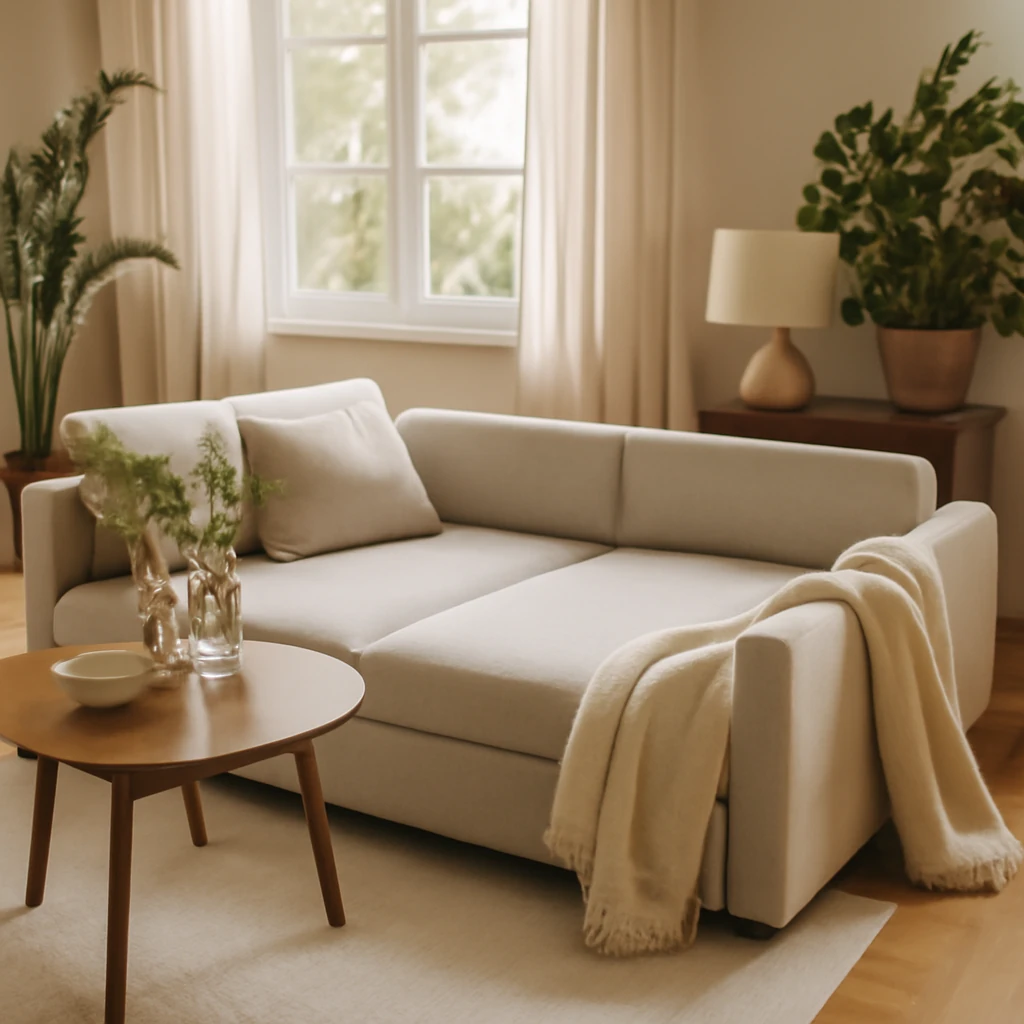
Why a sofa bed deserves careful selection for daily use
In many European homes, a sofa bed is a daily anchor rather than a rare guest-bed. It must cope with regular sitting, lounging and sleeping, often in spaces that double as home offices or dining areas. The right model blends comfort, durability and design, turning a compact living area into a flexible hub. This guide explains what to look for when choosing a sofa bed for daily use, from how it unfolds to its upholstery and frame, and how to tailor the choice to a European home environment.
Who will sleep on the sofa
Beyond aesthetics, the core question is who will actually use the bed every night. The answer dictates the最 appropriate construction, comfort level and maintenance needs. Consider the following typical scenarios:
One adult
For a single sleeper, the aim is simple daily comfort. A sofa that is easy to use, with a sturdy seat and a smooth mechanism, will often be kept as a permanent bed. Look for a flat, even sleep surface when unfolded, and ensure the sofa seat does not reveal a pronounced seam or crease where one person might feel it during the night. A firmer core generally wears well over time, so consider a cushion system that complements that preference. Widths around 120–150 cm and lengths of about 190–200 cm are common starting points for a comfortable single-night bed.
Couple
For two adults, a truly flat sleeping surface is essential. A sofa with a bed surface that resembles a standard bed reduces motion transfer and cushions the joints. Attention should be paid to where the seam lies and how the backrest and armrests align with the bed when folded. A sofa bed that offers a wide, uninterrupted sleeping area - roughly 1.6–1.9 m in width and about 2.0 m in length when fully unfolded - will feel more like a proper bed and support restful sleep every night.
Child or lightweight user
When children share a sofa bed, ease of use and durability are paramount. Mechanisms should operate with minimal effort, and fabrics ought to withstand stains and colour change. Consider fabrics with good stain resistance and easy-clean finishes, plus reinforced frames that can cope with frequent transformation. A simple, intuitive mechanism reduces the risk of improper use and prolongs the sofa’s life.
Where the sofa will live
Room layout and size heavily influence the optimal sofa bed. In compact flats or urban studios, straight, compact models near the wall maximise floor space and maintain circulation. In larger living areas or open-plan homes, a corner sofa or modular arrangement can effectively zone the space while providing a generous sleeping area when required. A key consideration is how the back of the sofa is finished: in European spaces, many buyers prefer sofas with the back upholstered in the main fabric, ensuring a tidy appearance when the sofa is used as a room divider or when placed away from walls.
Small rooms
In tight rooms, a straight sofa that folds out along the wall is often the best option. It minimises the footprint in sleep mode and avoids obstructing doorways or pathways. Ensure there is enough clearance to unfold the bed without manoeuvring furniture away from walls.
Open-plan or larger living areas
In broader spaces, a sectional or modular sofa can act as a room divider while offering a comfortable sleep surface. The ability to align the back panel with the room’s fabrics helps to maintain a cohesive interior. If choosing a corner unit, verify that the back of the sofa is finished in the same high-quality fabric as the visible fronts, so it looks well-presented from all angles.
Practical tip: before purchase, measure the room and the doorways to guarantee the sofa can be moved into place without removing doors. Also consider how often you will transform the sofa during a typical week, and whether you need a model that can stay in bed mode for extended periods without comfort loss.
Choosing the unfolding mechanism: longitudinal or transverse
Sofa beds use a range of folding or pulling mechanisms. The choice influences how much space is needed to deploy the bed and how the sleeping surface feels. In European homes, two broad orientations are common: mechanisms that unfold along the wall (longitudinal) and those that unfold across the room (transverse). Both have advantages depending on room shape, traffic patterns and user preference.
- Longitudinal unfoldings (along the wall): typically preferred for rooms where wall clearance is crucial. The bed extends lengthwise, and the sofa sits closer to the opposite wall. This orientation often delivers a longer, unobstructed sleeping surface and can work well in narrow living areas.
- Transverse unfoldings (across the room): the bed surface is created by pulling the seat away from the wall and extending the bed sideways. This approach can yield a broad sleeping width, useful for couples or taller sleepers, but may require more floor space to operate.
Within these orientations, there are several widely used mechanisms. Each has its own feel, maintenance needs and price bracket. Here is a concise overview of common types, with notes on daily-use suitability.
Book mechanism
The traditional “book” fold opens from the seat, with the backrest folding down to create a resting surface. It is renowned for simplicity and durability but can leave a small seam in the middle where two seating sections meet. It remains reliable for daily use if the cushions are well-supported and the joint operates smoothly. In compact rooms, the book mechanism can be a good option because it folds relatively flat against the wall when closed.
Click-clack (also known as click-clack or tango)
This mechanism folds the backrest down to meet the seat, creating a flat surface. It is generally easy to operate and comfortable for daily sleeping when upgraded to higher-quality fillings. The main caveat is that lower-cost versions may be less robust over time and can develop creaks or a less even sleeping surface if the frame or upholstery is compromised.
Eurobook
The eurobook mechanism features a wheeled seat that slides out while the backrest pivots into place, producing a smooth, relatively flat bed. It does not usually require pulling the sofa away from the wall, which makes it well suited to small living rooms. Wheels and rails are points to check for floor protection and long-term wear, high-quality versions use gentler hardware to minimise scuffing on hard floors or carpets.
Pantograph (puma, tik-tak)
A pantograph system operates with a lifting action and a rolling or sliding base. It typically offers a very even sleeping surface with good edge support. It is more common in mid-to-upper price ranges and can deliver stable performance with daily use, though it may require more precise assembly and occasional maintenance to preserve lid alignment and glide smoothness.
Roll-out / pull-out (telescopic)
In a roll-out or pull-out mechanism, the bed surface slides forward from under the sofa and lays flat. This approach often provides a generous sleeping area with minimal seam visibility. It can be ideal for frequent use, though the initial effort to deploy the bed and potential wheel marks should be considered, especially on delicate floor coverings.
Accordion / Konrad
These fold-out styles typically yield a particularly roomy sleeping surface. They can be workhorse options for daily use but may require careful handling to keep the joints quiet and secure over time. They are frequently found in mid-to-upper price ranges due to their substantial frames and suspension systems.
Italian and American folding beds
High-end mechanisms from these families prioritise a very flat, mattress-like sleeping surface. They often deliver superior comfort and minimal transition between sofa and bed. The trade-off is higher price and, in some cases, a more complex installation process or heavier furniture.
Dolphin (kangaroo) and similar multi-part systems
These arrangements involve cascading sections that extend to form a large bed. They are popular for sectional sofas and corner configurations, offering a generous sleeping area but sometimes requiring careful use to avoid misalignment or squeaks with frequent transformation.
Shape and size: how to choose sleeping dimensions
Sleeping dimensions should be the foundation of the decision. A comfortable single sleeper benefits from a bed area of around 80 × 200 cm. For two adults, a surface of 160–180 cm in width and 190–200 cm in length is a practical baseline, with exact choices depending on the mechanism and sofa width when folded. It is important to remember that armrests, back cushions and sofa depth add to the overall footprint when the bed is in use, so the usable sleep area may differ from the sofa’s exterior dimensions.
- Without full extension (sofa used as a couch): allow for a width of about 1.2–1.8 m, and a dismantled length of roughly 2.0 m, depending on seating. Taller sleepers (about 180–190 cm) should consider models with removable or slim-profile arms or a longer sofa bed to achieve adequate length when lying down.
Note: if the sofa bed can be converted into a full bed with minimal intrusion, you may opt for a longer overall width to guarantee a more generous sleep surface. Some European models offer seamless sleeping surfaces with a single, broad armrest or a low-profile frame that reduces edge interference along the sides.
- With unfolding (transverse): sleeping width around 1.6 m is common for two-person use, with a body-length of roughly 2.0 m. This arrangement prioritises wide sleeping platforms over compactness.
- With unfolding (longitudinal): bedding length around 2.0 m and width around 1.8 m may be typical, allowing a near-standard bed footprint while seated against the wall.
In practice, the best approach is to test the bed surface when unfolded and check for any seams, cushions or edges that could irritate the sleeper. A single well-designed arm height can prevent pillow loss and keep the top surface tidy at night. Comfort is largely about how the surface feels under the body, not just the mattress dimensions alone.
Upholstery, filling and frame
Upholstery: practical, non-slippery fabrics
The choice of fabric dramatically affects comfort when sleeping. Leather or faux leather can be less forgiving for nightly use due to body heat and friction, so many European buyers prefer textiles. A durable, breathable fabric with a matte or softly textured finish tends to feel more comfortable against skin and helps keep sheets in place. Consider performance fabrics with stain resistance and easy maintenance, especially in households with children or high traffic.
Colour matters too. While selecting to harmonise with living-room palettes, darker tones or patterns can better camouflage everyday wear and minor stains, making daily use more practical in busy homes.
Fillings: what matters for comfort
The cushions in a sofa bed are not a uniform feature across models. The seat and back cushions may use springs, high-density foam, latex or combinations. For daily sleep, independent (pocket) springs in the seat are highly regarded for consistent support and reduced motion transfer. Foam cores with a quality top layer can also deliver comfort, but be mindful of long-term compression and softening that may require replacements over time.
Back cushions often employ softer fillings for comfort but should maintain adequate support to prevent sagging. A balanced combination - strong seat support with ergonomic back cushions - helps maintain posture through the night. If in doubt, request a test sample of the fabric and cushion feel to assess comfort over extended sitting and lying periods.
Frame and structure
The frame is the backbone of a daily-use sofa bed. A robust timber frame, ideally hardwood or a well-engineered timber blend, provides durability and resistance to creaking. Metal frames can be strong but may require periodic checks to tighten bolts and ensure that joints remain stable with repeated use. Avoid frames that produce noticeable squeaks or wobbly sensations when the bed is in use.
Edge and corner reinforcement matters. In frequent-use models, reinforced corner blocks and high-quality webbing or springs help maintain performance over years of daily transformation. A well-built frame not only supports comfort but also reduces long-term maintenance costs.
Care and longevity
For daily use, the combination of upholstery, fill and frame determines how long a sofa bed remains comfortable. If you anticipate daily sleeping, prioritise higher-grade fills, a robust frame and a mechanism designed for frequent operation. When possible, choose fillings and fabrics that are easy to clean and resistant to everyday wear - this reduces upkeep and helps the sofa retain its shape and comfort for longer.
Additional options and practical features
Functional armrests and storage
A broad, sturdy armrest with a built-in top or a storage cavity can act as a bedside surface for a lamp, books, or small essentials. Some models offer hidden storage within the arm or under the seating, ideal for bedding, cushions or toppers. Integrated storage is especially valuable in compact homes where every square metre counts.
Under-seat and sofa-bed storage
Many sofa beds incorporate storage drawers or a lift-up seat for blankets, pillows and toppers. A well-designed storage solution reduces clutter and keeps sleeping essentials close at hand, without sacrificing comfort when the bed is in use.
Topper and comfort accessories
For those who want a truly bed-like experience, a thin topper can smooth transitions between cushions and reduce perceptible seams. When selecting toppers or cushions, ensure they fit within the sofa’s sleeping area and do not protrude, which could interrupt comfort or create an awkward edge while sleeping.
Practical checks before buying
- Measure meticulously: record room dimensions, sofa width, depth and height, and doorway widths to ensure smooth delivery and manoeuvrability. If space is generous (over 10 m²), consider an L-shaped or modular configuration for better zoning and sleeping options.
- Choose the right mechanism for your space: think about wall clearance, floor type, and who will operate the bed. In tight spaces, a longitudinal mechanism that unfolds along the wall often saves floor area, in larger rooms, a transverse option can provide a broader bed surface.
- Assess frame and core materials: opt for hardwood frames or well-engineered alternatives and a cushion core that offers long-lasting support. Independent springs provide superior support for nightly sleep and help preserve posture over time.
- Test the sleeping surface: lie down and roll to the sides to check for seams, edge support and how the fill distributes under pressure. A smooth, even surface is essential for restful sleep.
- Obtain fabric samples for home testing: order swatches to observe colour, texture and stain resistance in natural room light. This avoids surprises after delivery and helps ensure colour fidelity with your décor.
- Consider storage needs: if storage is a priority, choose models with integrated drawers or lift-up seats. This can make a meaningful difference in small or shared spaces.
When in doubt, visit a showroom or arrange a home consultation. In most cases, buyers can test the sofa bed by sitting, lying and folding it in real conditions to gauge daily suitability before committing to a purchase.
Maintenance and care for daily-use sofa beds
Daily use requires straightforward maintenance. Regularly vacuum upholstery to remove dust and crumbs. If the fabric is washable, follow the manufacturer’s instructions for spot cleaning, and use fabric-safe cleaners that do not degrade the fibre. For wooden or metal components, check hardware and tighten bolts if there is any creaking or looseness. Rotate cushions periodically to ensure even wear and reshape the surface after unfolding to prevent sagging on one side. A discreet toppers or mattresses can extend life and comfort, particularly if the sofa bed is used as a primary sleeping surface.
In summary: a practical decision framework
- Measure the room, doorways and the sofa’s footprint, ensuring the sofa can be delivered and placed without removing doors.
- Define how the sofa will be used most days and who will use it, then select a mechanism that aligns with space and ease of use.
- Prioritise a strong frame and a high-quality, appropriate filling - independent springs or latex are reliable for nightly use.
- Choose upholstery that balances comfort, aesthetics and maintenance. Patterned or darker fabrics can hide wear and stains better in daily life.
- Look for functional extras such as built-in storage, reachable arm surfaces and toppers that enhance sleep quality.
- Test the sofa bed in store or at home, paying attention to the seamlessness of the transition between sofa and bed and the overall sleeping surface.
With careful consideration of these factors, a sofa bed can be a true asset in European homes - combining everyday comfort with practical flexibility for today’s varied living environments.
Table: typical mechanisms and sleeping surface characteristics
| Mechanism | Typical sleep surface when deployed | Space considerations | Best for |
|---|---|---|---|
| Book | Flat surface with a seam in the middle, good for occasional use | Requires space to pull the seat forward, wall may need clearance | Compact rooms, budget-friendly options |
| Click-clack | Flat surface, back folds down, comfortable with mid-to-high-end fillings | Moderate wall clearance needed | Everyday use with reasonable durability |
| Eurobook | Flat bed with wheels, bed surface typically wide and even | Low wall clearance required, easy to operate in compact rooms | Daily use in small spaces |
| Pantograph | Flat surface with lifting action, robust and even | Moderate space to deploy, higher price segment | Frequent daily sleep in higher-end models |
| Roll-out / pull-out | Expanded bed with smooth surface, often roomy | Requires length to extend, watch for floor protection | Comfort-focused living rooms, larger spaces |
Final thought: the best sofa bed for daily sleep is the one that fits your space, your routine and your posture. Prioritise a solid frame, a supportive filling and a mechanism that you find easy to operate. With careful selection, a sofa bed can be both a stylish centrepiece and a reliable night-time solution across European homes.
You may also like these articles
 Tips & How-To
Corner Sofas in Europe: How to Size, Shape and Select for Every Living Room
Master the art of choosing the perfect corner sofa for European homes.
 Trends
Rethinking Ceilings: European Trends in Finishes, Light and Form
A guide to European ceiling design trends, materials, lighting and colour.
Small Spaces
Smart design for a 20 m² European studio: living well in a compact space
How to make a 20 m² studio feel spacious with smart layouts and storage