
Explore interior trends, AI design insights, styling guides and real transformations
Bauhaus Style in Interiors: Core Principles, Practical Application and Modern European Homes
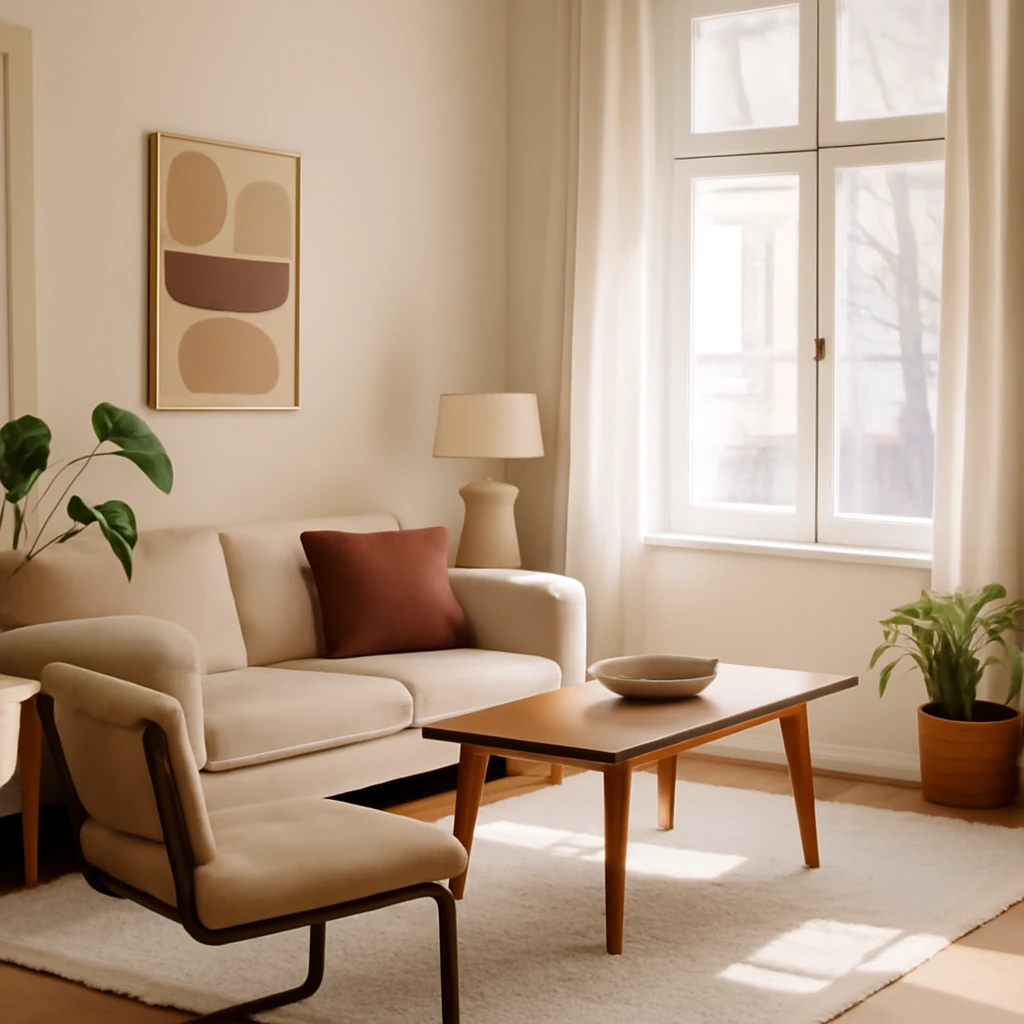
What is Bauhaus interior design
Originating in the early 20th century in central Europe, Bauhaus sought to unite art and industry. It champions straightforward forms, practical function and a factory friendly approach to making furniture and architectural components. The ethos was not to produce luxury objects but to democratise good design for everyday living. This is a philosophy that continues to influence contemporary interiors across Europe.
Core characteristics
- Simplicity minimal ornament, clear geometry, restrained colour palettes. Shapes are primarily rectangular, square and circular with a playful but limited use of curves.
- Functionality every item has a purpose and avoids frivolous decoration.
- Ergonomics layouts prioritise comfortable, logical flows and flexible use of space. Zoning is pragmatic rather than prescriptive, encouraging adaptable rooms.
- Affordability use of mass produced materials and standardised components makes good design accessible and easy to repair.
- Industrial roots emphasis on manufacturable forms and systems rather than bespoke crafted pieces, with materials such as steel, concrete and plywood common.
In architecture
European Bauhaus influenced architecture with cubic forms, flat roofs and unadorned façades. The idea is to eliminate unnecessary decoration and let function define structure. Buildings frequently feature robust concrete frames, extensive glazing and modular planning that prioritises daylight and efficiency. The exterior may appear restrained, yet the interiors benefit from generously proportioned rooms, flexible layouts and straightforward maintenance.
In graphic design
In graphic practice the language is geometric: squares, circles and triangles create balanced compositions. Sans serif typography, bold, clean letterforms and sometimes diagonal text produce posters and interfaces that read clearly at a glance. The visual language translates well to digital design, where minimalism supports usability and fast loading times while keeping a strong identity.
In interiors
The palette is generally restrained: greys, whites, beiges and black form the backbone. In private spaces such as bedrooms or home offices this calm base works well. For living rooms and kitchens honest, saturated colour accents like primary red, yellow or blue can act as focal points. The aim is sharp contrast and clear geometry rather than soft gradients or decorative flourishes. Materials are left visible where possible, as the honesty of concrete, plaster, steel, glass and wood is valued. Furniture favours modular, compact forms that can be reconfigured to suit changing needs.
A typical room may mix steel tubing chairs and storage with clean lined storage and a low profile sofa. Accessories are purposeful rather than decorative. Lighting is important and often designed to delineate zones rather than merely illuminate.
Practical furniture and how to use it
When selecting pieces, look for furniture made with simple frames, rectangular or square profiles and industrial materials. Transforms such as extendable tables, modular seating and storage walls help maximise space particularly in smaller European apartments. Built in wardrobe systems and hidden storage keep surfaces uncluttered. Rather than ostentatious statement pieces, choose ergonomic, multi functional items that serve several tasks in a compact footprint.
Lighting and material honesty
Lighting plays a central role in Bauhaus inspired interiors. Large windows are common in European building stock and multiple light sources in each room help define areas. Lighting fixtures tend to be geometric and unadorned, with adjustable features and smart controls that enhance usability. The material honesty principle invites visible materials such as steel tubes, concrete, unfinished wood and glass to be part of the design rather than hidden beneath superficial finishes.
Decor and art
Decor should be purposeful and aligned with the room function. Posters and prints referencing the Bauhaus aesthetic can be used as tasteful nods. Unexpected objects such as a clever clock, a sculptural lamp or an industrial artefact can become a characterful focal point. Avoid clutter and tiny trinkets, the discipline lies in selecting pieces that enhance the overall composition and life of the space.
Practical tips for applying Bauhaus in European homes
- Start with a restrained palette and let colour appear as deliberate punctuations rather than random accents.
- Choose modular furniture with multiple uses to maximise small spaces typical of many European apartments.
- Expose honest materials and avoid excessive surface finishes that hide the truth of the material.
- Plan spaces around daily routines and easy maintenance, ensuring furniture and fittings can be kept clean and repaired without complication.
- Use lighting strategically to create zones and to reinforce the architectural order of the room.
Challenges and how to soften the look
Pure Bauhaus can feel severe in some settings, especially in homes with soft textures or warm fabrics. To make the aesthetic more accessible, combine elements with other styles or introduce subtler colour variations. For example, temper the red with terracotta, blue with softer indigo, or warm the palette with natural wood tones. Pairing a modular, geometric setup with cosy textiles or a tactile rug can create a balanced, lived in ambience while preserving the core logic of form and function.
European context: renovating and living with Bauhaus principles
Across Europe, older housing stock such as postwar flats, modernist blocks and contemporary apartments presents opportunities and constraints for Bauhaus styling. In many cities the architectural language already aligns with Bauhaus ideals: long proportions, large windows, exposed structural elements and easy access to daylight. When renovating, keep service routes and cable runs accessible for maintenance and future upgrades. Use modular units that can be reconfigured as needs evolve, and prefer materials that are durable and easy to clean. In social housing and retrofit projects the approach supports flexibility, cost efficiency and accessibility, ensuring that good design remains within reach for a wide range of households.
Sustainability and performance
The Bauhaus mission translates well to contemporary sustainability goals. Mass produced components can be manufactured to high efficiency standards, reducing waste and improving lifecycle performance. Opt for repairable materials and standardised fittings that are easy to replace. Consider thermal performance, airtightness and insulation as integral to the design so fit outs remain comfortable in varying European climates while keeping running costs sensible.
Proportions and scale
Rhythm and proportion are central to a Bauhaus inspired interior. Wall lines set a logical order, ceilings remain clear, and furniture scale mirrors the room dimensions. In European homes where rooms can be compact, the play between solids and voids helps to create the sense of air and order. A well balanced composition may combine a low profile sofa with a vertical storage tower and a cantilevered shelf, all aligned to a common axis. The trick is to keep a calm backbone while allowing flexible surfaces to adapt to daily life.
Materials and finishes
Material honesty is a cornerstone. Interiors celebrate concrete, exposed plaster, timber and metal in their natural state. Engineered surfaces such as veneered plywood, lacquered steel and tempered glass are chosen for durability and ease of maintenance. Colour is used selectively to heighten emphasis on form and structure rather than to create a decorative field. When finishes are applied, they reinforce the sense of utility rather than conceal it.
Storage and space planning
European urban dwellings often benefit from intelligent storage solutions. Built in wardrobes with modular components, wall mounted units and sliding doors maximise floor area while preserving visual clarity. The aim is to keep everyday objects organised yet accessible, so that a room can transform from living space to work zone without visual clutter. Storage should disappear into the architecture, not interrupt it.
Window design and daylight strategy
Large glazing and careful light management are natural allies of the Bauhaus mindset. In many European contexts daylight is a precious commodity, the design strategy is to harness light to delineate zones, highlight the geometry of the space and reduce reliance on artificial lighting during the day. Where windows are smaller or fewer, interior surfaces become light reflectors and multi light sources create a sense of openness. The strategy is not simply about brightness, but about how light reveals the quality of materials and the order of the layout.
Integrating technology and modern living
Modern Bauhaus inspired interiors can accommodate smart home functionality without compromising the clean lines. Concealed wiring, minimalist controls and modular furniture systems make it easier to upgrade technology without creating visual noise. The emphasis remains on simplicity, so tech features should support daily life rather than define the room. The result is a space that feels contemporary yet timeless, capable of adapting to evolving routines and devices.
Case for a European approach
Rather than recreating a historic aesthetic, a European interpretation of Bauhaus recognises local building traditions and climate realities. It respects the heritage of brick and concrete, timber frames and postwar layouts, while infusing them with the clarity and practicality that Bauhaus champions. The goal is not to imitate a particular era but to extract its organisational logic and apply it to real homes. In cities with strict listed building controls or stringent energy regulations, a Bauhaus language can be gently tempered by compatible finishes and thoughtful upgrades that preserve the original character while improving comfort and performance.
Conclusion
Bauhaus interiors offer a disciplined yet flexible framework for modern living. Their emphasis on clarity, purpose and material honesty translates across homes across Europe, from compact city flats to generous living spaces. By embracing modular furniture, light filled spaces and restrained colour, you can achieve a sophisticated aesthetic that is both practical and emotionally resonant. The Bauhaus ethos remains relevant because it speaks to how we actually live and how we want our everyday environments to perform with minimal fuss but maximum usefulness.
You may also like these articles
 Bathroom Design
Four Square Metre Bathrooms: European Design Solutions for Small Homes
Ingenious design ideas to maximise a 4 m² European bathroom.
Small Spaces
Designing the hallway: practical strategies for European apartments
Transform hallways into bright, organised, design-forward spaces.
Tips & How-To
Mastering the European formal table setting: etiquette, arrangement and refined decor
A practical guide to European-style formal dining for stylish, comfortable tables.