
Explore interior trends, AI design insights, styling guides and real transformations
Hidden doors: flush-fit design for European homes
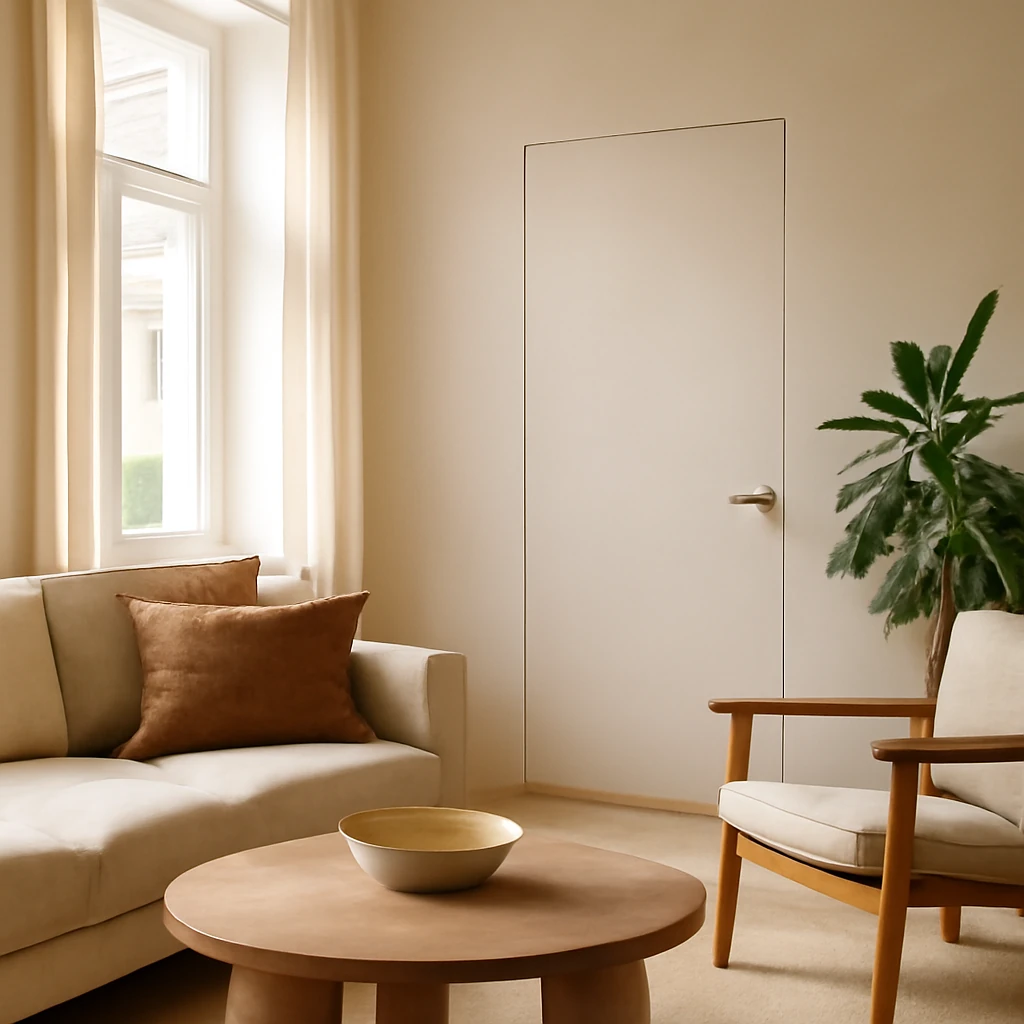
What are concealed doors and why choose them?
Concealed doors, or doors with concealed mounting, sit flush with the surrounding wall so there is no visible frame, trim or hinge. In European interiors they are valued not only for function but also as a refined design element. The absence of protruding elements can make rooms feel calmer, brighter and more expansive, while offering a high level of customisation in finishes. These doors are installed with specialised hardware that hides hinges, fasteners and even door frames, creating a continuous surface that reads as wall rather than as a doorway.
For homeowners seeking a contemporary aesthetic, concealed doors offer a versatile solution that complements a range of architectural styles - from minimalist and Nordic-inspired interiors to refined classical schemes. They also unlock practical advantages, particularly in compact flats, open-plan living spaces and projects where wall aesthetics are paramount.
Concealed vs standard doors: how they differ
The core distinction lies in the visible elements surrounding the door. A standard door is framed, edged with architrave or casing and sits perceptibly within a door opening. The junction between frame and wall is clearly defined. By contrast, a concealed door integrates with the wall, with the leaf mounted on hidden hardware so that the edge of the door merges with the wall plane.
Key features of concealed doors include:
- Hidden hinges and fasteners that keep the mechanism out of sight
- Flush surface where the door aligns exactly with plaster or paneling
- Flexible finishing options that allow painting, veneer, wallpaper or mirrors to extend the wall treatment onto the door
- Potential for minimal reveals or no reveals at all around the door leaf
Advantages and drawbacks
Advantages
+ Space efficiency. The absence of a protruding door frame or door stop can reclaim precious centimetres in narrow hallways, tight corners and compact living spaces, making layouts feel more generous.
+ Enhanced acoustic performance. A well-sealed leaf and dense backing can improve sound attenuation, particularly when combined with appropriate door seals and floor-skill alignment. This is beneficial for bedrooms, home offices and media rooms.
+ Seamless aesthetics. A flush, uninterrupted wall surface creates a clean, contemporary look that complements light, colour and material schemes. It also reduces visual clutter, enhancing the sense of calm in high-traffic areas.
+ Design versatility. The door surface can be treated as an extension of the wall. Finishes range from paint and wood veneer to decorative plaster or mirrored panels, enabling creative expression without altering the architectural language of the space.
In many European projects, concealed doors are specified to integrate with wall panelling or joinery, allowing the door to disappear into the design narrative.
Drawbacks
− Higher cost. Concealed doors require specialised hardware, precise wall preparation and skilled installation, which typically increases both materials and labour costs compared with standard doors.
− Wall preparation and compatibility. The wall must be brought to a flat, plumb condition prior to installation. This may involve reinforced framing, levelled plaster or boards, and careful alignment with other cladding or panelling.
− Thickness and thresholds. The leaf is usually thicker than a standard hollow-core door, and wall thickness may need adjustment. Depending on the design, there can be a visible or subtle threshold on the opposite side of the wall, which designers often manage through floor-leveling and flooring choice.
Because maintenance and access to hidden hardware can be more involved, plan for serviceability when selecting concealed doors for high-traffic or frequently used spaces.
What they’re made of: construction and materials
Concealed doors combine a robust leaf with an engineered frame and a wall-ready finish. Across European projects common configurations include:
- Leaf filled with a dense core material for rigidity and sound insulation, typically MDF or wood composite, sometimes with a honeycomb or reinforced core for lightness and stability.
- Frame often fabricated from lightweight aluminium, steel or wood, hidden within the wall cavity and finished to match surrounding materials.
- Face and veneer surfaces vary from paint-ready MDF to veneered wood, solid wood panels, laminated finishes or glass, depending on the desired aesthetic and environmental considerations.
- Edges and seals minimal or seamless edges, plus high-grade seals around the leaf to ensure air-tightness and acoustic performance.
- Hardware concealed hinges, butt hinges or pivot mechanisms that are hidden from view, plus discreet handles or touch-release systems if required by the design brief.
Where and when to use concealed doors
Concealed doors are suitable for a wide range of spaces across Europe, from compact city apartments to large family homes, and even in commercial interiors where a calm, uncluttered aesthetic is desired. Here are common applications and design rationales.
Living rooms and open-plan layouts
In open-plan plans, concealed doors can serve as subtle transitions between zones - leading to a study, guest bedroom, or pantry while preserving sight lines and daylight. They help maintain a single, continuous wall plane that visually expands the living area.
Bedrooms and private spaces
In bedrooms, concealed doors contribute to a sense of retreat and tranquillity. When paired with acoustic-insulating fillings and proper seals, they can reduce transmission of sound between rooms, supporting a restful sleeping environment.
Bathrooms and sanitary zones
Where moisture and humidity are factors, select finishes and hardware rated for damp environments. In some European homes, concealed doors are used to discreetly separate wet and dry zones, or to create private en-suites behind flush walls while preserving a refined, spa-like atmosphere.
Home offices and study areas
Quiet, focused spaces benefit from a door that blends with the wall, reducing visual distractions. Concealed doors can be especially effective when paired with soft room-sound treatments and a restrained palette.
Kitchens and utility spaces
In hidden-kitchen configurations or utility corridors, concealed doors help maintain a cohesive look while concealing appliances, pantry spaces or secondary storerooms from view.
Spaces where concealed doors may not be ideal
If you require a door with a visible external frame
Some schemes benefit from a strong architectural edge around doors for clarity or stylistic emphasis. In such cases a traditional door with a visible frame may be preferable.
When installation access is limited
If renovation work is difficult or wall alterations are restricted, it may be challenging to achieve the precise wall preparation required for concealed doors. In such instances pocket doors or standard doors may be more practical.
Moisture-prone or high-traffic zones
Bathrooms and laundry areas demand carefully chosen materials and hardware rated for humidity. Ensure the chosen system includes appropriate seals and maintenance intervals to prevent wear on concealed mechanisms.
Finishes and styling: extending the wall treatment onto the door
One of the defining advantages of concealed doors is the ability to create a unified wall surface. Finishes range from pigment paints to timber veneers, decorative plaster, or mirrored panels that continue beyond the door leaf. When selecting finishes, consider how they relate to adjacent walls, flooring and ceiling details, as well as the interior lighting plan.
- Painted doors offer a seamless colour field, ideal for monochromatic schemes or bold accents when the wall finish continues across the door.
- Wood veneer or laminates bring warmth and tactile quality, with options from light European oak to darker timber tones that echo furniture and built-ins.
- Mirror or glass panels can visually enlarge spaces and reflect light, but require careful maintenance and safety considerations in family homes.
- Decorative plaster or plaster-embellished faces provide texture and depth, reinforcing a refined, cohesive interior language.
When a door is designed to disappear into the wall, subtle differences in finishes between walls and doors can be intentional. A barely perceptible shift in gloss or texture can still convey a deliberate design decision rather than imperfect alignment.
Planning and installation considerations
Successful concealed door projects rely on meticulous planning, accurate measurements and skilled execution. Here are practical steps and considerations to guide you through the process.
- Define the wall system. Determine whether the wall is plaster, plasterboard, masonry with render, or timber framing. The wall structure affects the type of hinge, the depth of the cavity and the finish that can be applied to the door edges.
- Assess wall thickness and door leaf depth. Expect a leaf thickness around 40–60 mm, with cavity depth to accommodate the concealed hardware. This may influence door widths and opening sizes.
- Choose finishes and a cohesive palette. Select door faces that rhyme with wall materials - paint, veneer, wallpaper, or panels - so the door becomes a natural extension of the wall rather than a separate element.
- Plan for floor and ceiling integration. Coordinate with flooring installers to ensure the door edge is flush with the floor and any thresholds are minimised. Consider underfloor heating and acoustic substrates where relevant.
- Identify moisture and environmental constraints. In bathrooms or damp environments, specify finishes and core materials rated for humidity, and opt for hardware with corrosion resistance.
- Prepare for serviceability. Ensure access to concealed mechanisms for maintenance or repair, either through removable panels or designed-access points that preserve aesthetics.
- Engage qualified professionals. The complexity of concealed systems means experienced carpenters, joiners or specialised door fitters typically undertake the installation. Plan for a lead time that reflects bespoke fabrication and wall preparation.
Maintenance and care
Concealed doors require periodic upkeep to maintain performance and appearance. Key considerations include:
- Regular inspection of seals and hinges. Lubricate concealed hinges and check seals for compression, ensuring airtight performance without sticking.
- Control for environmental conditions. Avoid excessive humidity and direct water exposure in non-moist zones, particularly when using timber veneers or high-gloss paints that may show moisture damage over time.
- Touch-ups and repainting. If a painted finish is chosen, plan for touch-ups as colour can shift slightly due to lighting and environmental factors.
- Access considerations. If the door operates within a cavity or concealed frame, ensure that access panels or removable sections remain intact and unobtrusive.
Design ideas by space type
- Minimalist living rooms. A flush, monochromatic wall with concealed doors painted the same hue as the walls enhances the room’s serenity and light reflection.
- Scandinavian bedrooms. Light woods, pale neutrals and matte finishes on concealed doors contribute to a soft, breathable atmosphere with calm air of simplicity.
- Urban lofts with industrial accents. Combine concealed doors with concrete-look paints or metallic trims to maintain a cohesive industrial vibe without visual clutter.
- Classical interiors. Concealed doors can be finished with timber veneers or decorative plaster to mirror classical panelling, creating a seamless transition between wall treatment and door leaf.
Cost considerations and value
Concealed doors are a premium interior feature. While a standard door might deliver straightforward value, the additional cost reflects specialised hardware, precise wall preparation and skilled installation. However, for projects aiming to maximise space, reduce visual noise and achieve a refined, cohesive look, concealed doors can elevate the perceived quality of a home and even influence market appeal in Europe’s design-forward markets.
Conclusion
Concealed doors offer a compelling combination of space efficiency, acoustics and contemporary aesthetics. When thoughtfully planned and expertly installed, they integrate into a wide range of European interiors, from light-filled, modern homes to elegant, panelled spaces with a timeless feel. The key is to align the choice of materials, finishes and hardware with the wall system and overall design language of the building. With careful budgeting, the right trade partners and a clear vision for how the door will perform in daily life, concealed doors can be a lasting design asset rather than a decorative afterthought.
Notes for designers and homeowners
- Ask for a technical specification that includes wall preparation requirements, door leaf thickness, sealing details, and the intended finish.
- Request a sample board or finish swatch to ensure the door truly blends with the wall and lighting conditions.
- Consider future adaptability - will the surface treatment age well and remain easy to refresh as styles evolve?
You may also like these articles
 Colour & Materials
Grey as the New Neutral: Mastering European Interiors with Colour and Texture
Grey as the new neutral: elevate European interiors with mindful colour pairings.
Interior Design
Scandinavian Style Reinvented: 75 Ideas for Light, Comfortable Interiors
Nordic calm: light, natural, and cosy interiors for European homes.
Colour & Materials
Light Interiors Across Europe: Timeless Tones for Calm, Bright Homes
Bright, serene spaces across Europe with light palettes and classic styles.