
Explore interior trends, AI design insights, styling guides and real transformations
Crafting a functional 5 m² kitchen: layout strategies for European homes
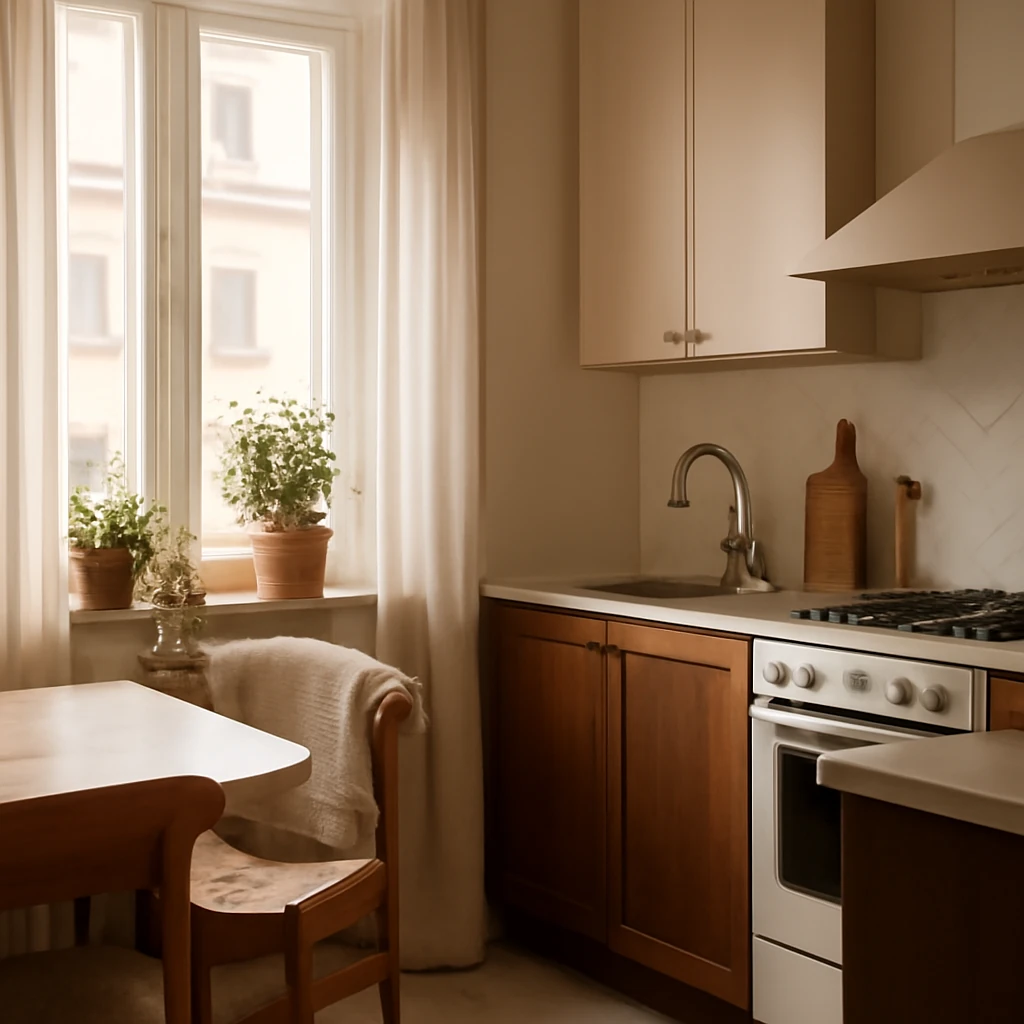
Designing a 5 m² kitchen in a European home
Five square metres is a common footprint in many urban flats across Europe. It is a challenge shared by city-centre studios, compact two-room layouts, and renovated period properties where space must be managed with care. The objective is not merely to fit the essentials, but to create a daily routine that feels calm, efficient and beautiful. The most successful small kitchens use every surface, prioritise storage that disappears when not in use, and rely on a restrained palette and thoughtful detailing to make the space feel generous.
Key principles for small kitchens
- Limit the colour palette. In a 5 m² kitchen, aim for two colours or a monochrome scheme. Too many colours can visually fragment the space, two or three tones will keep the area cohesive.
- Choose light, uninterrupted fronts. Solid, pale facades help the room read larger and reflect light. If you want a bolder look, keep the pattern and contrast minimal to avoid clutter.
- Select a scheme that suits small urban homes. Scandinavian, eco or contemporary minimalist styles work well, while a restrained neoclassical approach can also be effective when kept airy and light in colour and detailing.
- Avoid heavy patterns and overly busy decoration. If you crave ornament, opt for a restrained motif or a subtle textural effect. The focal point can be a clean splashback in a refined tone rather than a loud pattern.
- Floor and ceiling strategy. A patterned floor is acceptable if kept balanced, the ceiling should usually be white, matte, and in one plane to maintain visual height.
How to arrange furniture in a 5 m² kitchen
In small kitchens, there are two core furniture types: storage systems and the cooking area. Sometimes a compact work zone by a window or a tiny seating nook can complete the space. The aim is to maximise work surfaces and ensure the kitchen remains easy to clean and visually calm.
Cabinetry
Key considerations when selecting the cabinetry include how to maximise storage and keep worktops clear. Practical moves include:
- Corner configurations - an L-shaped layout often gives the best use of corner space and provides deep upper and lower storage for cookware and pantry items.
- Height strategies - if you cook frequently and you have the ceiling height, extend wall cabinetry up to the ceiling where possible. This maximises storage and reduces visual clutter by concealing items behind closed doors.
- Open versus closed storage - if storage is limited, consider a combination: tall upper cabinets for infrequently used items and open shelving for everyday essentials, keeping the look light and accessible.
- Surface organisation - keep the working surface free of clutter. Use uniform containers and organisers to create a cohesive look that blends with the cabinetry.
Walls are not merely boundaries, they are storage opportunities. Small kitchens can gain extra wall space with narrow shelves, magnetic strips for utensils, and hooks inside cupboard doors for lightweight items. A well-considered inward-facing storage solution can dramatically reduce countertop congestion.
Dining area
If dining belongs in the kitchen, choose compact solutions designed for daily use without dominating the space:
- A round or square table for two, ideally drop-leaf or fold-away, to free space when not in use.
- A drop-down surface that converts to a desk or additional prep area when needed.
- A broad windowsill extended to meet the worktop can function as a casual dining surface with seating nearby.
- A bar counter can elegantly separate a compact kitchen from a living zone, especially in an open-plan arrangement.
How to fit appliances and services in a 5 m² kitchen
The next challenge is to establish a practical layout for the appliances, while considering the European standards for ventilation, water supply, and electrical circuits. The essentials typically include a sink and a cooktop, a fridge is important but may be positioned outside the immediate cooking zone depending on the plan of the flat. If space is tight, a compact two-burner hob can be a practical solution to free counter space for chopping and preparation.
When deciding where to place major appliances, consider these options:
- End of the corner unit - placing the fridge or tall cabinet at the far end can balance the room and maintain a smooth work triangle.
- On an opposite wall - a separate line for the fridge can keep the cooking area clear and improve workflow.
- In a niche - if a recess exists, install an integrated appliance unit to maintain a continuous, streamlined facade.
Regarding services, older flats may have legacy pipework or gas lines in less-than-ideal locations. In many European contexts, it is perfectly feasible to work around these constraints with clever cabinetry, panelled solutions, and integration of services behind doors or within tall units. Here are practical tactics:
- Conceal a service column within a tall cabinet, ensuring ventilation and safety clearances are observed.
- Match pipes to the wall colour or neutral tones to minimise their visual impact. If feasible, repaint pipes to blend with the surroundings.
- Use decorative but subtle screens or plants to draw attention away from any residual visual clutter.
Project layouts for 5 m² kitchens
Let us explore representative 5 m² configurations, each designed to maximise usability while retaining a strong sense of style. The emphasis is on practicality and clarity of form, with considerations for modern European living and the realities of city flats.
4.9 m² layout
In a compact plan, the goal is to create a fully functional cooking zone with storage on every available surface. The approach often employs a two-wall, corner-based cabinetry system that runs along two sides, extending to the window sill where additional drawers can be built in. The counter profile remains generous enough to support meal preparation, and the same surface can double as a small seating area if a compact bench or cushion is added on top. The cabinet at the entry increases storage without visually crowding the space.
5.2 m² layout
Consolidating the cooking area with the living zone presents a challenge in flats where gas supply or building regulations constrain open-plan layouts. A clever solution is an invisible door separating the kitchen from the living area. When closed, the door is discreet, when opened, it creates a single, coherent space. The cabinetry forms a compact, linear or gently L-shaped configuration, with a wide windowsill used to house compact appliances or serve as extra storage. The dining function can be located in the adjoining living room with a semi-bar table. In this design, a linear kitchenette keeps the footprint lean while delivering all essential appliances within five square metres.
5.5 m² layout
Older European apartments with small, separate rooms often rely on a partial reconfiguration to improve flow. In a two-room layout, the kitchen is approached from the living area, but a lightweight partition helps to maintain a sense of separation while preserving light. Within the 5.5 m², the cabinet run includes full-height, high-capacity upper units to maximise storage, and a round dining table with transparent chairs to maintain visual lightness. The use of elongated upper cabinets enhances perceived height, contributing to a more open feel even though the actual space remains compact.
5.6 m² layout
This scenario showcases a non-standard plan in a compact European flat where a niche is fully utilised. The fridge is housed within a tall, dedicated unit and flanked by additional shelves. The main run of cabinetry is linear, with a continuous worktop and integrated appliances. Under the window, a narrow counter or a shallow pantry provides extra storage for small items. A folding dining table keeps the space flexible: it can be extended when required, then stowed away to reclaim floor area for everyday movement.
Practical tips for European living in small kitchens
Small kitchens require a disciplined approach to organisation and a willingness to adapt layouts to the specific quirks of a flat. Here are practical, field-tested tips drawn from European urban housing experience:
- Prioritise essential equipment. Identify the non‑negotiables for your kitchen routine. If a full-sized fridge is essential, plan a dedicated space for it rather than squeezing it into the cooking zone and compromising workflow.
- Think vertically. Tall pantry cabinets, open shelves near the sink, and wall-mounted rails can dramatically increase storage without sacrificing floor space.
- Keep the worktop calm. Reserve a single durable surface for meal prep. Use uniform containers, canisters, and organisers to create a coherent look that reduces visual noise.
- Make the most of the windowsill. A wide sill can host small appliances, a herb display, or serve as a casual dining surface with compact stools or cushions.
- Plan for flexibility. In a compact home, the ability to transform a dining surface into an additional prep area or seating can be a real life saver.
- Ventilation matters. Ensure any compact hood or extractor is properly vented or recirculating, good ventilation reduces moisture and helps maintain a pleasant environment.
- Lighting design. Combine overhead light with task lighting under wall cabinets and lighting along the underside of upper units to create depth and warmth.
Final considerations: how to choose the best approach for your space
Every European home has its own geometry and constraints. A practical five square metre kitchen should respond to the following criteria:
- Footprint and circulation. Ensure there is a comfortable passage from the entrance to the living area and through to the dining or seating zone. Avoid blocking natural traffic patterns with oversized furniture or protruding appliances.
- Storage balance. If you cannot fit all the desired products in the kitchen zone, plan to relocate less-used items to adjacent storage areas such as a hallway wardrobe, cellar, or utility room. This keeps the kitchen uncluttered while still meeting daily needs.
- Aesthetic cohesion. Maintain a cohesive material story across cabinetry, worktops, and backsplashes. Subtle matching or tonal contrasts create a calm, considered space rather than a busy, piecemeal appearance.
- Durability and maintenance. Choose durable, easy-to-clean surfaces and hardware that can withstand daily use in a busy home. Think about spill resistance and wipeable finishes for the splashback area.
In summary: turning a 5 m² kitchen into a lived-in, stylish hub
Five square metres can be more than enough when planned with clarity. By prioritising the essential elements, employing an efficient layout, and selecting restrained finishes, a compact kitchen can offer the same satisfaction as a larger space. The Kitchen as a workplace, dining room, and social hub can coexist in a refined, compact zone in European homes. The key is to design around the realities of daily life, respect the geometry of the room, and let simplicity guide every choice. With thoughtful cabinetry, intelligent use of vertical space, and a dining solution that does not overwhelm, a 5 m² kitchen becomes not only functional but also elegantly contemporary.
You may also like these articles
 Small Spaces
Smart Solutions for Small Toilets: European Design Principles
Effortless space-saving ideas for European small toilets.
Bedroom
Bedroom trends for 2026: calm, colour and clever layouts across Europe
Timeless, restful European bedrooms: trends, palettes and smart layouts.
Living room
Living Room Design in European Homes: Space, Light and Comfort
Timeless, flexible living rooms for European homes: light, texture and adaptable zones.