
Explore interior trends, AI design insights, styling guides and real transformations
Designing a Grand Kitchen for a Modern European Home
Designing a Grand Kitchen for a Modern European Home
The journey to a truly generous kitchen starts long before the first appliance is chosen. In Europe, where homes span from country houses to contemporary villas, a large kitchen is often more than a functional space - it is the heart of everyday life and a stage for socialising, dining and family rituals. The design challenge is not only about fitting equipment into a broad footprint, but also about orchestrating light, flow, storage and texture so that the room remains warm, welcoming and endlessly practical. This guide explores how to plan and styling a substantial kitchen in a European home, with practical layouts, material choices and lighting schemes that respect regional sensibilities and CLIMATE-conscious design.
Large kitchens in European residences present distinct considerations compared to city apartments. They benefit from generous glazing, access to outdoor spaces such as terraces or gardens, and sometimes a double height or secondary living spaces that connect with the kitchen zone. These features should inform the planning process from the outset: how work zones relate to views, how noise and odours are managed, and how storage and seating are arranged to support family life and entertaining. Below we outline essential decisions and then dive into practical configurations, materials, finishes and lighting strategies tailored for a contemporary European home.
Key considerations for a countryside or village kitchen
- Maximise views and daylight: position the primary preparation and washing areas to face garden, terrace or panoramic glazing. A well-framed view becomes an architectural asset and a daily source of inspiration, especially during cooking and cleaning tasks.
- Flexible work zones: unlike compact urban kitchens, a large kitchen offers the opportunity to place the island or a dedicated prep zone at the centre, enabling social interaction while cooking and providing a natural flow to dining spaces.
- Independent plumbing and utilities: in larger homes, there is greater freedom to place sinks, dishwashers and ventilation away from rigid building lines. Careful planning of plumbing and services under the floor makes this feasible without compromising aesthetics.
- Storage density and accessibility: with more space comes the temptation to overfill. Plan a pantry or larder adjacent to the work zone to keep everyday surfaces clear and decoration uncluttered.
- Ceiling heights and upper storage: large rooms can handle tall cabinetry and statement lighting, but the scale must be balanced. In some layouts, reducing or omitting upper cabinets in certain zones prevents visual heaviness and keeps the room feeling breathable.
- Outdoor connection: a seamless transition to terraces or loggias helps extend the kitchen’s practical footprint and encourages alfresco dining, especially in temperate climates.
Planning a contemporary large kitchen
The configuration of a countryside or suburban kitchen is not dictated by the total area alone, rather, it is the geometry of the room, the window distribution and the relationship to adjoining living spaces that shape the most efficient layout. The aim is to shorten the path between primary tasks - washing, cooking and cooling - while preserving a clear, connected environment for family life and entertaining. In practice, a thoughtful plan treats the kitchen as part of a larger living area rather than a closed, separate workspace.
L-shaped
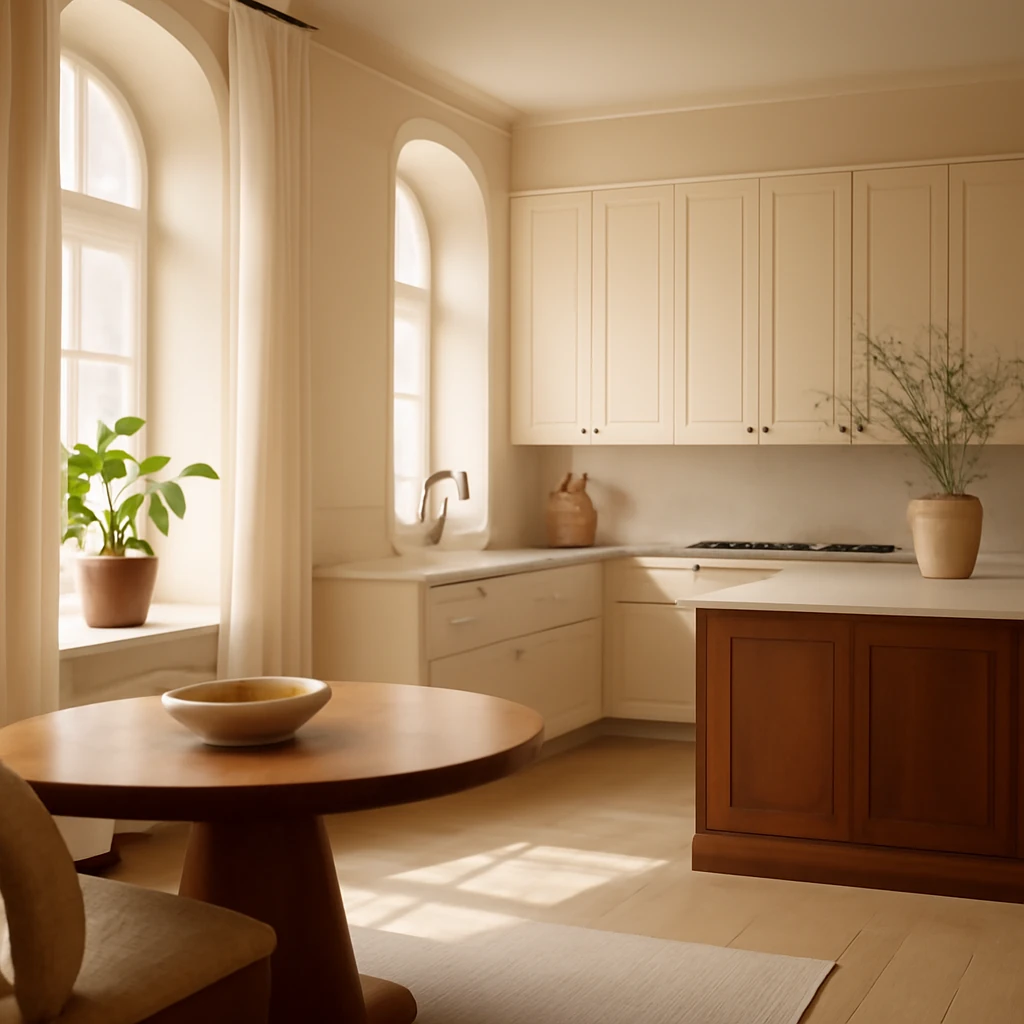
The L-shaped layout is a perennial favourite for European homes because it makes excellent use of two adjacent walls and creates a natural corner for the dining area. In a large kitchen, one leg of the L can be designed as a tall storage wall with full-height cabinetry and integrated appliances, while the opposite leg remains open to the room, offering generous work surface and room for a dining table or a large island. This arrangement supports a classic work triangle - sink, hob and fridge - while allowing a clear, wide aisle between storage and seating zones.
To keep the interior visually light, consider placing the upper cabinets on only one of the two walls, or limiting them to the perimeter and letting the island act as a social hub. When the kitchen adjoins a living or dining space, the L-shaped plan can be made even more fluid by aligning the end of the work zone with the dining table to create a cohesive flow for rehearsals, family meals and hosting guests.
Straight
A straight, or single-run kitchen, can be a deliberate choice when the room is long and narrow yet broad enough to accommodate a substantial island or dining area opposite the main run. The straight configuration excels at precision planning: the work zones align along a single axis, reducing cross-traffic and making it easy to monitor multiple tasks. For larger spaces, the straight plan benefits from extending the run beyond four metres to incorporate deeper work zones, integrated appliances and a wider walk-in pantry or boot room adjacent to the kitchen.
In open-plan homes, a straight kitchen can visually recede into the background of the living area, especially if the upper cabinets are kept to the minimum and the finishes connect seamlessly with the adjacent spaces. If space allows, offset the wall with a freestanding island that doubles as a casual dining area or breakfast bar, reinforcing the room’s social role without creating a sense of confinement.
U-shaped
The U-shaped configuration is widely regarded as one of the most ergonomic for serious cooking. It occupies three walls and forms a compact, efficient work triangle with a central corridor wide enough for comfortable movement. In large homes, one side of the U can be aligned with a full-height pantry and the other with a window or courtyard view, turning routine cooking into a pleasurable, daylight-filled activity. For bedrooms as well as kitchens, air quality and ventilation are important - consider oversized range hoods or external ventilation that does not intrude on interior aesthetics.
To maintain a sense of openness, a portion of the third wall can be opened to the dining area, or the wall facing the living room can be left partly transparent through glazing or open shelving. Ensure there is a minimum aisle width of 120 cm between opposite runs to allow doors and drawers to open fully, and consider foot-friendly details such as toe-kick storage and comfortable legroom under the island when it doubles as a dining counter.
Island
In many European homes, the island is not merely an extra surface but the architectural and social centre of the kitchen. It can host the main cooking zone with a flush or downdraft extraction, a sink for supervised food preparation, or even a dedicated beverage zone for entertaining. The island’s location should face the room so the cook remains part of conversations while maintaining clear sightlines to the dining area and garden views.
When designing an island for a large kitchen, plan for electrical needs: outlets integrated into the sides of the island or into the back panel expand the range of tasks - blending, charging devices, small appliances. If the island doubles as a dining space, consider a two-level solution or a protruding edge that creates legroom of at least 30 cm at the seating side. This ensures guests can pull up a chair without obstructing the workflow behind the island.
Hidden or concealed kitchen
The concealed kitchen is a modern response to the desire for a tidy, gallery-like living space. All working surfaces, sinks and small appliances can be hidden behind tall doors that harmonise with the room’s façades. When closed, the kitchen resembles a built-in cabinet or wall treatment, preserving the interior’s visual continuity. This approach is particularly effective in open-plan layouts where the kitchen is visually secondary to the living and dining zones.
Hidden kitchens require meticulous internal lighting and dependable mechanisms. Internal lighting should illuminate the workspace even when doors close, and touchless or sensor-activated lighting can help ensure the space is always practical. Select high-quality hinges and soft-close systems, and ensure the cabinetry aligns perfectly with the surrounding interior for a seamless finish. This configuration offers a neat aesthetic but demands precise execution during installation and ongoing maintenance to keep doors closing quietly and smoothly.
Ideas for styling a large kitchen
Beyond layout, the character of a large kitchen is defined by materials, colour and texture. The European design repertoire embraces natural warmth, tactile surfaces and durable finishes that stand up to family life and frequent entertaining. The following sections offer a framework for choosing materials and detailing that create a cohesive, timeless space.
Colour palette
When selecting a colour strategy for a countryside or suburban kitchen, think in terms of blending with the exterior landscape and surrounding architecture. Nature-inspired tones can help a large space feel grounded and inviting. Consider combinations such as:
- olive or sage greens that harmonise with gardens and trees
- terracotta or sand hues to echo earthy ground textures
- warm taupe or creamy ivory for walls to foster warmth without brightness fatigue
- deep blues or charcoal for cabinets to add depth and sophistication
- walnut or other rich wood tones for warmth and organic contrast
Adopt the 60/30/10 rule as a practical guideline: 60% a neutral backdrop (walls or large surfaces), 30% primary cabinetry, 10% accents. In generous spaces, deeper, more saturated tones can be used without shrinking the room, provided the lighting is well-balanced. Avoid an abundance of pure white in very bright interiors - the space can feel clinical if white is used extensively without colour variation. Instead, opt for warm neutrals with subtle undertones, such as ivory, ivory with a hint of biscuit, or pale greige.
Finishes
For floors and walls, large-format tiles, porcelain stoneware, durable vinyl plank or engineered timber create a robust and cohesive base for a big kitchen. Wall finishes may include matte washable paint, decorative plaster, or microcement for a seamless, contemporary feel. If the kitchen is connected to a living or dining zone with continuous flooring, select the same material for both areas to avoid abrupt thresholds, which can visually chop a spacious plan.
In timber or brick-built houses, there is an opportunity to celebrate the raw material rather than conceal it. If structural timber beams or exposed brick are part of the architecture, treated and sealed panels can serve as a finish that preserves authenticity while delivering a refined look. This approach creates texture and warmth, helping the kitchen integrate with the overall character of the home.
Furniture and appliances
For a large kitchen, consider tall cabinetry that reaches the ceiling to maximise storage and reduce visual clutter. High cabinets offer substantial pantry capacity and can substitute for a separate storage room in smaller homes. Appliances with full-height panels create a sleek, integrated appearance that blends into the cabinetry. In a larger home, a second dishwasher is often a welcome convenience, especially when hosting guests or catering for celebrations. When selecting a cooktop, professional-grade ranges with widths of 90 cm or more can anchor the kitchen and support simultaneous cooking activities without crowding the space.
Decor and textiles
In a spacious kitchen, decor should be carefully scaled to avoid overwhelming the room. Rather than filling every surface with small objects, choose a single statement piece - such as a large ceramic vase, a sculptural object, or a bold centrepiece for the dining area - that acts as a visual anchor. Textiles contribute warmth and softness, employ floor-to-ceiling or generously proportioned curtains in natural fabrics, light, tactile rugs with easy maintenance, and soft furnishings for the seating zone. Consider throws and cushions in complementary tones to tie the kitchen to the adjacent living or dining spaces.
Lighting
A large kitchen benefits from multiple layers of light to create atmosphere and function. A single centre pendant is rarely sufficient. Plan for at least four levels of illumination:
- General lighting: recessed downlights, track lighting, or a series of small ceiling fixtures to illuminate the entire room evenly.
- Task lighting: under-cabinet or shelf lighting to illuminate work surfaces and avoid shadows on the work zone.
- Accent lighting: a dramatic pendant or row of pendants above an island or dining table to designate the focal area.
- Decorative lighting: cove lighting or illuminated cabinet bottoms to highlight architectural features and provide a soft glow in the evening.
Smart controls and dimmers are essential for a space of this scale, allowing the lighting to adapt to different activities and times of day. In European homes with tall ceilings, consider layered lighting that can be adjusted from multiple points to suit tasks, mood, and occupancy. Electrical planning should anticipate future changes in kitchen use, so use adaptable wiring and accessible outlets in convenient places around the island and in the pantry.
Practical advice for European homes
Designing a large kitchen in a European context requires attention to building traditions, climate considerations and everyday life patterns. Here are pragmatic guidelines to help you achieve a durable, elegant and functional kitchen:
- Plan for seasonal usage: in temperate climates, kitchens are frequently used year‑round. Materials should resist humidity and temperature fluctuations, and finishes should be easy to clean after cooking, baking and outdoor dining.
- Connect to outdoor spaces: if you have a terrace or garden, create visual and physical connectivity. A door or large opening that links kitchen and terrace can extend the usable space for warm weather and social gatherings.
- Consider natural light: oversized windows are common in European country houses. Ensure the kitchen has controllable shading and robust glazing that minimises glare while letting in daylight. Light-coloured interiors can feel airy, but if natural light is abundant, you may want richer hues for depth and warmth.
- Storage is more than cupboards: integrate a walk-in pantry or a dedicated larder with climate‑controlled zones for food storage, or create a flexible scullery that hides messy tasks while preserving a polished façade for everyday use.
- Ventilation matters: high‑quality range hoods and well-placed extractors ensure comfortable spaces in large, open plans. Avoid bulky vents that disrupt sightlines, instead, opt for integrated or designer venting that blends with cabinetry.
- Material choices for longevity: invest in durable surfaces like porcelain, engineered quartz, and reinforced timber that resist daily wear and appear timeless across decades. For walls, washable paints or microcement offer practicality without compromising aesthetics.
- Future-proof your layout: design with flexibility in mind. A kitchen that scales with family life - bunka spaces for a growing family, additional seating for gatherings, or a reconfigurable island - will remain relevant as needs change.
Final reflections
A grand kitchen in a European home is less about chasing the latest trend and more about achieving a balanced composition of space, materiality and light. The most successful schemes treat the kitchen as a living environment rather than a purely functional zone: it must support cooking, dining and conversation, while respecting the architectural language of the house and the rhythms of daily life. When the layouts, finishes and lighting align with how you live, the kitchen becomes a place where every element serves a purpose and every moment feels thoughtfully designed.
Ultimately, the best large kitchen emerges from careful planning, precise detailing and a clear sense of how the space will be used over time. Start with the geometry of the room, consider how much storage you need and where you want to view the world outside, then design your cabinetry to disappear into the room while still providing everything you require. A well-conceived kitchen of generous proportions can transform the way you cook, eat and gather - a true centre of modern European living.
Content prepared for xhome design by a team of interior design professionals. If you are planning a large kitchen, consult with a qualified kitchen designer or contractor to translate these principles into a fully tailored plan for your home.
You may also like these articles
 Tips & How-To
Hallway Floor Tiles: A Comprehensive Guide to Design and Laying
A practical guide to selecting and laying hallway tiles across Europe.
Tips & How-To
From Pallets to Comfortable Seating: A European DIY Guide to Pallet Sofas
DIY pallet sofas for European homes: build, finish, and style.
Tips & How-To
Six elegant ways to decorate the wall above the dining table
Six stylish ideas to elevate the dining-wall space.