
Explore interior trends, AI design insights, styling guides and real transformations
Ergonomic kitchen heights: tailoring countertops to you
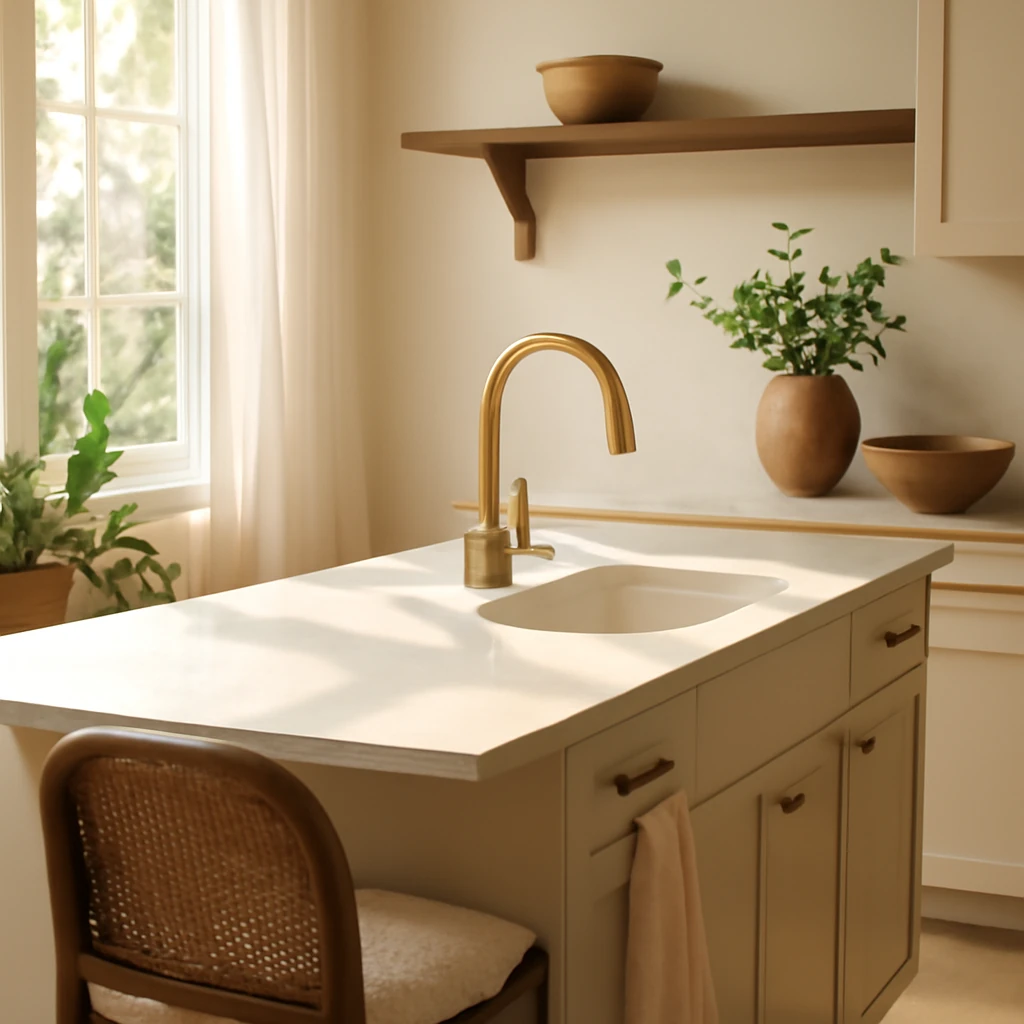
Why countertop height matters
Even a small difference in height can noticeably affect comfort and efficiency in the kitchen. A countertop that's too low invites stooping, straining the back and neck, one that sits too high can overload the shoulders and arms. For anyone who spends several hours cooking, the right height is a decisive factor in long-term comfort and wellbeing.
- Different tasks - slicing, beating, kneading - demand varied leverage. It can be beneficial to have work surfaces at several heights to suit the activity and user.
- A kitchen island or a secondary surface at a different level can accommodate multiple users with ease.
What is the standard height for kitchen countertops?
Across Europe, the conventional kitchen countertop height has typically been around 85–90 cm from the floor. This range remains common, but as householders grow taller on average, and as appliances and configurations change, many designers now tailor heights to the inhabitants. A one-size-fits-all approach rarely delivers optimal comfort in diverse households.
During a project for a family with young children, a designer noted that the standard height didn’t work well for the parents. By adjusting the main work surface by a few centimetres, both adults found it markedly easier to prepare meals without postural strain. The experience highlighted how even modest adjustments can transform daily routines.
If the kitchen window height or architectural constraints demand a different alignment, adjustable legs or a modular approach can help maintain a harmonious line while accommodating individual needs. For instance, aligning a work surface with a window sill often requires specialised feet or a customised plinth. The aim is a coherent, ergonomic zone that suits both form and function.
How to determine the optimal height from floor to the countertop
There is a simple ergonomic method: stand upright and bend your elbow to form a right angle, with your forearm resting along your torso. Measure the distance from the floor to your palm and subtract 10–15 cm. That result is a practical starting point for your countertop height.
| Height (cm) | Recommended countertop height (cm) |
|---|---|
| 150–165 | 75–83 (below standard) |
| 170–180 | 85–95 |
| 180–190 | 95–105 |
| 190 and above | 105+ |
This table provides a practical guide, but it is only a starting point. Actual preferences vary with posture, reach, and the way you work. If you share a kitchen with someone of a different height, consider a compromise solution such as an offset island or a split-height workstation to keep everyone comfortable during peak cooking times.
Countertops of different heights for multi-user households
Do not rely on a simple arithmetic mean to determine a communal height. The most comfortable arrangement is usually dictated by the person who cooks most frequently, and by the tasks that dominate in daily routines. For a household with mixed-height users, a pragmatic approach is to allocate the primary prep area to the chief user while providing alternative heights nearby for secondary tasks or for guests who help with preparation.
In open-plan or larger European homes, a kitchen island with a dual-height configuration - one section at standard height and a raised bar or secondary surface at a higher or lower level - can offer flexible ergonomics for different moments of use. A well-planned island also creates a natural zone for chopping, rolling dough, plating, and casual dining, while maintaining visual cohesion with the rest of the kitchen.
Variant 1 - adjust the cabinet legs
Most base units allow limited vertical adjustment through their legs, typically about 1–5 cm to compensate for uneven floors. The legs themselves come in various heights (for example 10 cm, 13 cm, 15 cm). Selecting the right leg height can raise or lower the work surface by a meaningful margin without changing the cabinetry.
Variant 2 - raise the kitchen on a podium
A podium or plinth is a cost-effective way to elevate the workspace. This approach is practical when a full cabinet replacement is undesirable or impractical. If extending the plinth, ensure the toe-kick clearance remains comfortable and that the transition between surface and cabinetry reads as a cohesive element. A carefully planned plinth can create a subtle, elegant lift that feels integrated rather than ad hoc.
To tailor a kitchen for my height, the carpenter raised the legs by a few centimetres and concealed the extra height behind a narrow plinth. The result is a natural, accessible work zone that remains visually balanced for guests and family alike.
Note that the space beneath the raised surface can sometimes be utilised for an additional shallow drawer or tray storage, which helps keep frequently used items close at hand without crowding the main drawers.
Variant 3 - replace the countertop
If the height needs to shift only marginally, it may be more practical to replace the countertop with a slightly higher or lower slab. This is most straightforward during the initial kitchen installation or during a major refurbishment. If the work is already installed, changing the countertop can involve detaching sink fittings, relocating power sockets, trimming the splashback, and addressing other integration challenges. A measured, planned approach is essential to avoid complications.
Why kitchens were not always built higher - and what changed
Historically, countertop heights often aligned with the practical constraints of built-in appliances and cabinetry in European homes. As integrated appliances became more prevalent, designers began rethinking the ergonomic relationship between the work surface, the oven or hob, and vertical storage. The result is a more flexible approach to heights, allowing for greater comfort when performing common tasks such as chopping, kneading, or rolling dough. When the oven sits at chest height, it can be safer and more convenient to place the countertop at a higher level for easy transfer of hot trays.
How to plan countertops of varying heights within a kitchen layout
Planning is best done at the design stage. Identify where different tasks are performed and what heights would best support those actions. A thoughtful layout can preserve flow, maximise ergonomic efficiency, and maintain visual harmony across the space.
“Working triangle” in the kitchen
In intensive cooking, a cook moves among the primary zones: prep area, hob, and sink - roughly forming a triangle. The height and placement of these zones affect how much effort is required to complete tasks. A well-balanced triangle reduces unnecessary reaching and bending, which is especially valuable in compact European kitchens where space is at a premium.
Chopping and dough preparation zones
For frequent rolling and kneading, a dedicated surface at or near elbow height can be particularly comfortable. A secondary surface or an extendable board that slides out from a drawer can be useful for temporary work while keeping the main counter at a comfortable, consistent level. Consider incorporating a hidden storage option for boards or baking sheets to make the most of tight layouts.
It is common for the main dining table to sit at around 75 cm high, which is typically lower than standard kitchen counters. Always use a cutting board rather than directly cutting on a table surface to protect the work surface and preserve hygiene.
Sink height and placement
When the sink is deep, bending can become particularly tiring. The depth of the sink and the height of the base cabinet together influence the effective height of the workspace. If the sink is placed in a section that is elevated relative to the rest of the counters, it can dramatically improve comfort for washing and prep tasks. A taller base or an elevated countertop can make food preparation and dishwashing more ergonomic, especially for taller users.
Cooktop height and usability
Test the usability of the cooking surface by simulating common tasks: lifting lids, looking into pans, and reaching for pots. If you find yourself needing to rise onto your toes to reach into a pot, the countertop height may be too low. If you must bend excessively to view a simmering pot, it may be too high. In some cases, a modular or standalone induction top at a raised height can offer the necessary 10–15 cm adjustment while keeping other surfaces at a comfortable level.
- And finally, remember that separate zones, such as a dedicated coffee station or a pastry area, can have their own ergonomic heights to optimise specific workflows.
Additional zones and clearance
When raising countertops, ensure the vertical space between upper cabinets and the work surface remains comfortable. A well-proportioned gap helps prevent a cramped feeling and ensures easy access to the backsplash and wall panels. Plan for a minimum clear height of around 60 cm in the main working zones to accommodate storage, splashbacks, and comfortable reach to appliances.
Seven practical steps to plan the right height
- Assess the primary cook: identify who uses the kitchen most and for which tasks, then tailor the main surface to that person’s comfort level.
- Do not rely solely on an average height - consider active work zones where different tasks are performed and adjust accordingly.
- Evaluate the feasibility of varying surface heights within the same kitchen, using a combination of standard cabinetry, a raised island, or a plinth solution.
- Consider adjustable legs or a modular plinth to fine-tune the height without a full cabinet replacement.
- When a height increase is modest, explore changing the countertop alone, more extensive changes may require structural planning during major renovations.
- Plan the working triangle with height in mind: ensure prep, cooking, and cleaning zones are at heights that minimise bending and reaching.
- Maintain adequate space between surfaces and storage: allow sufficient clearance for drawers, doors, and appliance openings, typically no less than 60 cm in critical zones.
If a dishwasher is present, prioritise the height of the sink and the adjacent work area for ease of loading and washing. A well-considered ergonomic strategy will still work well even in compact European flats where space is at a premium.
Practical tips for implementing height adjustments
- In a new kitchen project, mark zones for the main tasks (prep, cooking, cleaning) and set target heights for each zone before selecting cabinetry.
- Ask for sample boards of countertop materials at different thicknesses. Thinner counters can look sleek, but thickness can affect perceived height and feel of the workspace.
- When combining different heights, ensure transitions are smooth and visually cohesive with plinths or step-downs that read as intentional design features rather than ad-hoc fixes.
- Document your benchmark measurements - keep a simple record of the chosen heights for longevity and future renovations.
Conclusion: plan, test, and tailor
Ergonomic kitchen design is about aligning the work surfaces with the people who use them. Rather than forcing everyone to adapt to a single standard, thoughtful height adjustments - whether through adjustable legs, podiums, or a carefully chosen countertop - can transform daily routines. In contemporary European homes, a flexible approach to countertop height can support faster, more comfortable cooking, easier food preparation, and a more enjoyable culinary experience for all members of the household.
You may also like these articles
 Outdoor & Terrace
Finishing the balcony: materials and ideas to create a stylish, practical extension
Turn your balcony into a stylish, durable extension with expert material guidance.
Small Spaces
Small Space Living: European Transformable Furniture for Every Home
Smart, modular furniture that adapts to European homes and smaller spaces.
Colour & Materials
Hallway Wallpaper 2026: Textures, Palette and Practical Chic for European Hallways
Discover 2026 hallway wallpaper trends—textures, colours and smart durable options.