
Explore interior trends, AI design insights, styling guides and real transformations
Designing a European Kitchen: Colour, Layout and Finishes
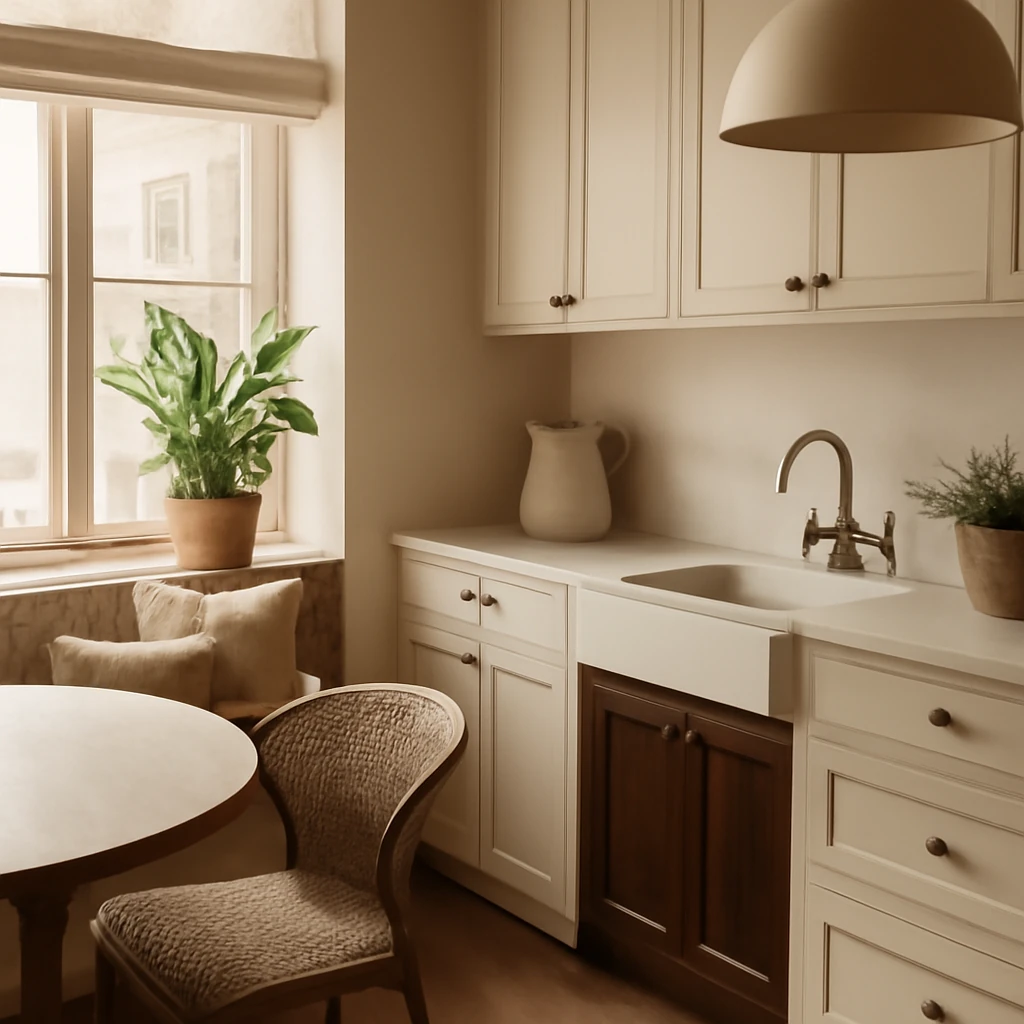
Designing a European Kitchen: layout, finishes and everyday life
In European homes the kitchen is rarely an isolated room, it is the hub of daily activity that integrates with living and dining spaces. The best designs align the modules of the kitchen with the plumbing and electrical network, choose materials that age well under busy use, and consider how the space will feel in different lights and seasons. This is not about chasing fashion but about building a practical, beautiful kitchen that supports daily rituals - from coffee and breakfast to cooking with family and entertaining friends. In this article we explore contemporary kitchen concepts that combine function with refined aesthetics, drawing on European sensibilities around proportion, craftsmanship and sustainable materials.
From compact city flats to generous family homes, the core principles remain the same: optimise work zones, create generous storage without crowding, choose durable surfaces, and plan lighting that adapts to tasks and mood. The kitchen should be easy to clean, economical to maintain, and flexible enough to accommodate changing needs, such as a growing family, more demanding cooking equipment, or a home office corner. The following sections unveil palettes, materials, and layouts that work across European contexts, with attention to daylight, acoustics and human scale.
Top 5 popular colour palettes for kitchens and dining areas
Colour sets the backdrop for every kitchen, influencing mood, perceived space and cohesion with other rooms. Here are five palettes that have stood the test of time in European design, along with tips for pairing them with materials and lighting.
Grey-beige monochrome: for neo-classical, Scandinavian and contemporary interiors
This light, neutral palette is inherently calm and versatile. A beiges-grey scheme provides a clean backdrop that makes small kitchens feel more expansive, while still providing warmth through timber floors, soft textiles and warm lighting. In open-plan layouts with living spaces, the grey-beige base acts as a quiet stage for more expressive artwork, textiles or textiles. In practice, pair pale concrete or marble-like worktops with warm oak or ash cabinetry and soft, ambient illuminations. The result is a timeless backdrop that suits neo-classical, Scandinavian, and modernist aesthetics, and can bridge multiple styles with ease.
Beige-brown aesthetics: cosy family-friendly spaces
A beige-brown palette blends warmth with a sense of tradition. It typically combines cabinet finishes in light to mid brown timber tones with beige stone or laminate worktops and natural stone floors. This is a comfortable, family-friendly option that works brilliantly in traditional interiors such as neo-classical, country and English-influenced schemes, and even in Nordic settings when surfaces remain light and uplifting. The palette pairs well with white, grey, olive and muted gold accents, and invites the addition of textiles and natural textures to amplify warmth.
Chocolate-coffee: fashion for dark, luxurious interiors
Deep chocolate and coffee tones create a cocooning, refined atmosphere especially in larger kitchens with generous daylight. This palette reads well in classic interiors and Art Deco-inspired schemes, and it can translate neatly into contemporary spaces with streamlined, high-gloss or matte surfaces. Balance the darkness with lighter stone or marble, and introduce warmth through timber or brass details. For compact rooms, ensure abundant illumination and reflective surfaces to prevent the space from feeling enclosed.
Black-and-white contrast: modern chic for kitchens
The black-and-white duo is a perennial favourite in European kitchens. It suits minimalism, contemporary classic and Art Deco-inspired interiors. A black base paired with white cabinetry can add depth and drama, while a white base with black accents offers a crisp, disciplined aesthetic. Use metallic touches for glamour, and avoid excessive colour elsewhere to keep the look coherent. In busy households, keep storage discreet and maintain a clean, uncluttered line to preserve the elegance of the palette.
Warm trio: brown, white and black for a nuanced, contemporary feel
Where more than two tones are welcome, a trio of brown, white and black creates a sophisticated modern ambience with depth. This layered palette works best in larger spaces where different areas of the kitchen can bear contrasting finishes while maintaining a cohesive feel. Introduce accent colours sparingly through textiles, glass, or wall art to create personality without breaking the harmony. The key is to balance glossy with tactile textures such as wood, stone, or linen to avoid a sterile effect.
To explore ideas, consider how these palettes translate into materials and hardware across European manufacturers. A timeless choice often involves a restrained base of neutrals with deliberate pops of colour or metallics in tiles, lighting and fittings.
Popular design approaches for kitchens in apartments
In European apartments the kitchen is increasingly integrated with living spaces. Designers combine practical layout with refined detailing to create rooms that feel both functional and inviting. The following sections summarise current techniques that are adaptable to city apartments, suburban homes and renovated historic interiors alike.
Unified colour for backsplash and worktop
Designers frequently extend a single material across the wall behind the sink and across the work surface to create a seamless working zone. White marble or quartz-look surfaces with a matching splashback give the kitchen a clean, cohesive line and reduce visual breaks in smaller spaces. When selecting materials, consider heat resistance, stain performance and ease of maintenance. In open-plan schemes, a continuous surface can help connect kitchen with dining or living areas without overpowering them.
Stretch ceiling with integrated lighting
A stretch ceiling allows for clean lines and hidden lighting that can transform the ambience from bright daytime task lighting to soft evening mood lighting. Integrated LED profiles provide even illumination over work zones and along shelves or islands. For a more expressive ceiling, decorative panels or wooden beams can be woven into the design, always ensuring acoustic comfort and ease of cleaning.
Accent backsplash using bold tiles
A bold backsplash acts as a focal point in compact kitchens and can define the room’s character. Think jewel-toned glass tiles, enamel patterns or ceramic tiles in a vibrant hue. In smaller spaces, a single strip of colour or a geometric mosaic is enough to create personality without dominating the room. Pair with a neutral worktop to keep the composition balanced plus adequate lighting to avoid reflections that complicate cooking tasks.
Flooring that combines formats and finishes
Mixing floor finishes can create a sculptural, passport-like pattern and a sense of texture underfoot. Porcelain stoneware can mimic marble, limestone or onyx, while using varying tile sizes can delineate zones. For example, a larger format tile around the cooking zone and smaller tiles in the dining area can help visually separate functions without walls. A carefully chosen palette links the two areas and reinforces a cohesive scheme.
Kitchen island with integrated appliances
The kitchen island continues to be a central feature in open-plan homes. It can accommodate a sink, a cooking zone or a compact oven setup, and even a beverage centre. For busy households, an island with a tall bar section can provide casual seating while keeping the main work area island free for prep. When planning, ensure electrical outlets and plumbing are routed with the island in mind, and consider a warm, slip-resistant surface for safety and comfort.
Mixed-format upper cabinets
Upper storage has moved away from a uniform, full-height row of cabinets. Designers now mix glass-fronted cabinets, open shelving, slim modules, and ceiling-mounted elements to create a more dynamic kitchen. This approach can emphasise light and airiness, while providing practical storage and display space. It is particularly effective in loft, industrial and contemporary kitchens where the sightlines matter as much as the storage.
Small kitchen designs from 9 to 16 square metres
Compact cooking spaces demand clever layout and high-quality components. Below are several configurations commonly used in European homes, all featuring modular systems designed for efficiency and flexibility. Each approach can be customised to fit a homeowner's needs and the room's proportions.
Design for 9 square metres with base units along one wall and columns along the opposite
In 9 to 13 sqm kitchens, a one-wall base run with tall columns on the other side can maximise storage and preserve floor space. The key is to compress the primary functions into a single line and use slender, tall units to hide bulky appliances. The result is a tidy, legible kitchen that reads as a well-planned workspace rather than a cluttered zone.
Small linear kitchen for 9–14 sqm
A linear kitchen remains a practical option for modest spaces. Modern modular systems offer integrated appliances and slimline cabinetry to create a continuous, uninterrupted run. Use a mid-tone or light base with a contrasting work surface to enhance focus on the task area and to visually enlarge the room. Lighting above the worktop is essential for usability and atmosphere.
Kitchen-dining room around 30 sqm with a recess niche
In larger apartments, an open kitchen adjacent to a dining area can benefit from a recessed or shallow niche that houses appliances or a coffee station. This configuration creates defined zones within an open plan while preserving clear sightlines and fluid movement. Choose materials with subtle variation to maintain cohesion across the two zones.
Long angular kitchen with concealed appliances in side columns
For narrow rooms, a long corner kitchen with deep vertical columns can hide tall appliances and leave a generous central work surface. The angle can help break the monotony of a straight run and create a dynamic geometry that remains practical for daily use.
Grey compact loft-inspired kitchen with built-in fridge in a side column
A compact loft-style kitchen can pack a lot of function into a small footprint. A tall side column can conceal the fridge, while a mix of open shelves and closed cabinets provides flexible storage. Choose a restrained palette of greys with warm timber accents to keep the space inviting rather than austere.
Small U-shaped kitchen with side columns
In compact layouts a shallow U-shape can deliver excellent storage within a confined footprint. Side columns can house tall appliances and pantry storage, while the central run remains dedicated to prep and cooking. Carve out a compact dining zone if space permits to maintain a social, integrated feel.
Open-plan kitchen dining with a marble island bridging cooking and lounging
In open plans the kitchen island can function as a social hub, with a marble or quartz island top acting as a visual anchor. Include seating on one side and a clean, efficient working surface on the other. The island can accommodate secondary tasks like baking or pastry stations, while keeping the living area visually connected.
Integrated kitchen-dining in a contemporary style with glossy furnishings
Glossy units and a light, reflective worktop maximise light in compact spaces. Balance the shine with warm materials such as wood and natural textiles, and ensure the layout allows easy movement between cooking, eating and relaxing zones. Subtle texture and quiet tones keep the scheme from becoming visually exhausting.
Beautiful styles in kitchen design: the most popular and interesting
European clients have a broad range of preferences, from glamorous Art Deco to practical minimalism and cosy Scandi. The following styles remain enduringly popular and provide templates for mixing contemporary features with timeless craft.
Art Deco: glamorous atmospheres and festive mood
A kitchen in the Art Deco style reads as refined and ceremonial. Finishes may include lacquered cabinetry, metallic accents, mirrored surfaces and sculptural lighting. This style pairs well with bold colour accents and high-contrast pairing, especially in homes that are already styled with contemporary elements. The result is a space that feels theatre-like yet comfortable for daily cooking and socialising.
Minimalism: practicality nourished by restraint
Minimalist kitchens emphasise clean lines, hidden storage and a disciplined palette. The objective is efficiency and ease of use, with high-performance appliances and robust, easy-to-clean surfaces. Decorative touches are kept to a minimum, but when used they should be precise and purposeful. This approach translates well across many European interiors, from modern flats to refurbished historic spaces that require modern systems without overpowering the architecture.
Loft: urban bravura with industrial edge
Loft-inspired kitchens celebrate material honesty and rough-edged beauty. Think black or dark metal accents, exposed brick or tile, timber worktops and open shelving. The style thrives in open-plan spaces with generous volumes and high ceilings, where the juxtaposition of industrial textures with warm surfaces creates a dynamic, liveable environment.
Scandinavian: light, warm and family-friendly
Scandinavian kitchens prioritise daylight, whiteness or pale tones, and simple, functional storage. A white or light-wood kitchen with a dark countertop can feel snug rather than sterile, especially when paired with warm lighting, textile softness and practical fittings. The approach remains popular across Europe for its honest materials, balanced proportions and ability to blend with other styles.
Classic: luxury with meticulous detailing
Classic kitchens celebrate refinement through crafted detailing and timeless materials. Carving, mouldings, equestrian brass or gilt accents, and carefully chosen marbles can convey a sense of enduring luxury. The key is to harmonise classical elements with contemporary conveniences, so the space remains comfortable, functional and timeless within a modern home.
You may also like these articles
 Tips & How-To
Light Kitchens Across Europe: Colour, Texture and Style
Bright, easy-to-maintain kitchens across Europe: tips on colour, texture and lighting.
Colour & Materials
Laminate vs Parquet: A Practical European Flooring Guide
Laminate or parquet? A practical guide to European flooring choices.
Kitchen Design
8 m² Kitchen Design: Clever layouts for compact European homes
Compact kitchen design that maximises space and style.