
Explore interior trends, AI design insights, styling guides and real transformations
Window-Wide Work Zones: Reimagining the European Kitchen
Introduction
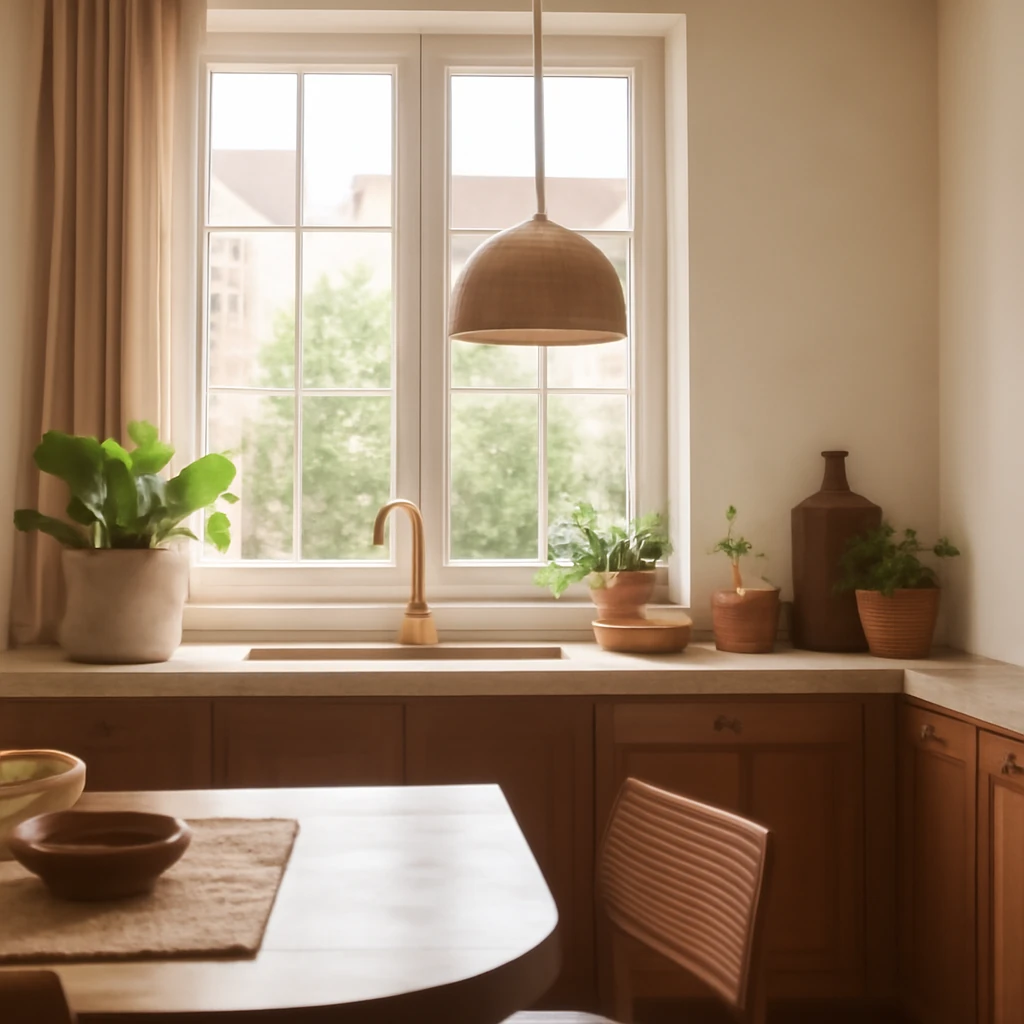
Window-front work zones have become a practical, increasingly popular design strategy across Europe. From compact city flats to generous family kitchens, extending the countertop into the window recess can unlock valuable preparation space, introduce daylight into the culinary zone, and even create a dedicated dining edge. Yet this approach also prompts a set of practical questions: how to protect glass from splashes, how to manage ventilation when the window is opened, how to deal with a radiator located beneath the sill, and whether a non-standard floor plan is worth the investment. In this guide we explore the European context for kitchen work zones by the window, outline the main pros and cons, describe common configurations, and offer design considerations to help you decide if this solution is right for your home.
Pros and cons of a kitchen with a window work zone
A kitchen that places a work area next to a window brings clear benefits but also notable challenges. Understanding these can help you make informed planning decisions and avoid common pitfalls.
Advantages
- Increased workspace for food preparation. A longer countertop along the window line yields extra room for chopping, assembling meals, and setting down hot dishes, which is especially valuable in smaller kitchens where every centimetre counts.
- Additional storage opportunities. Cabinets or drawers under the sill can house pots, pans, and frequently used utensils close at hand, keeping the main work surface uncluttered.
- Natural light and a pleasant view during tasks. Working at the window can make routine tasks more enjoyable and help reduce fatigue during long cooking sessions.
- Potential for easy ventilation. If the window can be opened while cooking, it provides a straightforward way to disperse steam and odours without relying solely on the mechanical extract.
It is worth noting that the actual impact of these benefits depends on the broader layout, local building practices, and the specific window configuration. In many European homes, for instance, it is possible to integrate the window zone with a well-planned drainage and plumbing strategy, while still preserving a cohesive aesthetic across the kitchen-dining area.
Disadvantages
- Plumbing and drainage considerations. If a sink is positioned next to the window, you may need to coordinate a pipe run that connects to the main waste system. This can involve regulatory approvals or structural adjustments, particularly in retrofits or flats with retained partitions.
- Radiator relocation or redesign. Radiators beneath windows are common in older European buildings. Moving or reconfiguring the radiator must be planned with the heating system in mind and approved by the building administrator or landlord where applicable.
- Glass cleanliness and splash risk. Splashing from the sink or stove can quickly dirty the glass of the window. Depending on orientation and climate, this may require more frequent cleaning or a protective treatment.
- Non-standard countertops can raise costs. To maintain a seamless, space-saving look, you may need a countertop depth beyond the standard 60 cm, as well as bespoke cabinetry to suit the window geometry. This tends to elevate project cost.
In real projects, many of these drawbacks can be mitigated by thoughtful detailing, smart materials, and careful scheduling of trades. For example, a private home may allow a customised route for plumbing, while a well-planned retrofit can position the radiator on the adjacent wall and use a vented under-sill cabinet to maintain heat distribution without obstructing the work zone.
Variants of window work zones
There are three common ways designers configure a kitchen with a window work zone. Each offers a distinct balance of function and aesthetics, and each may suit different space types and lifestyles.
- Sink at the window
- Work area with storage at the window
- Dining area at the window
Before committing, evaluate how you live in the space: do you cook extensively, entertain often, or rely on quick meals? The best configuration aligns with your routine while maintaining ergonomic comfort and an uncluttered look.
In European renovations and new-builds alike, these layouts are often adapted to respect window operation, heat distribution, and airflow, as well as contemporary expectations for hygiene and ease of maintenance.
Sink at the window
The sink near the window is a classic arrangement, frequently chosen because it allows an uninterrupted view and a generous amount of counter space for food prep. When planning a window-front sink, several practical points deserve attention.
Tap design and window operation
The choice of tap is not merely a matter of style. If the window opens in a way that could obstruct the handle or the spout, you may opt for a folding or swing-out tap, or mount the tap toward the window edge so that it remains accessible even when the sash is open. A pivoting or telescopic design can be particularly useful for ensuring the window can be opened fully without interference from the faucet. Consider a high-arc or pull-out spray for flexibility when rinsing large pans near the sill.
For practical reasons, many projects favour a folding or bayonet-style tap that can be lowered away from the window during operation. This keeps the window free to swing without the risk of contact with the lever or handle, a detail that can noticeably improve daily usability.
When planning, it is helpful to remember that the under-sill space can become a shallow work zone, a sink designed to fit within the window footprint should still allow a full arc of the window’s opening mechanism. A well-positioned tap is part of a holistic solution that includes the sink, the drain, and the surrounding countertop.
In small or compact kitchens, placed near the window, the sink can benefit from a wider, uninterrupted countertop run to accommodate washing up, food preparation, and drying, reducing the need for additional prep space elsewhere in the room.
Practical plumbed solutions may include a gravity-fed drainage line, where feasible, or a small pump system to ensure reliable flow to the main sewer, depending on the height of the window sill and the layout of the building’s plumbing.
Radiator and heat considerations
If the radiator is located directly under the window, you face two design questions: can you re-home the radiator to another wall, or is it preferable to build a bespoke cabinet that shields the heat while keeping air flow? In many European homes, radiators under windows are common because the window provides insulation and the heat can counteract cold drafts. If you decide to keep the radiator in place, plan for a sealed cabinet or a heat-exchanging panel that prevents heat from being trapped beneath cupboard doors. Ensure that any cabinet allows air to circulate and that the heat output remains sufficient for the room in cold months.
In some projects, the radiator is moved to the wall next to the window, or a compact radiating panel is integrated into the edge of the countertop below the sill. If you must place drawers or a deep cabinet under the window, consider a grille or perforated backing to maintain convective heat flow into the room and avoid heat becoming trapped behind cabinetry.
A practical tip is to design the cabinet with a trough or vent at the back, so warm air can circulate upwards and escape through a perforated panel. Where transparency is essential for heat management, a glass-fronted cabinet can be used above the radiator to keep light and air moving while maintaining a streamlined appearance.
In projects where the radiator remains under the window, it is often wise to install an integrated splash guard and choose materials that are easy to wipe clean and resistant to heat and humidity. A solid surface countertop or flame-retardant material that matches the cabinet finish helps create a cohesive, low-maintenance look.
Under-sill storage and seamless transitions
One of the challenges of a window workspace is achieving a clean, seamless transition between the window and the countertop. A wider under-sill or a continuous run of material that wraps around the window can provide a visually uninterrupted surface, but it may require custom fabrication and precise tolerances. When a standard 60 cm countertop depth is insufficient to cover the window’s profile, you can specify a drawer stack or a shallow cabinet with a hidden hinge that fills the gap while preserving legroom and ease of access.
To keep the visual weight balanced, select a countertop material that harmonises with the surrounding cabinetry and the window sill. A light-coloured, non-porous surface such as quartz or compact laminate enhances reflectivity and makes the space feel more open, while a robust stone can deliver longevity in a high-use zone near the sink.
Raising the counter and the sill idea
In some designs, the windowsill is integrated with an extended countertop that sits at a comfortable height for a prep zone. If the sill is integrated at 90 cm above floor level, the counter can be aligned with the standard work surface height (usually around 90 cm), creating a seamless, barrier-free working area. Alternatively, you may set the window-side counter a touch higher, turning the window into not just a light source but a practical edge for casual dining or quick meals. When adopting this approach, be mindful of stool dimensions and the length of the dining bar to ensure a comfortable seating experience for family members of different heights.
Protected glazing and window treatments
To minimise splash marks while preserving the view, many projects employ a simple, wipe-clean window treatment or a light screen that reduces direct water contact with the glass. Options include moisture-resistant roller blinds, water-repellent fabrics, or a slim roller shade that can be pulled down when the sink is in use. In addition, a continuous, seamless countertop across the window avoids gaps that can accumulate dirt and dust and contributes to a crisp, minimalist aesthetic.
Storage under the window and a tidy drain area
Consider a shallow cabinet with integrated drainage solutions, such as a recessed drainboard or a micro-drain area that channels water toward the main waste line. A spill-friendly configuration reduces the risk of standing water and keeps the workspace hygienic. If you intend to install a dishwasher under the window, ensure there is sufficient clearance for loading and unloading, along with an easy connection to the water supply and drain.
Case for a compact under-window counter
Where space is limited, a shallow under-window counter - narrower than the standard 60 cm - can still offer practical prep space. In such cases it may be prudent to downsise the base cabinets adjacent to the window in favour of tall, slim units that keep the kitchen's overall footprint balanced and visually calm. The result is a tailored, highly usable workspace that respects the window’s geometry and the room’s proportions.
Dining area at the window
A window-front dining zone can be a charming feature in a kitchen-dining room or a kitchen with a shallow dining niche. By turning the window side into a dining surface, you free up the main kitchen area for cooking and cleaning tasks. However, a window-dining solution requires careful attention to ergonomics and use-patterns.
- Counter-height dining zone. To allow comfortable seating, some projects elevate the dining surface to around 80–85 cm, paired with taller stools. This creates a social dining edge while keeping the main flow of the kitchen legible and open.
- Under-counter clearance. Ensure there is adequate legroom for diners, typically 60 cm of knee clearance, along with comfortable seat depth and backrest height. If the window is low, you may opt for a higher counter height to match typical bar stools and avoid cramped seating.
- Heating and ventilation considerations. A dining area placed within the window line should still receive adequate warmth and airflow, so plan heat sources and extraction strategies to avoid drafts and condensation on the glass.
In many European homes, a window-front dining area is a practical compromise in a compact living space, allowing the kitchen to double as a dining room during daily meals and a family hub for socialising after hours. The key is to ensure the seating arrangement integrates with surrounding furniture and maintains easy circulation paths for everyday use.
Another configuration: the window as a purely storage-facing edge
Sometimes the window-line is kept as a visual boundary rather than a primary working edge. In this approach the main cooking zone remains on the opposite wall, while a shallow under-window counter acts as a supplementary preparation or display area. This can be especially appealing in open-plan layouts where a full under-window kitchen peninsula would overwhelm the space or create traffic bottlenecks.
Practical design considerations for European contexts
When designing a kitchen with a window working area, certain considerations become particularly important in many European buildings, ranging from 19th-century flats to modern apartments with retrofit renovation constraints. Here are some practical guidelines to help you make a plan that is both beautiful and feasible.
Planning the plumbing and drainage
Sink placement next to a window demands careful coordination with the plumbing team. A traditional under-window location sometimes requires routing pipes along the wall or within the cabinetry, so it is essential to verify whether the building’s plumbing system can accommodate an under-window waste line and fresh water supply without compromising the window’s operation or the wall structure. In many cases a straight run along the wall or a shallow concealed channel within the cabinetry provides a clean solution. In retrofit projects, alternative routes or mounted pumps may be required to ensure reliable drainage and water supply, particularly in higher-floor flats where gravity-based drainage can be challenging.
Before committing to a sink at the window, request a detailed plan from a licensed plumber or certified contractor that confirms the feasibility of the routing, the necessary access panels, and any required building permissions. If you are in a building with strict management rules, consult the property manager ahead of time to avoid any conflicts with approved alterations to plumbing or electrical installations.
Electrical and lighting planning
Natural light should be complemented with well-considered artificial lighting. In a window-backed work zone, ensure there is strong, glare-free lighting directly over the work surface, as natural daylight can vary with weather and seasons. Plan for layered lighting: ambient ceiling lighting, task lighting under wall or base cabinets, and accent lighting to highlight architectural features. Ensure power outlets are conveniently located for appliances, small electrical devices, and charging without cluttering the counter. Consider integrating a discreet charging rail into the side of the window sill if space allows, or installing a power strip on a dedicated, cord-free channel that avoids tripping hazards.
When selecting lighting, prefer fittings with warm, CRI-90 or higher light sources to render colours faithfully, especially on food preparation surfaces and cookware finishes. For energy efficiency, opt for LED solutions and dimmable controls to adapt the ambience for cooking, dining, and casual lounging in the same space.
Materials, finishes, and maintenance
Since a window work zone is more exposed to moisture and contact with water, choose materials that are water-resistant, durable, and easy to clean. Countertop materials such as quartz, porcelain, or high-quality solid-surface laminates are excellent for wet zones due to their non-porous surfaces and resilience. Cabinet interiors should use moisture-resistant boards with sealed edges, and doors should be finished in coatings that resist humidity and heat.
Keep the colour palette coherent with the rest of the kitchen to maintain a calm, cohesive look. A consistent material language - matching the window sill, countertop, and cabinet finish - helps the space feel larger and more unified. In addition, ensure the under-window space is designed for efficient air flow, consider perforated panels or open shelving on the sides to avoid trapped moisture and to facilitate cleaning.
Ergonomics and human scale
When the window work zone becomes a regular prep area, ergonomic considerations become critical. A shallow sink, a comfortable faucet reach, and a proper knee space beneath the counter all contribute to comfortable daily use. If the window is used for casual dining, ensure chairs or stools are comfortable for extended seated periods, with appropriate back support and seat depth. The height of the dining surface should be chosen with the primary user in mind - many households prefer a counter height of around 80–85 cm for semi-casual dining, with stools that are 65–75 cm in height.
Ventilation strategy
Even with a window nearby, a kitchen extractor remains essential. If the window is frequently opened for air movement, you may rely on a responsive mechanical system that switches to recirculation mode when the window is closed. In well-insulated buildings, you can still achieve excellent ventilation by aligning the exhaust with a high-capacity hood and ensuring the window opening provides cross-ventilation for rapid air exchange during heavy cooking. For high-humidity tasks, a dedicated range hood with high extraction rates is advisable to control steam and odours effectively.
Small spaces: balancing utility and seating
In compact apartments, the window area often becomes a multipurpose zone. To keep circulation fluid, designers prefer to create a compact, efficient work triangle where the sink, cooker, and fridge form a logical layout while the window line serves as a generous prep edge and occasional dining surface. The key is to maintain clear pathways and avoid visual clutter. Choose integrated appliances when possible to reduce protrusions and keep the space visually calm.
Classic versus contemporary approaches
Because a window work zone is primarily functional, modern kitchens favour clean lines, minimal ornamentation, and high-performance finishes. If your home has preserved period features, you may prefer a restrained, contemporary treatment that respects the historic context while delivering modern comfort. The window itself should remain a source of daylight and a focal point rather than a cluttered corner, therefore, select cabinetry and hardware with a refined, streamlined profile and avoid overly heavy draperies that could accumulate dust or interfere with window operation.
Drafts, moisture, and climate considerations
Under-window areas can be prone to cold drafts in older buildings. Insulation around the window frame and a well-sealed sill are essential to prevent heat loss and condensation. If you live in a climate with harsh winters, consider triple-glazed openings or enhanced insulation around the sill edge to maintain comfort and energy efficiency. Conversely, in warmer climates, ensure shading or reflective glazing does not create glare on the work surface while still allowing daylight to enter.
Planning check-list: planning a kitchen with a window work zone
Before you embark on a remodel or a new build, use this practical checklist to ensure the concept is feasible and financially prudent.
| Consideration | Key questions |
|---|---|
| Plumbing and drainage | Can the sink be connected to the building’s waste system without extensive structural work? Are there access points for fresh water supply and waste removal? |
| Radiator location | Is relocation feasible, or can the existing radiator be integrated with minimal impact on storage and heat distribution? |
| Window operation | Will the window fully open with the sink or counter in place? Are clearances adequate for safe operation? |
| Countertop depth | Will a standard 60 cm depth be sufficient, or is a deeper or customised countertop required for seamless under-window integration? |
| Storage configuration | Do you need shallow cabinets, drawers, or open shelves under the window to maximise access and maintain openness? |
| Electrical plan | Are power outlets positioned for appliances, lighting, and charging without clutter? Is there a dedicated circuit for heavy-use devices? |
| Lighting strategy | Do you have layered lighting for daytime tasks, evening cooking, and dining? Is there adequate task lighting directly above the work zone? |
| Materials and finishes | Are surfaces moisture-resistant, easy to clean, and compatible with heat and humidity? Is the colour and texture cohesive with the rest of the kitchen? |
| Maintenance plan | Will the glass, splash zones, and countertop finishes be easy to maintain with regular cleaning schedules? |
Finally, consider the overall lifestyle you want from your kitchen. If you spend significant time cooking and entertaining, a window work zone can be a brilliant way to bring daylight into the heart of the home, balance operation between cooking and social zones, and create a space that feels connected to the outdoors. If your routine is more about quick breakfasts and casual meals, a more restrained arrangement might be appropriate, with the window kept as a light-filled edge rather than a primary work surface.
Conclusion
The decision to place a work zone by the window rests on a careful weighing of space, climate, regulations and personal habits. In many European homes, thoughtful detailing - such as strategic radiator placement, a well-considered countertop depth, moisture-resistant finishes, and layered lighting - turns a window-front edge into a highly functional, aesthetically coherent part of the kitchen. When executed with clear planning and professional input, a window work zone can deliver extra prep space, a brighter environment, and a versatile dining edge without compromising the integrity of the room’s structure or its performance. In the end, the success of this approach lies in marrying practical requirements with a design statement that respects the architecture, the site, and the daily rhythms of life.
You may also like these articles
 Tips & How-To
30 Smart Storage Solutions for European Kitchens
30 practical ideas to banish kitchen clutter with style.
Small Spaces
Bookshelf partitions: zoning with style for European homes
Smart, stylish shelving to zone spaces without shrinking rooms.
Living room
How to size a sofa for a European living room: comfort, fit and function
Master the art of sofa sizing for stylish, well-proportioned living spaces.