
Explore interior trends, AI design insights, styling guides and real transformations
Orange Kitchen Design: Bright, Balanced European Interiors
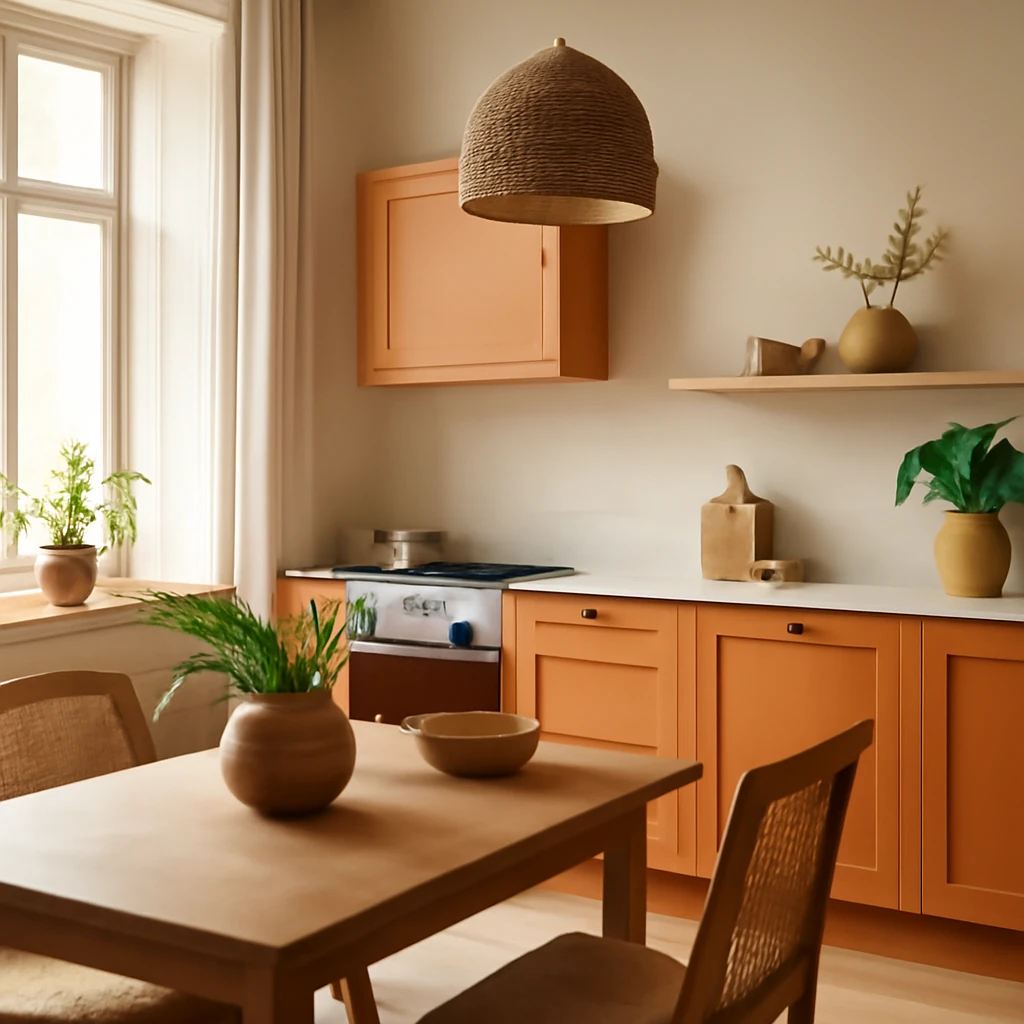
Why orange for the kitchen?
Across European homes, an orange kitchen can inject daylight and vitality even on dull days. Used thoughtfully, this colour brings warmth, energy and a sense of sociability to the heart of the home. However, planning is essential: too much saturation or the wrong pairing can feel intrusive, visually shorten a space or create fatigue. The goal is to balance orange with neutrals, textures and light so that the kitchen remains welcoming, productive and timeless.
In practice, orange works best when it is a strategic feature - applied to cabinetry, a pantry front, a statement island, or a single wall - while the surrounding surfaces stay calm. This way the space retains its usability and character without overwhelming the eye.
Guiding principles from designers
Design specialists emphasise that orange can positively influence mood and appetite, but it should be used with care. Here are practical rules adapted for European kitchens:
- Bright orange hues naturally draw attention and energise a room. Use them to define essential work zones such as the cooking and prep area, or to create a focal island.
- Because orange tends to bring objects forward visually, apply it on surfaces where you want emphasis, not across every surface. Pair it with subdued neutrals on walls and cabinets to maintain balance.
- Colour can highlight architectural features or textures. Use orange strategically to accent interesting details or to hide minor imperfections illuminated by well-planned lighting.
- In compact, narrow kitchens, an orange feature wall or an orange-fronted island can expand the sense of depth, for larger spaces, orange can be used more freely, paired with generous daylight and reflective materials.
Colour harmonies for orange kitchens
The right colour combinations are key to an aesthetically pleasing orange kitchen. Below are palettes commonly employed in European interiors, with notes on how to achieve balance:
Blue
Orange and blue is a timeless, energetic pairing. This contrast remains vibrant without becoming aggressive when you choose navy or powder blue as the counterpoint. A white or pale grey backdrop helps the blue and orange stand out in a sophisticated, contemporary way. For a softer, hygge-inspired vibe, consider lighter blues with warm orange accents on cabinetry or hardware.
Timber (wood tones)
Wood introduces warmth and tactility, tempering the brightness of orange. Light oak, ash or Scandinavian-inspired woods work particularly well as flooring, shelving or framing for bright orange cabinetry. Use timber as a grounding element rather than the predominant surface, so the space remains comfortable and human-scale. A timber-framed island front or open shelving with warm timber tones can harmonise the palette beautifully.
Brown
Warm browns - honey, pumpkin, or walnut - pair nicely with orange, especially when used in cushions, seating, or small decorative elements. When working with darker woods such as espresso or deep walnut, counterbalance with lighter walls and a cooler countertop to avoid a heavy, moody effect. A balanced brown-and-orange scheme can feel especially refined in traditional European kitchens with contemporary updates.
Green
Green brings freshness and a sense of renewal. Olive, sage or moss greens can appear as a wall colour, a ceramic backsplash, or a seating upholstery choice. When combined with orange, green injects a creative, natural energy ideal for family kitchens, studios or culinary spaces that double as work areas.
Metallic or grey
Cool metallics and greys act as a stabilising counterweight to orange’s warmth. Stainless steel appliances, brushed nickel fittings, or gunmetal hardware harmonise with glossy orange surfaces or enamel cabinet finishes. In more minimal schemes, a restrained grey or charcoal backdrop emphasises the brightness of the orange without competing for attention.
Choosing cabinetry, finishes and accessories
Modern European kitchens often feature glossy cabinetry with enamel or lacquer finishes over MDF or plywood. Durable, low-VOC coatings are preferred for healthier interiors and easier maintenance. Rounded or softly curved cabinet profiles soften the energy of orange, making the space feel more welcoming and approachable. An entirely orange kitchen is striking but often more practical when orange is used on select elements - like a tall pantry front or a central island - paired with neutral or white surfaces.
When selecting finishes, light and daylight interact with colour. A sunlit kitchen can carry a saturated orange with confidence, while a darker space benefits from a lighter neutral base to prevent enclosure. In larger rooms, you can experiment with bolder combinations, in smaller spaces, restraint is key. Consider using one vivid orange surface against a backdrop of white, cream, or cool greys to maintain balance and legibility of the space.
Cabinet materials should be durable and easy to clean. For frequently used surfaces, enamelled MDF or high-quality plywood with a scratch-resistant laminate is common. Handles and hardware in metallic finishes - brushed nickel, satin brass or black oxide - can tone down the intensity of orange and add a contemporary edge.
Flooring and wall finishes should complement the cabinetry. Light timber floors, pale stone, or warm beige tiles provide a clean, timeless foundation. In more dramatic interiors, a neutral concrete-look tile or large-format porcelain with a matte finish can heighten the modern spirit while letting orange shine as the hero colour.
Countertops, backsplashes and flooring
The choice of worktops and backsplashes is crucial for visual balance. Neutral countertops - white, off-white, light grey, or taupe - keep the focus on orange cabinetry. For a touch of sophistication, an understated pattern in a glass or ceramic backsplash can add texture without clashing with the bold hue. Mosaic backsplashes in restrained tones or glass panels with subtle graphics offer a contemporary approach that remains easy to clean and maintain.
Flooring should support the overall mood: light oak, ash, or warm beige laminates create airiness and reflect daylight, helping to prevent the room from feeling visually heavy. In more expansive kitchens, pairing orange with terracotta or slate floors can produce a rich, European villa-inspired ambience, in compact spaces, a lighter floor ensures a sense of continuity and openness.
Soft furnishings and decor
Soft furnishings are an effective way to refine or modify the palette without committing to large-scale changes. Choose light, semi-transparent curtains to maintain daylight flow and avoid heavy drapery that could intensify the colour. Introduce accent textiles in cooler blues or greens, or in warm neutrals like stone and beige to harmonise the scheme. Decorative ceramics, vases, and small appliances in complementary hues can weave colour across the room without overpowering it.
Lighting and atmosphere
Layered lighting is essential when using a strong colour like orange. Combine ambient lighting with task lighting over the work zone and subtle accent lighting to highlight textures and materials. Cool white task lighting helps keep the workspace clear and efficient, while warm ambient lighting creates a cosy, inviting atmosphere in the evenings. Dimmable fixtures and under-cabinet LEDs enable flexible mood management, particularly in open-plan kitchens where socialising and cooking share the same space.
Layout strategies for different spaces
Layout plays a major role in how orange will read in a kitchen. In compact or galley-style spaces, keep orange in controlled doses - an island front, a tall pantry, or a single accent wall can transform the room without crowding it. In open-plan European kitchens, orange can act as a bold visual anchor, with the dining zone set apart by a contrasting ceiling finish, flooring shift, or a floating wall element in a cooler tone.
Practical steps to realise an orange kitchen
- Define the role of orange in your kitchen: primary colour, accent, or feature surface.
- Establish a durable base palette of neutrals such as white, cream, grey or beige.
- Plan functional zones: cooking, prep, dining, and storage, ensure clear circulation paths and ergonomic work triangles.
- Test colour in context: apply sample panels or temporary vinyl patches to observe daylight interaction at different times of day.
- Specify materials with longevity and cleanability: enamelled MDF, quartz or porcelain countertops, tempered glass backsplashes.
- Choose hardware and fittings in complementary metallic finishes to temper intensity.
- Integrate natural textures (timber, stone, ceramic) to prevent a flat, digital look and add tactility.
Maintenance, longevity and sustainability
Durable finishes such as enamelled cabinetry and UV-cured coatings resist daily wear and are easier to clean, which matters in orange kitchens where fingerprints and smudges are more noticeable. Regular cleaning with non-abrasive products, avoiding aggressive ammonia-based cleaners on sensitive finishes, and using placemats and protective pads will help preserve colour integrity. When planning, prioritise durable worktops - quartz, porcelain or solid surface - and reliable sealing for timber surfaces. For sustainability, choose FSC-certified wood where timber is used, low-VOC paints and water-based lacquers, and appliances with high energy efficiency ratings to minimise environmental impact.
European palette roadmap: example configurations
To help visualise the possibilities, here are four palette configurations commonly used in European kitchens. Each supports a distinct mood while remaining adaptable to different dwelling typologies - from city-centre apartments to country houses.
- Orange + blue + white: a crisp, contemporary look ideal for modern city flats with abundant daylight.
- Orange + timber + cream: a warm, natural aesthetic that blends traditional craft with modern finishes.
- Orange + brown tones + pale walls: a sophisticated, grounded scheme with soft contrasts and timeless appeal.
- Orange + green accents: a vibrant, fresh environment suited to creative studios or active family kitchens.
Final reflections
Orange can be both energising and comforting when used with care. The secret lies in balance: pairing vibrant hues with calm neutrals, selecting materials that offer texture and longevity, and engineering lighting that reveals the colour’s depth without glare. When approached thoughtfully, an orange kitchen can become a timeless anchor in a European home - a place that invites cooking, conversation and everyday delight.
You may also like these articles
 Interior Design
Baroque Interiors for Modern Europe: Luxury, Restraint and Statement Details
A refined guide to infusing Baroque drama into contemporary European homes.
Living room
Sofas that define European living rooms: choosing size, style and functionality
A guide to selecting the perfect European sofa for living rooms
Small Spaces
How to merge living room and bedroom in a single space: tips
Smart zoning, multifunctional furniture and lighting ideas for compact European living spaces.