
Explore interior trends, AI design insights, styling guides and real transformations
Living Room Design 2024: Nine Trends Shaping European Homes
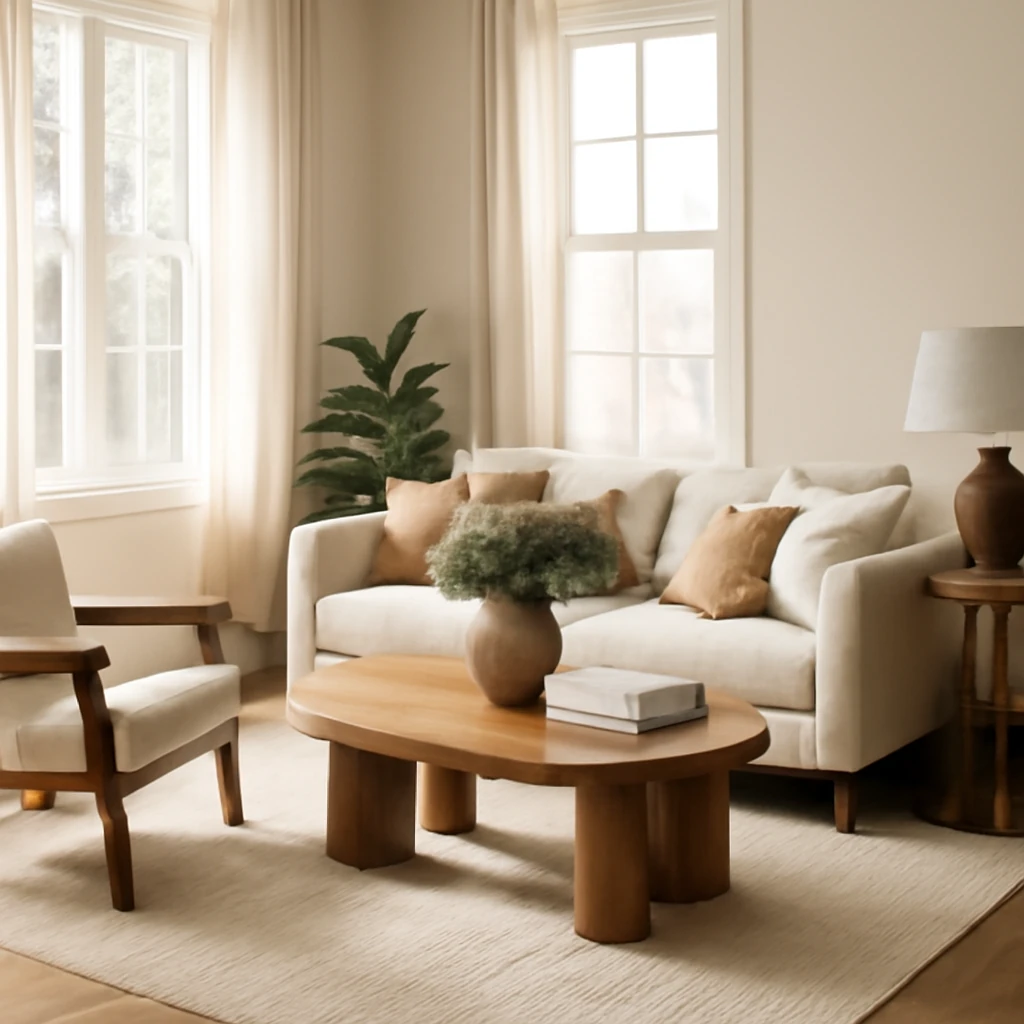
What’s new for living rooms in 2024
The European living room continues to evolve as households adapt to changing lifestyles, balancing calm comfort with versatile spaces for work, socialising and rest. In 2024, design leans into warmth, tactility, and thoughtful restraint, while offering space for personality through art and bespoke details. The following trends are shaping new-builds and renovations alike across cities and towns from Lisbon to Helsinki, Barcelona to Belfast.
Key trends in living room design 2024
Across the continent, several broad directions stand out. They are not isolated, but interwoven: biophilic design, soft zoning, elegance that feels present yet not fussy, warm colour palettes, and a new confidence in graphic contrasts. Beyond aesthetics, the focus is on function that supports wellbeing and everyday life.
Biophilic design
Biophilic design has moved from a niche concept to a practical framework for modern living spaces. It is about more than plants, it is a holistic approach to connect interior environments with nature to reduce stress, improve mood, and support physical health. For European homes, this translates into strategies that work with typically compact plan formats and variable daylight across seasons.
Implementable elements include:
- Maximising daylight with window design, skylights, and light wells where possible
- A calm palette inspired by natural materials and landscapes
- A generous presence of indoor plants, with attention to scale and drainage
- Patterns and textures that echo nature in textiles and finishes
- Natural materials in their most honest form - stone, timber, linen, wool
- Tactile surfaces that invite touch and slow life
In practice, a living room can feel calmer and more breathable when you prioritise daylight, pair soft textures with warm tones, and curate a small, curated plant collection rather than a jungle of greenery. Consider using natural materials like oak or walnut for furniture frames, stone for occasional surfaces, and linen or raw wool textiles for upholstery and drapery. The goal is a space that looks and feels rooted in the natural world, even in an urban apartment.
Biophilic design also translates into climate-conscious choices: breathable fabrics, well-insulated glazing, and low-VOC finishes support comfort throughout the year. In southern Europe, shading strategies and adaptive lighting become essential to maintain a healthy indoor microclimate while preserving daylight connection with outdoors.
Soft zoning
Open-plan living remains popular in European homes, particularly where the kitchen is integrated with the living room. The challenge is to delineate zones while preserving a sense of airiness. Soft zoning offers a refined solution - gently separating seating, dining, and work areas without heavy partitions.
Practical strategies include:
- Varying wall and floor finishes to subtly differentiate zones
- Layered lighting to mark transitions from day to evening
- Thoughtful furniture arrangement that creates cosy nooks
- Architectural details such as niches, alcoves, and panelled walls
- Decor elements and textiles that carry the zone's character without visual clutter
In small to mid-size spaces, cool neutrals paired with warm wood can make the room feel larger while still inviting. The aim is a gentle flow rather than a rigid grid, allowing residents to move comfortably between tasks and social spaces.
Soft zoning can also be achieved with modular cabinetry, low open shelving, and screen elements in fabrics or wood. In urban flats with balconies, it helps to maintain a sense of connection to the outdoors by keeping the transition between zones light and transparent rather than enclosed.
Enduring elegance
Contrasting with the current wave of pared-back minimalism, 2024 sees a resurgence of refined, timeless elements. The trend leans into neoclassical and traditional ideas - the symmetry of layouts, the craft of mouldings, and the warmth of natural materials - presented with modern restraint. The effect is a room that feels distinguished but not ceremonious, comfortable without pretension.
Key aspects include:
- Neoclassical details such as mouldings and cornices in refined, muted finishes
- Quality wood surfaces and cabinetry with honest grain
- Well-balanced proportion and carefully edited decorative items
- Artworks and textiles that respect the room’s equilibrium
- A contemporary base that keeps the space current and usable
In European homes, this can translate to a composed palette - soft beiges, hazels, marble-inspired surfaces, and classic silhouettes reinterpreted with contemporary proportions. It’s about lasting elegance that adapts to modern routines, from family lounging to entertaining guests. The timeless aesthetic sits well with modern technology and smart storage, ensuring the space remains uncluttered and usable for daily life.
Warm colours
The warmth of natural materials informs the colour direction for 2024. The trend is not about loud accents but about layered neutrals and gentle tonal contrasts that create depth and comfort. Expect a broad spectrum of warm neutrals, from beige and ivory to honey and caramel, with plum and terracotta as sophisticated accents.
Suggested palettes:
- All variations of beige and off-white
- Ivory, cream, and biscuit tones
- Honey, caramel, and biscuit hues
- Muted orange and egg yolk accents
- Terracotta and mustard for a pop of warmth
- Capuccino, latte, and chocolate browns
- Olive with a yellow undertone
To avoid a space that reads too heavy, pair these warm shades with cool neutrals like grey or white, and with restrained tones such as blue or sage. In larger rooms, a deep charcoal or a woolly black can ground the palette, while a touch of blue-grey or pine-green adds sophistication.
Material and surface choices reinforce this warmth. Linen upholstery, wool throws, and tactile boucle resonate with the colour direction, while timber floors with a warm finish and stone accents anchor the palette in a durable, everyday way.
Graphic contrasts
For those who desire a more expressive look, 2024 allows graphic contrasts without tipping into high-contrast chaos. The idea is to pair strong black-and-white or near-monochrome foundations with well-chosen accent colours. Use clear transitions between light and dark areas and bring depth with saturated tones such as deep greens, inky blues, plum, burgundy, or olive. The result is a space that feels contemporary and energetic, yet controlled.
Implementation cues include:
- Less is more with bold pairings, keep base surfaces calm
- Introduce accent tones through textiles, art, and accessories
- Choose sophisticated, not flashy, high-contrast combinations
- Allow the core palette to remain quiet so the accent colours can speak
In practice, a living room with black-and-white fundamentals can be enriched by a single statement piece or a coloured rug, a velvet armchair, or a painted wall in a deep hue. The contrast should feel intentional, not arbitrary. For European homes, the emphasis is on refined undertones and sustainable, low-gloss finishes that prevent the space from feeling clinical.
Furniture and decor
Moving beyond paint and walls, 2024 places furniture and decorative items at the heart of personal expression. The emphasis is on creating curated, functional, and comfortable spaces rather than a purely cohesive museum-like display. The following trends reflect how European living rooms are being assembled today.
Furniture from mixed collections
The old rule of buying a complete matching set is being replaced by a more nuanced approach. A room can feel cohesive when items relate through shared tones, textures, or silhouettes, even if they come from different manufacturers. This approach fosters personality and a sense of lived-in comfort that a single-brand collection rarely achieves.
Guidance for successful eclectic pairing:
- Identify a unifying thread - style, finish, silhouette or pattern - that ties items together
- Create intentional pairs to stabilise the composition (for example, two lounge chairs, a matching pair of lamps)
- Limit the number of textures to 2–3 main materials, especially with wood
- Balance vibrant pieces with a calm backdrop to avoid visual noise
With care, a living room assembled from varied sources can feel deliberate and refined rather than random. The result is a space that resonates with the owners’ tastes and travels while remaining functional for daily life.
Rounded forms
Soft, curved lines have dominated design conversations for several seasons, and 2024 continues to reward spaces with gentler geometry. Rounded sofas, arced coffee tables, curved shelving, and oval rugs all contribute to a sense of ease and hospitality. In minimal interiors, curved forms can introduce warmth and subtle playfulness without compromising calm.
Two routes exist for embracing curves: a fully rounded aesthetic for a spa-like ambience, or selective curved elements that provide a softer counterpoint to straight lines. Either way, the aim is to reduce harsh angles and let space breathe. In commercial or hospitality-inspired settings, curves translate into welcoming seating arrangements and more fluid circulation.
Consider pairing a curved sofa with straight-edged chairs to create a dialogue between softness and structure. Accessories such as a circular rug or a curved console can reinforce the theme without overwhelming the room. For families, rounded forms also feel safer and friendlier for everyday use.
Multi-functionality
Function is king in contemporary living rooms. The demand for furniture that can perform multiple roles - storage-rich sideboards, sofa beds, fold-out tables, and modular systems - has become standard. European homes often feature compact footprints that benefit from intelligent solutions that save space without sacrificing beauty.
Practical examples include:
- Modular seating that can reconfigure for gatherings or family movie nights
- Chests or ottomans with hidden storage
- Work desks that telescope or fold away for occasional home office use
- Media consoles with integrated cable management and display options
Even when furniture appears modest, its multi-functionality increases usability. The strategy helps homes manage daily routines - work, play, rest - in a single, cohesive environment. In European design hubs, such pieces often feature slim profiles, clever finishes, and materials that wear well over time.
Art with meaning
The idea of wall art as mere filler is obsolete. In 2024, every artwork should carry intention. This is less about collecting famous canvases and more about selecting pieces and prints that resonate with you, tell a story, or reflect a moment in time. In living rooms, these works become conversation starters and focal points that give the room character.
Guidelines for selecting art with depth:
- Choose works with narrative or emotional resonance rather than purely decorative images
- Mix media - paintings, prints, photography - while maintaining a coherent scale
- Be mindful of placement, use height, lighting, and surrounding textiles to accentuate the piece
- Avoid mass-produced wall art, seek original or limited-edition pieces where possible
For European homes, emphasis on local galleries, local artists, and meaningful collaboration with art professionals can yield compelling results. The art should feel integrated, not separated from the room’s architecture. Rotating selections through the year can keep the space fresh without major redecoration costs.
Putting it into practice: designing a contemporary European living room
Bringing these trends together requires a thoughtful design process. Start with a clear brief that addresses how the living room will be used across seasons and life stages. Consider the following steps to translate trend concepts into a liveable space:
- Assess the footprint: measure the room, note doorways, windows, radiators, and built-in storage. Identify the main lounge zone, dining zone, and any work area if needed.
- Establish a base palette: select a calm, warm-neutral foundation - think soft stone, warm whites, or light taupe. Add depth with one or two accent colours drawn from the palette.
- Plan the zones: use arrangement, lighting, and materials to delineate spaces without heavy partitions.
- Choose furniture with intention: pick items in complementary tones and materials, favour pieces with flexibility and high quality.
- Incorporate natural materials: wood, stone, quartz, linen, wool - these textures have a lasting appeal.
- Add art with purpose: select artworks that align with the space and its inhabitants’ story.
- Finish with lighting: layered lighting - ambient, task, and accent - should support both daytime and evening use.
Open-plan living requires circumspection of acoustics, heat, and daylight. Large windows contribute life to the room, but can also create glare and heat gain. Treat windows with appropriate shading and select fabrics with the right density to balance light and privacy.
In smaller European apartments, flexibility is essential. A well-chosen sofa bed or modular sofa, a compact dining set, and clever storage can transform a tight space into a comfortable living room that remains stylish. The crux lies in choosing pieces that offer longevity and comfort rather than chasing fast-changing trends.
Time-saving tips include planning for seasonal changes: light textiles in summer, heavier upholstery in winter, and adaptable lighting to shift the room’s mood throughout the year. A well-thought-out plan reduces the need for costly reconfigurations and supports a truly lived-in home.
Practical colour and materials directions
In 2024, the emphasis on materials continues to rise. The tactile experience becomes a key factor in interior perception, influencing how comfortable a room feels and how it ages with use. The following materials and finishes are especially resonant across European homes.
- Solid timber for furniture and flooring, with visible grain for warmth
- Natural stone surfaces, especially in benching, tabletops, or fireplace surrounds
- Textiles in wool, linen, or cotton blends with a soft, matte finish
- Decorative surfaces with gentle textures such as brushed metal, carved wood, or subtle embossing
- Paint finishes that lean to warm or neutral tones for longevity
Colour and material choices should be deliberately layered. Pair natural timber and stone with soft fabrics to keep the environment hospitable, and let the textures play against neutral walls. Avoid overly shiny or glossy surfaces that can feel cold or clinical, instead, prioritise tactile warmth. In practice, a living room that combines warm timber, stone accents, and soft textiles can age gracefully while remaining contemporary.
Final thoughts
As European homes adapt to shifting routines and the desire for spaces that feel both welcoming and functional, living rooms in 2024 are about balance - between nature and modern life, heritage and invention, quietude and sociability. By combining biophilic principles with thoughtful zoning, an elegant yet comfortable aesthetic with warm, sophisticated colour stories, and purposeful art and furniture choices, a contemporary living room can be both timeless and of-the-moment. The future of European living rooms lies in spaces that nurture wellbeing, invite connection, and evolve with daily life, rather than chasing fleeting trends.
You may also like these articles
 Bathroom Design
Grey Bathrooms Across Europe: Colour Schemes, Finishes and Design Ideas
A European guide to chic grey bathrooms with palettes, textures and clever details.
Tips & How-To
Hanging sheer curtains beautifully: seven practical methods for European homes
A practical guide to hanging sheer curtains with seven versatile methods.
Colour & Materials
Bleached Oak: A versatile light wood for European interiors
Bleached oak transforms European spaces with light, tactile warmth for floors, walls and furniture.