
Explore interior trends, AI design insights, styling guides and real transformations
Bottle Crafts for European Gardens and Terraces: Practical DIY Ideas for Outdoor Living
Introduction
In many parts of Europe, the outdoor room has become an essential extension of the home. Balconies in cities, courtyards in townhouses, and sun-soaked terraces along the coast all benefit from thoughtful, durable décor that is both affordable and easy to produc e. Reimagining waste into something useful is not only good for the planet, it also offers limitless scope for personal expression and a cohesive design language. This article explores a selection of bottle-based projects - from bird feeders and vases to floral sculptures, ornamental birds, a palm sculpture, and a simple drip irrigation system. Each idea uses readily available materials, practical tools, and finishes designed to withstand European weather, while keeping the aesthetic clean, contemporary, and versatile for a range of architectural styles.
Bird Feeders from Bottles
Birds bring life to outdoor spaces and create a rhythm in the garden. A well-designed feeder made from a bottle is durable, easy to clean, and highly adaptable to different settings - from a city balcony to a country cottage garden. For European terraces, it is wise to choose containers that are weatherproof and easy to mount on a wall, fence, or tree. The five-litre bottle is a practical starting point because of its volume and sturdy base, but smaller bottles can be clustered for multiple feeding stations in a row, giving birds a safe, accessible feeding network.
What you will need
- Recycled plastic or glass bottle (ideally with a wide base and sturdy neck)
- Strong cord, garden wire, or a copper-titted wire for suspension
- Weatherproof lid or cap, with a small hole for rain protection
- Wooden perch or small dowels
- Non-toxic, outdoor-rated paint or decorative elements
- Sharp cutting tool and markers for marking openings
Step-by-step approach
- Position the bottle on its side to plan the openings. Mark the locations for the feeder slots with a marker, ensuring that the slots will be wide enough for seed access but narrow enough to shield the interior from rainfall.
- Cut the openings along the marked lines, cutting through three panels while leaving the fourth panel intact to act as a front shield. Fold the fourth panel outward slightly to form a small overhang that will protect the seed from rain.
- Close the bottle with a lid or cap. If rain is a frequent issue in your area, reinforce the top with a thin strip of metal or weatherproof tape. Thread a robust cord or wire through the neck, creating a secure hanging system. Add a simple perch from a wooden dowel just below the openings.
- Decorate the exterior with non-toxic, outdoor paints or natural textures - think subtle colour-blocks or organic patterns. The decoration should be both attractive and unobtrusive to wildlife.
- Fill with seed suitable for garden birds in your region. Ensure regular maintenance: clean the interior periodically and replace seed as needed to prevent damp and mould.
Optional enhancements
- Group several feeders at varying heights along a fence or tree, creating a short fuel corridor that birds can use without crowding.
- Attach a small drizzle shield or canopy to deter heavy rain from soaking the seed.
- Combine with a water supply nearby, so birds can drink in the same area, promoting biodiversity in compact urban gardens.
Design note: consider the placement height and orientation. In many European settings, a 1.5 to 2.0 m high installation on a south-facing or east-facing wall tends to be sheltered from prevailing winds and offers good visibility for observers without stressing the birds.
Glass Bottle Vase
Glass Bottle Vase: Minimalism with Subtle Detailing
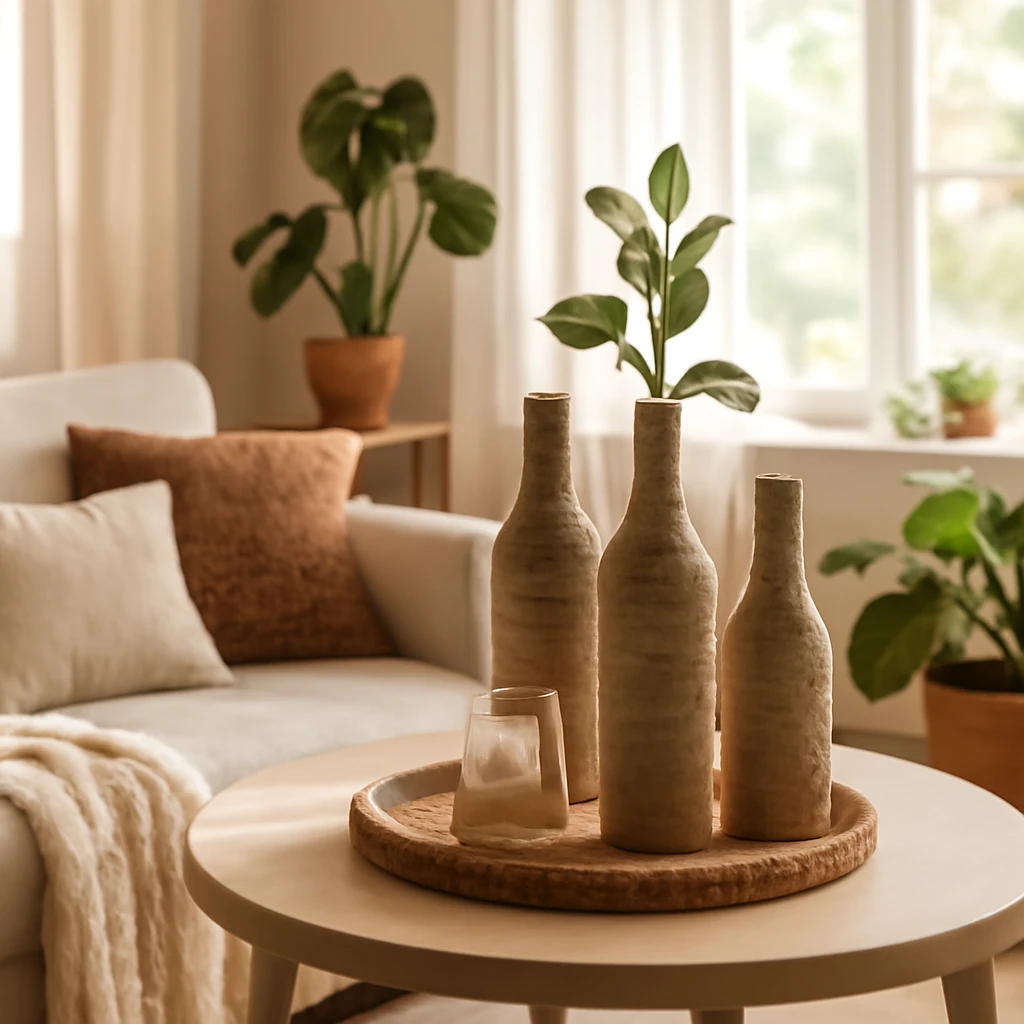
Glass bottles are naturally elegant and make a refined statement when left in their raw form. In contemporary European interiors and exterior spaces, a handful of glass bottles can form a striking vertical or horizontal arrangement, especially when their shapes and hues are varied. For a quiet, minimalist look, keep bottles in their natural state, perhaps with a light wrap of jute or a single decorative ribbon. If more visual impact is desired, consider light embellishments such as decoupage, soft paint, or a restrained textural wrap.
Practical tips
- Choose bottles with clean lines and varied shapes to create visual interest.
- Apply a thin coat of clear-weather varnish to protect painted surfaces and maintain gloss in damp climates.
- For a cohesive look, pair glass vases with a limited palette of natural materials - timber, rattan, linen, and stone.
Decorative approaches
- Naturalistic: keep the glass clear or lightly tinted, then wrap with a natural fibre such as hemp or jute for texture.
- Textured: lightly brush with matte paint and apply a decoupage layer with pressed leaves or feathery elements for a subtle pattern.
- Layered: stack or align bottles of different heights and diameters, filling with water and floating candles for evening ambience (use LED candles for safety).
Decoration ideas using primarily glass bottles offer a restrained, sophisticated aesthetic ideal for European city balconies or courtyard corners that blend into a larger design narrative.
Plastic Bottle Vase
Plastic bottles, though often less refined in form, can be transformed into artful vases with a little technique. The main challenge is to achieve a delicate appearance while maintaining structural integrity in an outdoor environment. The following approach yields attractive results with a relatively small investment of time and materials.
Approach and stages
- Cut off the top portion of the bottle to create a flat rim. Remove sharp edges with careful trimming or sanding if available.
- Print or draw a decorative motif on paper and trace it onto the bottle as a guide for decoration. You can use any favourite pattern or even a simple geometric design.
- Trace the design with a felt-tip marker and fill in with glass-friendly paints designed for plastics, ensuring good adhesion and weather resistance.
- Affix beads, glass granules, or seed beads with a hot glue gun for texture and reflective interest. Ensure bead sizes are appropriate for the interior of the vase and won’t detach easily in wind.
- Finish the rim by gently sealing it with a flame to smooth any rough edges or consider applying a weatherproof sealant to protect the artwork from the elements.
Alternative technique: create an open, airy edge by cutting vertical strips around the bottle, leaving a narrow uncut margin. Weave or curl the strips to form an intricate lacy edge. This approach gives a tactile, handmade feel that remains contemporary when paired with neutral-toned foliage.
Care and maintenance: Plastic can degrade over time in strong sun, so choose UV-resistant paints and sealants, and consider swapping or refreshing the design every few growing seasons to keep it looking fresh.
Flowers from Bottles
Bottles offer surprising potential for sculptural floral forms. Do not discard bottle bottoms - they can be repurposed into lightweight petals for leis, petals, or petals-inspired shapes that can be assembled into a range of floral motifs. Draw petals onto the bottle bottom, cut with a sharp tool, and shape the petals by bending the edges gently. For more elaborate forms, you can experiment with joints and hinges using heat to soften the plastic and create natural curves.
Crafting petals
- Draw petals of various sizes on the bottle, then cut and detach them from the body.
- Curve the petals backward to form a natural, life-like shape. You can paint or colour the petals for additional realism.
- For more synthetic flowers, use a short length of wire as a stem and secure it to the base with a hot glue gun. Attach petals by layering them from the outside to the centre.
Using candles or heat to shape petals is a delicate technique. If you choose to use heat, exercise caution and work in a well-ventilated space. A safer alternative is to use heat-softening tools and cool, resilient plastics designed for outdoor use.
Additional floral ideas
- Lilies, daisies, and bells are achievable by shaping and layering cut pieces with slight curvature. Use a light coating of sealant to protect against UV rays and rainfall.
- For a luxuriant effect, create a “hybrid” flower by combining multiple bottles in a radial arrangement on a single stem, supported by a central anchor or metal frame.
- To create a hanging bouquet, thread lightweight stems through holes drilled near the bottle rims and suspend at varying heights to mimic a natural cascade.
Birds from Bottles
Constructing life-like birds from bottles is a more ambitious project, combining sculpture, modular assembly, and a little engineering. It offers a striking focal point for larger European gardens or substantial terraces where space allows for a playful but refined installation. Plan for scale by starting with the torso using several bottles joined to form a rounded body, then add wings, tail, legs, and eyes. The resulting pieces will require careful joining and robust anchorage to withstand wind and rain.
What you will need
- Several bottles of various sizes
- Pacings of foam or lightweight foam-core for internal body forms
- Cardboard, craft knife, and glue
- Thin metal mesh or hardware cloth for wing frames
- Wire for legs, and small bottles or beads for eyes
- Weatherproof enamel paints and sealant
Construction outline
- From cardboard, cut patterns to create individual body parts (head, chest, wings, tail). Score edges lightly to allow bending and shaping, then assemble with glue to form a composite shell.
- Wrap the torso with a lightweight metal mesh to create a structural cage for wings. Shape the wings with additional mesh layers and attach to the body with wire, ensuring a natural overlapping effect.
- Create legs from short lengths of tubing or recycled wire and attach to the base, a small perch can be added to stabilise the sculpture and increase its realism.
- Attach eyes from beads or small buttons. Finish with weatherproof enamel paints in natural hues to achieve a lifelike look that suits outdoor spaces year-round.
- Mount the finished bird on a stake or a prepared base so it remains stable in windy conditions.
Harmonising with the landscape: Garden birds can be a dramatic statement when scaled appropriately for the space. For a contemporary European garden, a handful of large birds placed as a sculptural series can create a playful yet refined focal point that invites longer viewing from seating areas.
Palm from Bottles
A slender palm-inspired sculpture made from bottles is a signature statement for larger outdoor spaces. The idea scales well from medium-sized courtyards to expansive terraces in rustic or coastal settings. The key is to design a believable trunk using a central support and a clever method to stack and segment the bottles to resemble a natural tree trunk. Leaves are created from green bottles, cut into segments that are then layered on a supporting framework to mimic fronds.
What you will need
- Green and brown bottles of assorted sizes
- Metal pole or steel tube for the trunk (anchored into the ground)
- Wire to connect bottles and form a flexible frond frame
- Strong glue and weatherproof sealant
Construction approach
- Prepare the trunk: set a metal tube into the ground at a stable depth (typically 30–50 cm, depending on soil). This provides a rigid backbone for the palm sculpture.
- Remove the bases of the green bottles and cut the bottles into strips to form foliage at a controlled angle. Thread the strips onto the trunk, layering them to build a textured trunk that flares slightly as it rises.
- For leaves, cut green bottles across the width to produce leaf segments. Each segment is split into thin strips (not cutting to the edge by 5–7 cm) to create a natural fringe appearance. Attach these fringe pieces to a wire framework that loops up and outward from the trunk, forming the crown.
- Gradually add five to seven frond branches at the top, varying the length and width to achieve a balanced silhouette. Use weatherproof sealant to secure seams and prevent paint flaking in rain and sun.
- Place the palm in a sheltered outdoor corner or along a sunny boundary to maximise the visual impact while ensuring the base is firmly anchored and protected from accidental tipping by wind.
Alternative approach: if you prefer a more architectural look, use a single-colour palette for the leaves (dark greens and olives) and a neutral trunk. This approach reads as a modern statement piece while maintaining the whimsical charm of a bottle-made palm.
Drip Irrigation from Bottles
Beyond decoration, bottles are excellent for simple, economical irrigation systems. When you’re away from home for extended periods, a bottle-based drip system can deliver essential moisture to roots without wasteful runoff. The concept is straightforward: invert a bottle and regulate water release through a small-diameter tube or a drilled cap. This is particularly effective for herbs, vegetables, and perennials on European terraces where button-down irrigation can make a meaningful difference to plant vitality during hot summers.
Two common configurations
- Individual plant stations: each plant has a bottle with a narrow tube leading directly into the soil at the plant’s base.
- Shared irrigation lines: a single larger bottle feeds several tubes that branch to multiple pots or beds.
Implementation steps
- Choose vessels and tubing. The tubing diameter should suit the plant’s needs and the bottle size. For most European balcony herb gardens, 2–4 mm tubes work well.
- Prepare the bottle: drill a small hole in the cap to thread the tube. If needed, attach a short piece of tubing to the cap to create a leak-free connection.
- Fill the bottle with water and invert it into the soil or a planter. The cap hole will slowly release water at a controlled rate. Adjust the rate by changing the hole size or using multiple layers of tape to reduce flow.
- Test and tune the system: monitor soil moisture over several days and adjust the tube lengths or cap holes to ensure plants receive consistent moisture without pooling at the base.
Alternative: in cooler climates or shaded spots, you can use a gravity-fed system where the bottle sits higher than the plant container. This leverages gravity to control flow, with the bottle acting as a passive reservoir.
Practical Considerations for European Gardens
When incorporating bottle-based décor into European outdoor spaces, several practical considerations help ensure long-term success and aesthetic coherence:
- Material selection: glass offers a premium, timeless look but requires careful handling and more robust mounting. Plastic is lighter and highly versatile but should be treated with UV-resistant coatings to resist sun damage.
- Weatherproofing: choose paints, sealants, and adhesives rated for exterior use. In coastal areas, consider products that resist salt air and corrosion. In continental climates, select finishes that tolerate freeze-thaw cycles.
- Colour palette: integrate your bottle projects with the surrounding architectural palette. Neutral bases with accent colours drawn from plant foliage and seasonal flowers create a harmonious balance.
- Maintenance: outdoor artworks require regular cleaning to prevent algae growth, grime, and dust buildup. A gentle rinse with water and a soft brush is usually sufficient, avoid high-pressure washing on delicate decorations.
- Safety: ensure edges are smooth and that any raised components are securely anchored. Use non-toxic, outdoor-friendly finishes to safeguard children and pets in shared spaces.
Sourcing and Sustainability in a European Context
Sourcing bottles and related materials across Europe benefits from a mix of recycling streams, charity shops, and local hardware suppliers. Plastic bottles of suitable shapes and sizes are readily available, while glass bottles can be repurposed from household products. When planning a project, consider the following approaches:
- Utilise bottles from household recycling streams and, where possible, select containers with consistent neck dimensions to simplify assembly and ensure predictable fit for stems and lids.
- Collaborate with local makers, DIY studios, or community spaces to access tools for cutting and shaping bottles safely. A shared workshop can provide the equipment necessary to execute more ambitious pieces.
- Choose non-toxic, water-based paints and sealants designed for outdoor use to maximise longevity and minimise impact on the environment.
- Keep the design modular: plan parts that can be replaced or refreshed with minimal disruption to the overall installation. This encourages ongoing personalisation while reducing waste.
Maintaining a European-Ready Outdoor Aesthetic
To ensure your bottle-based installations stay fresh and visually coherent through the seasons, consider a few maintenance strategies:
- Seasonal refresh: rotate colours and decorative elements with the change of seasons. A light varnish or sealant can rejuvenate the surface and preserve vibrancy.
- Humidity management: in damp climates, place items on raised bases or pedestals to prevent water pooling at the base and to allow airflow around the objects.
- Weather resilience: if you anticipate harsh weather, anchor points and frames securely and opt for materials with higher UV resistance and corrosion resistance.
Showcasing Bottle Art in Small Spaces
Even on modest urban balconies or compact courtyards, bottle-based décor can create a sense of intimacy and texture. Use vertical arrangements to optimise space: align glass or coloured bottles on a slim wall shelf, cluster several feeders or vases along a railing, or create a sculptural corner that becomes a focal point as light shifts through the day. The key is balance - avoid clutter by restricting the number of elements per surface and by maintaining clean lines in the surrounding architecture.
Conclusion
Bottle-based décor is a remarkably versatile approach to outdoor design. It invites hands-on creativity, supports sustainable practices, and resonates with the European preference for pieces that are both practical and aesthetically refined. From practical drip irrigation to sculptural birds and palms, these ideas demonstrate how everyday materials can transform terraces, balconies, and courtyards into living, breathable spaces. With careful material choice, weather-ready finishes, and mindful placement, bottle crafts can become enduring features in a modern European garden or urban exterior.
You may also like these articles
 Small Spaces
Welcoming Entrances: Designing a Practical and Stylish European Hallway
A guide to stylish, space-saving hallways across European homes.
Renovation
Renovating a New-Build: How to Hire the Right Team for European Homes
Navigate new-build renovations with expert guidance to avoid costly mistakes.
Renovation
Cosmetic Renovation: Refreshing Your European Flat with Simple Makeovers
A practical guide to refreshing your flat without major upheaval.