
Explore interior trends, AI design insights, styling guides and real transformations
Demolishing walls in a renovation: a practical European guide

Introduction: rethinking interior demolition in contemporary European homes
Renovation is a journey that often begins with a bold decision: to remove or reconfigure an interior wall to create a more open plan, better light, or a new room workflow. In many European cities, tightening living spaces and evolving lifestyles mean that slightly altered layouts can transform a flat or house. Yet, demolition is not merely about swinging a hammer. Even when you are dealing with non‑load‑bearing partitions, there are technical, regulatory and safety considerations that demand a methodical approach. This guide translates professional principles into a clear, European context: it outlines how to assess whether you need permissions, what resources to assemble, how to plan for a clean and safe execution, and how to manage waste and finishing without compromising structural integrity or compliance with local rules. The goal is to empower confident decisions while respecting the building’s fabric and your neighbours.
1. Get the approvals: when you need permission to alter interior walls
In many European jurisdictions, changing the layout inside a dwelling triggers a review by the local planning authority or building control body. The key question is whether the alteration affects the building’s structure, external envelope, or fire and safety provisions. If you are merely removing or repositioning non‑load‑bearing partitions, it may not require full planning permission, but a technical notification or a building notice may still be necessary. If the project involves any alteration to load‑bearing elements, the introduction of new openings, or changes to fire escape routes, a formal project is usually required, often with a structural report and approved drawings from a licensed professional.
In historic or listed properties, or in dense urban contexts with party walls in semi‑detached or terraced houses, additional approvals are commonly needed. A conservation officer or equivalent authority may request details about how the work affects the building’s fabric. Always check with the local planning authority and, where applicable, with the building control body before ordering any demolition materials or ordering contractors. A typical workflow includes presenting a plan drawn by an architect or engineer, obtaining a formal permit, and scheduling inspections at key milestones during the demolition and subsequent rebuild.
Even when no external changes are planned, it is prudent to verify the status of utilities behind the wall - electrical, plumbing, and heating systems - because incidental modifications can trigger safety concerns or code requirements. If you rent rather than own, obtain consent from the landlord and consult the property management or tenants’ association as required by the lease and local rules. In short: understand the scope of regulation early, document decisions, and keep a record of approvals and correspondence.
2. Assess resources and budget: what you need to plan the project
Once you know whether permission is necessary, the practical next step is to size up the project and assemble the resources. The cost driver for wall demolition is not only the labour, but a well‑calibrated plan for materials, waste management, and compliance with safety standards.
First, evaluate the wall type and what lies beneath. Masonry walls (brick or concrete) differ markedly from timber or metal stud partitions clad with plasterboard. In European flats and houses, internal partitions vary widely: plastered masonry walls are typically solid and heavy, while modern partitions might be light frames with gypsum board. The thickness of walls is important for determining whether a lintel or structural reinforcement is required for an opening, and it influences the method of demolition and the choice of tools.
Next, assemble the right tools and protective equipment. If you already own a complete set, you may still need to extend it with a few items or consider rental for heavy equipment. Essential items include personal protective equipment (PPE) such as a dust mask or respirator, safety goggles, protective gloves, sturdy boots, and coveralls. For debris control and dust management, you’ll need plastic sheeting to seal adjacent spaces and a reliable vacuum with a high‑efficiency particulate air (HEPA) filter or a dedicated construction dust extractor.
Tools typically required for interior demolition include a pry bar, hammer, chisel, and a robust drill or impact driver. For masonry, a demolition hammer or rotary hammer with a masonry bit will be indispensable, along with a diamond blade saw for controlled openings. For lighter partitions (gypsum boards or plasterboard), a reciprocating saw or oscillating tool makes quick work of lining and studs. A heavy‑duty angle grinder may be needed for metal components or stubborn anchors. Finally, arrange waste disposal in advance: in most European cities, you must hire a licensed waste carrier or rent a skip/container and coordinate with the local municipal waste service for recycling where possible.
Budget for safety and compliance: PPE, dust suppression, containment, site protection, and temporary power supply if a permanent circuit is not yet available. If the project involves any structural work, the budget must account for design and supervision by a qualified professional, as well as potential inspections by the building control body. A prudent plan allocates a contingency of 10–20 per cent to cover unforeseen issues, such as hidden services or the need for additional reinforcement or re-plastering work.
3. Define the scope and prepare a safety and logistics plan
Before touching the wall, create a clear scope of work and a safety plan. Work should proceed in a controlled sequence, and everything must be prepared to prevent damage to adjacent spaces and to protect occupants. In many European renovations, the recommended order is to isolate the area, switch off power to the space, protect floors and furniture, and then begin the work from the top down - ceiling, walls, and finally the floor. If you are performing a cosmetic refresh, you might only strip finishes, for a major reconfiguration, you will typically remove fittings, plaster, and framing to expose the structural condition before installing any new openings.
Health and safety rules require you to shut down the electrical circuit feeding the room and, if relevant, isolate plumbing or gas lines in the area to be demolished. It is essential to plan for dust containment: seal the work area with plastic sheeting, create a temporary dust corridor, and ensure that any shared ventilation systems are protected to prevent cross‑contamination of dust. For projects affecting fire safety or egress, maintain clear access routes and ensure that temporary barriers do not obstruct escape paths.
In the scope section, define whether the aim is merely to remove a non‑structural partition, enlarge an existing doorway, or install a new opening with structural support. For openings in load‑bearing walls, the plan should specify the type of lintel, the required clearance, and any reinforcement needed around the opening. The documentation should include a method statement, a sequence of operations, and a risk assessment that reflects typical European workplaces and home environments.
4. The demolition process: methods by wall type and the role of professionals
The demolition approach varies with wall type and the presence of utilities or services behind the panel. Always proceed with caution, and when in doubt, involve a licensed professional - particularly for load‑bearing walls or structural openings. Here is a practical guide to common wall types you may encounter in European homes.
- Gypsum board or light plasterboard partitions: These are the easiest to dismantle. Start by removing fittings and fixtures that may be attached to the wall. Use a utility knife to cut through the joints, then detach sheets from the studs. A heavy hammer or a short‑handled sledge can help separate boards from tracks. Remove the framing and debris in manageable bundles. Vacuum and wipe down the studs as you go to prevent excessive dust accumulation.
- Non‑load‑bearing masonry walls (brick or block): These are robust but not typically structural obstacles. Demolition is usually performed starting from the top near the ceiling, using a lump hammer and chisel or a demolition hammer for tougher sections. As you unravel the wall, care is needed to avoid damaging adjacent structural elements, utilities, and bearing floors below. Debris removal should progress in tandem with dismantling, to avoid piling up heavy sections in the workspace.
- Load‑bearing walls or walls with services behind them: This requires careful coordination with a structural engineer and possibly temporary shoring. The preferred method is to install a suitable lintel or beam to carry the load across the new opening, with professional confirmation of load paths and safety margins. Diamond‑tipped saws are recommended for cutting masonry when creating a new opening in a controlled manner, as they minimise cracks and maintain wall integrity as much as possible until reinforcement is in place.
- Concrete or aerated concrete partitions: These walls may require a combination of manual chiselling and mechanical cutting. Use appropriate PPE and dust extraction. When deep sections are involved, a licensed contractor should supervise to ensure that there is no accidental damage to adjacent floors or services.
Hidden services demand particular vigilance. Electrical wiring, plumbing pipes, and heating conduits can run behind any wall, including non‑load‑bearing partitions. If you encounter cables, valves, or pipes, do not pull abruptly, pause, identify the route, and re‑route or temporarily disconnect as required by a qualified tradesperson. Avoid burying new work under poor or non‑uniform ground surfaces, because this can later lead to maintenance issues and safety hazards.
For openings in load‑bearing walls, the structural engineer’s instructions will outline the size and position of the new opening, the type of lintel or beam, and temporary supports during construction. This is critical to ensure the ceiling and floors above remain stable and compliant with local building regulations. For non‑structural openings, the process is simpler but still requires accurate measurements and a clean cut to prevent damage to adjacent areas.
5. Debris management and site clean‑up
Waste management is an integral part of the project. Work proceeds in parallel with stripping debris from the wall to keep the workspace workable and safe. Arrange for waste containers or skips in advance. In many European cities, you will need to hire a licensed waste carrier to remove construction debris and recycle materials where possible. Sorting debris by material - concrete, masonry, wood, metal, drywall - helps with recycling and may reduce disposal costs. Do not overload skips or containers, a safe load prevents accidents and ensures efficient removal.
After the demolition, a thorough clean is essential. A workshop vacuum with HEPA filtration does a better job than household vacuums, especially for fine dust. A final wipe‑down after plaster dust settles helps to prepare the space for the next phase, whether that involves plastering, re‑insulating, or installing a new partition with an updated layout. If you plan to repaint or re‑plaster, allow the wall to dry and acclimatise before applying finishes.
6. Finishing and integration: from rough opening to refined space
Once the opening is created and any required structural reinforcement is in place, you move into finishing. This includes addressing the edge detailing around the new opening, re‑plastering or drylining, and ensuring that new finishes align with the surrounding aesthetics. If you are re‑configuring a kitchen, bathroom, or living area, plan for electrical and plumbing re‑routes, ensuring compatibility with current codes and energy standards. In addition, assess thermal and acoustic performance. Replacing or upgrading insulation and installing soundproofing materials on new or exposed walls can significantly improve comfort in compact European homes with persistent noise from urban environments.
Lighting and electrical design should be updated to reflect the new layout. If you have created a larger opening that changes room proportions, consider recalibrating the placement of outlets, light fixtures, and switches. In historic or characterful spaces, consider preserving a sense of the original architecture while introducing contemporary detailing that complements the renovation. The finishing stage is also a good time to plan for storage solutions, niche shelving, and integrated appliances that suit a reconfigured floor plan.
7. Practical tips, cautions, and common pitfalls
- Always consult a qualified professional when there is any uncertainty about the wall’s role. Even non‑load‑bearing walls can conceal essential services or complicate moisture and thermal management.
- Document all communications with authorities and keep copies of permits, design drawings, and inspection reports. These records simplify inspections and future renovations.
- Do not rush the process. Demolition can generate unexpected issues, from hidden conduits to moisture pockets. Allow time to understand and address these safely.
- Engage licensed trades for critical steps such as lintel installation, structural reinforcement, re‑wiring, and re‑plastering. These tasks affect safety and long‑term performance.
- Coordinate with neighbours when removing walls that are party walls or adjacent to common spaces. Noise, dust, and temporary access can affect communal areas and may require agreements with the building management or residents’ association.
- Plan for post‑ demolition changes in terms of energy efficiency and ventilation. Sealing and insulation are especially important in modern European homes where energy performance is a priority.
Working with professionals: how to engage the right expertise
Hiring the right professionals is crucial for a successful and compliant project. Start with a licensed architect or structural engineer to assess the wall and prepare a practical plan for any openings. A reputable contractor or demolition specialist can execute the work, but ensure they are insured and hold valid licences for the activities they perform. Seek multiple quotes, verify references, and review past project photographs or portfolios. Always obtain a written scope of work, a breakdown of materials and labour, a timeline, and payment milestones. For the electrical and plumbing aspects, use qualified tradespeople who will issue compliance certificates upon completion. Finally, ensure that all work is reviewed and approved by the local building control body or planning authority as required by your jurisdiction.
8. Post‑demo considerations: safety, compliance, and quality finishes
After the dust settles, consider a forward plan for achieving a high‑quality finish that integrates the new layout with the overall design language of the home. This includes new plaster or drywall, surface preparation for paint or wallpaper, and the installation of any new doors, archways, or partitions. If the project has altered the building envelope or affected fire safety measures, confirm that the new configuration maintains compliance with fire codes and ventilation requirements. In energy‑conscious Europe, pay attention to air sealing, insulation, and thermal bridging around openings. The goal is a space that is not only open and aesthetically pleasing but also comfortable, safe, and efficient to live in.
You might be interested to know:
- How to plan a low‑dust renovation: tips from interior designers
- Moving a doorway in a load‑bearing wall: design and engineering considerations
- Understanding local renovation regulations: a practical checklist
You may also like these articles
 Small Spaces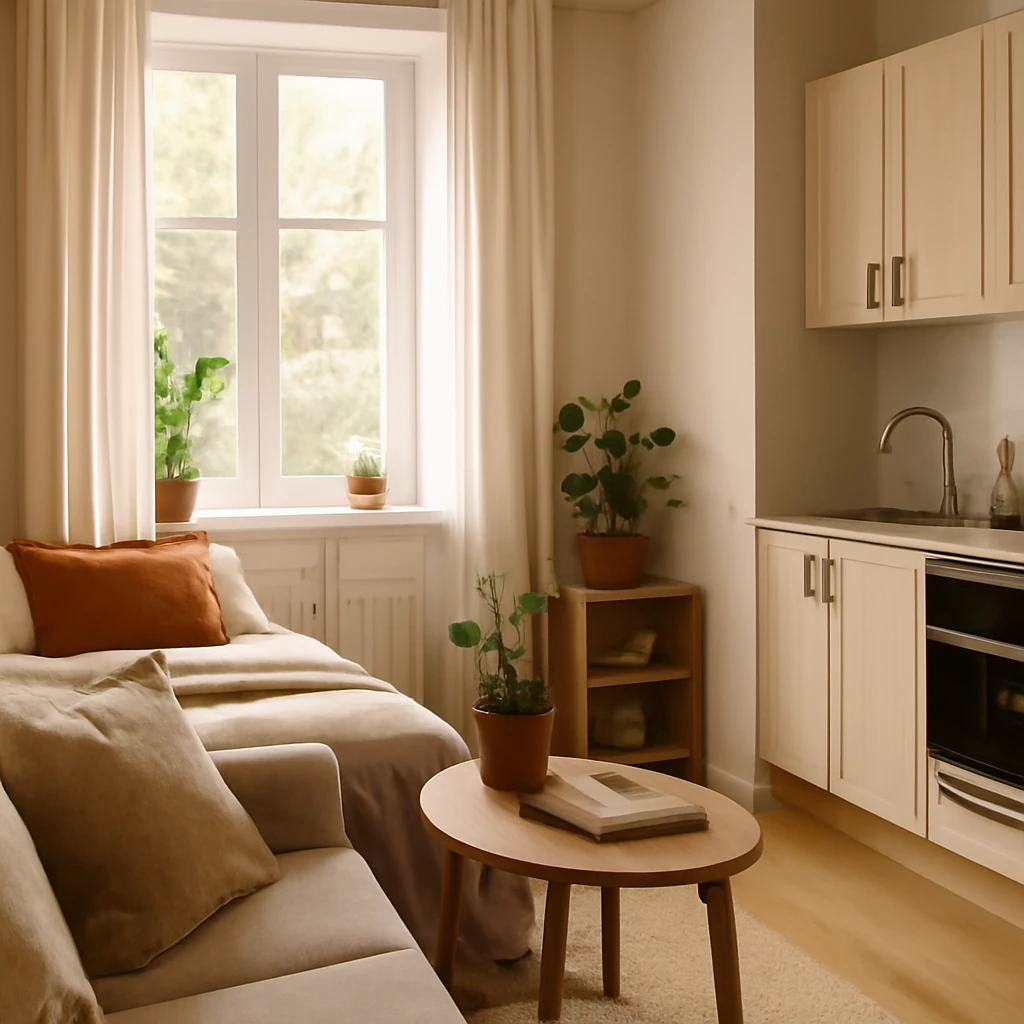
A compact 21m² studio: functional design and cosy comfort for a student home
A compact 21m² studio reimagined with smart zoning and green accents.
Colour & Materials
Choosing Wall Finishes for European Homes: A Practical Guide
Durable, stylish wall finishes for European homes.
Small Spaces
Smart Solutions for Small Toilets: European Design Principles
Effortless space-saving ideas for European small toilets.