
Explore interior trends, AI design insights, styling guides and real transformations
Designing the hallway: practical strategies for European apartments
Introduction
In European homes, the corridor or hallway is more than just a passage from one room to another, it is a first impression, a daily routine alley, and often the most challenging zone to design. Long, narrow, or irregular passages can feel like a tunnel - functional, yet visually exhausted if not treated with intention. The key is to optimise proportions, introduce light, and integrate storage without sacrificing style. This article offers a comprehensive, design‑savvy approach to creating hallways that feel generous, cohesive and welcoming, whether you are renovating an old dwelling, adapting an apartment in a compact city complex, or rethinking a long passage in a contemporary home.
Throughout this guide you will find practical rules of thumb, material suggestions that perform well in European living patterns, and styling ideas that work across climates and design preferences. The aim is not only to beautify the corridor but to make it a functional, low‑maintenance zone that supports daily life while elevating the overall mood of the home.
Planning your corridor: space, proportions and storage
Before selecting finishes or furnishings, perform a quick audit of the space. European apartments frequently feature corridors that are 0.9 to 1.3 metres in width and between 3 and 6 metres long, with varying ceiling heights and occasional architectural quirks such as alcoves, niches or irregular corners. Your plan should respond to these realities rather than trying to disguise them.
Ask yourself the following questions:
- What are the primary activities in this zone? Storing outerwear and footwear, transitioning to the living room, or simply passing through to other bedrooms or work spaces?
- How much natural light enters the corridor, and where can artificial light be most effective?
- Which surfaces are easiest to clean and maintain in high‑traffic areas?
- Where can you locate essential storage without obstructing the route?
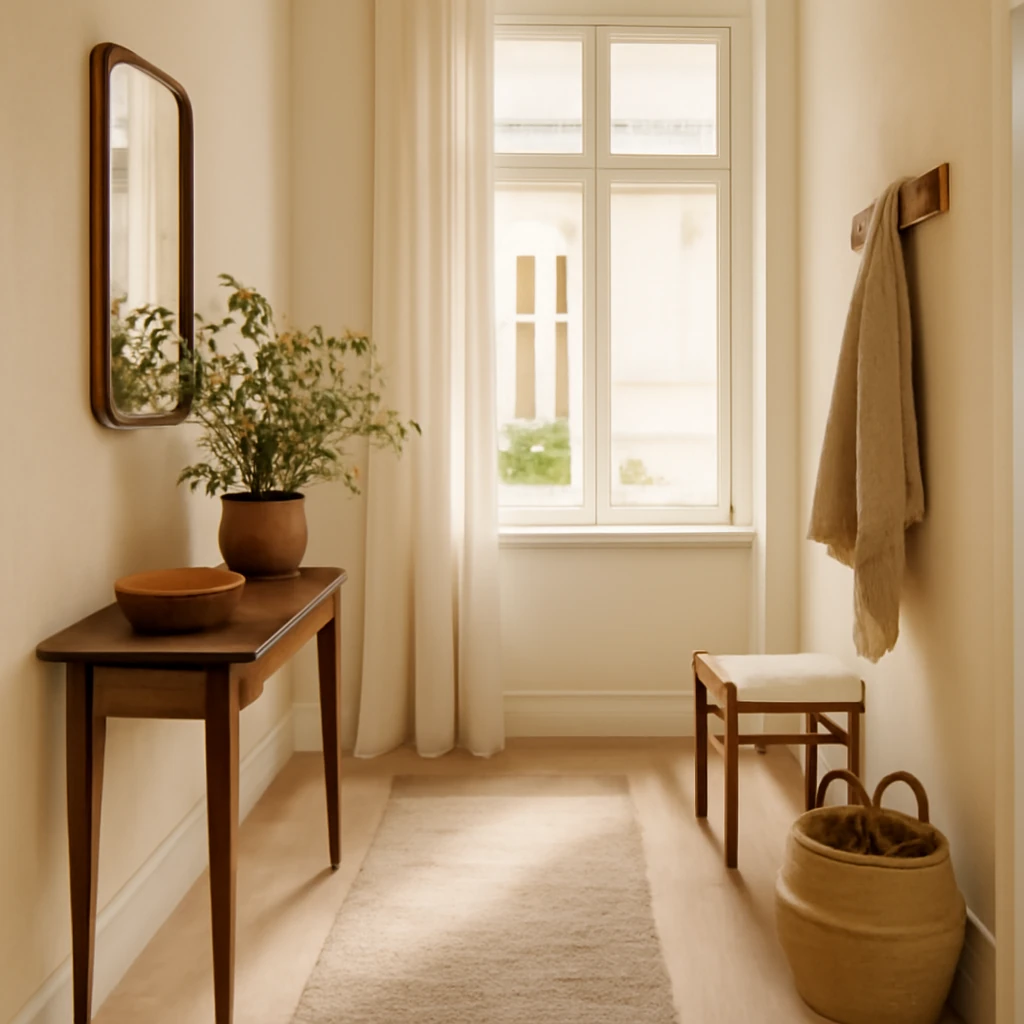
Strategies to improve proportion and flow include: installing a slim, well‑concealed storage unit along one wall, creating a defined entry zone with a compact console and mirror, and using material changes to visually separate the corridor from adjacent rooms. When space is especially constrained, consider a built‑in wardrobe or a narrow hall cabinet that mirrors the width of the passage to minimise visual disruption.
In irregular corridors, plan with the architecture, not against it. A gentle bend can be used to reveal a small seating nook or a hidden shoe station. If doors swing into the passage, you may prefer sliding or pocket doors to free width and avoid clashes with furniture. Layered lighting, mirrors, and light colours can all help to widen perceived space, while carefully chosen word‑of‑mouth details, such as a uniform baseboard height or a continuous door frame, unify disparate segments into a coherent route.
Colour and light: making space feel larger
Colour is one of the most powerful tools in a corridor designer’s kit. Lighting and temperature of colour can alter perceived width and height, while the right palette creates harmony with the rest of the flat. In European homes, a common goal is to create a calm, cohesive transition from entry to living areas, with a touch of personality through subtle accents.
Key principles to guide colour choice:
- Light tones visually expand space. White, warm greys, soft beiges, pale blues and mint greens provide a reliable base for small or long hallways. These hues pair easily with textures and patterns in the furniture and décor.
- To avoid flatness in a monochrome scheme, introduce texture and variation. Use different finishes of the same colour family - matte walls with satin or textured flooring - to add depth without visual noise.
- Even in narrow passages, you can experiment with subtle contrasts. A slightly darker wall at the far end or along one side can draw the eye forward and create an impression of length, especially when balanced with reflective surfaces and well‑placed lighting.
- The 60/30/10 rule remains useful: 60% neutrals, 30% a secondary shade, 10% a brighter cue - this could be a piece of furniture, a rug, or an artful accessory.
- Consider warm vs cool temperature pairing. Warm whites and creams read cosy in winter, while cool greys and pale blues can feel breezy in summer. Mixing temperatures should be intentional to maintain harmony with living spaces beyond the hallway.
Mirrors do more than reflect, they multiply light and create a sense of depth. A full‑length mirror on one wall or mirrored panels integrated into a wardrobe can visually double the space. Where weather and climate permit, natural daylight should be complemented by energy‑efficient artificial lighting that avoids colour distortion and glare.
Finishes: durable materials for high‑traffic zones
The corridor is a workhorse of the home, materials must withstand constant use, frequent cleaning, and occasional impacts. In European climates, the choice of flooring, wall coverings, and ceilings should prioritise durability, ease of maintenance, and resilience against humidity and temperature fluctuations.
Flooring
The flooring selected for a corridor faces unique tests - shoe scuffs, dropped items, and potential wet patches from mobility gear, pets or weather. The following options perform well in most European apartments and are widely available across markets:
- Porcelain stoneware tiles: exceptionally durable, water resistant, and straightforward to clean. They offer a wide range of finishes, including wood‑look and stone‑look aesthetics, making them a versatile base for many schemes.
- Ceramic tiles: slightly less dense than porcelain but equally practical in the majority of corridors, particularly in entry zones where moisture may be an issue.
- Quartz composite vinyl tiles: a robust, water‑resistant option that can mimic natural textures such as stone and timber. They are comfortable underfoot and typically more forgiving under impact than real stone.
- Laminate or carpet: suitable for living zones away from the main entry doors, protect sensitive floor finishes with transitions at door thresholds.
In open‑plan layouts where the corridor morphs into a larger passage, consider using two different materials to signal transitions - e.g., a hard, durable tile near the door and a warmer, softer plank or vinyl in the rest of the passage. This not only reduces wear in the busiest zone but subtly delineates spaces without heavy segmentation.
Walls
Walls in a corridor should be easy to clean and resistant to scuffs. The most practical options include:
- Washable paint finished in matte, satin or semi‑gloss. If you have pets or young children, consider an anti‑scrape finish that cleans easily without showing every mark.
- Washable wallpapers with vinyl or cellulose coatings. These can handle humidity better in humid climates and offer tactile texture without compromising durability.
- Ventilated or moisture‑resistant wall coverings where moisture is an issue, such as near entryways or in damp climates. Textured plaster or decorative plaster can add subtle depth while remaining easy to repair.
Colour and texture should be chosen with care. Light neutrals keep the space airy, if you want more character, use a soft tonal shift or a restrained pattern such as a faint geometric or linear motif. Remember to balance ornament with practicality - heavy patterns in a long hallway can feel busy, while a gentle pattern or a single accent wall can create a sense of identity without overwhelming the route.
Ceiling
A clean, flat ceiling is often the best solution in a corridor. Keep finishes matt to avoid glare and reflections that can be tiring at the end of a long walk. Consider discreet cove lighting or recessed LED strips along the perimeter to bathe the space in soft, even illumination. If your ceiling is low, a bright, uniform wash of light can help lift the sense of height. In irregular sections, a slightly lighter shade on the ceiling than the walls can visually raise the ceiling line and reduce confinement.
Storage and furniture: light, slim, and purposeful
In narrow corridors, bulky furniture is a visual and physical obstacle. The objective is to provide practical storage and seating while preserving an uncluttered route. The following principles help achieve that balance:
- Choose slender, wall‑mounted or floor‑standing pieces with delicate profiles. A wall‑hung console or a narrow jogger bench can house keys, mail, and a small tray, keeping surfaces clear.
- Opt for a compact shoe storage unit that inserts neatly beside the door or within a shallow alcove. Look for models with ventilated panels to minimise odours and mould risk in damp climates.
- Use multi‑purpose solutions: a bench with internal storage or a seating stool that doubles as a small coffee table for corridor art or decorative objects.
- In very tight passages, avoid doors that swing into the corridor. Sliding or pocket doors preserve width and reduce the risk of bumping into furniture when entering rooms.
- Incorporate open shelving or a series of narrow wall‑mounted hooks for outerwear and bags. This keeps everyday items accessible while maintaining visual lightness.
Proportions matter: the furniture reveal should be modest relative to the corridor width. A rule of thumb is to keep the total depth of stored pieces to around 20–25% of the corridor width - enough to hold essentials, but not so much that walking becomes cumbersome. The colour and finish of storage units should echo the surrounding walls for a cohesive, seamless look.
Lighting: layered and precise for function and mood
The corridor benefits from a layered lighting approach that combines ambient, task, and accent elements. Given that many European hallways lack large windows, lighting design becomes crucial to avoid a damp, shadowy feel.
- Ambient lighting: use evenly distributed fixtures along the ceiling or perimetrically to soften shadows. Recessed lights or discreet linear LED runs provide uniform brightness without creating hotspots.
- Task lighting: incorporate targeted light near entry storage or seating. A slim wall light above a console or a small adjustable fixture can illuminate keys or paperwork without glare.
- Accent lighting: highlight mirrors, architectural details, or a favourite artwork. Place fixtures at average eye level to create inviting focal points as you walk down the hall.
- Colour temperature: aim for a neutral to warm white, typically around 2700–3000 K, to avoid a clinical or overly yellow tone. A consistent colour temperature across the corridor and adjacent rooms helps maintain visual coherence.
Smart lighting can adapt to daily routines. Dimmable fittings, motion sensors, and programmable controls ensure that energy is used efficiently while the hallway remains welcoming both day and night. If you have mirrors or glass surfaces, ensure lighting is positioned to minimise unwanted reflections while maximising brilliance.
Decor and architectural details: personality without clutter
Decor in a corridor should guide the eye gently and reinforce the sense of arrival. The most effective strategies combine mirrors, curated art, architectural mouldings, and subtle textures that add depth without overwhelming the space.
- Mirrors: full‑height or strategically placed panels reflect light and visually expand the width. A mirrored wardrobe front, a freestanding mirror, or mirror tiles can multiply daylight and brighten the route.
- Art and frames: select a small number of art pieces or framed photographs in slim frames to create a curated gallery feel without turning the corridor into a photography wall. Space paintings or a sequence of evenly spaced frames along the wall can be compelling as you walk past.
- Architectural details: consider gentle mouldings, shallow cornices, or door casings that echo the home’s architectural language. Subtle reliefs, cornices, and rosettes can bring a touch of refinement to even modest spaces.
- Textural contrasts: a tactile wallpaper or a decorative plaster finish on one wall can add character. Keep the rest of the walls neutral to allow the texture to read as a design feature rather than a pattern clash.
In every European home, the strategy is to fuse practicality with a respectful nod to tradition. You can mix contemporary pieces with classic detailing - such as a modern console paired with a delicate moulding or a clean‑lined wardrobe framed by understated cornices - so long as the balance remains deliberate and cohesive.
Suitable styles for hallways: what works where
Not all design styles suit every corridor. The best approach is to adapt broadly applicable principles to match the rest of the residence while acknowledging the constraints of narrow or long passages. Here are six versatile directions that translate well to European dwellings.
- Minimalism: clean lines, restrained colour, built‑in storage, and concealed hardware create an air of calm and space. The absence of clutter is the most powerful ally in small corridors.
- Scandinavian: light woods, pale palettes, practical textiles, and soft textiles add warmth and approachability. The focus is on light, air, and functionality.
- Neo‑classic: refined mouldings, muted hues, and quality materials communicate timeless elegance without heaviness. Pair a slim console with a framed mirror to create a disciplined vignette.
- Industrial: exposed textures (brick, metal) and darker neutrals can be balanced with brighter flooring and reflective surfaces to avoid a dungeon-like feel. This style demands considered lighting to prevent gloom.
- Contemporary/contemporary‑classic: a flexible approach that blends modern accents with traditional details. Use a restrained palette and well‑chosen hardware to keep the corridor legible and inviting.
- Eco and natural materials: warm woods, stone textures, and low‑impact textiles create a serene, environmentally minded mood. Architectural cleanliness keeps the space breathable and timeless.
Ideas for narrow corridors: optical tricks that work
When space is at a premium, optical techniques can extend perceived width and height while maintaining comfort and practicality.
- Light everywhere: push light to all ends of the corridor. A bright entry, a well‑lit seating area, and mirrored surfaces reflect light to eliminate dark corners.
- Horizontal emphasis: artefacts, frames, or shelves placed along the length of the wall guide the eye and create the impression of expanded space. Horizontal lines on walls or floors can visually stretch the corridor.
- Vertical accents: tall mirrors or vertical frames draw the eye upward, suggesting height and airiness. Vertical lighting can further enhance this effect.
- Gloss and reflectivity: choose glossy tiles, glass tiles, or a polished finish for some surfaces to bounce light. Use reflective surfaces strategically, as too much sparkle can feel busy in a narrow passage.
- Minimalism with purpose: limit furniture to essential pieces - a slim console, a compact shoe storage unit, and a bench. Each item should earn its keep and contribute to the route’s fluidity.
In practice, combine two or three of these techniques to achieve a coherent, legible corridor that reads as part of a thoughtful whole rather than a necessity between rooms.
Maintenance and sustainability: long‑lasting choices
A corridor endures high traffic and frequent cleaning. Reliable materials, resilient finishes and easy‑to‑clean surfaces reduce maintenance while delivering lasting style.
- Durable flooring that tolerates scuffs and moisture is essential, porcelain tiles and porcelain‑look porcelain stoneware are favourites for entry zones and high‑traffic passages.
- Washable wall coverings minimise cleaning effort. If you prefer texture, consider washable wallpaper with a vinyl or cellulose coating that remains easy to wipe clean.
- Low‑maintenance furniture: choose pieces with smooth, wipeable surfaces and lightweight frames that resist movement when doors or windows open and close.
- Energy efficiency: model simple lighting schemes that are flexible and scalable. Recessed lights or LED strips reduce electricity usage while preserving brightness.
In terms of sustainability, select materials with low environmental impact, prioritise longevity over trendiness, and choose finishes that can be repaired rather than replaced. A well‑designed corridor can outlive fashion cycles and still feel contemporary decades later.
Practical renovation tips for long or irregular corridors
If you are renovating an older European home or adapting a quirky corridor from a pre‑war layout, consider these practical moves to maximise the outcome without large structural changes.
- Keep the route clear: remove unnecessary doors or replace swing doors with sliding variants to maintain width. If doors must remain, install door stops that minimise impact on the corridor surface.
- Create micro zones: use a bench and a small shelf to define a transition from entry to living spaces. A compact seating area invites momentary pauses and creates a sense of belonging in the home.
- Plan for adaptability: incorporate modular storage that can be reconfigured as your needs change. Avoid fixed, heavy installations that limit future re‑organisation.
- Respect the architectural language: pick finishes that echo the overall house style, whether traditional, modernist, or mixed. A corridor should feel part of the home’s story, not a separate appendix.
Decor ideas: light touches that elevate without clutter
Decor in hallways should be restrained, selective, and purposeful. The best installations enhance wayfinding and mood rather than create visual noise.
- Mirrors as art: a framed mirror, a mirror wall, or a mirror‑fronted storage unit can be both beautiful and functional, expanding the perceived space and bouncing light across the room.
- Art with restraint: one or two well‑chosen pieces in slim frames, positioned at eye level, can create a calm gallery feel. Rotate artwork over time to keep the corridor feeling fresh without overcrowding.
- Textural accents: a single feature wall with a tactile plaster, subtle wallpaper with a tactile surface, or a natural materials panel can introduce depth without overwhelming the space.
- Architectural ornament: light mouldings or delicate trims can elevate the corridor, adding character while remaining unobtrusive. Pair classic details with a contemporary palette for a refined juxtaposition.
Conclusion: turning the corridor into the heart of daily life
A well‑designed corridor is not merely a passage but a daily experience - an area that sets the tone for the home and supports the rhythms of modern living. By balancing proportion, light, durable finishes and intelligent storage, European apartments can transform long and narrow hallways into bright, organised, and welcoming spaces. The most successful schemes combine practicalities with a coherent aesthetic, ensuring the corridor remains an integral, beloved part of the home rather than a functional afterthought.
As you plan, measure precisely, sketch a few layouts, and test materials in representative daylight and artificial lighting. Invest in a small, high‑quality mirror or a slim storage unit, and let a restrained palette guide the rest of the design. The result will be a corridor that feels larger than its footprint, harmonises with adjacent rooms, and supports a calmer, more stylish everyday life.
You may also like these articles
 Living room
Mastering a 20 m² Living Room: European Design Lessons
Compact living room mastery: clever zoning, light, and style.
Tips & How-To
A Practical Yearly Deep Clean: The Essential European Guide
Plan a seasonal, thorough annual clean to refresh every corner of your European home.
Small Spaces
Small Space Living: European Transformable Furniture for Every Home
Smart, modular furniture that adapts to European homes and smaller spaces.