
Explore interior trends, AI design insights, styling guides and real transformations
A compact 21m² studio: functional design and cosy comfort for a student home
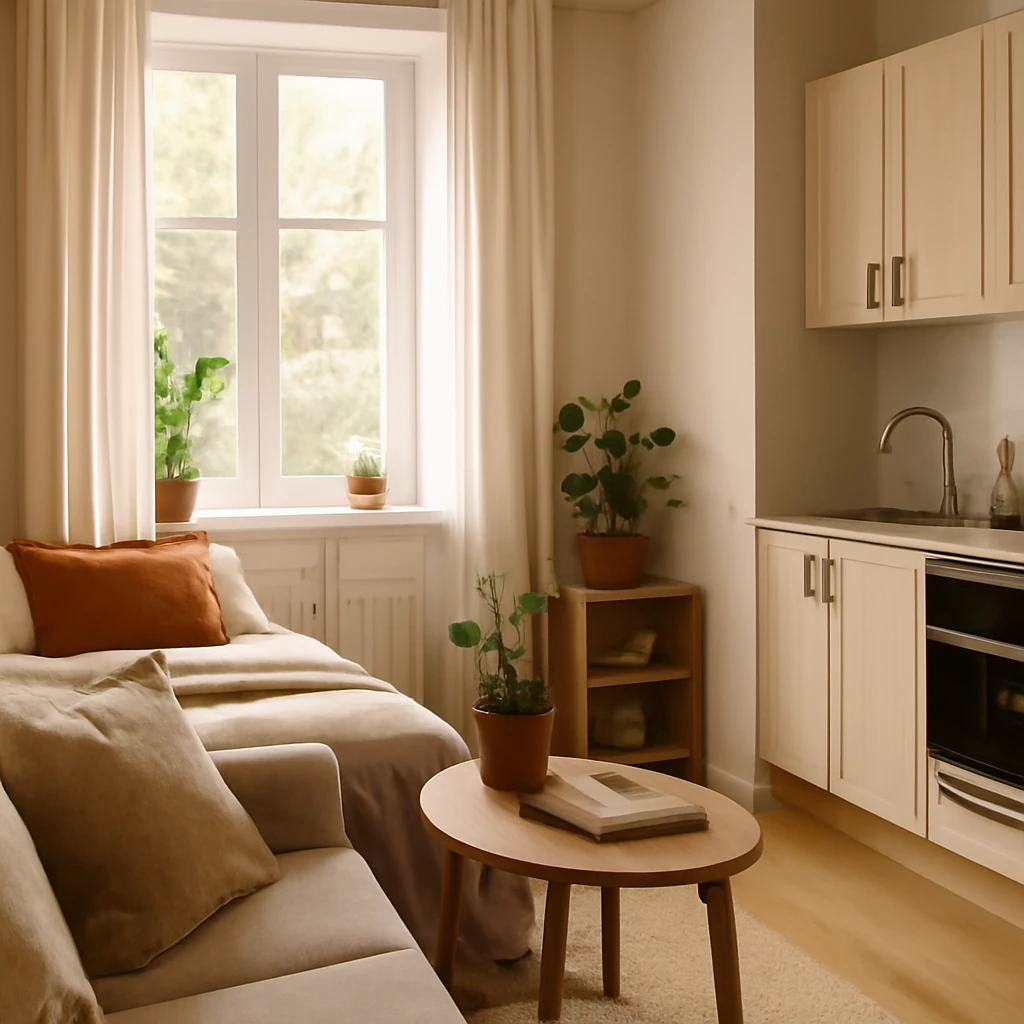
Client brief and design objectives
A young student lived in a compact 21m² studio. His parents commissioned a professional interior designer to craft a home that feels calm, comfortable and liveable. The brief required clearly defined zones: an entry with ample storage, a compact bathroom, a kitchen-dining-living area with a television, a dedicated workspace and a sleeping zone. The ambition was to deliver the sense of two rooms within a single room, prioritising usable space, daylight and a lasting aesthetic that would endure beyond trends.
Layout and zoning strategy
The existing layout was maintained to preserve the core footprint, changes to the kitchen and the bathroom were not considered feasible. In the living area a sofa faces a wall-mounted television, a bed with integrated wardrobe sits along the window wall, opposite the bed a compact workstation is tucked into the room. Zoning is achieved through sculptural wall and ceiling panels painted in a muted green. These panels act as visual dividers and acoustic aids, subtly separating the living zone from the entry, kitchen and bath while maintaining a cohesive, open feel. The bathroom receives the same green accent in walls and ceiling, tying the spaces together.
Finishes and materials
The palette is light and airy: walls and ceilings finished in a soft white or warm ivory, the floor runs diagonally in a herringbone vinyl with a timber look across the whole flat to create continuity and practicality. The main architectural feature is a set of voluminous decorative panels, resembling cushions, painted in a restrained green. These panels not only add texture but also serve to zone and soften the space. In the bathroom the green tone is echoed on the walls and ceiling, and the cabinetry - hidden behind panels - continues the colour while a black mosaic tile on the walls and shower pit adds emphasis and depth. The sanitary fittings are compact and modular to maximise floor space.
Furniture and storage systems
In the entry there is a tall wardrobe with coat and shoe storage and overhead compartments for out-of-season items. A slim floating console near the door provides a place for keys, phones and small items. The kitchen is compact yet efficient: a fridge is tucked beneath a lower cabinet beside the oven, and cupboards rise to the ceiling to deliver substantial storage. In the living area the bed doubles as a storage unit: a wardrobe bed with shelves and drawers stores bedding and clothing, enabling daytime use of the footprint. The headboard area is finished with panels in the same textile as the wall panels to create a warm, cohesive effect. Opposite the bed a desk is flanked by open shelves, there is potential to add extra shelves above the desk if required. Radiators are concealed behind decorative panels, and the wide window sill doubles as a seating area. The bathroom includes a vanity unit under the sink, a wall cabinet above the washer-dryer unit, and additional cabinet space above the toilet cistern.
Lighting and atmosphere
The ceiling features recessed plaster-in spotlights that provide even general illumination. For layered lighting there are bedside wall lamps, under-shelf and desk lighting, and integrated shelf lighting by the window. A minimalist pendant above the console adds a finishing touch to the entrance. In the bathroom, mirror lighting helps to intensify perceived space. The overall lighting strategy is warm and soft, enhancing the sense of calm and emphasising the green panels as focal points rather than decorative statements.
Style and design philosophy
The design embodies a contemporary European interpretation that blends elements of Japandi, minimalism and neo-modernism. For small spaces the architecture of the plan is as important as the furniture choices, rounded forms, natural textures and soft fabrics create a visual tranquillity. The green accents function as intentional anchors, giving each zone its own identity while maintaining a unified, uncluttered aesthetic. The project demonstrates that for compact homes, restraint in decoration and a clear spatial logic are more impactful than following fleeting trends.
Practical considerations for students and homeowners
Living in a tiny studio requires careful attention to comfort, storage and adaptability. Practical strategies transferable across Europe include choosing dual-function furniture such as a bed with integrated storage and a sofa that converts to a bed for guests, leveraging vertical storage up to ceiling height, and using lightweight, acoustic panels or coloured blocks to establish flexible zones. Ensure adequate daylight and ventilation, and consider heat management and insulation for year-round comfort. Where possible, pair a dedicated study area with a power-desk and sufficient outlets plus glare-free lighting. When planning any structural changes or electrical work, consult a registered architect or interior designer and check local regulations, as altering plumbing or electrical systems may require permits.
Conclusion
In a compact studio, thoughtful layout, enduring materials and restrained decoration can produce a home that feels larger and more liveable. By using modular furniture, green accent panels and careful zoning, a student gains the practicality of a two-room feel within a single room - proof that European small-space living can be elegant, comfortable and lasting.
You may also like these articles
 Interior Design
Art Deco Interiors: The Timeless Allure of Geometry and Glamour
Uncover how Art Deco luxury translates into modern European homes.
Kitchen Design
Kitchens and Backsplashes: Five Striking Pairings from European Designers
Bold splashbacks redefine European kitchens with five standout pairings.
Interior Design
Shabby Chic Interiors: A European Guide to Timeless Charm
A European guide to mastering shabby chic for cosy, aged beauty.