
Explore interior trends, AI design insights, styling guides and real transformations
Kitchen niche in European homes: planning rules and practical layouts
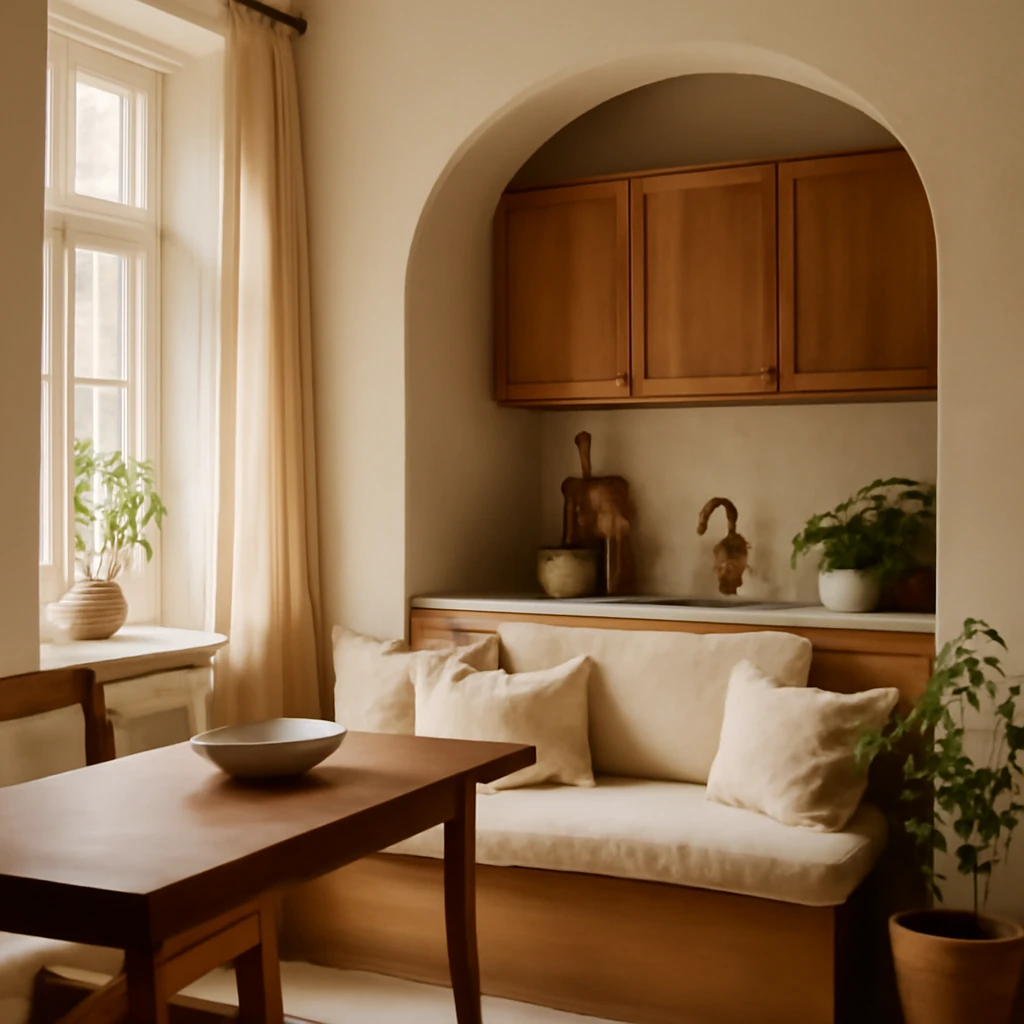
What is a kitchen niche?
The kitchen niche is a compact cooking zone formed as a recessed area within an apartment, typically adjoining the living space or a utilitarian room. In many European jurisdictions this is recognised as a distinct type of kitchen, with defined requirements for its equipment, ventilation and location. A niche kitchen usually includes fixed elements such as a cooker or hob (electric or induction), a sink and a dedicated ventilation system, and it sits adjacent to a living or auxiliary space rather than standing as a separate, fully detached kitchen.
Importantly, the dining area is not housed within the niche itself. Instead, the eatery may be located in a neighbouring living room, a dedicated dining room, or another room in the plan. The shape of the niche can be square or elongated, the critical factors are the restricted footprint and compliance with the minimum area and service requirements laid out in local regulations.
In contemporary European layouts, kitchen niches frequently appear in small flats or in open-plan spaces where the kitchen is deliberately separated from the main living zone by architectural or decorative elements. The effect can be a clearly defined cooking area that remains visually connected to the rest of the home.
Minimum requirements and allowances
Regulatory guidance for niche kitchens is framed around safety, practicality and efficient use of space. While exact rules vary from country to country, several core principles are widely observed across Europe:
- Minimum area: The niche itself should provide a usable cooking area of at least 5 square metres. This measurement excludes the volume of the room in which the niche sits, focusing on the zone dedicated to cooking.
- Wet zone relocation: If the wet area (sink and water supply) is moved to a corridor or storage space, it must be permissible under the local plan. Typically this means there should be no living rooms directly below the lower level, and a sanitary facility is located appropriately above or below, depending on the building’s structure.
- Gas restrictions: Gas cooking is not permitted within a kitchen niche. Only electric cooktops or induction hobs may be used. If the building is gas-fed, alternative electrical options must be pursued.
- Ventilation: A dedicated vent is mandatory, connected to the kitchen zone. The ducting should be routed from the niche to an appropriate point in the building’s ventilation system or directly to the exterior, to ensure effective removal of steam and odours.
- Location limits: The niche must not be placed on the site of a bathroom, balcony, or other non-kitchen spaces designated for different uses.
Some European regulations offer relaxations. For instance, unlike a standard kitchen, the niche kitchen may operate with limited natural daylight, allowing the cooking area to be positioned in less conventional places such as corridors or store cupboards, provided all other standards are met. The overarching aim is a safe, workable workflow with adequate ventilation and accessible utilities.
Advantages and disadvantages
As a concept, the kitchen niche is innovative and efficient, but it is not universally suitable. Here are the typical pros and cons to weigh during planning.
Advantages
- Space savings: The niche confines the cooking zone to a compact footprint, freeing more square metres for living or storage elsewhere in the home.
- Ergonomics: A well-designed niche brings together essential functions - sink, hob, ventilation, and often a fridge or microwave - so movement around the work area is efficient and minimises unnecessary steps.
- Aesthetics: In open-plan spaces, a discreet niche can vanish from view when closed, or be visually softened with partial partitions or glazing, offering a modern, streamlined look.
- Rational planning: For smaller households or rental flats, a niche kitchen can provide just what is needed - functional, compact, and easy to maintain - without the burden of a full-sized kitchen.
Disadvantages
- Planning and approvals: Relocating or creating a niche requires careful planning and, in some cases, approvals which can be lengthy and complex.
- Utilities and integration: Getting water, drainage, and electrical services properly connected in a restricted space can demand clever engineering and sometimes non-standard solutions.
- Acoustics and odours: In open-plan homes, cooking smells and noises can travel more readily. A powerful extraction system and thoughtful acoustic planning help mitigate this risk.
Placement options
When choosing where to place a kitchen niche, the available space, structural constraints and local regulations guide the decision. The main placement strategies are described below, with practical considerations for each scenario.
Kitchen–living room (open plan)
This is the most common and practical arrangement in European city flats that combine living and cooking zones. The niche remains clearly defined yet remains part of a single, larger living area. The three essential blocks - cookery, dining, and relaxation - are arranged to suit the room’s shape and size. The cooking module can be positioned along a wall, with the dining table or sofa group adjacent, or the layout can be configured in two lines or a gentle L-shape that keeps sightlines open.
Ventilation becomes crucial in this setup: a high-performance extractor and well-considered ducting prevent odours from lingering on textiles and furniture. It is also worth planning light layers so the kitchen remains functional without overpowering the living area. A transparent partition or glass screen can visually separate the cooking zone while preserving light and air flow.
Important note: a niche cannot be placed in a separate living room, as this would fail to meet the definition of a kitchen within the dwelling. In open-plan schemes, the kitchen must be integrated within the overall living space rather than treated as a separate, enclosed room.
Example plan (descriptive)
In a compact city apartment with a long, narrow footprint, the kitchen is carved into a shallow niche along the main wall. An L-shaped configuration houses the hob, sink and a compact fridge, with a tall pantry forming a natural boundary to the living area. A lightweight, transparent partition with subtle glazing separates the dining zone from the lounge, allowing daylight to travel through while keeping cooking activities visually distinct.
Corridor or transitional space
In very compact flats, the concept of a niche can extend into a corridor or secondary passage. This can be an effective way to reclaim living space for daily life, provided it adheres to regulatory constraints. The key is to ensure that the corridor area is not a primary living space and that the installation does not disrupt structural elements.
- The corridor should not lie above a living room in the floor below, and there should be no bathroom directly above the proposed niche location.
- The overall kitchen area must still meet the minimum square metre requirement, and any removal of internal walls should concern non-load-bearing partitions only.
For many households, moving the cooking zone into a corridor creates a more expansive central room, enabling a better layout for seating and storage. In practice, the corridor kitchen is often accompanied by a compact dining surface - such as a drop-leaf table or a slim peninsula - that doubles as a breakfast bar.
Kitchens within storage spaces (storeroom or wardrobe)
Extremely small flats or unusually shaped spaces sometimes repurpose non-living rooms such as storerooms or walk-in wardrobes to fit a niche kitchen. If the non-habitable status of the room is maintained and the zoning rules are satisfied, this can be a highly efficient use of space. The same rules apply: a fixed cooking unit, a sink, ventilation and proper drainage, and a minimum usable floor area.
Practical planning for this arrangement typically uses a compact, straight or L-shaped cabinet run, with a tall cabinet for appliances and a hidden or partially concealed edge to maintain a sense of airiness. A bar corner or a small counter can serve as a casual dining spot, relieving the need for a large dedicated dining table.
Furnishings and equipment
With the kitchen niche defined, the focus moves to selecting furniture and appliances that maximise efficiency without overwhelming the space. The cabinet layout, worktop depth, appliance sizes and finish choices all influence usability and ambience. Here are guiding principles and practical options.
- Cabinet configurations: The main unit should be sized to the niche’s footprint. Options include linear (single-run), angled (to ease corner access), parallel (two adjacent runs with a walkway), and, in larger niches, a full or partial U-shape. In compact spaces a linear or slightly angled layout often delivers the best balance of storage and workflow.
- Appliances: Aim to consolidate major appliances within the cooking zone - cooker/induction hob, sink, fridge, dishwasher or microwave - so that everything needed for meal preparation is within comfortable reach. Where space is tight, consider integrated appliances to maintain a seamless look.
- Countertops and materials: Durable, easy-to-clean materials work best: quartz, solid surface composites, porcelain stoneware, or glazed ceramic for splashbacks. Light-coloured surfaces help reflect light, giving a sense of airiness, while warmer tones can add cosiness when paired with natural wood accents.
- Finishes and colour: A calm, restrained palette - soft whites, pale greys, and natural timber - opens up the space. Subtle colour contrast on the upper and lower cabinetry can delineate zones and emphasise the kitchen’s architectural form.
- Storage design: Deep drawers, pull-out pantry units, corner carousels and integrated organisers maximise usability in tight spaces. Consider vertical storage, including tall cupboards or open shelves on the perimeter walls to keep everyday items accessible.
- Ventilation and acoustic strategy: A high-capacity extractor is essential in a confined plan. Pair it with acoustic-friendly finishes (soft textiles, rugs, and soft seating in the living area) to mitigate noise and odour transmission.
- Lighting layers: Use layered lighting to illuminate work surfaces (under-cabinet LEDs), the cooking zone, and the dining area. Ensure there is a dedicated task light near the hob and sink, complemented by ambient and accent lighting to create atmosphere.
Planning steps and practical guidance
Designing a kitchen niche requires a structured approach. Here is a practical sequence to help homeowners and designers move from concept to compliant installation.
- Measure and map the space: Create an accurate floor plan, noting door widths, window positions, electrical outlets, water mains and drainage lines, plus existing structural constraints. Identify the location of the main ventilation outlet and any restrictions on modifying load-bearing walls.
- Define the workflow: Consider the work triangle principle, adapted for a compact zone. Position the sink, hob and refrigerator to minimise steps and crossing paths. Reserve space for preparation, cooking, cleaning and storage without crowding the corridor or living spaces.
- Check regulatory requirements: Consult local building regulations and planning requirements. Confirm minimum area, ventilation standards, and any restrictions on gas installations. Ensure the proposed layout does not encroach on protected spaces or violate fire-safety codes.
- Consult professionals: Engage a qualified architect or interior designer who is familiar with local regulations. A project would typically involve a structural engineer (if walls or supports are altered), a mechanical engineer (ventilation and water services), and a licensed contractor for installation and finishes.
- Develop multiple layouts: Draft several options - linear, L-shaped, parallel, and compact U-shaped configurations - and evaluate them for usability, light, and acoustic comfort. Consider how the dining area will relate to the niche and whether a transparent partition or sliding door is desirable.
- Plan utilities and ventilation: Layout the electrical feeds, water supply and drainage lines to minimise awkward piping. Ensure the ventilation system is capable of removing steam efficiently and that duct routing complies with fire and building codes.
- Iterate and finalise: Refine the chosen plan, secure approvals if necessary, and prepare detailed technical drawings for contractors. Confirm material choices, delivery times, and installation sequences to avoid delays.
In practice, a well-executed niche kitchen balances a confident architectural idea with practical everyday use. It is not merely about fitting a stove into a corner, it is about creating a compact, highly functional work zone that complements the surrounding living space and respects the building’s regulatory framework.
Key considerations for European homes
European flats vary widely in size, layout and construction type - from compact city apartments to more generous family homes. The following considerations help ensure that a kitchen niche works well within multiple contexts:
- Natural light: The niche may operate with limited or no natural light, depending on the location and regulations. In such cases, a bright, reflective material palette and layered lighting are particularly important to avoid a sterile or claustrophobic feel.
- Ventilation quality: In compact layouts, a powerful extractor paired with quiet, well-insulated ductwork prevents odours from circulating into living areas and textiles.
- Sound isolation: Achieve a sense of separation between the cooking zone and the living space through partitioning, doors, or glass screens that do not block daylight.
- Maintenance and durability: Choose wipe-clean surfaces and robust cabinetry finishes to withstand daily use in a busy home environment.
- Aesthetic integration: Let the niche read as a deliberate architectural feature - an intentionally carved-out space with uniform cabinetry and cohesive hardware - rather than a leftover corner.
Taking the next step
For readers considering a kitchen niche in a European home, the overarching message is clear: start with a strong functional concept, respect local regulations, and collaborate with design and construction professionals who can translate ideas into compliant, ergonomic solutions. A successful niche kitchen is not a compromise, it is a carefully resolved configuration that makes dense spaces feel generous and purposeful.
If you are planning a relayout, begin with a precise brief for your architect or designer: outline the minimum space you require, the appliances you cannot live without, and how you want the cooking area to interact with the living zone. From there, you can explore layouts, experiment with light and material choices, and refine the plan until it perfectly suits your daily routines and aesthetic preferences.
In the end, a kitchen niche offers a disciplined way to optimise space without sacrificing comfort or style. With thoughtful planning, accurate technical execution, and a sensitivity to the surrounding living areas, it can become one of the most practical and elegant features of a modern European home.
You may also like these articles
 Renovation
Calm, open-plan two-bedroom: a modern European renovation
A self-designed two-bedroom renovation with a serene palette and smart storage.
Tips & How-To
Reading chairs for European living rooms: comfort, style and a practical guide
Find the perfect reading chair for European living rooms.
Small Spaces
Bookshelf partitions: zoning with style for European homes
Smart, stylish shelving to zone spaces without shrinking rooms.