
Explore interior trends, AI design insights, styling guides and real transformations
The essential European mattress guide: comfort, spine health and design
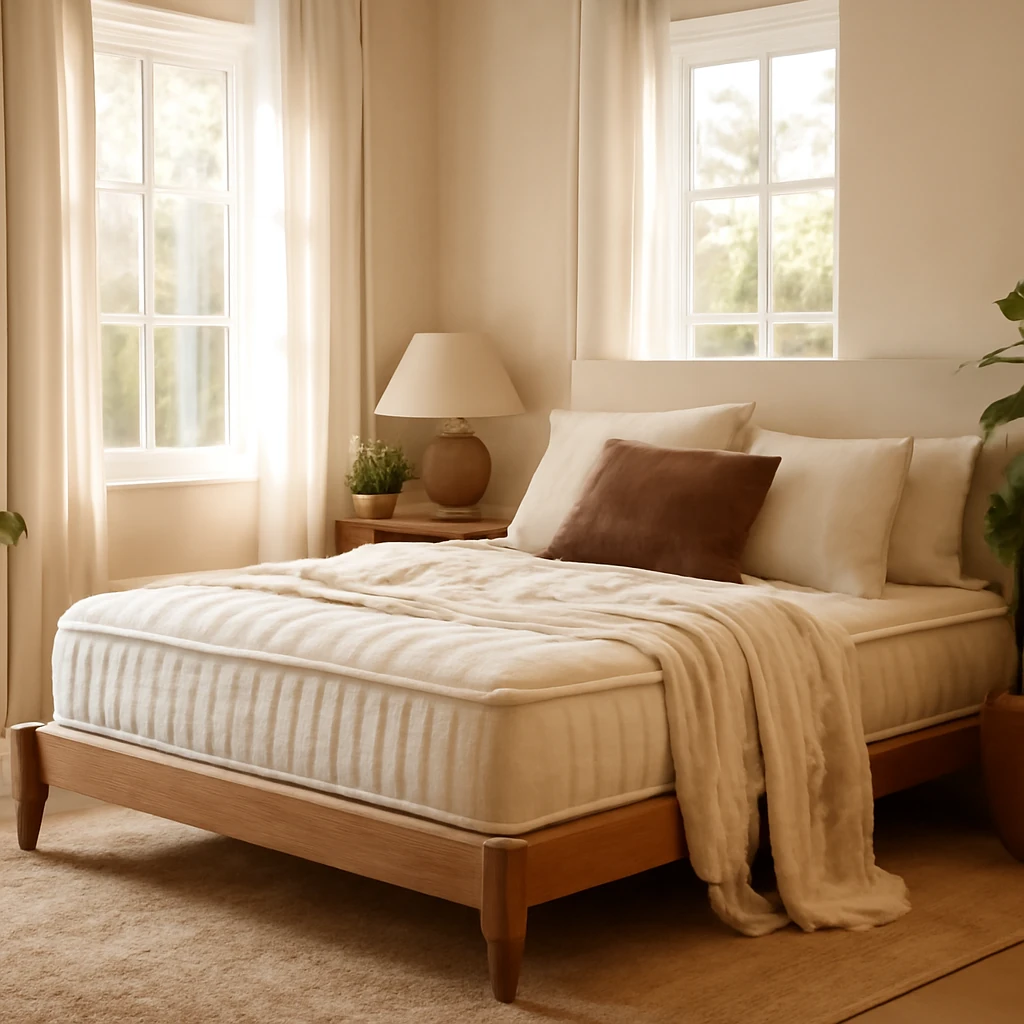
Introduction: why a good mattress matters for health
We spend roughly a third of our lives asleep, and the surface on which we rest plays a pivotal role in wellbeing, mood and energy. A well-chosen mattress is far more than a piece of furniture, it is an investment in health, a centrepiece for restorative sleep and a foundation for daily life. In European homes, a thoughtfully designed sleep surface blends comfort with support, promotes spinal alignment, and integrates with contemporary bed frames and bedroom schemes.
This guide unravels the choices consumers face across Europe, from personal factors such as weight and age to technical details like fillings, firmness and testing before purchase. It aims to help you select a mattress that not only feels comfortable but also keeps you feeling energised and well-supported night after night.
How to choose by weight and age
Weight and age influence the level of support required from a mattress. Manufacturers typically provide weight guidelines, but comfort is ultimately personal. The right surface should help the spine maintain its natural alignment while distributing load evenly across the body.
For children and teenagers (up to around 16–18 years). The focus is on supporting a developing spine. Opt for mattresses with medium firmness on a non-sprung core or on a pocket-sprung system with individual pockets. This combination supports growth while reducing the risk of scoliosis and ensuring comfortable sleep for growing bodies.
For adults up to 60 years and weighing up to 60 kg. Lighter bodies do not require exceptionally firm surfaces. A soft-to-medium firmness mattress is usually suitable, allowing the shoulders and hips to sink slightly while keeping the spine in a healthy line. A surface that is too hard can create pressure points and discomfort in the shoulders and knees.
For adults up to 60 years and weighing 60–90 kg
This represents a broad and common range. Medium-firm mattresses often strike the best balance between comfort and support for many sleepers, distributing pressure evenly and providing steadier support across the body. If you sleep on your side, a slightly softer layer under the shoulders can aid alignment, if you sleep on your back or stomach, a marginally firmer feel can help prevent sagging at the hips.
For adults up to 60 years and weighing more than 90 kg
Heavier individuals typically benefit from firmer, reinforced constructions. Look for mattresses with a robust spring unit or a high-density foam core, plus a top layer that provides comfortable contours without excessive compression. Independent pocket springs (where each spring works separately) often deliver targeted support and can accommodate varying weights within a couple without compromising spinal alignment.
European considerations: sizes and practicalities
Across Europe, standard mattress sizes range from compact singles to large doubles. Common dimensions include 90x200 cm, 100x200 cm, 120x200 cm, 140x200 cm, 160x200 cm, 180x200 cm and 200x200 cm. Depths vary from around 18 cm to 40 cm, with deeper models often offering richer comfort layers. When selecting a base, ensure compatibility with a slatted frame, platform base or adjustable base, and consider ventilation, storage needs, and overall bed height in relation to the room’s proportions and other furniture.
Mattress fillings: what to choose
The filling largely determines firmness, support, breathability and long-term performance. Here are the most common options used in European markets, with practical considerations for each.
Coconut coir (coir)
Natural fibre derived from coconut husks, often used as a firmness-enhancing layer. Pros: high support, excellent breathability, long-lasting and hypoallergenic when well made. Helpful for those who prioritise a firmer, structured feel and robust edge support. Cons: can be too rigid for lighter sleepers or those who prefer softer surfaces, may require more careful handling to avoid deformation over time.
Latex
Latex can be natural (from rubber trees) or synthetic. A popular choice for European beds due to its elasticity and resilience. Pros: superb contouring and pressure distribution, durable, naturally breathable and often hypoallergenic. Cons: natural latex can be pricey, some people notice a distinct scent with newer products, and the lifespan depends on the quality and density of the foam.
Polyurethane foam (PU foam)
Modern PU foams come in a range of densities and constructions. They form the backbone of many layered mattresses. Pros: versatile, inexpensive and capable of high support with good shape retention. Cons: lower-density foams can lose support over time, high-quality dense memory foams (e.g., memory foam variants) address these concerns but come at a premium. High-density PU foams and advanced foams (memory or gel-infused) can offer excellent spinal support and pressure relief when well designed.
Which mattress is better: sprung or non-sprung
Both constructions can deliver excellent orthopaedic support, the key is the performance of the core and the quality of the top comfort layers. In European markets, you will frequently encounter three families: sprung (coil) mattresses, foam-based mattresses, and hybrids that combine both technologies.
Sprung mattresses
Open-coil (traditional Bonnell) springs: an older technology where each spring is connected to others. The main advantage is cost, but the system can sag and develop waves over time. Noise and partner disturbance can occur as the structure wears.
Pocket-sprung (independent pocket springs): a modern standard in European bedding. Each spring sits in its own fabric pocket and moves independently, providing targeted support and reducing motion transfer. This is particularly beneficial for couples with different weights or movements, and for sleepers who want precise zoning of support across the body.
Foam and foam-hybrid mattresses
This category includes memory foam, latex foams and various high-density foams layered together. Pros: quiet, low motion transfer, often excellent edge support and long-lasting comfort. Cons: some individuals may find memory foams retain heat, many modern versions address this with breathable covers, gel infusions or ventilated architectures.
Hybrids combine a pocket-sprung core with foam or latex comfort layers, aiming to deliver the best of both worlds: active support from springs and contouring comfort from foams or latex.
Firmness: how to choose
Firmness is subjective and depends on body weight, sleeping position and personal preference. It is often described as a scale from soft to firm, with perceived support shaped by the top layers over a solid base.
Soft (3–4/10). Provides enveloping comfort and is favoured by lighter sleepers and side sleepers who prefer gentle contouring around shoulders and hips. Often achieved with latex or memory foam layers on a softer core.
Medium (5–6/10). A versatile choice that suits a wide range of body weights and sleeping positions. Good balance between contouring and support, appropriate for most couples sharing a bed with different bodies.
Firm (7–9/10). Delivers maximum support, recommended for back and stomach sleepers and heavier individuals. A firmer base with higher-density comfort layers helps maintain spinal alignment when the pelvis and torso require robust support.
For double beds, some manufacturers offer two-sided designs or seasonal variations, allowing partners to tailor firmness on each side or rotate a mattress to even wear. Such options can be advantageous for couples with divergent comfort needs.
Two-sided vs single-sided and seasonal considerations
Two-sided mattresses or models designed to be used on both sides were once standard, modern premium mattresses often feature a single, optimised sleeping surface. If opting for a single-sided model, be mindful of the expected wear pattern and rotate the mattress regularly to maintain even support. Seasonal considerations are still relevant in Europe: some sleepers appreciate a slightly cooler or more breathable surface in summer, while a warmer top layer can improve comfort in colder months. The key is to choose a model with appropriate materials and a well-ventilated cover to manage moisture and temperature throughout the year.
How to test a mattress in-store
Trying a mattress in person is essential. Follow these practical steps to assess suitability before purchase:
- Lie down in your typical sleep positions - for at least 15–20 minutes, ideally for longer if you can. This helps you feel how the mattress supports your spine and joints across different postures.
- Test with a partner if the bed will be shared, ensure movement on one side does not excessively disturb the other.
- Check edge support by sitting near the edge and lying near the edge, a good mattress should hold its shape without collapsing.
- Assess for pressure points at shoulders, hips and heels. A well-made mattress distributes weight evenly and reduces numbness or aching.
- Consider temperature and breathability. If you tend to overheat at night, look for materials with good air flow (ventilated foams, natural latex, or coir layers) and breathable covers.
- Ask about trial periods and return policies. A generous trial (ideally 90–120 nights) provides a real opportunity to evaluate comfort in daily life, not just a brief test in-store.
European buying guide: sizes, bases and beds
When selecting a mattress, ensure it pairs correctly with the bed base and the room’s layout. A robust slatted base or platform base is essential for longevity, with a base height that aligns with the room’s furniture and your comfort needs. Mattress depth (often 18–40 cm) affects everything from bedding aesthetics to edge feel and contouring. In modern European bedrooms, it is common to combine clean-lined bed frames with natural textiles and a restrained colour palette, the mattress should be a quiet foundation that complements this design language rather than competing with it.
Think about ventilation and hygiene: choose breathable covers, and if allergies are a concern, look for certifications or fillings designed to minimise allergen exposure. For a cohesive bedroom scheme, coordinate the mattress and its top layer with your chosen fabrics, whether they are natural wool, linen, or hypoallergenic performance fabrics, to achieve an effortless, serene aesthetic.
Practical tips: budget, warranty and trials
- Set a sensible budget. High-quality mattresses often represent a longer-term saving, given their durability and comfort over many years. While top models come with premium prices, a well-constructed mid-range option can deliver excellent value.
- Consider the warranty and trial period. Look for warranty coverage that aligns with expected wear and a trial period long enough to evaluate comfort within your home environment. Read the terms carefully to understand what is considered a defect versus normal settlement over time.
- Assess the sleep environment. A dedicated sleep space with a supportive base, breathable coverings and a cool, quiet room enhances the mattress’s performance. Pair the bed with appropriate pillows that support the neck and cervical spine in your usual sleeping position.
- Look for European materials and manufacturing standards. Many reputable manufacturers publish density ratings, foam type and spring counts to help you compare products on a like-for-like basis. Ethical sourcing and environmental considerations may also factor into your decision.
Conclusion: a practical checklist for a well-designed sleep surface
- Assess your body weight, age and any health considerations, and use these to narrow your firmness target.
- Decide on the core technology: sprung with independent pockets for precise support, or foam/latex for a quieter, contouring experience, consider hybrids for a balanced performance.
- Choose fillings with your priorities in mind: coconut for firmness, latex for elasticity and breathability, and high-density foams for durability and conformity.
- Test thoroughly in-store, paying attention to support, edge integrity and any pressure points, insist on a generous trial period if buying online or from a showroom.
- Ensure compatibility with your bed base and room design, considering height, ventilation and the overall aesthetic of the space.
- Don’t compromise on health. A good mattress can influence sleep quality for years, supporting posture and reducing pain, with long-term benefits to mood and productivity.
You may also like these articles
 Colour & Materials

Harmonising Tile Combinations in the Bathroom: Colour and Texture Across Europe
A European guide to mixing bathroom tiles with colour, texture and light.
Furniture
The ottoman: flexible sleeping and seating for European homes
A versatile furniture hero: the ottoman that doubles as seating and sleeping space.
Tips & How-To
The Chair You Need: How Size, Shape and Tilt Define Comfort in European Homes
A practical guide to choosing chairs that fit you and your home.