
Explore interior trends, AI design insights, styling guides and real transformations
Hidden Skirting Boards: The Quiet Revolution in European Interiors
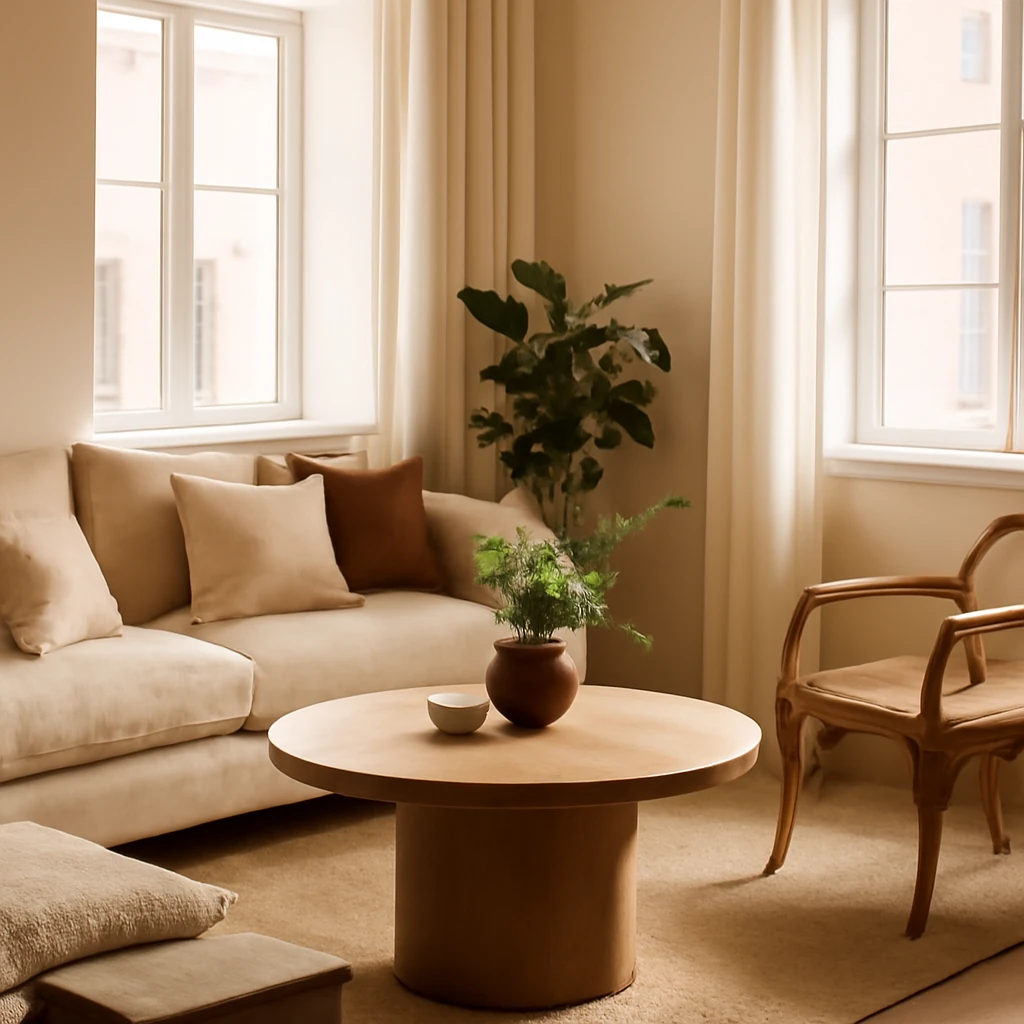
Hidden Skirting Boards in Interiors
In contemporary European design, the cleanest lines are often the most powerful statement. Designers and architects are increasingly opting for concealed solutions that hide the transition between wall and floor. Transparent seams and uninterrupted planes make spaces feel lighter, more expansive, and easier to maintain. A well-executed hidden skirting is not merely a visual choice, it also solves practical challenges such as dust gathering in gaps, uneven joins, and the visual noise that can accompany traditional skirting boards.
Whether renovating a period property or completing a contemporary apartment, the move towards hidden systems is gaining momentum across urban and suburban contexts. This guide explains what hidden skirting boards are, the design and installation considerations, and how to integrate lighting and concealed doors without compromising durability or comfort.
What Is a Hidden Skirting Board, and What Does It Look Like?
A hidden skirting board is a mulitlayered finishing solution that recesses into the wall, so the visible edge runs flush with the wall surface. Unlike conventional skirting, it does not protrude along the base of the room. The effect is a seamless junction where walls meet floors, creating a calm, continuous field that emphasises volume and light.
In practice, a hidden skirting uses a purpose-made aluminium profile set into the roughing stage of construction. A decorative cap - typically MDF, a composite material, natural or engineered stone, or another suitable panel - sits within the profile, forming the visible edge. When correctly executed, the result is an almost invisible line that enhances modern interiors and pairs well with minimalist, Scandinavian, and high-tech aesthetics.
Pros and Cons of Hidden Skirting
Like any architectural system, concealed skirting boards carry benefits and trade-offs. Consider the following:
- Modern, uncluttered aesthetics: A seamless perimeter reduces visual clutter and gives the room a refined, high-end feel.
- Ease of cleaning: With no protruding edge, vacuums and mops glide along the surface, reducing dust accumulation in the corners.
- Perceived space gain: The absence of a visible seam can make a room feel marginally larger, especially in compact layouts.
- Versatility in design: Works well in minimalism, contemporary, and mid-century inspired schemes, and it can accommodate concealed lighting or doors.
- Better integration with concealed doors: Doors without visible frames or traditional casings sit more harmoniously with a hidden perimeter.
- Lighting opportunities: A small gap above the decorative strip can house LED tapes, producing a soft glow and a “floating wall” effect.
However, there are downsides to weigh:
- Higher cost: The profile, materials, and precise installation push budgets higher than standard skirting.
- Early planning required: The system is set during roughing-out and plastering stages. If not foreseen, late changes can be costly.
- Technical skill needed: Achieving flawless alignment, level lines, and clean junctions demands experienced workmanship.
Hidden Skirting vs. Shadow Profile: Six Fundamental Differences
Both options create a “clean bottom” and suit modern interiors, but they differ in construction and visual effect. Here is a concise comparison:
| Characteristic | Hidden Skirting | Shadow Profile |
|---|---|---|
| Look | Virtually disappears into the wall, almost seamless | Emphasises the junction by casting a shadow line, heighten contrast |
| Installation | Integrated with the wall during roughing-out, decorative cap sits flush | Profile remains visible, can be paired with lighting for depth |
| Lighting | Allows for concealed lighting above the profile | Typically highlighted by a light gap or shadow line |
| Best for | Minimalist, contemporary, integrated doors | Architectural emphasis on the wall/floor intersection |
| Cost | Higher due to bespoke profile and precise fitting | Moderate, can be less expensive than full concealment |
| Usage with doors | Requires careful planning with hidden doors | Flexible with concealed or visible door systems |
Which Skirting to Choose for Concealed Doors
Hidden doors are a hallmark of contemporary interiors, and they pair best with skirting that is understated and geometrically simple. For maximal secrecy, select a hidden skirting with clean, straight lines and a minimal profile. If you want the door outline to be perceptible as a feature, a shadow profile can mark the edge with a controlled shadow, helping the door read as a precise architectural element. When planning, align the door thickness, wall finish, and floor covering so that the final lines run in a single plane. In projects with concealed doors, it is essential to integrate the door frame, wall finish, and skirting in the same calculation to avoid compensations after plastering.
Step-by-Step: Installing a Hidden Floor Skirting
Installing a concealed skirting is a refined process that requires coordination among the layers of construction. The profile is embedded into the rough wall, and the decorative cap is installed later to create a clean edge.
Here is a practical sequence for a typical European renovation:
- Project preparation: Define the height and type of hidden skirting for the floor and the chosen floor covering (laminate, engineered wood, or tile). Plan positions for all transitions and obtain approvals before plastering and screeding begin.
- Aluminium profile installation: After screed and the initial plaster layer, fit the aluminium profile into the rough wall. It acts as a guide for subsequent wall finish and helps maintain level accuracy. Secure it with adhesive and fasteners precisely according to the layout.
- Wall finishing: Apply the second plaster or gypsum board layer and a skim coat. Aim for a surface that is perfectly flush with the face of the profile. Finish by painting or applying wall coverings as specified in the design.
- Flooring installation: Install the floor covering first, ensuring it sits tightly against the wall without gaps. This creates a stable base for the decorative cap.
- Cap installation: Insert the decorative cap (MDf, composite panel, stone, or alternative material) into the profile’s groove and secure with adhesive or clips. Cut mitres at corners to 45 degrees for crisp joints. If the cap is painted, apply the paint beforehand to prevent smudges and ensure an even finish.
How to Install a Shadow Floor Profile: Concealed Installation
A shadow profile differs from a full hidden skirting by leaving a deliberate seam between wall and floor, which creates a subtle, architectural shadow. For professional results, observe the following guidelines:
- Define the visible height: For the shadow gap, a typical visible portion of the profile is around 15 mm, if you plan to add concealed lighting, you may require about 20 mm to accommodate fixtures.
- Profile placement: During project planning, calculate the profile position relative to the finished floor and wall surfaces. Profiles can be integrated into the wall finish or recessed into a shallow niche.
- Fixing method: Use a water-based adhesive for the initial set, then reinforce with mechanical fixings at 40–50 cm intervals in the upper portion to maintain long-term stability.
- Finishing: Apply skim coat to bring the wall and profile to the same plane, then paint or plaster as required. The goal is a continuous, uniform surface with a precise edge.
When aligning a shadow profile with concealed doors and built-in storage, ensure all lines converge in the same plane. A well-executed shadow profile can be used around cabinets or behind floating partitions to create a cohesive, floating-edge look.
Creating Paring Walls with Lighting
- Leave a service gap above the profile: A typical clearance of 10–15 mm allows room for a LED tape without pressing on the wall surface.
- Install LED lighting: Place the tape inside the gap, aiming for a continuous glow along the length. Choose a warm white (around 2700–3000 K) for a comfortable atmosphere or a cooler tone for a modern vibe.
- Move for motion and ambience: Add motion sensors if desired to switch lighting on as occupants approach, improving energy efficiency and user experience.
- Diffusion: Use a soft, diffusing cover to ensure the light is even and not harsh along the line.
To achieve the coveted “floating walls” effect, plan the lighting as an integral part of the interior design. A detailed design brief with a lighting consultant helps ensure that the spectrum, brightness, and distribution work with the floor finish and wall colours.
A note: before pursuing an invisible floor skirting, consult with a specialist. Walls must be exceptionally straight and true, otherwise, light may bend at inconsistencies, undermining the intended effect.
Hidden Skirting as a Must-Have for Contemporary Renovations
Hidden or concealed skirting is not merely a technical tweak, it is a design strategy. It helps spaces feel lighter, more open, and better suited to modern lifestyles where open plans and soft furniture dominate. In many European apartments, particularly those with long sightlines or compact footprints, the absence of a visible base line creates a cleaner backdrop for furniture, textiles, and architectural lighting.
Compatibility with different styles is a strength:
- Minimalism: A flawless foundation that does not compete with furniture or art.
- Scandinavian: Emphasises air, daylight, and the tactile warmth of materials, a hidden edge enhances the sense of calm.
- Contemporary: Supports flexible layouts and bold surface combinations, including statement flooring and high-contrast walls.
- High-tech: Complements technology-driven interiors with a crisp, uninterrupted plane.
- Loft and industrial: A refined counterpoint to rugged materials such as concrete or brick.
Conversely, traditional, cottage, or rustic styles tend to rely on visible mouldings and base boards to add texture and charm. Hidden skirting is therefore a deliberate choice that signals a modern interpretation of a space, often best-suited to new-builds or thoroughly updated interiors in Europe’s dense urban fabric.
Alternatives for Concealing the Perimeter
If a full concealed skirting feels out of reach, there are practical alternatives that still reduce visual clutter:
- Painted skirting in wall colour: Opt for narrow, slimline plinths in a durable material that can be painted to match the walls. This approach minimises contrast and creates a near-seamless line, particularly on smooth wall finishes.
- Micro-skirting or gap fillers: A slim edge that sits flush with the wall and floor, fixed along the perimeter to cover gaps without adding bulk.
These options provide a cost- and time-sensitive path to a tidier perimeter while keeping a strong sense of openness and light. They are especially effective in retrofit projects or where budget constraints limit the scope of a full concealed system.
DIY: Is Hidden Skirting Realistic to Install Yourself?
In theory, a DIY approach is possible, but it requires a careful assessment of the space and a disciplined workflow. Potential challenges include:
- Achieving perfect geometry on both walls and floors, even small deviations (a few millimetres) can be noticeable in a concealed system.
- Understanding the correct method for attaching profiles and ensuring compatibility with damp-proofing, insulation, and floor finishes.
- Managing the transitions between profile, wall finish, doors, and built-in furniture so that all edges meet precisely in the same plane.
- If lighting is included, planning the wiring and achieving safe, compliant electrical integration from the outset.
For most homeowners, engaging a professional design-and-build team with experience in concealed systems yields a reliable result. A well-executed project delivers the intended “parched corner” look in which the room reads as a unified field rather than a collection of disparate parts.
Achieving a Perfect Renovation Result
Over the course of European renovation projects, the most enduring success stories come from a clear design brief and early collaboration between designer, architect, and contractor. The key steps include:
- Integrated planning: Establish the system type (hidden skirting or shadow profile), decorative materials, lighting strategy, and door integration in the early design phase.
- Accurate measurements: Take precise wall, floor, and door dimensions. Document tolerances for plaster, screed, and floor coverings.
- Quality materials: Choose profiles of European manufacture with corrosion resistance, appropriate thermal expansion coefficients, and compatible finishes for our climate.
- Professional installation: A skilled team should handle profile embedding, plaster rework, and final finishing to guarantee flush, durable joints.
- Testing and adjustment: Check levels, straightness, and gaps across the entire perimeter. Make minor adjustments before final finishes and lighting are completed.
When developed as part of a broader refurbishment, hidden skirting becomes a fundamental design element rather than a hidden afterthought. The result is a refined atmosphere with a lasting sense of cohesion and light.
Conclusion: The Subtle Power of Seamless Surfaces
Concealed skirting boards are more than a trend, they represent a design principle rooted in clarity, durability, and the intelligent use of light. For European homes - many of which balance compact footprints with generous daylight - the absence of visible base lines enhances perception of space and modern living. Whether you choose a completely hidden skirting, a shadow profile, or a curated set of alternatives, the goal remains the same: to create interiors where every line feels deliberate, every material speaks of quality, and the transition between wall and floor becomes a quiet, powerful feature of the room.
You may also like these articles
 Kitchen Design
Ergonomic kitchen design for daily joy: layout, height and harmony
Practical guidance on ergonomic kitchen layouts for European homes.
Bedroom
How to Create a Provençal Bedroom: A Simple DIY Guide for European Homes
Create a sun-kissed Provençal bedroom with timeless European style.
Colour & Materials
Light Interiors Across Europe: Timeless Tones for Calm, Bright Homes
Bright, serene spaces across Europe with light palettes and classic styles.