
Explore interior trends, AI design insights, styling guides and real transformations
Creating a Hotel-Worthy Bed: Layering and Styling for European Homes
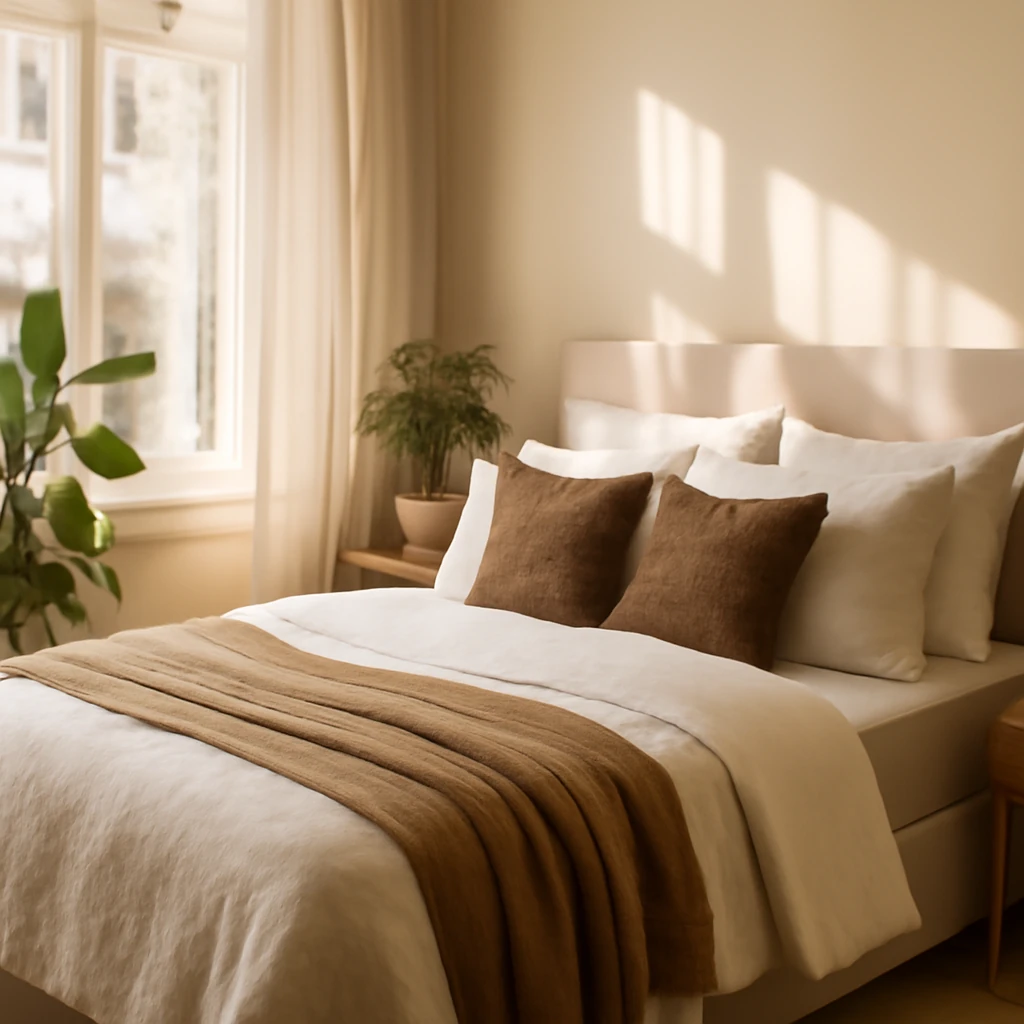
Why a made bed matters
In European homes, a well-made bed is more than a tidy surface. It sets the mood for the room, signals rest, and completes the colour and texture story of the space. The goal is a look that feels effortless, cohesive and perfectly suited to a room’s palette and material mix. A neatly dressed bed can anchor a compact urban bedroom just as effectively as it can crown a spacious suite. Small details - how layers meet, where the edges fall, and how cushions are arranged - can transform a space from utilitarian to calm and inviting.
- A made bed tends to collect less dust and stays cleaner longer, it also reduces the need for frequent linen changes.
- Making the bed becomes a daily ritual that supports organisation and a productive start to the day.
- A beautiful bed acts as a focal point, when the bed is well styled, the rest of the room tends to feel more ordered.
- Returning to a neat bedroom after a long day is instantly comforting, helping you switch into home mode quickly.
Across European interiors, the bed is a canvas for texture, colour and comfort. The following guide blends timeless techniques with contemporary styling, suitable for a wide range of climates and homes - from compact city apartments to generous, daylight-filled bedrooms.
The basic method: a reliable starting point
There is a straightforward, repeatable process to make a bed beautifully with minimum effort. Follow these steps to achieve a tidy, elegant bed with a calm, restful look:
- Shake out and smooth the bedding to remove major wrinkles and creases, this instantly makes the bed look neater.
- Fluff the cushions and return the corners of the blankets and duvets to their proper place.
- Lay the sheet flat and smooth it out, tucking the ends under the mattress to eliminate unsightly folds.
- Place a blanket over the sheet, it should be slightly larger than the mattress so the edges can hang or be neatly turned under.
- Let the top layer (duvet or duvet cover and any optional top sheet) drape over the sides and, if desired, let the edges touch the floor for a generous effect, or tuck the bottom edge under the mattress for a neater silhouette.
- Decorate the head of the bed with cushions arranged in a way that suits the room - from a plush, layered look to a minimalist, restrained profile.
While a bedspread is not an essential piece in every modern bedroom, it remains a popular element for protecting the bedding from dust and for day-time lounging. It can be especially useful in rooms where the bed is used as an occasional sofa or reading nook. In European interiors, the bedspread is often replaced or supplemented by a durable top blanket or a lightweight woven throw that adds texture without heavy weight.
A flexible selection of layers and fabrics
As interior styles evolved, many European bedrooms adopted a layered approach that blends practicality with visual interest. A bed can be dressed with a combination of fitted sheets, duvets, duvet covers, blankets, and a carefully chosen collection of cushions. These layers offer a way to accommodate seasonal changes in temperature and humidity, while keeping the overall look cohesive and sophisticated. The principle is simple: layers should complement one another in colour and texture, never compete for attention.
Contemporary layering: depth, texture and ease
Modern bed styling embraces depth and tactility. The idea is to create a sense of abundance without clutter, using several textiles in varying textures and a restrained colour palette. The following approach explains how to achieve a multi-layered, photogenic bed that remains practical for daily use.
Layering works best when you start with a neutral foundation - soft, breathable sheets in a natural fibre such as cotton, linen or a high-quality cotton blend. Build up with a duvet of appropriate warmth, then add a lighter cover or throw for contrast. Finally, punctuate the bed with cushions of different shapes and sizes that harmonise with the room’s upholstery and curtains.
In European homes, a duvet is the standard for warmth and comfort. Duvet covers make seasonal changes quick and hygienic, because covers are easy to wash and replace. The duvet itself should be stored in a breathable textile bag when not in use, and washed according to the care label to preserve loft and warmth. A well-chosen cover can alter the bed’s appearance dramatically without changing the core sheets or mattress.
1. Prepare the mattress
Before dressing the bed, remove the bedding and inspect the mattress area. Vacuum under the bed and around the sides to reduce dust and pet hair. A thin protector or fitted mattress protector helps guard against spills, while a breathable, non-woven top sheet can serve as a moisture barrier. If you use toppers to even out the surface, position them according to the body zones you most notice when lying down, and ensure they lie flat for a smooth base.
Practical note: in European homes, a well-ventilated climate can influence sleep comfort. Choose textiles that breathe in warm seasons and offer insulation when cooler weather arrives. A mattress protector with a light, natural weave is often preferred for longevity and comfort.
2. Conceal imperfections
The appearance of the bed often depends on the box spring area and the sides of the mattress. If the bed base or the base of the mattress isn’t exceptionally tidy, consider a bed skirt (dust ruffle) or a tailored cover that encircles the sides. A well-chosen bed skirt hides the beneath-the-bed clutter and can unify the look with the headboard or the chosen colour story. When selecting a skirt or a long cover, pick a colour that ties in with the headboard or bed textiles to create a cohesive silhouette.
Alternatively, a large, floor-length bed blanket can serve the same purpose, draping elegantly to the floor and concealing the under-bed storage. A restrained choice - one or two colours drawn from the room’s palette - often reads as more sophisticated than multiple competing patterns.
3. Put on the sheet
The method for laying the sheet depends on the fabric and type of sheet you’re using. A standard flat sheet should be carefully smoothed and tucked at all four corners, with neat, sharp corners to avoid unsightly tucks. If you prefer a fitted sheet, ensure it anchors firmly to the corners beneath the mattress and that the elastic stays positioned so the sheet won’t slip during the night. A fitted sheet made from cotton or a cotton blend typically wears well and maintains a crisp appearance with regular washing. If you opt for a sheet with elastic edges, ensure it is sized correctly for your mattress depth, or the edges may pull away during sleep.
4. Add the duvet
Place the duvet over the sheet, ensuring it extends beyond the edges of the mattress. The duvet cover is the outer layer that can be swapped to suit seasons or moods. For a relaxed, contemporary look, let the duvet lightly drape over the sides and foot of the bed. If you prefer a neat, tailored look, tuck the bottom edge under the mattress to create a sleeker profile. A two-colour or two-pattern duvet cover can introduce subtle visual interest without overpowering the room’s calm palette.
5. Layer with a coverlet or throw
A light coverlet or woven throw can be used across the foot of the bed to introduce texture and colour while maintaining easy access to the bed for lounging. A partially folded or draped throw adds an element of casual luxury and can serve as a practical grab-and-go layer for cooler evenings. Choose a throw that complements the duvet and cushions in colour and texture, and consider breathable fabrics like cotton blends or lightweight wool for year-round comfort.
6. Add a decorative throw or runner
For a touch of refinement, a narrow runner or decorative fabric placed across the foot of the bed can define the bed’s edge and add a finishing accent without overwhelming the space. The runner should be proportionate to the width of the bed and the room’s overall scale. A subtle texture - such as a knit or a jacquard weave - works well with plain or softly patterned bedding, while a bold pattern can become the room’s focal point if used sparingly and thoughtfully.
7. Position cushions and pillows
Pillows are the primary way to sculpt the bed’s character. Use a mix of shapes and sizes to create depth and interest: square cushions (50 cm), larger squares (60 cm or 65 cm), rectangular bolster cushions, and perhaps a couple of cylindrical bolster pillows. Place the largest cushions at the back, closest to the headboard, with gradually smaller cushions in front. The arrangement can be neat and formal or intentionally relaxed, depending on the room’s style. For a calm, contemporary look, keep the palette cohesive - perhaps a dominant base colour with a limited number of accent hues drawn from the room’s textiles or artwork.
8. Optional: a bench or ottoman at the foot
If space allows, a bench, ottoman or padded stool at the foot of the bed can be both decorative and practical. It provides a place to sit while dressing and a place to lay a duvet or extra blankets. If you choose a bench, select upholstery that coordinates with the headboard or the bed textiles to maintain a cohesive, long-legged line across the room.
Useful tips for a lasting, stylish bed
Ventilate and refresh textiles
Do not immediately remake the bed after waking. Overnight, dust mites and moisture accumulate within bedding. Allow the bed to air for a short while before re-dressing it. A quick lift of the duvet or a gentle fan of the sheets can refresh fibres and reduce the feel of stiffness. This simple pause can help your bedding look newer for longer and reduces the need for frequent washing of every piece.
Coordinate with the interior scheme
Bed textiles should communicate with the room’s overall palette. The statement pieces - such as a striking duvet cover or a bold throw - should rhyme with curtains, rug, and upholsteries. In a colour-led scheme, repeat a chosen hue in two or three textiles to create harmony. In a neutral scheme, introduce texture through linen, cotton, or wool to maintain depth without introducing visual clutter.
Add a subtle scent
A light, natural scent can complete the experience of a well-dressed bed. Consider a sachet in a drawer, a gentle room spray, or a linen mist that can be lightly spritzed on the bed linen. The aim is a clean, fresh ambience that enhances relaxation rather than overpowering the senses.
In summary: the bottom line
dressing a bed beautifully is not an elaborate ritual, it is a disciplined approach to layering textiles, securing sheets, and consciously selecting cushions and throws that support the room’s style. By following a simple framework - prepare the mattress, conceal imperfections, lay the sheet, add the duvet, layer a coverlet or throw, position cushions thoughtfully, and consider a bench at the foot - you can achieve a sophisticated, hotel-like bed in a European home. The goal is to create a bed that feels intentional, comfortable and perfectly integrated with the room’s character.
- When dressing the bed, aim for depth and cohesion: more layers often read as more refined, so don’t be afraid to layer thoughtfully.
- Secure the sheet and ensure there are no unintended folds that interrupt the silhouette of the bed.
- Don’t hide the edges of the sheet or undermine the bed’s lines - let the edges be visible where intentional, or tuck neatly for a crisp look.
- Arrange cushions and a throw to convey a sense of relaxed chic, allowing the space to feel calm and welcoming rather than cluttered.
With patience and the right textiles, any bedroom can become a serene retreat. The key is consistency: a unified palette, a balance of textures, and layers that invite comfort without sacrificing order.
You may also like these articles
 Small Spaces
Small Spaces, Big Style: European Solutions for Compact Rooms
Smart strategies to transform tiny European rooms into elegant, functional spaces.
Colour & Materials
Colour, Circles and Calm: The Itten Wheel in European Interiors
A practical guide to using the Itten wheel for harmonious European interiors.
Interior Design
European steam room design: materials, layout and finishes for modern baths
A practical guide to designing European steam rooms with durable materials and versatile layouts.