
Explore interior trends, AI design insights, styling guides and real transformations
Smart Power: How to plan kitchen outlets for a safe, efficient European kitchen
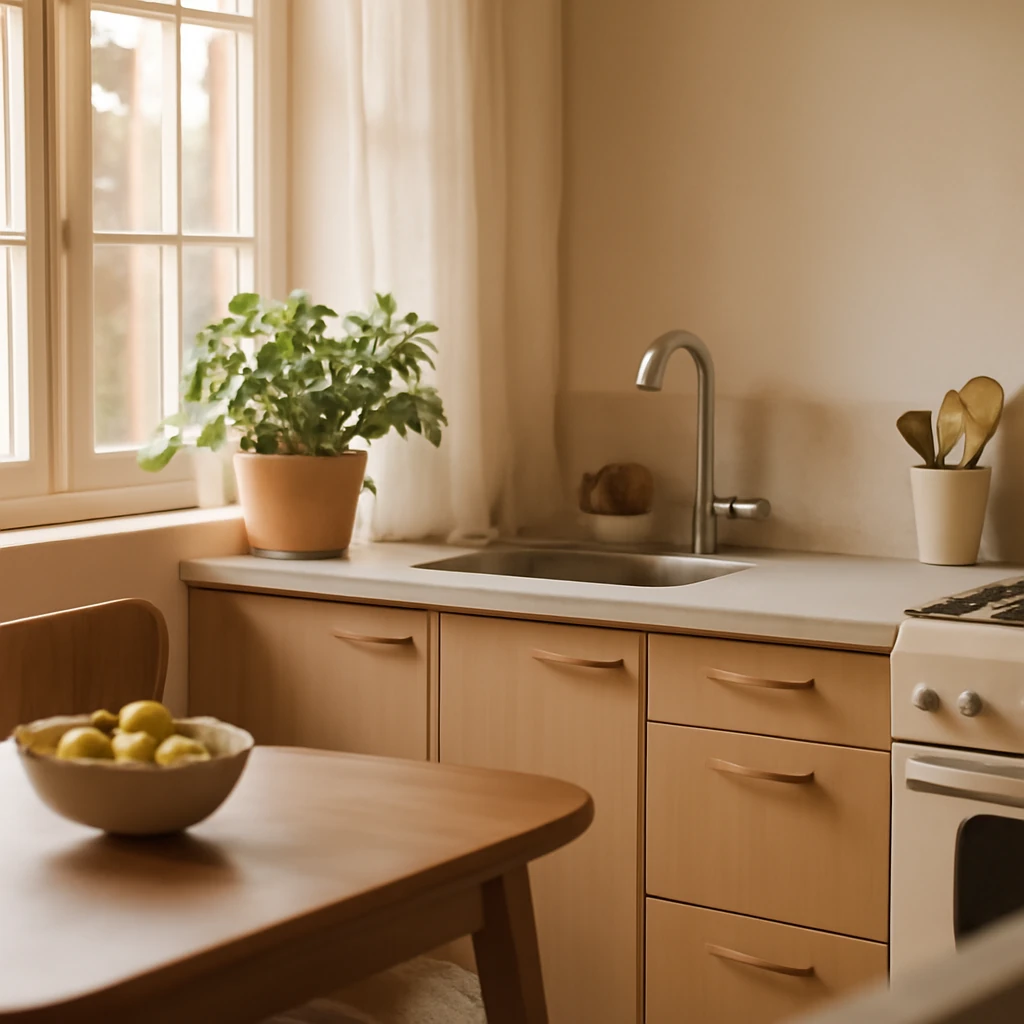
In European homes, the kitchen is the energetic hub of daily life. Planning electrical outlets is not only about convenience, it is about safety, efficiency, and a tidy aesthetic that supports modern appliances.
To ensure your kitchen stays reliable, you need a thoughtful layout that matches how you use the space. This guide covers typical loads, recommended placements, and practical rules from professional designers. You will learn how many outlets you need for different zones, where to position them for various devices, and how to create a kitchen that is both beautiful and fully functional.
How many and how to place outlets in the kitchen
Contents:
- Preparation for planning
- Levels of outlet placement
- Appliance-specific electrical connections
- General recommendations for placement
- Prohibitions and restrictions
Preparation for planning
The kitchen is among the most energy-intensive rooms in the home, a true "working station." Typical total load can vary from 5 to 12 kW, depending on the number and type of machines and the duty cycles you expect. To distribute this load safely, kitchens are divided into electrical zones, considering the location and consumption of all devices.
Ideally, each powerful appliance or group of appliances should be supplied by its own dedicated circuit. This helps avoid overheating and ensures stable operation. Do not connect more than five sockets in series on a single circuit. Choose reliable electrical accessories with proper earthing and isolation.
To position the sockets conveniently, start by visualising your kitchen layout. Draw a plan that includes all base units, wall cabinets, drawers, and appliances to determine what equipment is required and where it will sit.
If you are purchasing a new kitchen, a plan sheet is typically supplied by the showroom. If you are keeping the existing furniture, measure its dimensions and draw a wall plan. Then allocate the number of sockets for each device and create a diagram showing the location, distances, and types of outlets. Consider the following forms:
- Surface-mounted sockets are quick to install and easy to replace, but they can be visually disruptive if furniture is rearranged. They are easy to remove, leaving small recesses.
- Flush-mounted or in-cabinet sockets offer a neater look and saved space. They are safer and moisture-protected, but may be a little less forgiving for devices with lateral prongs.
- Corner sockets fit nicely into cabinet corners or wall alcoves. Made from robust materials and available in various forms. Installation is no more difficult than for surface-mounted outlets.
Levels of outlet placement
In a kitchen teeming with appliances, more than a dozen outlets are common. To prevent clutter, it is best to distribute them across three levels:
- Lower level at about 30 cm from the finished floor for purposed uses such as dishwashers, ovens in tall configurations, and other built-in equipment. This level is also suitable for sockets intended for a vacuum cleaner or steam cleaner, if you have them integrated near storage zones.
- Mid level near the cooking zone for small and mid-sized equipment. The exact height is flexible, the key is convenience and reachability during meal preparation.
- Upper level reserved for lighting for the worktop, the extractor hood, and, if desired, a television or other devices. You may tuck sockets inside or above wall cabinets so they stay discreet.
For easy access to outlets, some installers place them in the lower modules of furniture, accessed through rear wall cutouts. This practice is perfectly acceptable.
Appliance-specific electrical connections
Cooktop and built-in oven
When designing the power scheme for the kitchen, begin with the placement of outlets for built-in equipment. For a built-in oven and electric cooktop, provide two sockets at about 18 cm above the finished floor if the oven is set below the hob, so they align with the adjacent drawer line. Alternatively, two sockets can be placed vertically behind the nearest cabinet, at a height of roughly 20–75 cm from the floor and within 20 cm of the cabinet side.
For the hob itself, the most suitable socket location is beneath the appliance, at about 50–75 cm from the floor. If you plan to install the oven within a tall cabinet at chest height, arrange the outlets at 20–75 cm inside the cabinet or in the adjacent base unit. For freestanding ranges, place a socket at 20–75 cm from floor behind the neighbouring cabinet.
Refrigerator
Avoid placing the fridge next to radiators, hobs, or ovens, as this can lead to inefficiencies. The best position for a dedicated socket is in an adjacent cabinet. Place it 10–20 cm from the side of the fridge and 20–75 cm from the floor. If the cabinet is not a dedicated recess, leave about 5 cm from the appliance edge to access the plug easily.
Some models have separate circuitry for fridge and freezer compartments, in such cases another dedicated socket may be required.
Dishwasher and washing machine
A dishwasher is usually located near the kitchen sink, so the socket is best placed in a dry cabinet rather than behind the machine. Since these devices operate with water, it is important to consider the risk of leaks and potential damage to electrical equipment.
We recommend a socket at about 10 cm from the floor or 20–40 cm under the worktop for safety and ease of power. Keep 10–20 cm away from the edge of the device itself. The same applies to the socket for the washing machine.
Note that dishwashers have substantial depth and sit tightly against the wall under the worktop when installed, so sockets should not be placed directly behind them.
Microwave and coffee machine
When planning the socket for a microwave, consider its placement. If it sits on the work surface, the socket can be on the side or above the appliance. For built-in models, the socket is mounted within the cabinet niche. If the microwave sits on a shelf or on a sill, choose a socket location within the cord length and away from water or heat sources.
Built-in ovens are typically mounted at eye level, therefore the socket is placed inside a cabinet below, at 20–75 cm from the floor. The same rules apply to built-in coffee machines, and you may often place them above the microwave, which will require a second socket.
If you plan to position a microwave or coffee machine in the cooking zone, ensure a nearby socket above the worktop.
Extractor hood
Extractor hoods may be wired directly or connected to a dedicated socket, depending on the model. Consider the distance carefully when planning the outlet placement. For a hood concealed behind cabinetry, the power can be connected inside the cabinet. Place a socket to the side of the ventilation duct at about 20–25 cm from the bottom of the cabinet, or above the hood to avoid heat and steam contact.
If you opt for a surface-mounted hood, a socket is not always required, as some models are hard-wired. In this case, follow the manufacturer’s instructions for the proper outlet location.
General recommendations for outlet placement
Work zone
Carefully plan the outlet locations along the cooking zone, based on the equipment you intend to use and your daily routines. Determine which small appliances you want at hand - blenders, grills, bread-makers, and processors. Plan several outlets along the kitchen splashback with a margin for future devices. For an electric kettle, it is wise to reserve a dedicated outlet from the outset.
If you are unsure about future use, arrange groups of 3–4 outlets with even spacing along the entire work surface of the cabinetry.
General rule: plan multiple groups of 3–4 sockets in the work area of the kitchen.
- Do not install sockets closer than 50 cm to a sink or gas supply.
- Electrical outlets above the worktop are typically positioned 10–15 cm above the surface. If the tiling is yet to be chosen, run cables with some slack and determine the final location of the outlets during the renovation.
- Route lighting cables beneath the upper cabinets and consider connecting lighting directly or via a switch or socket - ensuring the wiring is unobtrusive and does not interfere with cooking.
Dining zone
If you have a bar or counter-height dining area, consider placing sockets above it. This is convenient for working on a laptop or charging devices at the table.
Socket outlets above a counter-height bar allow you to connect a laptop or charge other gadgets.
- In the dining zone, fit a pair of sockets under the table or in the plinth for kettle or coffee machine use.
- Do not forget a socket in a window reveal, it can be handy for seasonal lighting or charging devices.
- If a television is planned, include separate sockets for it and an aerial connection, plus a network socket for streaming and smart devices. Consider whether additional sockets are required for underfloor heating or air conditioning to maintain a comfortable kitchen climate.
Note: if you intend to install a TV in the kitchen, plan dedicated outlets and an aerial socket, plus a network connection for streaming and smart devices.
Prohibitions and restrictions
There are clear regulatory guidelines for the height and placement of kitchen outlets. Some may ignore these rules, especially if undertaking a renovation without changing the electrical system. The main restrictions to observe are:
- Do not power kitchen devices through multi-socket adaptors or extension leads. This can overload the electrical circuit and create hazardous conditions. Many appliance manufacturers warn against daisy-chaining power strips.
- Avoid placing sockets under or immediately above sinks, to minimise the risk of short circuits in the event of water ingress. The height above the worktop is not universally fixed, but keep sockets 20–30 cm clear of wet zones.
- Sockets should be protected from splashes and grease, therefore, keep a minimum distance of 20–30 cm from hobs and other heat sources where practical.
- Avoid installing sockets beneath washing machines or dishwashers. Place them higher or to the side in a neighbouring cabinet to avoid long cables and drainage considerations.
- Plan the work carefully. Do not finish the electrical installation before designing the kitchen layout, otherwise, sockets may end up in awkward places such as beside a sink or behind tall units.
- The number of sockets you need depends on the number of electrical appliances. Start by listing the devices you will use and then add a few extra sockets for future needs.
With these guidelines, you can design a kitchen that is both convenient to use and robust in operation. A qualified electrician should confirm the plan and carry out installation to comply with local regulations and safety standards.
You may also like these articles
 Small Spaces
A 49 m² European Home: Neoclassical Calm, Clever Zoning and Hidden Storage
Clever zoning transforms a 49 m² European apartment into warm, functional living.
Living room
How to size a sofa for a European living room: comfort, fit and function
Master the art of sofa sizing for stylish, well-proportioned living spaces.
Renovation
Renovating a New-Build: How to Hire the Right Team for European Homes
Navigate new-build renovations with expert guidance to avoid costly mistakes.